Herringbone Diamond Necklace: Material & Durability Guide
Explore the material properties, metal grades, and structural vulnerabilities of a herringbone diamond necklace in our expert durability guide.

The Anatomy of a Herringbone Diamond Necklace
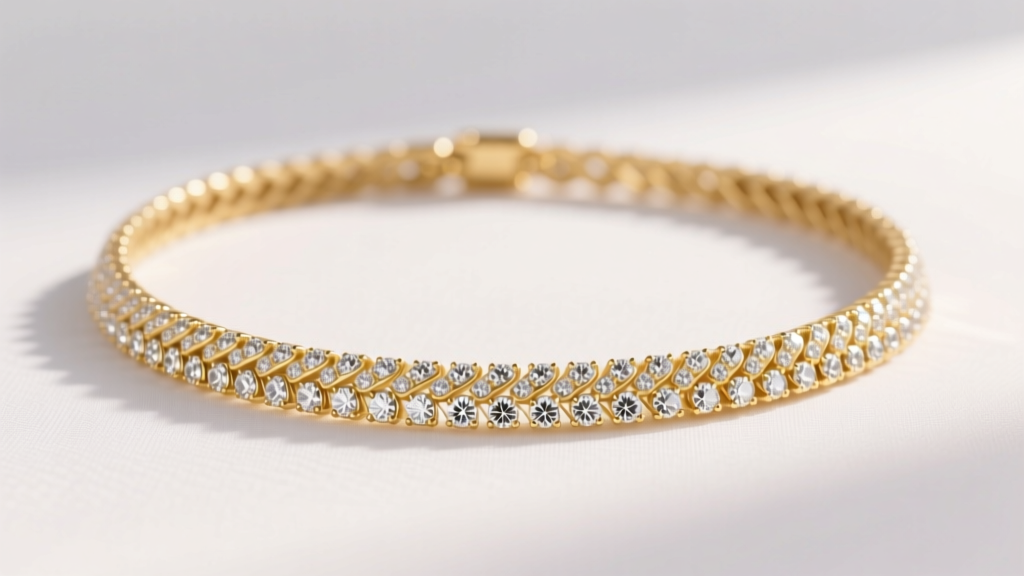
The herringbone chain is celebrated in fine jewelry for its liquid-like drape and high-reflectivity surface. Constructed from flat, V-shaped links that are woven and pressed flush against one another, this weave offers maximum surface area for light reflection. When a jeweler introduces diamonds into this design—creating a herringbone diamond necklace—the structural dynamics of the piece change dramatically. The addition of gemstones, or the aggressive faceting required for "diamond-cut" variations, alters the chain's center of gravity, tensile strength, and long-term durability.
As we navigate the 2026 fine jewelry market, consumers must understand that not all herringbone diamond necklaces are engineered equally. The interplay between the base metal's metallurgical properties and the diamond setting technique dictates whether the necklace will remain a fluid, wearable heirloom or succumb to permanent kinking and stone loss.
Base Metal Comparison: Hardness and Kink Resistance
The most critical failure mode of any herringbone chain is kinking. Because the links lack structural memory and rely on a flat alignment, bending the chain past its yield point causes permanent deformation. The choice of base metal directly influences this vulnerability. Below is a metallurgical comparison of the most common metals used in herringbone diamond necklaces.
| Metal Grade | Vickers Hardness (HV) | Kink Susceptibility | Diamond Setting Suitability | Approx. Price per Gram (2026) |
|---|---|---|---|---|
| 14k Yellow/White Gold | 130 - 150 | High | Excellent (holds prongs securely) | $45 - $55 |
| 18k Yellow/White Gold | 110 - 125 | Very High | Good (softer, requires thicker bezels) | $65 - $80 |
| Platinum (950 Pt) | 110 - 130 (High Tensile) | Moderate (Heavy drape causes stress) | Superior (burnishing secures stones) | $100 - $120 |
| Sterling Silver (925) | 60 - 80 | Extreme | Poor (prongs wear down rapidly) | $1 - $3 |
According to metallurgical standards referenced by the Jewelers of America, 14k gold is generally preferred for intricate, flat-weave chains because its higher alloy content (copper, zinc, or nickel) provides the necessary rigidity to resist minor bending. 18k gold, while richer in color, is significantly softer and more prone to permanent creasing if folded.
The Terminology Trap: Genuine Diamonds vs. Diamond-Cut
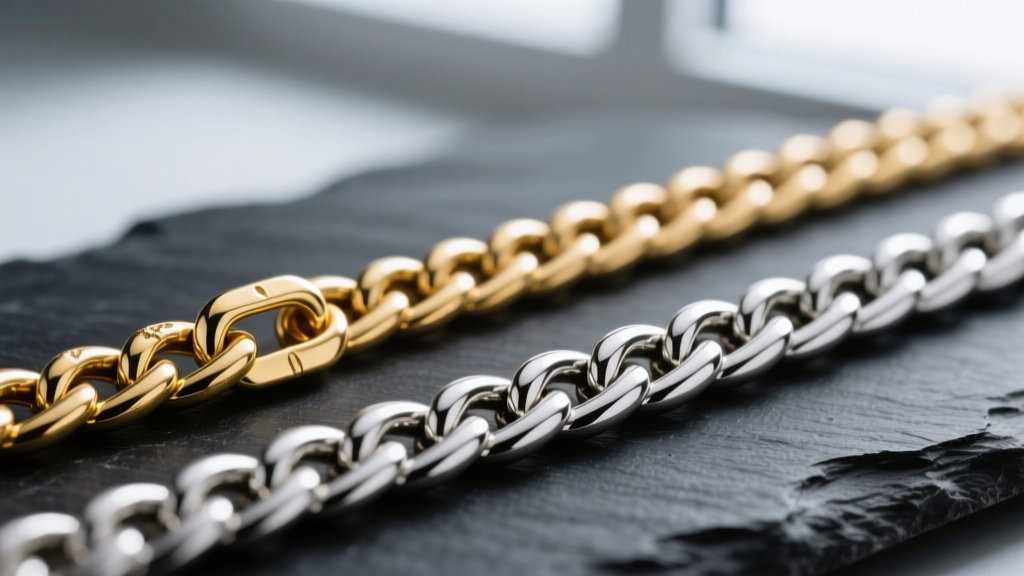
A major point of confusion in the market is the phrase "diamond necklace." When shopping for a herringbone diamond necklace, you will encounter two vastly different manufacturing techniques:
1. Genuine Melee Diamond Accents
This involves physically setting tiny diamonds (melee, typically ranging from 0.01 to 0.05 carats each) into the chain. In a herringbone weave, this is usually done via pavé or micro-bezel settings. The diamonds are sourced and graded, with most commercial pieces utilizing SI1-SI2 clarity and G-H color melee to balance cost and brilliance. The Gemological Institute of America (GIA) notes that genuine melee diamonds provide true scintillation and fire, but their settings create rigid "dead zones" in the otherwise fluid chain.
2. Diamond-Cut Herringbone
This is a metalworking technique, not a gemstone setting. A jeweler uses a specialized lathe to slice angled facets directly into the surface of the gold links. While a diamond-cut herringbone chain sparkles intensely under direct light, it lacks the depth, refraction, and fire of actual carbon crystals. Furthermore, the cutting process removes metal from the links, thinning them and increasing the chain's overall fragility.
Setting Mechanics: Pavé vs. Bezel on Flat Chains
If you are investing in genuine diamonds, the setting style profoundly impacts the necklace's wearability and structural integrity.
- Pavé Settings: Small beads of gold are raised to hold the melee diamonds. On a herringbone chain, pavé allows for maximum diamond density and a continuous ribbon of sparkle. However, the tiny prongs can snag on textiles, and the localized heat applied during the soldering process anneals (softens) the surrounding gold links, creating weak points.
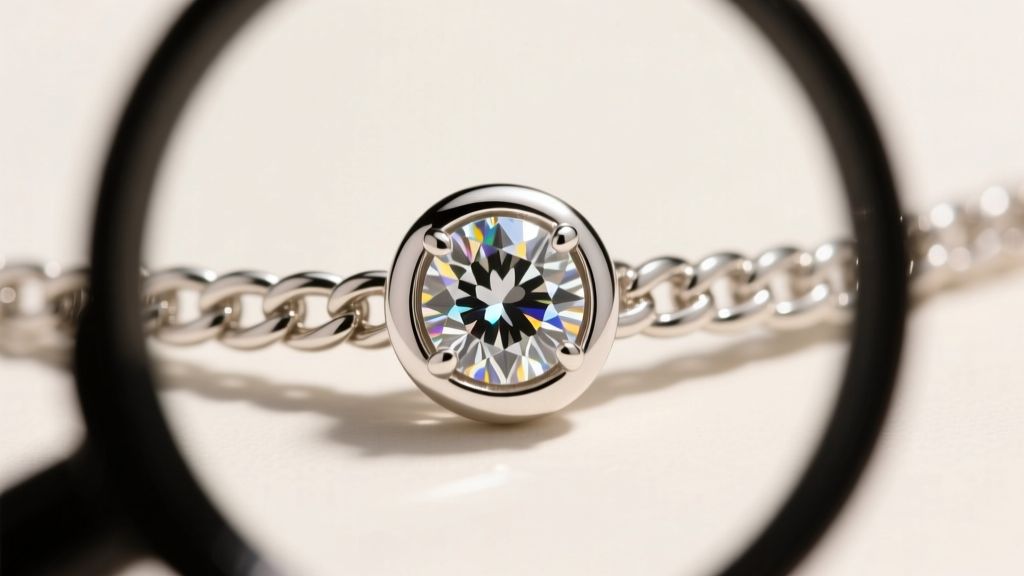
- Bezel Settings: A smooth rim of metal completely encircles the diamond. While bezel settings use slightly more metal and can interrupt the fluid visual line of the herringbone weave, they are vastly superior for everyday wear. They eliminate snagging and provide a more secure grip on the stones, which is vital given the high-torque stress a flat chain endures when twisted.
Structural Vulnerabilities and Failure Modes
To wear a herringbone diamond necklace is to accept a high-maintenance relationship with your jewelry. The primary failure mode is the creased kink. Unlike rope or cable chains, which can often be untangled and manipulated back into shape, a herringbone chain that has been folded or slept in will suffer a permanent crease.
When diamonds are added to the equation, the repair process becomes exponentially more difficult. If a herringbone chain kinks near a diamond cluster, a jeweler cannot simply use a traditional torch to solder the break or reshape the metal. The heat required to manipulate the gold will melt the microscopic pavé beads or fracture the melee diamonds via thermal shock. Laser welding is the only viable repair method for diamond-set herringbone chains, and even then, the repaired section will often lose its liquid drape, resulting in a stiff "hinge" effect.
Pricing Tiers and Market Realities
Understanding the pricing structure of herringbone diamond necklaces prevents overpaying for marketing hype. Prices in 2026 generally fall into three tiers:
- Entry-Level / Diamond-Cut ($300 - $800): 10k or 14k gold chains with no actual diamonds, relying entirely on faceted metal for sparkle. High risk of kinking due to thinner link profiles.
- Mid-Tier / Station Diamonds ($1,200 - $3,500): 14k gold herringbone chains featuring 3 to 5 bezel-set or pavé diamond stations (0.10ct to 0.50ct total weight). This is the sweet spot for durability and genuine brilliance.
- High Jewelry / Continuous Pavé ($8,000 - $25,000+): 18k gold or platinum chains completely lined with melee diamonds (2.00ctw+). These are spectacular but highly fragile, best reserved for occasional evening wear rather than daily use.
Care and Maintenance Protocols
Preserving the structural integrity of a herringbone diamond necklace requires strict adherence to specific storage and handling protocols:
- The Flat Storage Rule: Never hang a herringbone chain on a jewelry tree or hook. Gravity will pull the flat links against each other, causing micro-abrasions and eventual stretching. Always store the necklace perfectly flat in a lined leather tray or velvet pouch.
- The Slide-Off Method: When removing the necklace, do not pull it over your head. The friction of hair and the bending radius required to clear your skull is the leading cause of herringbone kinks. Always unclasp and slide it off the front of your neck.
- Ultrasonic Warning: Avoid ultrasonic cleaners for pavé herringbone necklaces. The high-frequency vibrations can shake loose the tiny melee diamonds, especially if the gold prongs have been softened by previous repair work. Stick to gentle soaking in warm water with a few drops of mild dish soap, using a soft baby-hair brush to clean behind the diamond settings.


