Herringbone V Necklace: Metal & Material Properties Guide
Compare metals for a herringbone v necklace. Explore tensile strength, kink resistance, and alloy properties for silver, gold, and platinum.

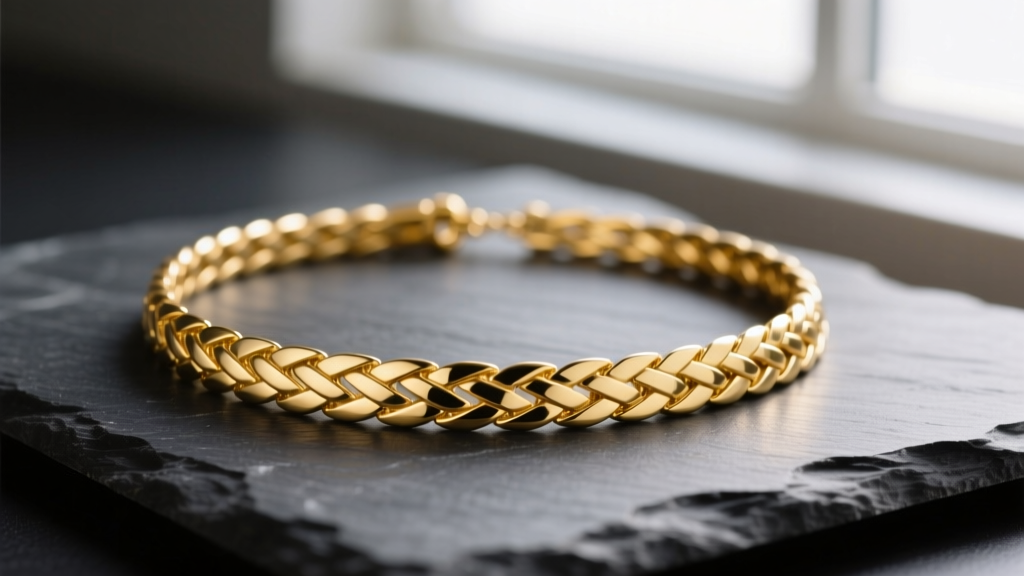
The Anatomy of a Herringbone V Necklace
The herringbone chain is a marvel of jewelry engineering, prized for its liquid-like drape and mirror-like reflectivity. Unlike traditional cable or curb chains that rely on interlocking oval links, a herringbone weave consists of flat, slanted metal links arranged in a continuous, flush pattern. When this fluid chain is configured into a herringbone v necklace—typically featuring a Y-drop, lariat, or specialized V-junction connector—the structural dynamics change dramatically. The horizontal collarbone chain must transition into a vertical drop, creating a high-tension stress point at the V-junction.
Choosing the right metal for this specific design is not merely an aesthetic decision; it is a metallurgical necessity. The flat links of a herringbone weave are inherently vulnerable to lateral folding (kinking). When you introduce the gravitational pull and directional tension of a V-drop, the material's hardness, tensile strength, and alloy composition dictate whether the necklace will lay flawlessly or suffer permanent structural failure. In this comprehensive guide, we break down the exact material properties you need to consider before investing in a herringbone V necklace.
Material Breakdown: How Metals Behave in a Herringbone Weave
Not all precious metals are created equal, especially when drawn into the ultra-thin, flat links required for a herringbone weave. According to the Gemological Institute of America (GIA), the alloying metals mixed with pure gold or silver drastically alter the final hardness and durability of the jewelry. Here is how the most common metals perform in a herringbone V configuration.
Sterling Silver (925) vs. Argentium (935)
Standard Sterling Silver is an alloy of 92.5% pure silver and 7.5% copper. While the copper adds necessary strength, silver remains a relatively soft metal with a Vickers Hardness (HV) of roughly 65 when annealed. In a herringbone V necklace, sterling silver is highly susceptible to kinking at the V-drop joint. Furthermore, the copper content makes it prone to tarnish, which can accumulate in the microscopic crevices between the flat links, dulling the chain's signature reflectivity.
The Upgrade: Argentium Silver (93.5% silver, alloyed with copper and germanium) is a superior choice for herringbone weaves. The addition of germanium increases the hardness to approximately 85 HV and provides exceptional tarnish resistance. For a silver herringbone V necklace that maintains its structural integrity and brilliant shine with minimal maintenance, Argentium is the definitive industry standard.
14k vs. 18k Gold: The Karat Dilemma
Gold purity presents a unique paradox for herringbone chains. Pure 24k gold is far too soft for any chain, so it must be alloyed.
- 14k Gold (58.5% pure gold): Alloyed with a higher percentage of copper, silver, and zinc, 14k gold achieves a Vickers Hardness of around 130-150 HV. This makes it the most durable gold option for a herringbone V necklace. The increased rigidity helps the flat links resist the bending forces at the V-junction.
- 18k Gold (75% pure gold): While 18k gold offers a richer, warmer color and higher intrinsic value, its higher gold content drops the hardness to roughly 110-130 HV. An 18k herringbone V necklace will drape beautifully but requires meticulous care, as the softer links are much more likely to crease and kink under the weight of a V-drop pendant.
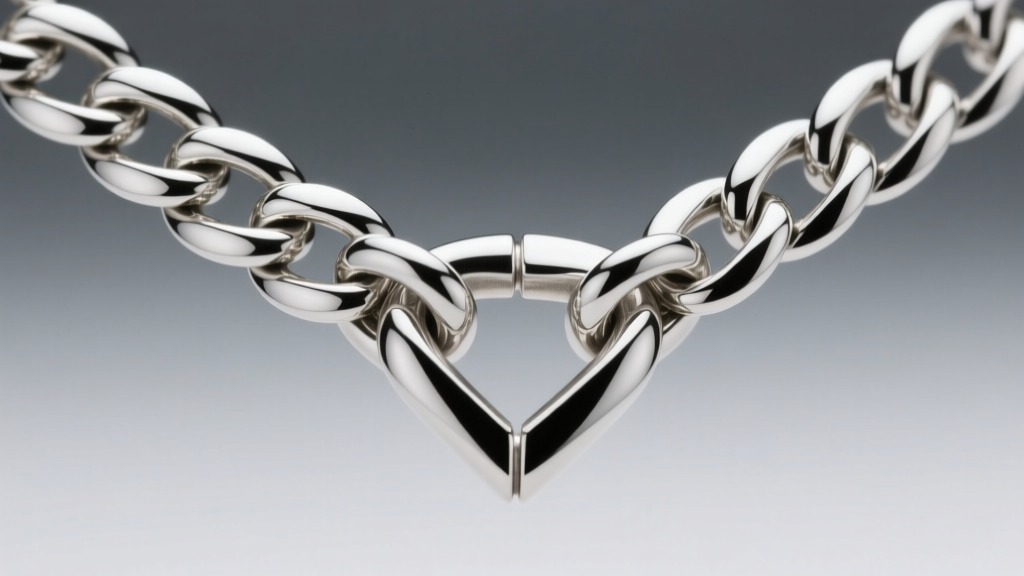
Platinum 950: The Heavyweight Contender
Platinum (typically alloyed with 5% ruthenium or iridium) is incredibly dense and durable, boasting a hardness of 130-150 HV. However, its density is a double-edged sword for a herringbone V necklace. The sheer weight of platinum pulls the V-drop taut, which can actually help the chain lay flat and resist casual kinking. However, the heavy vertical drop places immense sheer stress on the solder joints connecting the V-piece to the main chain. Platinum herringbone chains are luxurious and hypoallergenic, but they must be engineered with reinforced jump rings at the V-junction to prevent link separation.
The Kink Factor: Tensile Strength and Failure Modes
The most common failure mode of any herringbone chain is kinking. Because the links are bent at a sharp slant to lay flush against one another, folding the chain backward forces the metal past its yield strength, causing a permanent crease. In a herringbone V necklace, the risk is amplified at the transition point where the chain drops into the V-shape.
When a wearer moves, the V-drop swings, creating a repetitive hinge effect at the top link of the drop. If the metal lacks adequate tensile strength (like high-karat gold or standard sterling silver), this hinge effect will eventually cause metal fatigue, leading to the links stretching, separating, or snapping entirely. To mitigate this, high-end manufacturers use a specialized, rigid V-connector plate rather than a simple jump ring to distribute the kinetic energy across multiple links simultaneously.
Comparative Data: Material Properties & Pricing
The following table provides a technical comparison of the most common metals used in herringbone V necklaces, factoring in hardness, structural viability, and estimated market pricing for a standard 18-inch, 3mm width chain with a basic V-drop.
| Metal Alloy | Hardness (Vickers HV) | Kink Resistance | V-Drop Tension Tolerance | Avg. Retail Price (USD) |
|---|---|---|---|---|
| 925 Sterling Silver | 65 - 75 | Poor | Low (Requires careful handling) | $90 - $180 |
| Argentium 935 Silver | 80 - 95 | Fair | Moderate | $140 - $250 |
| 14k Yellow/White Gold | 130 - 150 | Good | High (Ideal for daily wear) | $450 - $850 |
| 18k Yellow/White Gold | 110 - 130 | Fair to Poor | Moderate (Prone to stretching) | $750 - $1,500 |
| Platinum 950 | 135 - 150 | Excellent | High (Heavy, requires strong joints) | $1,800 - $3,200+ |
Soldering and Repair Realities for V-Drops
One of the most critical, yet rarely discussed, aspects of buying a herringbone V necklace is the reality of repairs. According to manufacturing experts at Rio Grande, traditional torch soldering is virtually impossible on a herringbone weave. The links are so thin and tightly packed that the broad heat of a jeweler's torch will instantly melt the surrounding links into a solid, inflexible lump, destroying the chain's fluid drape.
If the V-drop detaches or a link kinks and snaps, the piece must be repaired using laser welding. Laser soldering uses a highly concentrated beam of light to fuse metal in a microscopic area without transferring heat to the adjacent links. As of 2026, laser-welding technology has become more accessible, but it remains a specialized service. Before purchasing a delicate 18k gold or sterling silver herringbone V necklace, verify that the brand or your local jeweler has in-house laser welding capabilities, as shipping fragile, kinked herringbone chains through the mail often results in further catastrophic damage.
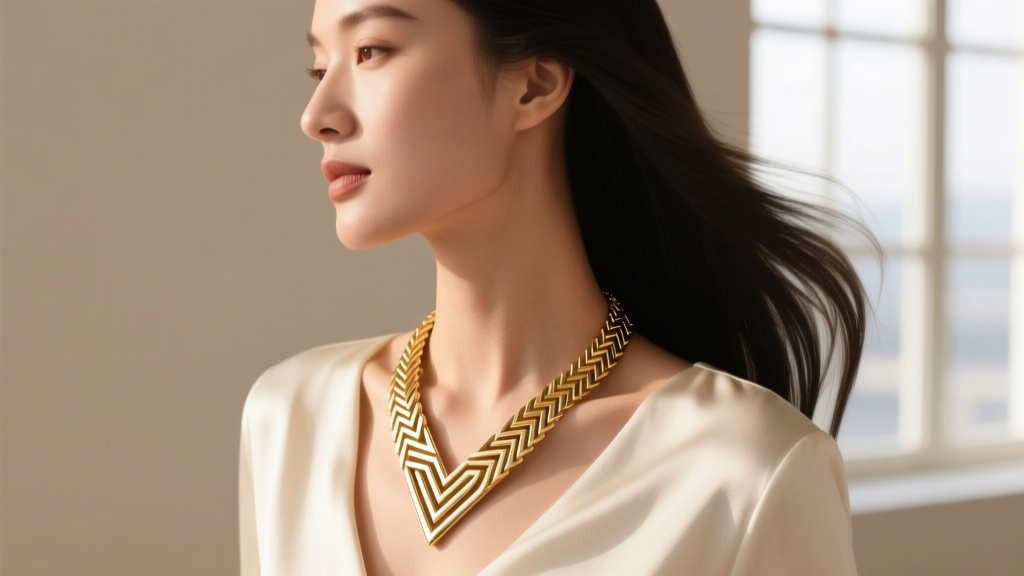
Gold Vermeil and Plated Alternatives: A Warning
The market is flooded with gold vermeil (thick gold plating over sterling silver) and gold-plated brass herringbone V necklaces. While these offer the look of 18k gold at a fraction of the price, they present severe structural and chemical risks. Brass bases are highly rigid but brittle; when a brass herringbone chain kinks, the gold plating will flake and chip off at the crease, exposing the raw, oxidizing brass underneath. Furthermore, the chemical baths used in the plating process can weaken the structural integrity of the base metal links. For a V-necklace that will be worn regularly, solid metals are the only viable investment.
Final Verdict: Choosing Your Metal
Selecting the right metal for your herringbone V necklace requires balancing your budget, aesthetic preferences, and willingness to maintain the piece. If you desire a durable, everyday piece that can withstand the kinetic tension of a V-drop, 14k solid gold is the undisputed champion, offering the perfect equilibrium of hardness and luxury. For those on a budget who prioritize brilliance and tarnish resistance, Argentium silver is a vastly superior alternative to standard sterling. Avoid high-karat 18k gold and plated metals for this specific chain style, as the inherent softness and structural vulnerabilities will inevitably lead to disappointment. Treat your herringbone V necklace with the respect its intricate engineering demands, and it will deliver a lifetime of unmatched, liquid-metal elegance.


