The Anatomy of a Hook Necklace: Materials and Stress
Explore the metallurgy, structural stress points, and material science behind the hook necklace, from traditional bone carving to titanium forging.

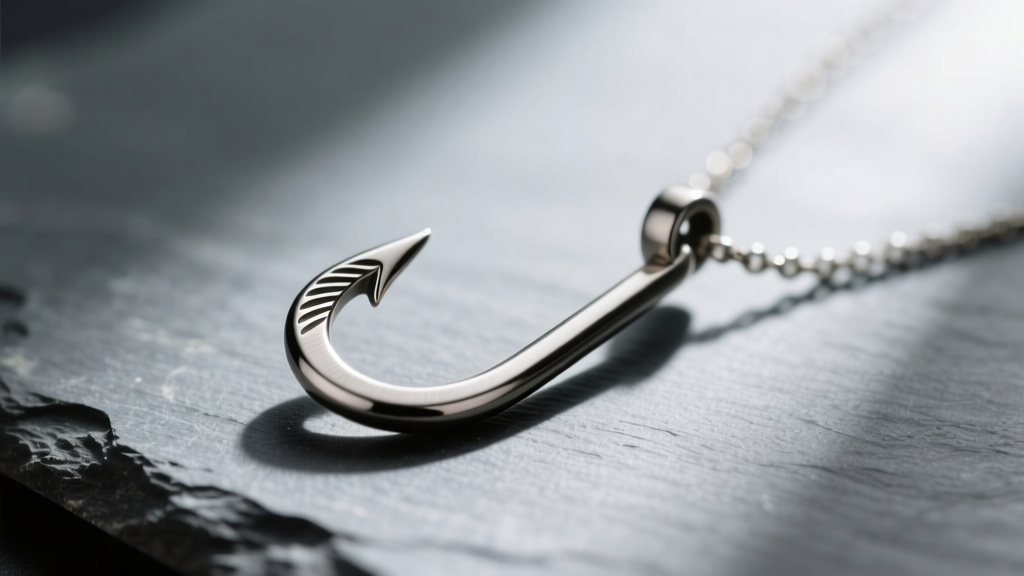
The hook necklace is a staple in both coastal heritage jewelry and modern structural design. Whether referencing the traditional Hawaiian Makau (fishhook) pendant symbolizing safe passage and strength, or the mechanical S-hook clasp systems used in heavy chainmaille, the underlying engineering remains a study in applied physics. Unlike static pendants, a hook necklace must endure dynamic tensile loads, lateral torsion, and localized stress concentrations at its inner radius. This expert deep dive explores the metallurgy, structural stress points, and material science that dictate the longevity and failure modes of hook-style necklaces.
The Engineering of the Hook Necklace Bend
The defining feature of any hook pendant or clasp is the curve. From a materials science perspective, this bend is the primary point of vulnerability. When a wire or carved blank is formed into a hook, the outer radius undergoes tensile stress (stretching), while the inner radius experiences compressive stress. The neutral axis—the theoretical centerline of the material—remains relatively unstressed.
If a jeweler bends a work-hardened metal wire without properly annealing it first, the crystalline lattice structure at the outer radius becomes brittle. Over time, the repetitive micro-movements of wearing the necklace cause fatigue cracking to initiate at the outer edge of the bend. For heavy-duty hook necklaces designed to hold substantial weight, the inner diameter of the curve must be at least 1.5 times the thickness of the material to prevent immediate structural failure during the forming process.
Material Science: Alloys vs. Organics
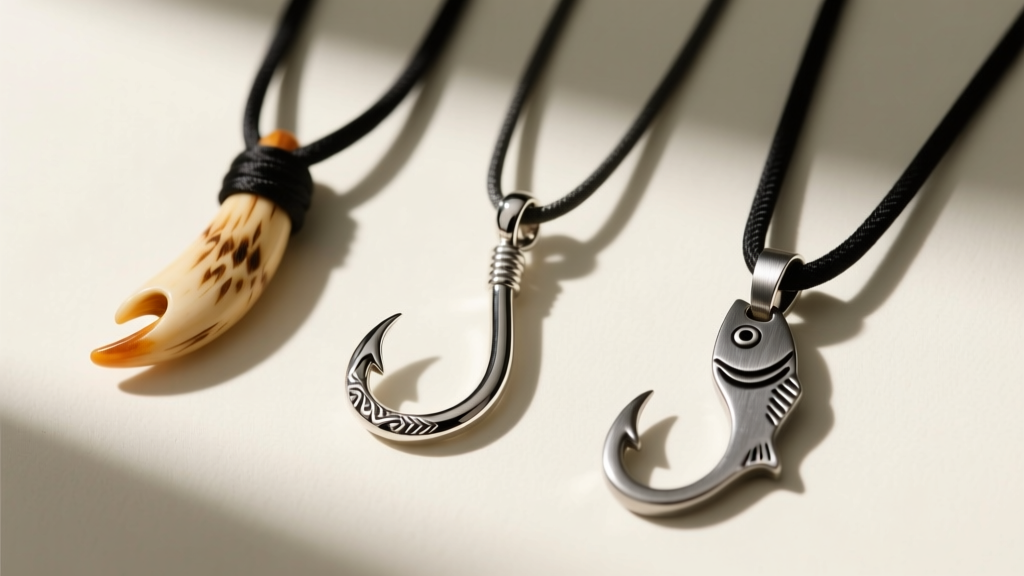
The choice of material drastically alters the hook necklace's tensile strength, weight, and corrosion resistance. Below is a technical comparison of the most common materials used in high-end and traditional hook fabrication.
| Material | Tensile Strength (MPa) | Fabrication Method | Best Use Case | Primary Vulnerability |
|---|---|---|---|---|
| Grade 5 Titanium (Ti-6Al-4V) | ~900 MPa | CNC Milling / Forging | Ultra-thin, high-strength modern hooks | Difficult to hand-polish; requires diamond tooling |
| 316L Stainless Steel | ~500-700 MPa | Investment Casting / Stamping | Marine environments, heavy S-hook clasps | Prone to galling if moving parts are unpolished |
| 925 Sterling Silver | ~250-300 MPa | Casting / Die-Striking | Traditional Makau pendants, luxury clasps | Low yield strength; bends permanently under heavy loads |
| Bovine Bone / Horn | ~100-150 MPa | Hand Carving / Abrasion | Cultural heritage pieces, lightweight pendants | Anisotropic; snaps if cut against the longitudinal grain |
According to the Gemological Institute of America (GIA), standard 925 sterling silver is often too soft for load-bearing clasps. Master jewelers frequently upgrade to Argentium 935 Silver or heat-treated beryllium copper alloys for hook clasps, as these materials offer superior spring-back and resistance to permanent deformation.
Fabrication Techniques and Grain Structure
How a hook necklace is manufactured is just as critical as what it is made from. The three primary fabrication methods yield vastly different structural integrities at the hook's apex.
1. Investment Casting
Casting is the most common method for commercial sterling silver and gold hook pendants. However, cast metal lacks a continuous grain flow. If the molten metal cools too quickly or traps gas, microscopic porosity can form exactly at the inner curve of the hook. Under tension, these pores act as stress concentrators, leading to sudden, catastrophic snapping without prior warning.
2. Die-Striking and Forging
Forging a hook necklace from sheet or wire stock aligns the metal's grain structure to follow the contour of the bend. This continuous grain flow dramatically increases the fatigue life of the piece. A die-struck 14-gauge (1.6mm) stainless steel hook will support significantly more static weight than a cast hook of the exact same dimensions.
3. Traditional Bone Carving
For organic hook necklaces, the orientation of the raw material is paramount. Bone is an anisotropic material, meaning its mechanical properties change depending on the direction of the applied force. As documented by the Bernice Pauahi Bishop Museum in their archives of traditional Hawaiian artifacts, master carvers always align the hook's shaft with the longitudinal grain of the bone. Carving a hook across the transverse grain guarantees that the pendant will snap at the bend under minimal pressure.
The S-Hook Clasp Variant: Tension and Spring-Back
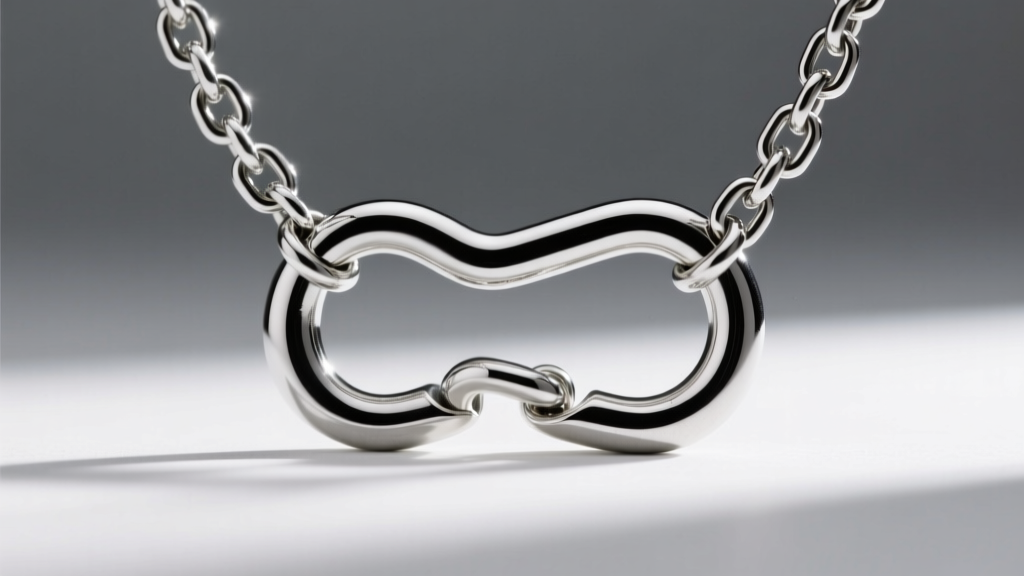
Beyond pendants, the 'hook' frequently appears as the primary closure mechanism in heavy chain necklaces via the S-hook or shepherd's hook clasp. This design relies entirely on the metal's yield strength and elastic deformation.
An 8-gauge (3.26mm) or 10-gauge (2.58mm) wire is typically used for S-hook clasps on heavy curb or Figaro chains. The clasp functions by compressing the metal slightly to pass through the catch ring, then relying on the metal's 'spring-back' to return to its original shape. If the jeweler uses a fully annealed (soft) wire, the hook will stretch open over time and fail to secure the chain. Conversely, if the wire is over-hardened, it will lack the necessary elasticity and snap when forced open by the wearer. Precision heat treatment is required to achieve the exact balance of hardness and malleability.
Cordage and Eyelet Tribology
A hook necklace is only as strong as the cord suspending it and the eyelet connecting them. The friction point where the cord passes through the hook's eyelet is a major site of abrasive wear.
- UHMWPE (Ultra-High-Molecular-Weight Polyethylene): Modern high-end hook necklaces often use braided UHMWPE cord (commonly known by brand names like Dyneema). With a tensile strength exceeding 3000 MPa, it is virtually unbreakable by human hands and highly resistant to abrasion against metal eyelets.
- Traditional Hemp and Cotton: While culturally authentic for bone Makau pendants, organic fibers degrade rapidly when exposed to sweat, UV light, and the microscopic burrs inside a drilled bone or metal eyelet. They require annual replacement to prevent catastrophic drops.
- Eyelet Finishing: According to metallurgical standards outlined by ASM International, any drilled hole in a load-bearing metal component must be deburred and polished. A rough, unpolished eyelet on a titanium hook will act like a saw blade against a nylon or silk cord, severing it in a matter of weeks.
Failure Mode Troubleshooting
To maintain the structural integrity of a hook necklace, collectors and wearers should perform routine inspections targeting specific failure modes:
- Micro-Fracture Detection: Inspect the outer radius of the metal bend under a 10x jeweler's loupe. Any visible dark lines indicate fatigue cracking. The piece must be retired or re-forged immediately.
- Stress Corrosion Cracking (SCC): In 316L stainless steel and certain brass alloys, the combination of high tensile stress at the bend and exposure to chlorides (sweat, ocean water) can cause SCC. Rinse metal hook necklaces with fresh water after marine exposure.
- Transverse Grain Snapping: For bone and wood hooks, look for hairline splits running perpendicular to the length of the hook. This indicates the piece was carved against the grain or has suffered severe moisture dehydration, compromising its load-bearing capacity.
Understanding the intersection of material science and traditional craftsmanship elevates the hook necklace from a simple decorative item to a masterclass in structural jewelry engineering. Whether selecting a Grade 5 titanium modernist piece or a hand-carved heritage pendant, recognizing these technical nuances ensures both longevity and safety in wear.


