Necklace for High Neckline Dress: Care and Cleaning Tips
Learn expert care, cleaning, and maintenance tips to protect your favorite necklace for high neckline dress outfits from friction, tarnish, and snags.


When curating the perfect necklace for high neckline dress outfits—whether it is a sweeping 30-inch lariat layered over a chunky turtleneck or a delicate 16-inch choker peeking above a Victorian lace collar—most stylists focus entirely on proportion and visual balance. However, as a jewelry care specialist, I look at the hidden environmental stressors these garments introduce. High-neck garments create unique microclimates of heat, friction, and trapped debris that can rapidly degrade precious metals and dull gemstones. Maintaining your favorite necklaces when paired with high collars requires a specialized, proactive approach to cleaning and structural preservation.
The Hidden Hazards of High Collars and Turtlenecks
High necklines, particularly those crafted from winter wools, cashmere blends, and synthetic mock-neck fabrics, act as mild abrasives against metal surfaces. While cashmere feels incredibly soft against the skin, its fibers are highly effective at trapping microscopic lint, dead skin cells, and cosmetic residues, which then grind into the crevices of your pendant settings.
Friction and Plating Degradation
The most severe casualty of high-collar friction is gold vermeil and gold-plated jewelry. True gold vermeil requires a minimum gold thickness of 2.5 microns over a sterling silver base. When a pendant rests against a coarse wool turtleneck and swings with your movements throughout the day, the continuous micro-abrasion can strip this plating down to the silver base in a matter of months. Solid 14k or 18k gold is far more resilient, but the high-polish finish can still develop a matte, scratched patina over time when subjected to relentless fabric friction. To mitigate this, always ensure the bail (the loop connecting the pendant to the chain) is lined with a smooth, hard metal or a protective enamel coating to prevent the chain from wearing a groove into the pendant's top loop.
Cleaning Pendants Exposed to Fabric Lint and Skin Oils
High collars push hair products, lint, and sebum directly into the under-gallery (the hollow space beneath the gemstone) of your pendants. This trapped debris blocks light refraction, making even the highest-clarity diamonds look cloudy and lifeless. Furthermore, the heat trapped by a turtleneck increases sebum production at the nape of the neck, accelerating the buildup of oils on the chain and clasp.
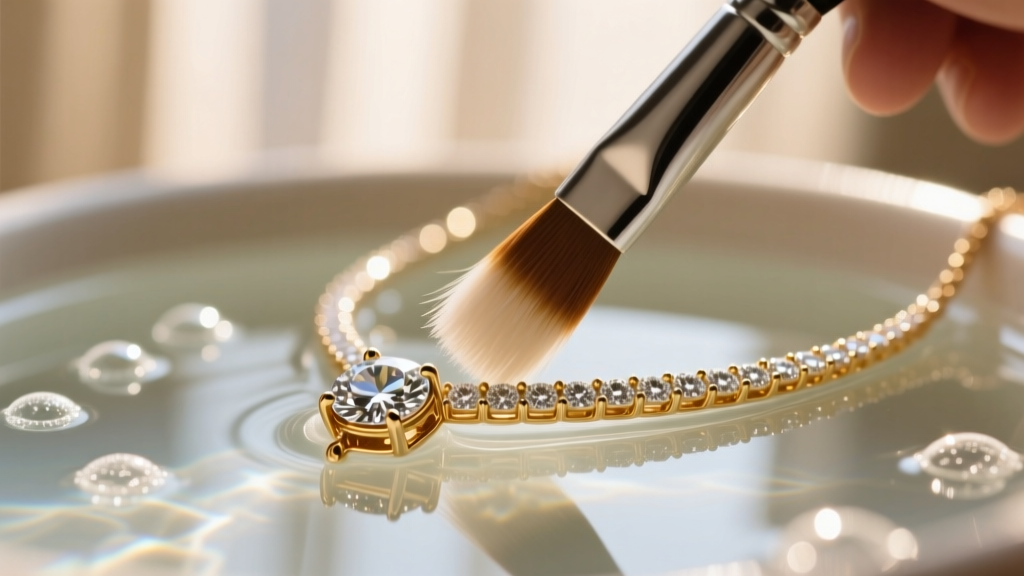
Step-by-Step Gallery Cleaning
To safely remove this buildup without damaging your stones, follow this targeted cleaning protocol recommended by gemological experts:
- The Soak: Mix lukewarm water with a few drops of phosphate-free, mild dish soap (avoid harsh detergents or moisturizing soaps that leave a film). Submerge the pendant for 10-15 minutes to loosen compacted collar lint.
- The Agitation: Using an extra-soft baby toothbrush, gently brush the under-gallery. Never use hard bristles, as they can scratch the metal prongs holding your stones.
- The Rinse and Dry: Rinse thoroughly under distilled water to prevent hard water spots. Dry with a lint-free microfiber cloth, avoiding tissue paper or cotton balls which will snag on the prongs and leave fibers behind.
Crucial Warning: According to the Gemological Institute of America (GIA), you must never use ultrasonic cleaners for porous or heavily included stones like opals, emeralds, or turquoise, which are frequently featured in vintage pendants worn over high collars. The high-frequency vibrations can shatter these stones or strip their protective oil treatments.
Managing Nape Tarnish and Sweat Accumulation
The nape of the neck is a high-sweat zone, and high necklines trap this moisture against your skin and jewelry. Human sweat is slightly acidic (pH 4.5 to 7.0) and contains salts and sulfur compounds. When sulfur interacts with the copper alloyed in 925 sterling silver, it rapidly forms silver sulfide—the black tarnish that plagues jewelry worn under winter layers.
| Metal Type | Tarnish Risk Under High Collars | Maintenance Protocol |
|---|---|---|
| 925 Sterling Silver | High (Copper reacts aggressively to trapped sweat) | Weekly polishing with a treated silver cloth; anti-tarnish storage |
| 14k / 18k Solid Gold | Low (Alloy oxidation is minimal, but oils attract dirt) | Monthly mild soap wash; buff with a jewelry polishing cloth |
| Gold Vermeil (2.5µm) | Extreme (Friction and sweat strip the gold layer rapidly) | Avoid wearing with coarse wool; wipe with a damp cloth after use |
| Platinum | None (Develops a natural patina, does not tarnish or oxidize) | Annual professional buffing to restore high-polish finish |
To combat nape tarnish, always remove your necklace before changing out of your high-neck dress to avoid pulling it over your head, which transfers hair oils and makeup directly onto the metal. For detailed metal care standards, the Jewelers of America recommends storing silver pieces with anti-tarnish strips immediately after wearing them in high-heat environments.
Chain Integrity: Preventing Snags on Heavy Knits
When styling a necklace for high neckline dress ensembles, longer chains (24 to 32 inches) are the standard choice to elongate the torso. However, these long lengths swing freely and are highly susceptible to snagging on buttons, zippers, and the coarse loops of heavy knitwear. A sudden snag can stretch individual links, weaken the clasp spring, or cause micro-kinks that eventually lead to chain breakage.
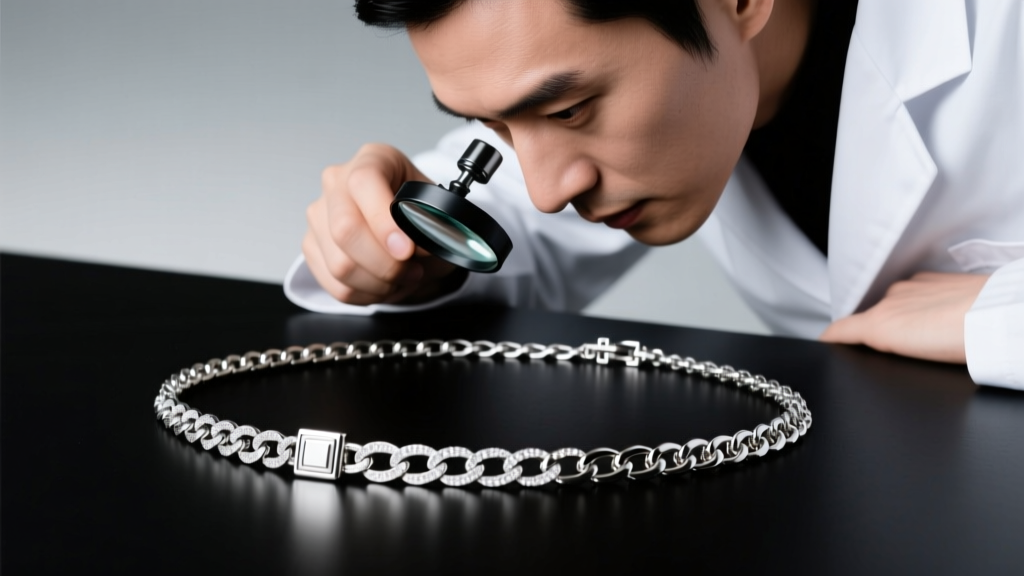
Best Chain Weaves for High-Neck Garments
The structural design of your chain dictates how well it survives winter wardrobes:
- Box Chains: Excellent for high necklines. Their smooth, geometric, and continuous surface glides over fabrics without catching on loose threads or knit loops.
- Rolo Chains: Highly durable and resistant to kinking due to their uniform, interlocking round links. They handle the weight of heavy pendants well without stretching.
- Snake Chains: Avoid these with knits. The tightly packed, smooth bands of snake chains are notorious for trapping microscopic lint and body hair. Once lint is embedded in the grooves, it is nearly impossible to remove without professional steam cleaning, and the chains are incredibly prone to permanent kinking if snagged.
Inspecting and Lubricating the Clasp
The spring ring or lobster clasp at the back of your neck is subjected to constant friction against the collar seam. Once a month, inspect the clasp mechanism with a 10x jeweler's loupe. Look for a loose lever or a weakened spring. If the clasp feels stiff, apply a microscopic drop of synthetic watch oil to the hinge—never use household oils like WD-40, which contain solvents that will degrade the metal and attract more dirt.
Safe Storage to Prolong the Life of Your Necklaces
How you store your necklaces after wearing them with high-neck garments is just as critical as how you clean them. Never toss a long pendant necklace into a jewelry box where it can tangle with other pieces. The tension required to untangle a knotted 30-inch chain often results in stretched links and broken solder joints.
"A necklace worn over a turtleneck absorbs the static electricity and lint of the garment. Before storing, always lay the chain flat on a clean microfiber towel and gently run a soft cloth down its length to discharge static and remove surface debris. This simple ten-second habit prevents the slow accumulation of grime that eventually seizes chain links." — Master Bench Jeweler
Hang your long necklaces on padded hooks or lay them flat in individual, airtight polyethylene bags equipped with anti-tarnish technology. By understanding the specific mechanical and chemical challenges that high collars present, you can ensure that your carefully curated high-neckline jewelry remains structurally sound, brilliantly polished, and ready to elevate your wardrobe for years to come.


