The Horse Charm Necklace Trend: 2026 Equestrian Style
Explore the 2026 horse charm necklace trend. Discover equestrian styling, chain pairings, material grades, and layering techniques for this iconic piece.

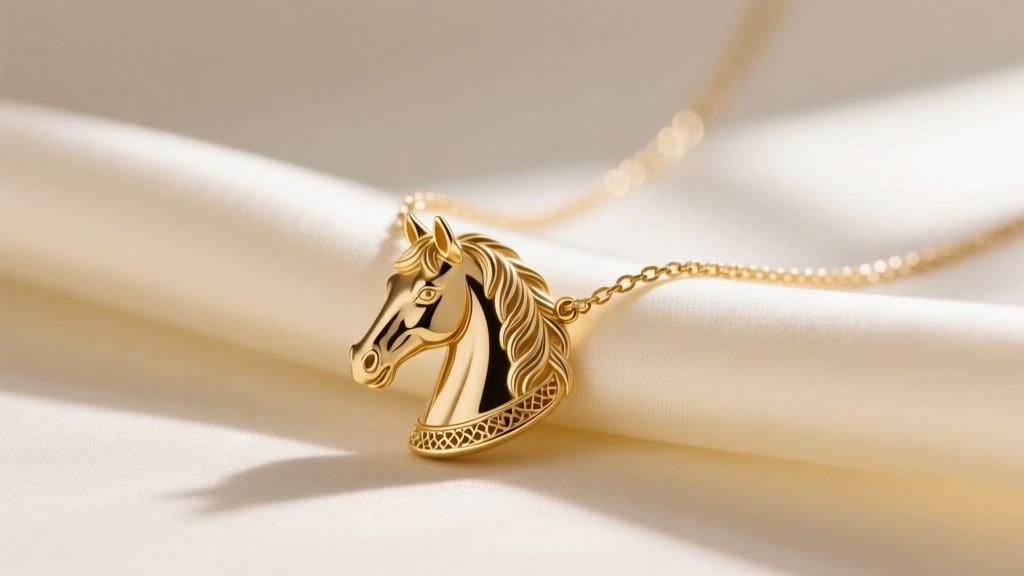
The equestrian aesthetic has long been a staple of heritage fashion, but in 2026, the horse charm necklace has transcended its traditional "old money" roots to become a versatile anchor in modern jewelry wardrobes. No longer confined to literal, chunky silver horse heads, today's equestriancore embraces kinetic movement, abstract silhouettes, and mixed-metal layering. Whether you are investing in a solid 18k gold heirloom or curating a stackable sterling silver collection, understanding the mechanics, materials, and styling frameworks of the horse charm necklace is essential for achieving a polished, intentional look.
The 2026 Equestriancore Shift: From Literal to Abstract
In previous years, equestrian jewelry leaned heavily into literal representations—detailed horse heads, horseshoes, and riding crops. However, the 2026 trend cycle favors subtlety and abstraction. Designers are introducing sleek, minimalist horse silhouettes, kinetic charms where the horse's legs move slightly with the wearer's pulse, and negative-space outlines. This shift aligns with the broader "quiet luxury" movement, where the symbolism is deeply personal rather than overtly declarative. According to trend forecasting from Vogue Fashion, the modern equestrian aesthetic is less about the country club and more about integrating organic, fluid motifs into urban, everyday styling.
Material Grades and Charm Anatomy
The longevity and drape of a horse charm necklace depend entirely on its metallurgical composition and casting quality. Because a standard 15mm to 20mm horse pendant weighs between 2.5 and 4.5 grams, the material must withstand daily friction without warping.
Solid Gold vs. Vermeil
For daily wear, 14k solid gold (58.5% pure gold) remains the industry standard, offering the perfect balance of tensile strength and rich color. If opting for gold vermeil, ensure the gold layer is at least 2.5 microns thick over a 925 sterling silver base. Anything less (often marketed as "gold plated") will wear through the high-friction areas of the horse's muzzle and hooves within months. As noted by the Gemological Institute of America (GIA), understanding karatage and alloy mixtures is critical for predicting how a piece will react to environmental factors and skin chemistry.
Sterling Silver and Rhodium Plating
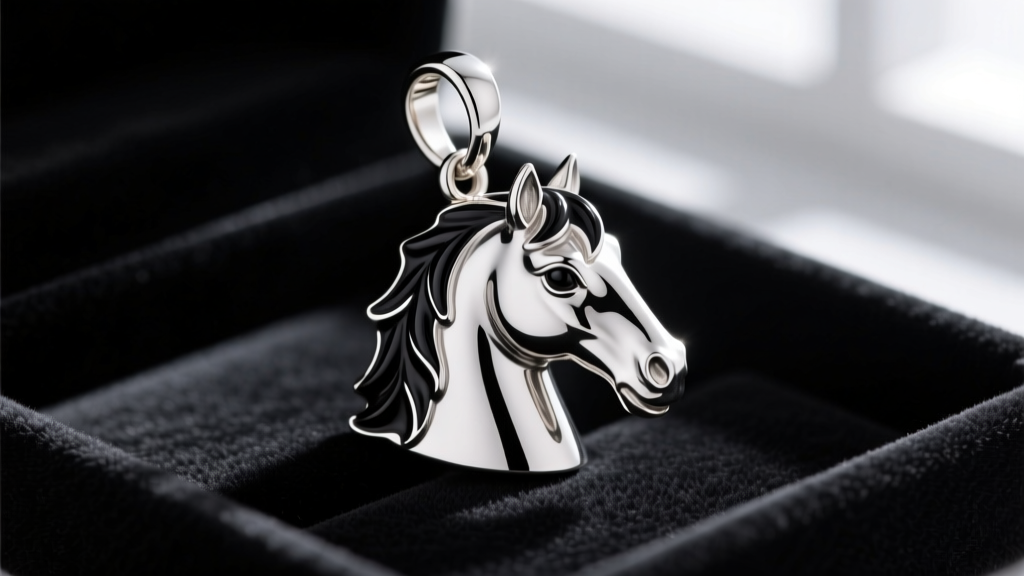
Sterling silver (92.5% silver, 7.5% copper) is highly malleable, allowing for intricate detailing on the horse's mane and tack. However, copper oxidizes. To prevent tarnishing, premium silver horse charms are flash-plated with rhodium. This platinum-group metal provides a brilliant, white-mirror finish and acts as an impermeable barrier against sulfur in the air.
Enamel Accents
High-end charms often feature enamel detailing on the saddle or mane. True vitreous enamel (fired glass) is highly durable and scratch-resistant, whereas cold enamel (epoxy resin) can yellow or chip over time. For a deep dive into the historical and chemical differences in jewelry enameling, Britannica's guide to enamelwork provides an excellent technical foundation.
Chain Pairings: Matching the Charm to the Link
A common failure point in charm necklaces is a mismatched chain. A 4-gram horse charm will easily snap a delicate 0.9mm thread chain, while a heavy 3mm Cuban link will visually overpower a minimalist 12mm silhouette. The ideal chain thickness for a standard horse charm sits between 1.2mm and 1.8mm.
| Chain Style | Ideal Thickness | Best Charm Weight | Aesthetic Vibe |
|---|---|---|---|
| Cable Chain | 1.2mm - 1.5mm | 2.0g - 3.5g | Classic, understated, traditional equestrian |
| Box Chain | 1.2mm - 1.7mm | 3.0g - 5.0g | Modern, geometric, highly durable |
| Rope Chain | 1.5mm - 2.0mm | 3.5g - 6.0g | Textured, vintage-inspired, light-reflective |
| Figaro Chain | 1.5mm - 2.2mm | 4.0g - 7.0g | Edgy, streetwear-adjacent, bold |
The Jump Ring Imperative
The jump ring connecting the horse charm to the chain is the most vulnerable structural point. For a pendant of this weight, the jump ring must be forged from 16-gauge (1.29mm) or 18-gauge (1.02mm) wire. Crucially, the ring should be soldered closed or feature a secure split-ring mechanism. Standard open jump rings will slowly pull apart under the pendulum motion of a walking gait, leading to lost charms.
Layering Frameworks for the Equestrian Aesthetic
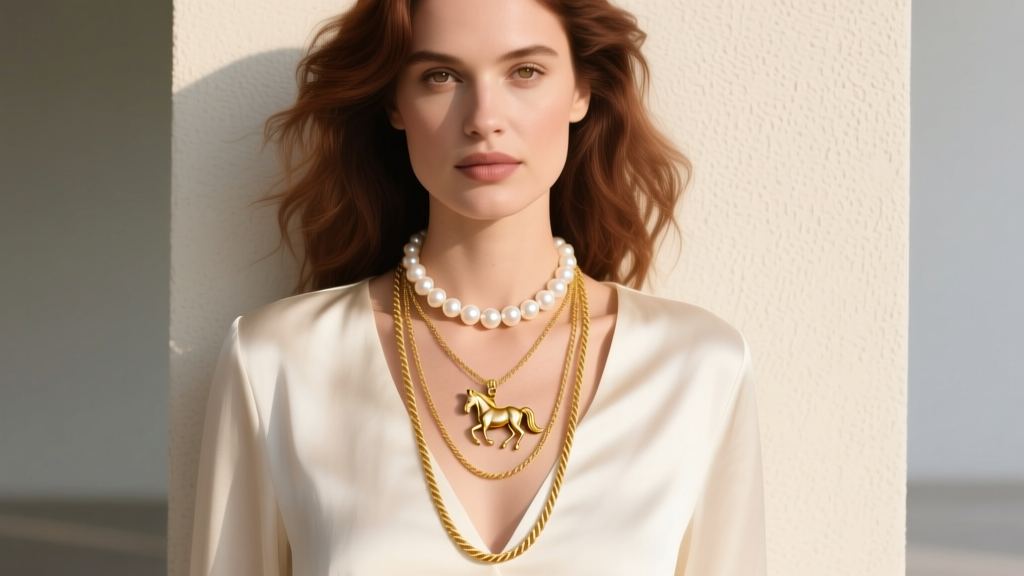
The horse charm necklace excels as the focal point of a curated stack. To avoid the dreaded "tangle knot," you must adhere to strict length intervals and varied chain textures.
- The 16-Inch Anchor: Start with a 16-inch choker or collar. A simple 2mm freshwater pearl strand or a sleek, flat 14k gold herringbone chain provides a clean baseline that sits above the collarbone.
- The 18-Inch Focal Point: This is where your horse charm necklace lives. An 18-inch length allows the pendant to rest perfectly in the suprasternal notch (the hollow of the throat), drawing the eye centrally.
- The 20-Inch or 22-Inch Counterweight: Finish the stack with a longer, heavier chain devoid of charms. A 20-inch 2.5mm rope chain or a 22-inch oxidized silver paperclip chain adds depth and prevents the layers from clustering together.
Investment Guide: Pricing Tiers in 2026
Navigating the market requires an understanding of what drives the cost of a horse charm necklace beyond mere brand markup.
Entry-Level ($60 - $150)
At this tier, expect 925 sterling silver with basic sand-cast detailing. The manes and facial features may lack crisp definition, and the chains are often lightweight (under 1.0mm) cable links. These are excellent for occasional wear or trend-testing but require frequent polishing.
Mid-Tier Artisan ($300 - $800)
This is the sweet spot for verified quality. Pieces in this range feature solid 14k gold or heavy 3-micron vermeil. Charms are often die-struck or 3D-printed in wax and cast, resulting in razor-sharp details on the horse's bridle and musculature. Brands in this tier frequently incorporate vitreous enamel or pavé diamond accents (typically VS clarity, G-H color, 0.05 total carat weight).
Heritage & Fine Jewelry ($1,500+)
Luxury houses and bespoke jewelers craft horse charms in 18k gold or platinum. These pieces feature hand-engraved manes, micro-pavé diamond settings, and kinetic joints. They are designed as multi-generational heirlooms and often come with certified gemological reports for any integrated stones.
Final Thoughts on the Equestrian Anchor
The horse charm necklace in 2026 is a testament to the enduring appeal of nature-inspired motifs, refined through a lens of modern minimalism and structural integrity. By prioritizing correct chain gauges, secure jump rings, and high-quality metallurgical bases, you ensure that this symbolic piece remains a staple of your jewelry rotation for decades. Whether styled alone against a crisp poplin shirt or layered into a complex, mixed-metal stack, the equestrian pendant bridges the gap between heritage elegance and contemporary edge.


