How to Get Knot Out of Necklace: Material-Specific Untangling Guide
Learn how to get knot out of a necklace based on its material. Discover expert untangling techniques for gold, silver, platinum, and cord chains.

The Physics of Necklace Knots: Why Material Matters
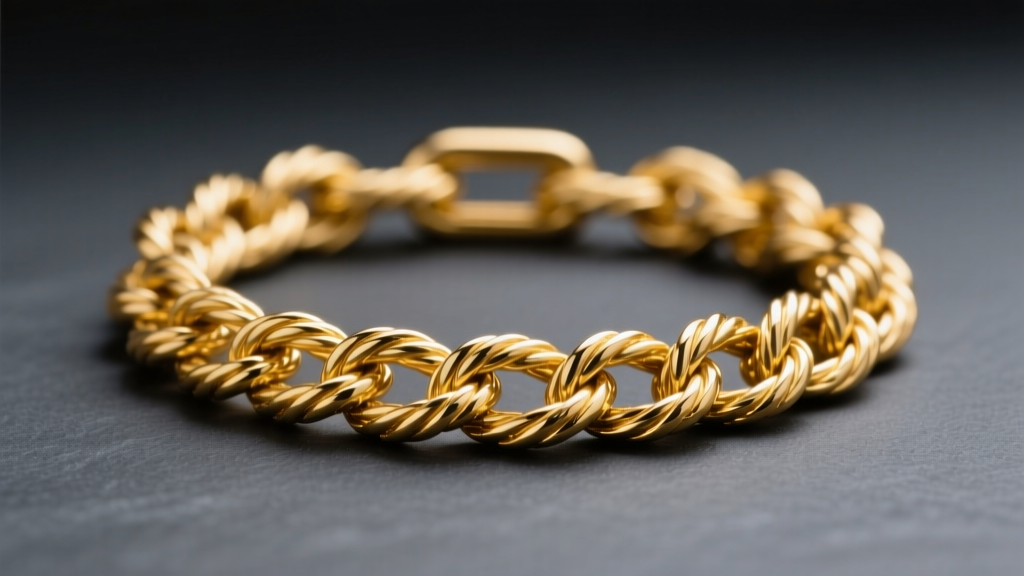
Learning how to get knot out of necklace chains requires more than just patience and a steady hand; it demands a fundamental understanding of material science. A knot is essentially a localized concentration of mechanical stress and friction. The way a necklace tangles, tightens, and ultimately yields to untangling is dictated by its Vickers hardness (HV), tensile strength, surface friction coefficient, and link geometry. A delicate 24-karat gold cable chain behaves entirely differently under stress than a woven stainless steel rope chain or a braided silk cord.
When you pull on a tangled chain, you are fighting the coefficient of friction between the overlapping links. In precious metals, microscopic surface imperfections and environmental tarnish act as abrasives, locking the links together. According to the Jewelers of America, improper pulling can lead to work-hardening, a metallurgical phenomenon where the metal becomes brittle and snaps under tension. To successfully extract a knot, you must alter the friction environment based on the specific material you are handling.
Material Comparison: Knot Susceptibility & Friction Profiles
Before applying any lubricant or tool, identify your necklace material. The table below outlines the physical properties that dictate how severely a material will knot and the optimal extraction strategy.
| Material | Vickers Hardness (HV) | Surface Friction | Knot Severity Risk | Best Lubricant |
|---|---|---|---|---|
| 24k Gold | ~25 HV | High (Soft/Grippy) | Extreme (Binds tightly) | Dry Talc Powder |
| 14k/18k Gold | 120-150 HV | Moderate | High | Mineral Oil |
| 925 Sterling Silver | 60-70 HV | Variable (Tarnish) | Moderate-High | Oil + Silver Polish |
| Platinum (950) | 110-130 HV | Low (Dense/Smooth) | Moderate | Graphite Powder |
| Silk/Cotton Cord | N/A (Fibrous) | Very High (Fiber lock) | Extreme | Cornstarch Paste |
| Stainless Steel | 200+ HV | Low | Low (Links slide) | WD-40 / Silicone |
Precious Metals: Gold, Silver, and Platinum Extraction
Gold Alloys (14k, 18k, and 24k)
Gold is inherently soft. Pure 24k gold has a Mohs hardness of roughly 2.5, making it highly susceptible to deep scratching if you use steel tools for untangling. 14k and 18k gold are alloyed with copper, zinc, or silver, increasing their yield strength but making them prone to work-hardening if bent repeatedly. To get a knot out of a gold necklace, lay the chain on a flat, non-slip surface. Generously apply baby powder (talc) or cornstarch. Talc has a Mohs hardness of 1, meaning it will not scratch the gold while effectively reducing the static and surface friction between the links. Use a brass beading awl or a plastic dental pick to gently tease the center link of the knot outward. Never pull the ends of the chain; this only tightens the topological loop.
925 Sterling Silver and the Tarnish Factor
Silver presents a unique challenge: silver sulfide (tarnish). Tarnish creates a microscopically rough surface that drastically increases friction. If your silver chain is heavily tarnished, dry untangling will likely result in a broken link. First, clean the localized knot area with a drop of mild dish soap and warm water to remove surface oils. Then, apply a drop of high-quality mineral oil. The oil penetrates the micro-crevices of the tarnish, acting as a hydrodynamic lubricant. According to the Gemological Institute of America (GIA), you must be cautious if the silver necklace features porous gemstones like turquoise or opals, as mineral oil can permanently stain these gems. In such cases, isolate the knot away from the stone before applying any wet lubricants.
Alternative Materials: Cords, Silk, and Leather
Silk and Cotton Cords
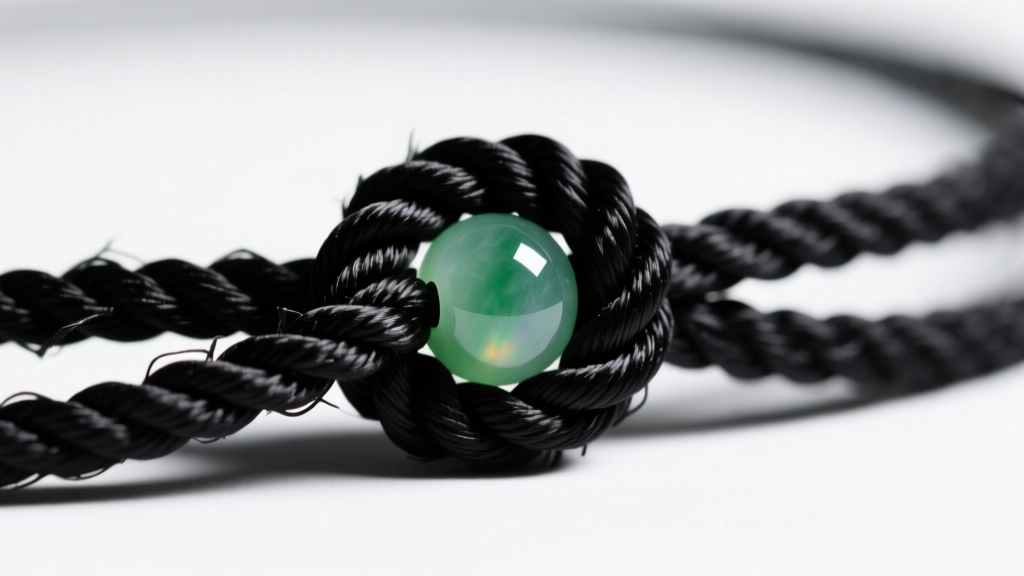
Fibrous materials do not rely on metallic friction; they rely on capillary action and fiber interlocking. When a silk cord knots, the individual microscopic fibers fray and bind together like Velcro. Applying oil to silk will ruin the cord, leaving a permanent dark stain and degrading the protein structure of the silk over time. Instead, create a thick paste using cornstarch and a few drops of water. Work this paste into the knot with your fingertips. The cornstarch acts as a microscopic ball bearing, coating the fibers and allowing them to slide past one another without fraying further. Once untangled, wipe the cord with a slightly damp cloth and let it air dry completely.
Leather and Suede
Leather necklaces, particularly round braided leather, suffer from high surface drag. Leather is also highly sensitive to moisture and chemicals. Never use water, oil, or talcum powder on leather, as these will strip the hide's natural tanning oils or leave permanent white residues in the braiding crevices. The best method for leather is thermal manipulation. Use a hairdryer on a low, warm setting to gently heat the knotted area for 15-20 seconds. The heat makes the leather more pliable and slightly expands the material, reducing the compression force of the knot. Massage the knot gently with your thumbs until it loosens.
Step-by-Step Triage: The 4-Pin Extraction Method
For severe, multi-layered knots in fine metal chains (like box or snake chains), professional jewelers utilize a multi-point stabilization technique. This prevents the kinetic energy of your pulling from transferring into adjacent links.
- Step 1: Isolate and Stabilize. Place the knot on a hard, flat surface. Use two sewing pins to pin the outer edges of the chain to a corkboard or foam mat, keeping the knot suspended but immobilized.
- Step 2: Lubricate. Apply your material-appropriate lubricant (talc for soft gold, oil for silver/steel) directly to the center mass of the knot.
- Step 3: Identify the 'Master Link'. Using a 10x jeweler's loupe, locate the single link that is passing through the most other links. This is the structural keystone of the knot.
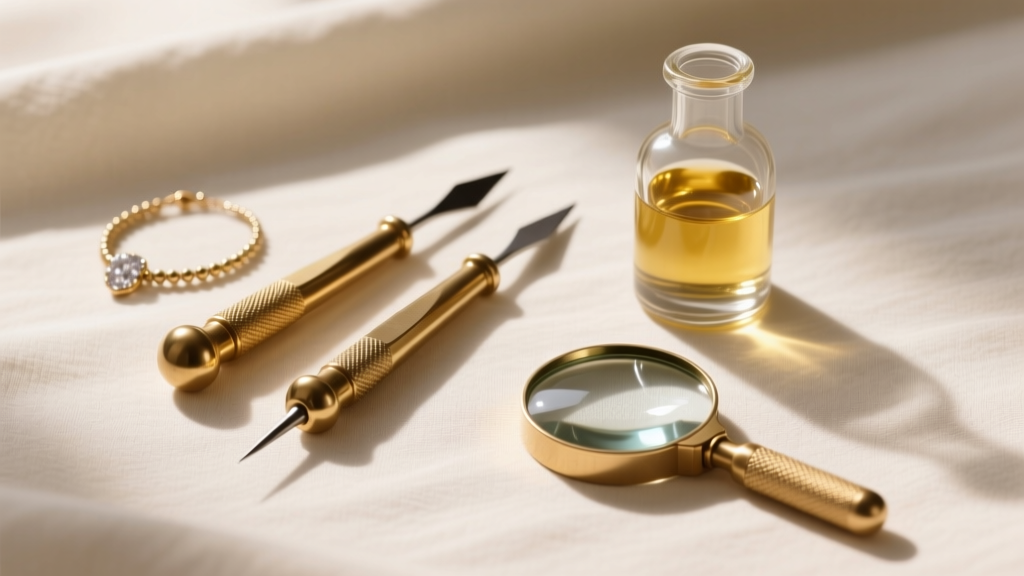
- Step 4: Extract, Don't Pull. Insert two brass awls into the master link from opposite sides. Gently twist the awls in opposing directions to pry the link open microscopically, allowing the surrounding links to slip out.
Tool Selection: Avoiding Micro-Abrasions
The tools you use are just as critical as the lubricants. A common mistake is using standard steel sewing needles to untangle gold or silver chains. Steel has a Mohs hardness of roughly 5.5. When you scrape a steel needle against 14k gold (Mohs ~3.5), you are actively gouging the metal, creating micro-abrasions that will catch on clothing and accelerate future tarnishing. Always invest in brass or copper-tipped beading awls. Brass is softer than most precious jewelry alloys, ensuring that the tool will deform before the necklace does. For high-end platinum or palladium chains, titanium-tipped tools offer the perfect balance of rigidity and non-marring surface contact.
Preventative Storage Solutions by Material Grade
Understanding how to get knot out of necklace chains is secondary to preventing the topology from forming in the first place. Knots occur when a chain's ends find their way through the loops of the body, a process accelerated by kinetic movement in a jewelry box.
Pro-Tip: The 'Straw Method' is highly effective for fine cable and box chains. Thread one end of the necklace through a plastic drinking straw and clasp it. The rigid straw prevents the chain from curling back on itself, making topological knotting physically impossible during storage or travel.
For heavier chains, such as Cuban links or thick rope chains, hanging storage is mandatory. The gravitational pull keeps the links aligned and under slight tension, preventing the slack required for a knot to form. Silk and leather cords should be stored unclasped, laid perfectly flat in a lined drawer, as hanging them can stretch the fibers over time, altering their structural integrity.
When to Seek Professional Jewelry Repair
There is a definitive line between a stubborn knot and structural failure. If you are dealing with a hollow-core chain (like many lightweight 14k gold tubular ropes), the metal walls are often less than 0.2mm thick. Attempting to force a knot out with tools will inevitably crush the hollow links, causing irreversible kinking. Similarly, if a platinum or white gold chain has been pulled so tight that the links have fused via cold welding (a rare but possible phenomenon under extreme localized pressure), chemical solvents or ultrasonic jewelry cleaners used by professionals are required. Recognizing the physical limits of your jewelry's material is the hallmark of true preservation.


