Alexander The Great Coin Necklace: 2026 Material Guide
Discover the best metals for your Alexander the Great coin necklace. Compare bronze, silver, and gold settings for durability, pricing, and skin safety.

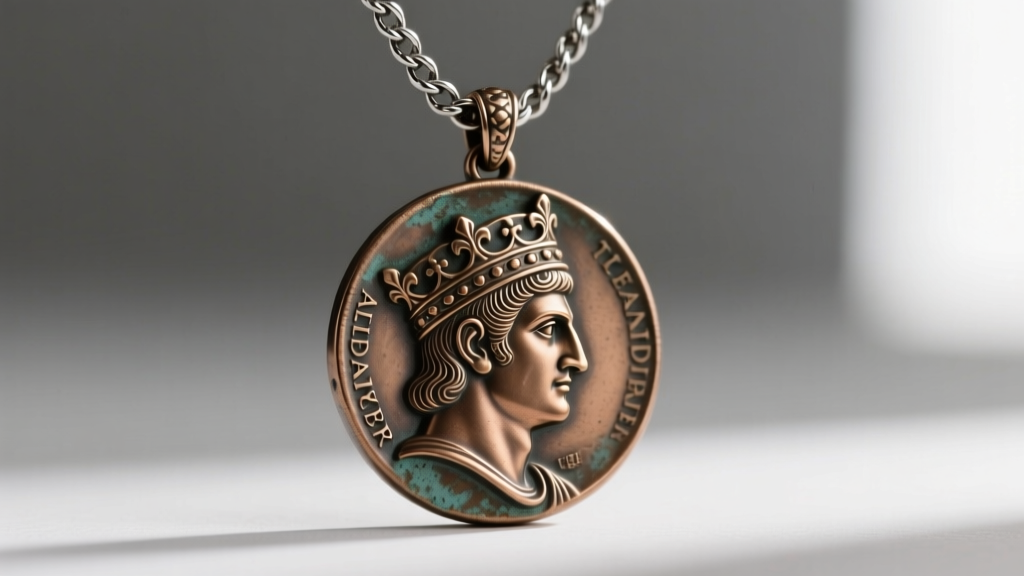
The Allure of the Alexander The Great Coin Necklace
The Alexander the Great coin necklace remains a commanding staple in historical and neoclassical jewelry. Whether depicting the iconic Ammon horn profile or the Heracles lion-skin motif, these pendants bridge ancient Macedonian heritage with modern metallurgy. Because authentic Hellenistic silver tetradrachms are exceptionally rare, fragile, and command tens of thousands of dollars at auction, setting a genuine ancient coin destroys its numismatic premium and risks structural failure. Consequently, over 99% of the jewelry market consists of meticulously crafted lost-wax cast replicas.
In 2026, the true differentiator in historical coin jewelry is not the visual design, but the metallurgical integrity of the replica and its housing. Choosing the right metal grade dictates the pendant's longevity, its interaction with your skin's chemistry, and its resistance to environmental degradation. This guide dissects the material properties of modern Alexander coin replicas, providing a definitive framework for collectors and daily wearers alike.
Core Coin Alloys: Reproduction Metallurgy
The method and material used to cast the replica coin fundamentally alter its weight, detail resolution, and aging process. Jewelers typically rely on three primary base metals for the coin face itself.
Cast Bronze and the Patina Process
High-quality replicas are most frequently cast in architectural bronze (an alloy of roughly 88% copper and 12% tin). Bronze is favored for its low melting point and exceptional fluidity, allowing it to capture the micro-details of the original coin die, including the intricate striations in Alexander’s hair and the subtle wear marks of an aged edge. Over time, bronze reacts with oxygen and moisture to form a cuprite patina. While some collectors cherish this darkening effect as it mimics archaeological aging, it requires periodic sealing with micro-crystalline wax if you prefer the original bright-cast finish.
Brass and the Contact Dermatitis Risk
Mass-market, budget-friendly Alexander coin pendants are often stamped or cast from brass (a copper-zinc alloy). While brass offers a bright, gold-like appearance straight from the mold, it is highly reactive. When exposed to the lactic acid and salts in human sweat (which typically has a pH between 4.5 and 6.0), the copper in the brass oxidizes rapidly, forming copper chloride. This results in the notorious "green skin" effect. According to research on metal allergies in jewelry by the Gemological Institute of America (GIA), prolonged exposure to reactive copper alloys can also trigger contact dermatitis in sensitive individuals. For a piece worn against the sternum, where sweat accumulates, solid brass is generally discouraged for daily wear.
Silver: 925 Sterling vs. 960 Argentium
For a premium, skin-safe alternative, jewelers cast the coins in silver. Standard 925 sterling silver (92.5% silver, 7.5% copper) provides excellent weight and a brilliant luster but is prone to sulfur-induced tarnishing. In recent years, top-tier artisans have shifted to Argentium silver (96% silver, with germanium replacing some copper). The addition of germanium creates a transparent, self-healing oxide layer that drastically slows tarnish formation, keeping the intricate facial features of the Alexander portrait sharp and bright without constant polishing.
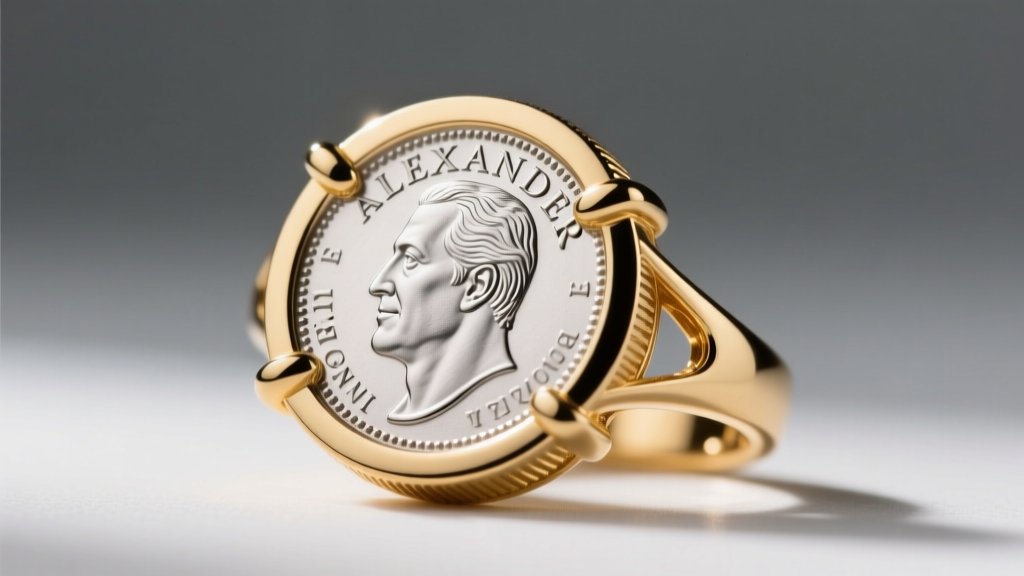
Setting and Chain Metallurgy: Structural Integrity
A common failure point in historical coin jewelry is not the coin itself, but the hardware tasked with holding it. A solid bronze or silver replica measuring 25mm to 30mm in diameter typically weighs between 14 and 22 grams. This concentrated mass creates a pendulum effect that places immense shear stress on the bail, the bezel, and the chain links.
The Bezel and Bail Mechanics
The coin must be secured in a bezel setting. Avoid glued-in settings, as temperature fluctuations and skin oils will degrade the adhesive within months. A properly engineered bezel uses a burnished metal lip rolled tightly over the coin's edge. The bail (the loop connecting the bezel to the chain) should be cast as a single, continuous piece with the bezel frame, or soldered using high-temperature hard silver solder. Laser-welded bails on heavy pendants frequently snap under the kinetic stress of daily movement.
Chain Gauge and Failure Modes
Pairing a 20-gram Alexander coin pendant with a delicate 1.0mm chain is a structural error. The repetitive friction will act like a saw against the inner links, eventually causing them to thin and snap. For pendants in the 15g–25g range, you must select a chain with a minimum wire thickness of 1.8mm (approximately 14 gauge). Robust styles like the Byzantine, wheat, or thick rope chain distribute the kinetic load evenly. Furthermore, ensure the clasp is a heavy-duty lobster claw with a reinforced jump ring; standard spring-ring clasps will inevitably deform and fail under the pendant's weight.
Gold Finishes: Vermeil vs. Standard Plating
If you desire the aesthetic of a gold Alexander the Great coin necklace without the exorbitant cost of solid 14k or 18k gold casting, you must understand the hierarchy of gold finishes. Standard "gold-plated" jewelry features a microscopic layer of gold (often less than 0.5 microns) applied over a base metal like brass. This layer will wear through to the reactive base metal within weeks of daily friction.
Instead, seek out Gold Vermeil. The Federal Trade Commission (FTC) Jewelry Guides strictly define vermeil as a sterling silver base coated with a minimum of 2.5 microns of 10k, 14k, or 18k gold. This thickness ensures the gold layer can withstand years of wear before requiring re-dipping. When purchasing a vermeil Alexander coin, verify that both the coin face and the bezel housing meet this 2.5-micron threshold, as some manufacturers cut costs by only plating the housing.
2026 Material Comparison Matrix
The following table breaks down the practical realities of the most common material combinations used in modern Alexander the Great coin necklaces, reflecting current market pricing and metallurgical performance.
| Material Combination | Composition Details | Tarnish / Patina Rate | Skin Reaction Risk | Approx. Price Range (2026) |
|---|---|---|---|---|
| Solid Cast Bronze | 88% Cu, 12% Sn | High (Develops dark patina) | Moderate (Green skin possible) | $60 - $120 |
| 925 Sterling Silver | 92.5% Ag, 7.5% Cu | Moderate (Sulfur tarnish) | Very Low | $140 - $250 |
| 960 Argentium Silver | 96% Ag, Germanium | Very Low (Highly resistant) | None | $180 - $300 |
| 14k Gold Vermeil | 925 Silver base, 2.5μ+ 14k Au | Low (Until gold wears off) | None (Unless worn through) | $150 - $280 |
| Solid 14k Yellow Gold | 58.5% Au, Alloyed Cu/Ag | None | None | $1,200 - $2,500+ |
Patina, Tarnish, and Maintenance Protocols
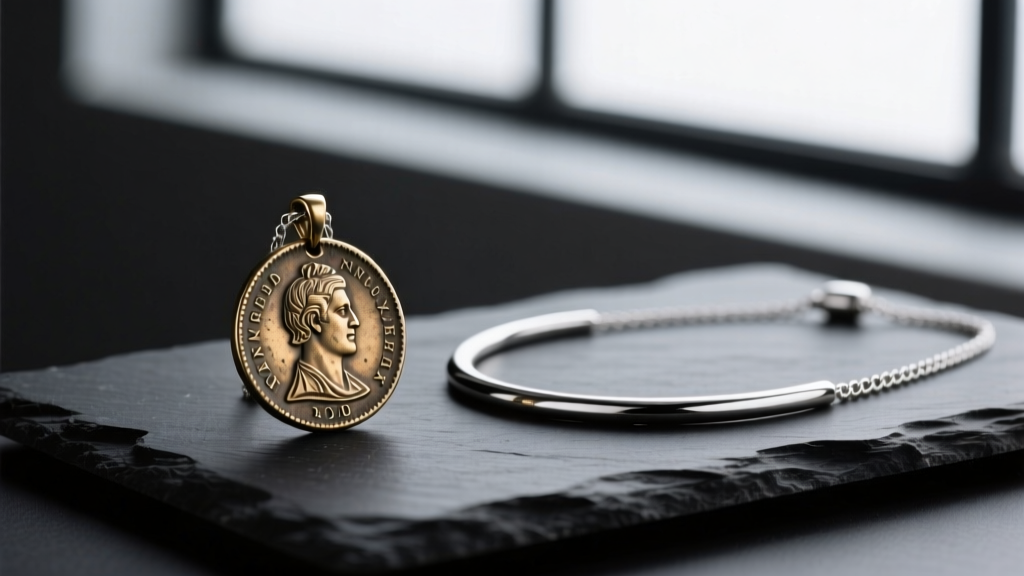
Maintaining an Alexander the Great coin necklace requires a nuanced approach, particularly because aggressive cleaning can ruin the "antique" aesthetic that makes the piece desirable. Many bronze and silver replicas are intentionally treated with liver of sulfur at the factory to darken the recessed areas of the portrait, creating high contrast and depth.
What to Avoid: Never use commercial silver dips or ultrasonic cleaners. Chemical dips will strip the intentional oxidation from the recesses, leaving the coin looking flat and artificially shiny. Ultrasonic vibrations can also micro-fracture the solder joints connecting the bail to the bezel frame.
Proper Cleaning Protocol: For daily maintenance, use a soft, untreated microfiber cloth to gently wipe away skin oils and environmental dust. If the coin requires a deeper clean, use a drop of pH-neutral dish soap and lukewarm water, gently agitating the surface with a soft-bristled baby toothbrush. Dry immediately with a lint-free towel. For bronze coins that have developed an uneven or splotchy patina, a light application of Renaissance Wax (a micro-crystalline wax used by museum conservators) will seal the metal, halt further oxidation, and provide a soft, historically accurate luster.
Final Verdict: Choosing Your Metal Grade
When investing in an Alexander the Great coin necklace, your choice of material should align with your wearing habits. If you want a rugged, historically evocative piece that you can wear occasionally and allow to age naturally, a solid bronze casting on a thick oxidized silver chain is an excellent, budget-friendly choice. However, for daily wearers who demand structural longevity, skin safety, and minimal maintenance, a 960 Argentium silver replica housed in a heavy-gauge bezel is the undisputed pinnacle of modern historical jewelry engineering. By prioritizing metallurgical transparency and structural gauge sizes over mere aesthetics, you ensure your tribute to the Macedonian empire endures for decades.


