Red Heart Choker Necklace: A Technical Guide to Materials & Fit
Discover the technical anatomy of a red heart choker necklace. We analyze enamel grades, chain gauges, clasp mechanics, and skin-safe alloys.

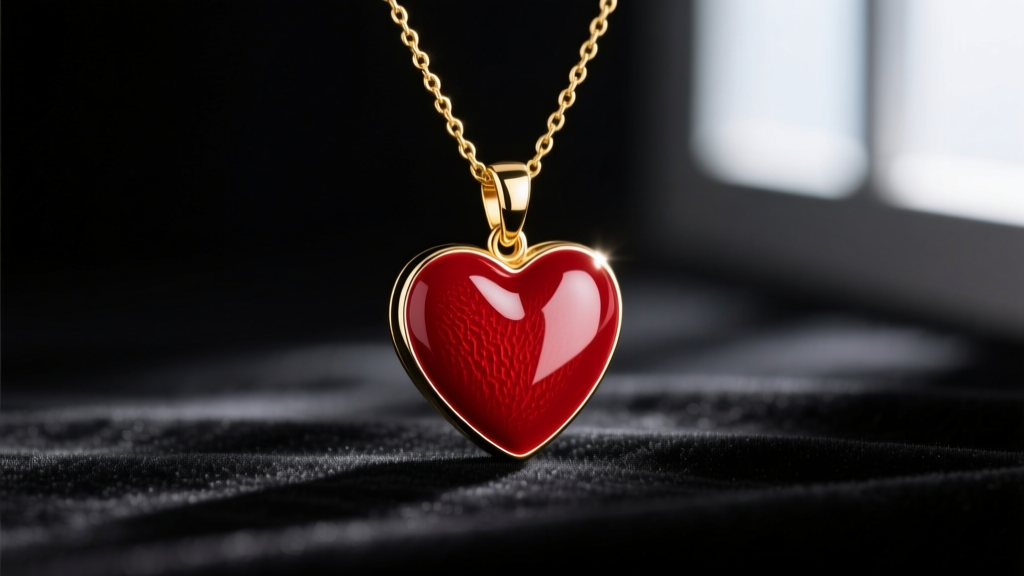
The Anatomy of a Red Heart Choker Necklace
The red heart choker necklace is a ubiquitous staple in both fine jewelry and fast-fashion markets. However, the structural integrity, material longevity, and dermatological safety of these pieces vary wildly depending on their manufacturing origin. As an industry standard, a choker sits tightly against the neck (typically 14 to 16 inches), meaning the chain and clasp hardware are subjected to higher tensile stress and continuous friction against the skin compared to longer opera or matinee lengths. This expert deep dive dissects the material science, gemological specifications, and mechanical failure points of the red heart choker necklace, providing a definitive framework for evaluating quality in 2026.
The Material Science of the Red Heart Pendant
The visual centerpiece of this jewelry style—the red heart—can be rendered through three primary material categories: vitreous enamel, cold enamel (resin), or faceted gemstones. Understanding the metallurgical and chemical differences between these materials is critical for assessing long-term durability.
Vitreous Enamel vs. Cold Enamel
High-end red heart pendants utilize vitreous enamel, a technique where finely ground glass powder is fused to a metal substrate (usually sterling silver or gold) at extreme temperatures ranging from 1,400°F to 1,500°F. The result is a scratch-resistant, UV-stable surface with a Mohs hardness of 5 to 6. In luxury pieces, jewelers employ the guilloché technique, where the metal base is engine-turned with geometric patterns before applying translucent red glass, creating a mesmerizing depth of color that never fades.
Conversely, mass-market pieces rely on cold enamel, which is essentially a two-part epoxy resin. While cold enamel allows for vibrant, opaque reds and cheaper production, it possesses a Mohs hardness of only 2 to 3. The primary failure mode of cold enamel is UV degradation; prolonged sun exposure causes the resin to yellow and become brittle. Furthermore, because resin and metal have different coefficients of thermal expansion, cold enamel is prone to delamination and cracking when exposed to rapid temperature changes.
Gemological Alternatives: Garnet, Ruby, and Spinel
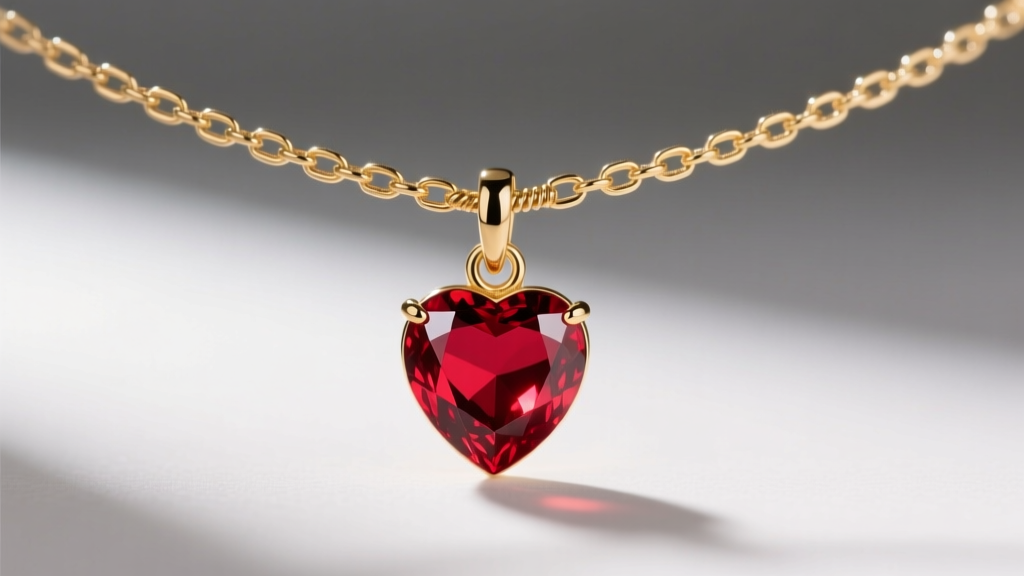
When the red heart is faceted rather than enameled, the gemstone selection dictates both the price point and the structural resilience of the pendant. According to the Gemological Institute of America (GIA), the most common natural red gemstones used in heart-cut pendants are Almandine Garnet and Red Spinel.
- Almandine Garnet: With a Mohs hardness of 7 to 7.5 and a refractive index (RI) of 1.76-1.82, garnet offers excellent durability for daily wear. However, heart-cut garnets are prone to chipping at the sharp inferior point if the prong setting is poorly engineered.
- Lab-Created Ruby: Modern 2026 jewelry heavily features flux-grown or Czochralski-pulled lab rubies. With a Mohs hardness of 9 and an RI of 1.76-1.77, lab rubies offer superior scratch resistance and optical brilliance compared to garnet, making them the optimal choice for a high-impact red heart pendant.
Chain Gauge and Tensile Strength in Chokers
Because a choker fits snugly around the neck, it is highly susceptible to snagging on clothing, hair, or seatbelts. This makes the chain's gauge (thickness) and link architecture the most critical safety factors in the necklace's design.
Evaluating Chain Architecture
For a red heart choker necklace, the chain must balance delicate aesthetics with mechanical resilience. The industry standard for fine jewelry chokers ranges from 14 to 16 inches. At this length, a sudden snag can generate up to 10 pounds of shear force on the weakest link.
| Chain Style | Typical Gauge | Tensile Break Point | Snag Resistance |
|---|---|---|---|
| Cable Chain | 0.8mm - 1.0mm | 3 - 5 lbs | Low (Links catch easily) |
| Box Chain | 1.0mm - 1.2mm | 7 - 10 lbs | High (Smooth surface) |
| Rope Chain | 1.2mm - 1.5mm | 8 - 12 lbs | Medium (Textured surface) |
Expert jewelers recommend a 1.1mm or 1.2mm box chain for chokers. The interlocking square links distribute tensile stress evenly and lay flat against the clavicle, minimizing the risk of the chain catching on external objects. Cable chains under 1.0mm should be strictly avoided for choker lengths unless the pendant is exceptionally lightweight (under 2 grams).
Clasp Mechanics and Soldered Jump Rings
The clasp assembly is the most frequent point of catastrophic failure in necklace design. For a secure red heart choker, the hardware must meet strict mechanical tolerances.
Spring Ring vs. Lobster Clasp: Spring ring clasps smaller than 5mm are notorious for internal spring fatigue, leading to the clasp failing to close completely. A 6mm or 7mm lobster clasp is vastly superior, offering a heavier internal spring and a wider lever for one-handed operation.
The Jump Ring Imperative: The jump ring connecting the clasp to the chain must be soldered (fused shut with a laser or torch). Unsoldered jump rings will inevitably gap open under the lateral stress of a snug choker, resulting in the loss of the necklace. When inspecting a piece, use a jeweler's loupe to ensure the seam on the jump ring is completely seamless.
Dermatological Safety and Alloy Composition
Chokers maintain constant contact with the sensitive skin of the anterior neck, an area highly susceptible to contact dermatitis and sweat-induced corrosion. Evaluating the base metal and plating thickness is non-negotiable for daily-wear jewelry.
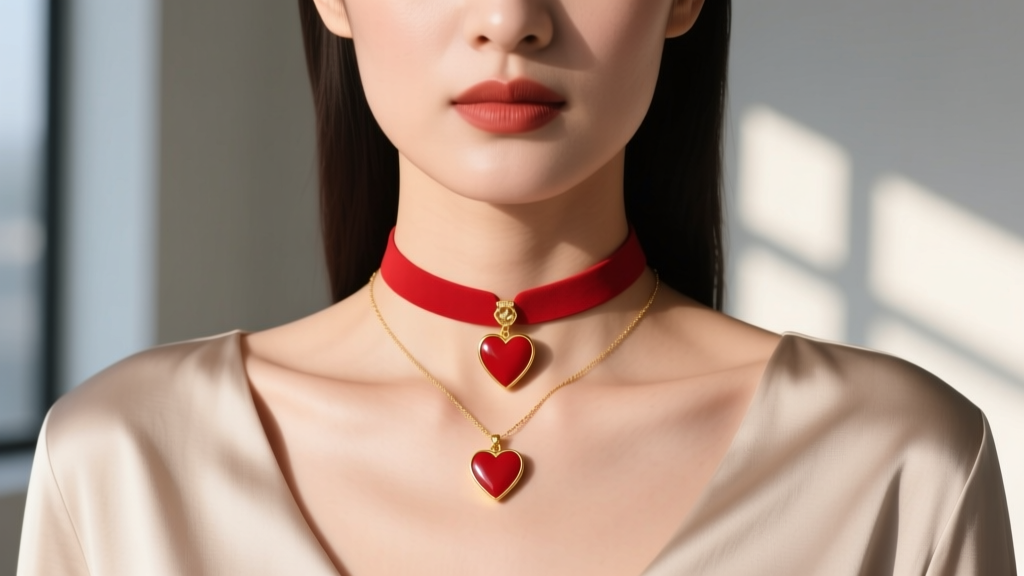
Nickel Allergies and REACH Compliance
Nickel is the most common contact allergen in jewelry, frequently used as a hardening agent in white gold and as a base layer beneath cheap gold plating. The American Contact Dermatitis Society consistently identifies nickel as a primary culprit in jewelry-induced eczema. In the European Union, the REACH directive strictly limits nickel release from jewelry to 0.5 micrograms per square centimeter per week.
To ensure dermatological safety, buyers should prioritize the following material specifications:
Expert Rule of Thumb: Avoid "gold-plated brass" or "gold-plated zinc alloy" for chokers. The constant friction and exposure to the skin's acidic mantle will degrade the thin plating within months, exposing the reactive base metal. Always opt for solid 14k gold, platinum, or medical-grade titanium (ASTM F136).
For those seeking the warm aesthetic of gold without the high carat price, vermeil is the acceptable middle ground. By definition, vermeil consists of a thick layer of gold (minimum 2.5 microns) plated over a solid sterling silver base. Because silver is generally hypoallergenic, even if the gold layer eventually wears through at the clasp friction points, the underlying silver will not trigger severe contact dermatitis. The World Gold Council provides extensive documentation on gold alloy standards, confirming that 14k and 18k solid gold alloys mixed with copper and silver remain the most biocompatible options for continuous skin contact.
Expert Verdict: Sourcing the Perfect Piece
A high-quality red heart choker necklace is an exercise in precision engineering disguised as romantic aesthetics. When evaluating a piece, look past the immediate visual appeal of the red heart and scrutinize the hardware. Demand a vitreous enamel or lab-ruby pendant over cold resin. Insist on a 1.2mm box chain for optimal tensile strength, and verify that all jump rings are laser-soldered. By applying these technical parameters, you ensure that the necklace will not only fit perfectly against the collarbone but will also withstand the mechanical and environmental stresses of daily wear for decades to come.


