How Do Mood Necklaces Work? The Ultimate Gifting Guide
Discover how do mood necklaces work, the science of thermochromic crystals, and our expert gift guide for choosing quality pendants.

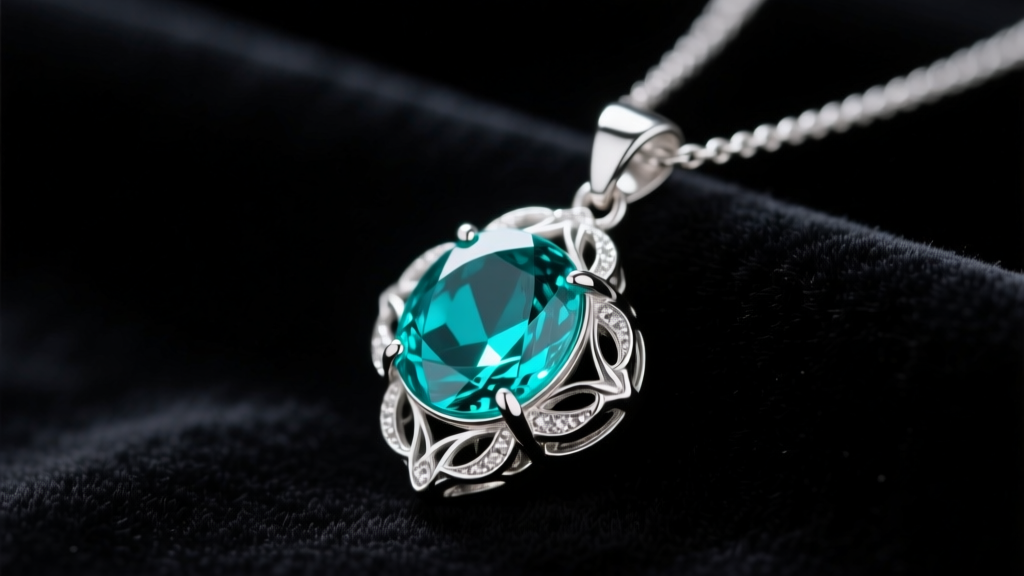
When shopping for a nostalgic, playful, or unique gift, you might find yourself asking: how do mood necklaces work, and are they actually a good present? Once a staple of 1970s and 1990s mall culture, mood jewelry has experienced a massive resurgence, driven by Y2K fashion trends and a renewed interest in wellness-centric accessories. However, not all mood pendants are created equal. While some are cheap novelty items that turn the wearer's skin green, others are beautifully crafted pieces of functional art featuring genuine sterling silver and sealed quartz cabochons.
This comprehensive guide breaks down the exact science behind thermochromic jewelry, outlines the material grades you must look for to ensure longevity, and provides a curated occasion-matching framework to help you select the perfect mood necklace gift in 2026.
How Do Mood Necklaces Work? The Science of Thermochromism
The color-changing magic of a mood necklace does not come from telepathy or brainwave reading; it is rooted in materials science. The 'stone' in a mood pendant contains a layer of thermochromic liquid crystals (TLCs). Specifically, these are cholesteric liquid crystals, which possess a helical molecular structure that twists and untwists in response to minute fluctuations in temperature.
According to the American Chemical Society, liquid crystals exist in a state between solid and liquid. When the temperature of the pendant changes, the pitch of the crystal's helix alters, causing it to reflect different wavelengths of visible light. Because the pendant rests against the skin (usually over the sternum, where peripheral blood flow is highly responsive to stress and ambient temperature), it acts as a rudimentary bio-thermal sensor.
The Temperature-to-Color Spectrum
While the cardboard backing of a cheap necklace might claim that 'black means stressed' and 'purple means passionate,' the reality is purely physiological. Vasodilation (blood vessels expanding) brings heat to the skin's surface, while vasoconstriction (blood vessels narrowing) cools it. Here is the actual thermal breakdown:
- Black / Brown (Below 72°F / 22°C): The crystals are tightly coiled. This indicates cold extremities, often caused by poor circulation, cold ambient weather, or the body's 'fight or flight' response drawing blood to the core.
- Blue / Green (72°F - 78°F / 22°C - 25°C): The baseline resting state. The wearer is calm, and peripheral blood flow is normal.
- Yellow / Orange (78°F - 84°F / 25°C - 28°C): Slight elevation in skin temperature, often due to physical activity, excitement, or a warm environment.
- Purple / Red (Above 84°F / 28°C): Maximum vasodilation. The skin is flushed and hot, which can correlate with intense emotion, physical exertion, or simply sitting in a heated room.
Material Grades: Avoiding the 'Green Skin' Effect
The most common failure mode of gifted mood necklaces is the dreaded green skin reaction. This occurs when the base metal of the pendant reacts with the wearer's sweat (which has an acidic pH of roughly 4.5 to 6.0). To ensure your gift is cherished rather than tossed in a drawer, you must pay attention to the metallurgy and the casing.
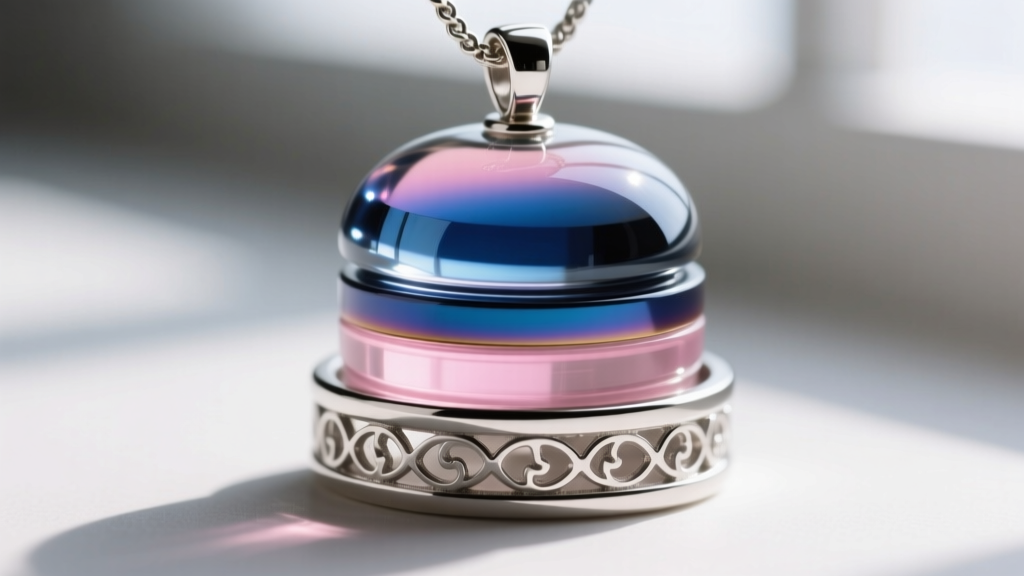
Base Metals: Brass vs. Sterling Silver vs. Surgical Steel
Novelty necklaces ($5 - $15) almost exclusively use brass (a copper and zinc alloy). When copper oxidizes against acidic sweat, it creates copper chloride, leaving a stubborn green ring on the chest. For a quality gift, look for 925 Sterling Silver (92.5% pure silver, 7.5% copper), which is vastly more stable and hypoallergenic. The Gemological Institute of America (GIA) notes that while sterling silver can tarnish over time due to sulfur exposure, it rarely causes the immediate green skin reaction associated with base metals. Alternatively, 316L Surgical Stainless Steel ($30 - $60) offers exceptional durability and is completely nickel-free, making it the ultimate choice for recipients with sensitive skin.
The Casing: Glass vs. Quartz vs. Plastic
Thermochromic liquid crystals are highly vulnerable to two things: moisture and UV radiation. If water breaches the casing, the crystals will permanently crystallize into a dead, opaque black. High-end mood pendants ($85 - $250) seal the TLC layer between a genuine quartz or glass cabochon and a metal backing using jeweler's epoxy. Avoid pendants that feel like lightweight plastic or porous resin, as these will degrade within weeks of daily wear.
The Occasion-Matching Gift Guide
Matching the necklace to the recipient's lifestyle and the occasion is critical. Use this matrix to select the right combination of chain gauge, pendant size, and material.
| Occasion / Recipient | Ideal Material & Casing | Chain Gauge & Length | Price Range |
|---|---|---|---|
| Gen Z / Y2K Trendsetter | 316L Steel, Iridescent Glass | 1.5mm Cable Chain, 16' Choker | $35 - $65 |
| Millennial Nostalgia | 925 Sterling Silver, Quartz Cabochon | 1.2mm Box Chain, 18' Princess | $75 - $120 |
| Wellness / Mindfulness | Gold-Vermeil over Silver, Teardrop Cut | 1.0mm Satellite Chain, 20' Matinee | $110 - $200 |
| Stocking Stuffer / Novelty | Plated Brass, Resin Coating | 0.8mm Rolo Chain, 18' Princess | $10 - $25 |
For the Nostalgic Millennial
Millennials who remember the original 90s mall craze will appreciate an elevated, mature take on the trend. Gift a heavy 925 sterling silver pendant featuring an oval-cut quartz stone. Pair it with an 18-inch princess-length box chain (1.2mm gauge) for a substantial feel that mimics fine jewelry rather than costume accessories.
For the Gen Z Trendsetter
Gen Z fashion heavily favors the Y2K aesthetic, which embraces playful, slightly edgy accessories. A surgical steel pendant with a bezel setting and a chunky 1.5mm cable chain worn at a 16-inch choker length perfectly captures this vibe. Look for pendants that feature iridescent or holographic backgrounds beneath the liquid crystal layer for maximum visual impact.
For the Wellness & Mindfulness Enthusiast
For the friend obsessed with somatic tracking, meditation, or biofeedback, a mood necklace serves as a physical grounding tool. Opt for a teardrop or lotus-shaped pendant in 14k gold vermeil over sterling silver. The 20-inch matinee length allows the pendant to rest directly over the heart chakra, making it a thoughtful, spiritually aligned gift.
Chain Lengths and Layering Techniques
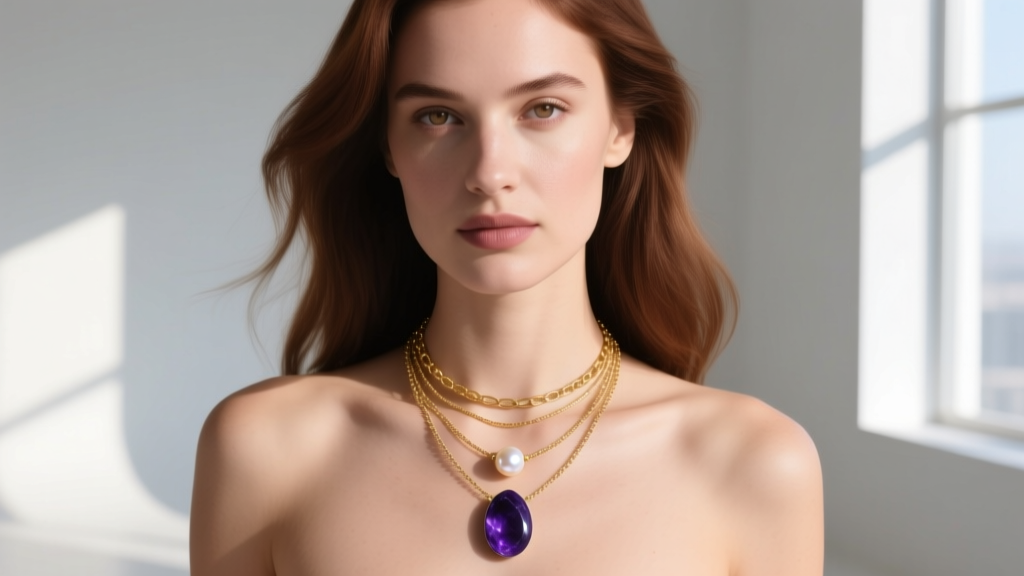
Mood pendants are typically statement pieces, ranging from 18mm to 25mm in diameter. To integrate them into a modern jewelry wardrobe, teach your recipient how to layer them effectively. The golden rule of necklace stacking is to maintain a minimum 2-inch gap between chains to prevent tangling and metal friction.
A highly effective stack involves pairing an 18-inch mood necklace with a 14-inch delicate satellite chain (featuring a tiny static gemstone like a freshwater pearl or moonstone) and a 22-inch lightweight rope chain. This creates a cascading 'Y' silhouette that draws the eye downward and allows the mood stone to remain the focal point without being obscured by heavy collars or turtlenecks.
Care, Maintenance, and Troubleshooting
Even the highest-quality thermochromic jewelry requires specific care to prevent the liquid crystals from degrading. When gifting a mood necklace, always include a small care card outlining these non-negotiable rules:
The 3 Rules of Mood Jewelry Care:
1. Never swim or shower with it. Chlorine, saltwater, and hot steam will compromise the epoxy seal, allowing moisture to destroy the crystal layer.
2. Apply lotions and perfumes first. Alcohol and essential oils can cloud the glass or quartz casing over time, dulling the color shift.
3. Avoid prolonged direct sunlight. UV radiation breaks down the molecular bonds of thermochromic pigments. If left on a sunny dashboard, the pendant will lose its ability to change color permanently.
Troubleshooting a 'Stuck' Pendant: If the necklace remains pitch black and refuses to change color when worn, it has likely suffered moisture ingress or extreme thermal shock (such as being left in a freezing car overnight). Unfortunately, once the liquid crystals are compromised, the thermochromic effect cannot be reversed, and the stone must be replaced by a jeweler.
Final Verdict: Are Mood Necklaces a Good Gift?
Understanding how do mood necklaces work transforms them from cheap novelty toys into fascinating pieces of wearable science. When you bypass the brass-and-plastic bargain bins and invest in a sealed quartz cabochon set in 925 sterling silver or 316L surgical steel, a mood necklace becomes a deeply personal, interactive, and highly stylish gift. Whether you are buying for a nostalgic friend, a trend-setting teen, or a mindfulness practitioner, a high-quality thermochromic pendant offers a unique blend of bio-feedback and beauty that standard gemstones simply cannot match.


