How Much Is a Pearl Necklace Worth? 2026 Value Guide
Discover how much a pearl necklace is worth. Explore pricing tiers, grading factors, and expert tips for buying Akoya, Tahitian, and Freshwater strands.

The Real Answer: Why Pearl Pricing Varies So Wildly
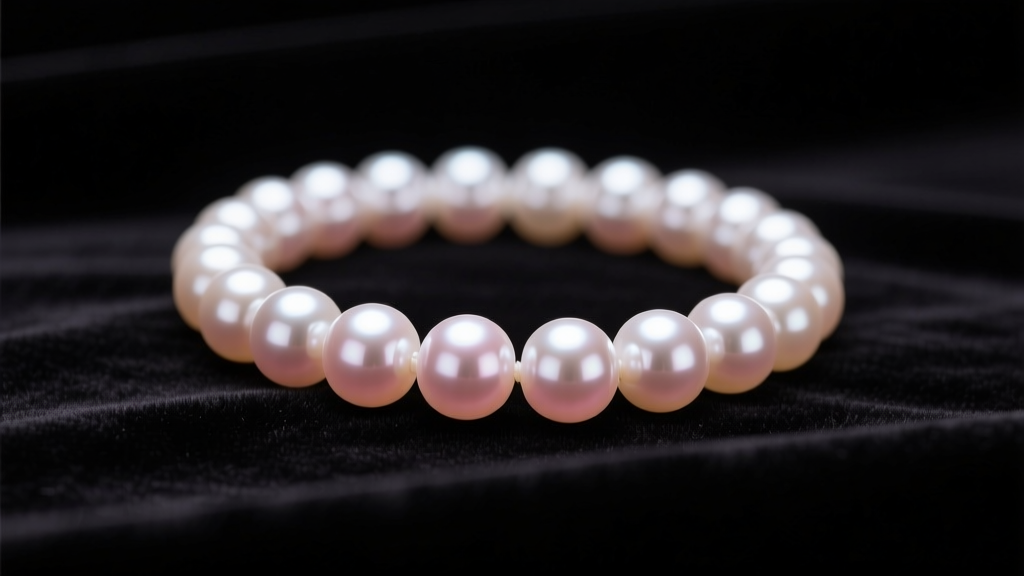
When shoppers ask, "how much is a pearl necklace worth," they are often met with a bewildering range of price tags. You can find a strand of pearls for $50 at a department store, while a seemingly identical strand at a high-end jeweler might command $15,000. Unlike diamonds, which are graded on the highly standardized 4Cs, pearls are organic gemstones born from living mollusks. Their value is dictated by a complex interplay of biology, cultivation time, and post-harvest processing.
In 2026, the pearl market has bifurcated sharply. On one end, mass-produced, heavily treated freshwater pearls flood the fast-fashion market. On the other, gem-grade, untreated saltwater pearls from Japan, French Polynesia, and Australia are seeing record auction prices due to declining mollusk populations and stricter environmental farming regulations. To determine the true worth of a pearl necklace, you must look far beyond the basic millimeter size and evaluate the structural integrity and optical performance of the nacre.
The 5 Pillars of Pearl Valuation (The "Luster First" Rule)
According to the Gemological Institute of America (GIA), pearl quality is assessed across several distinct value factors. However, expert buyers prioritize these factors in a very specific hierarchy.
1. Luster and Orient (The Dealbreaker)
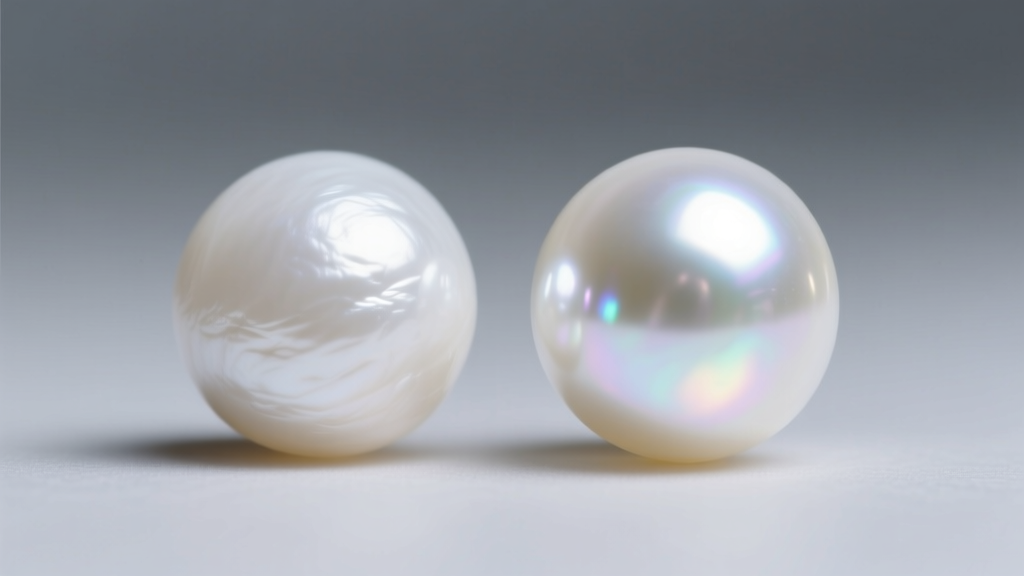
Luster is the sharpness and intensity of light reflecting off the pearl's surface. A high-quality pearl will reflect a crisp, distinct image of the light source, almost like a mirror. Poor luster appears chalky, dull, or milky. "Orient" refers to the iridescent play of colors shimmering just beneath the surface. A strand with excellent luster and strong orient will always be worth exponentially more than a larger, dull pearl.
2. Nacre Thickness (The Durability Metric)
This is the most critical factor for bead-nucleated pearls like Akoya. Nacre is the crystalline substance the oyster secretes around the shell bead nucleus. If an Akoya pearl is harvested too early, the nacre may be less than 0.3mm thick. These thin-nacre pearls will eventually peel, crack, or wear down to the bead underneath. For a pearl necklace to hold its value and last generations, demand a minimum nacre thickness of 0.4mm, with 0.6mm to 0.8mm being the ideal standard for fine jewelry.
3. Surface Quality (Blemishes)
Because pearls are organic, 100% flawless surfaces are exceptionally rare. Minor blemishes like tiny pits, bumps, or wrinkles are expected and do not severely impact value if the luster is outstanding. However, deep cracks, chalky spots, or missing nacre near the drill holes are structural flaws that drastically reduce a necklace's worth.
4. Shape and Symmetry
Perfectly round pearls command the highest premiums because they are the most difficult to cultivate and match. However, in 2026, symmetrical baroque shapes (like drops or ovals) and highly textured "keshi" pearls have surged in value among bespoke designers. Asymmetrical, heavily blemished baroques, however, remain low-value commercial goods.
5. Matching and Drilling
A necklace is only as valuable as its weakest pearl. Master stringers spend dozens of hours sorting thousands of pearls to create a strand where the size, color, overtone, and luster flow seamlessly from the center to the clasp. Poorly matched strands with visible color banding or drastic size jumps indicate commercial-grade sorting and lower the overall worth.
2026 Market Pricing Guide by Pearl Type
To answer "how much is a pearl necklace worth" accurately, you must identify the pearl type. Below is the current 2026 wholesale-to-retail pricing framework for an 18-inch princess-length strand.
| Pearl Type | Typical Size | Commercial Grade | Fine Grade | Gem / Investment Grade |
|---|---|---|---|---|
| Freshwater | 6mm - 12mm | $50 - $250 | $300 - $1,500 | $2,000 - $8,000+ (Edison) |
| Akoya (Japan) | 6mm - 9.5mm | $300 - $800 | $1,200 - $4,500 | $5,000 - $15,000+ (Hanadama) |
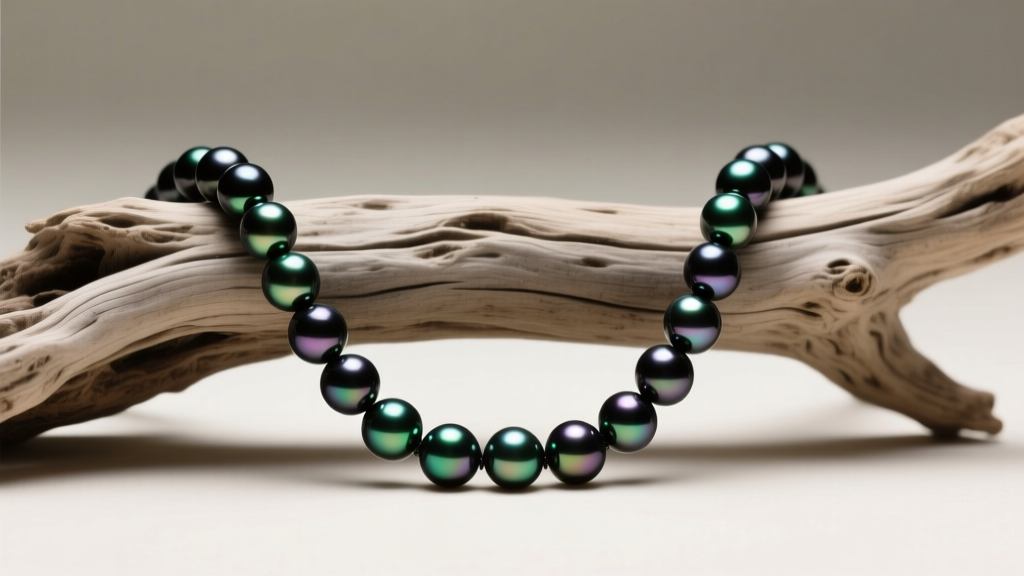
| Tahitian | 8mm - 14mm | $400 - $1,200 | $2,000 - $8,000 | $10,000 - $35,000+ |
| White South Sea | 9mm - 16mm | $800 - $2,500 | $4,000 - $15,000 | $20,000 - $100,000+ |
| Golden South Sea | 9mm - 15mm | $1,000 - $3,000 | $5,000 - $18,000 | $25,000 - $120,000+ |
Note: Prices reflect well-matched strands with good to excellent luster. Commercial grades often feature heavy blemishing, thin nacre, or obvious treatments.
Red Flags: How to Avoid Overpaying for Treated Pearls
The GIA Gem Encyclopedia notes that pearl treatments are common, but non-disclosed treatments are a major red flag that destroys resale value. When evaluating a necklace's worth, inspect the drill holes under a 10x jeweler's loupe.
- Maeshori (Pre-Treatment): This is a standard Japanese heat and chemical process used to tighten the nacre plates and enhance luster in Akoya pearls. It is universally accepted in the fine jewelry trade and does not negatively impact value.
- Bleaching and Dyeing: Many low-end freshwater and Akoya pearls are bleached to remove dark conchiolin spots, then dyed to achieve a uniform "pink" or "white" hue. Look for dye concentration around the drill holes. Dyed pearls are worth a fraction of their natural counterparts.
- Irradiation: Gamma ray irradiation is used to turn cheap freshwater pearls black (to imitate Tahitians) or give Akoya pearls a blue-grey "silver" hue. Irradiated pearls often have a distinctly dark, muddy nucleus visible through the drill hole. They hold virtually no investment value.
- Imitation Pearls: Brands like Majorica produce beautiful glass beads coated in guanine (fish scale extract). While lovely as costume jewelry, they are not organic gemstones and hold zero intrinsic gemological value.
The Power of Provenance and Certifications
If you are investing in a high-end pearl necklace (typically over $3,000), independent certification is non-negotiable. For Japanese Akoya pearls, the gold standard is the Hanadama certificate issued by the Pearl Science Laboratory (PSL) of Japan. A Hanadama designation guarantees the thickest nacre, the highest luster, and minimal blemishes. A Hanadama-certified strand will always command a 30% to 50% premium over an uncertified strand of similar visual appearance, and it is significantly easier to appraise and insure.
For rare South Sea and Tahitian pearls over $10,000, a GIA Pearl Classification Report is highly recommended. This report will explicitly state whether the pearls are natural or cultured, and crucially, it will disclose any detectable color treatments, protecting your investment.
Final Verdict: What Should You Actually Spend?
So, how much is a pearl necklace worth to you? The answer depends entirely on your wearing intentions. If you want a durable, everyday strand with brilliant luster that will last a lifetime, expect to spend between $1,200 and $3,500 on a fine-grade, 7.5mm to 8mm Akoya necklace from a reputable specialist. If you desire the dramatic, large sizes of Tahitian or South Sea pearls for statement wear, budget at least $4,000 to $8,000 to ensure you are getting adequate nacre thickness and untreated color. Avoid "bargain" saltwater pearls sold for under $500; they are almost universally thin-nacre, heavily treated, and destined to peel within a few years of regular wear.


