Long Necklace Chain Mechanics: Gauges, Links, and Durability
Explore the structural engineering of a long necklace chain. We analyze link types, wire gauges, clasp mechanics, and metal fatigue for 28-36 inch lengths.

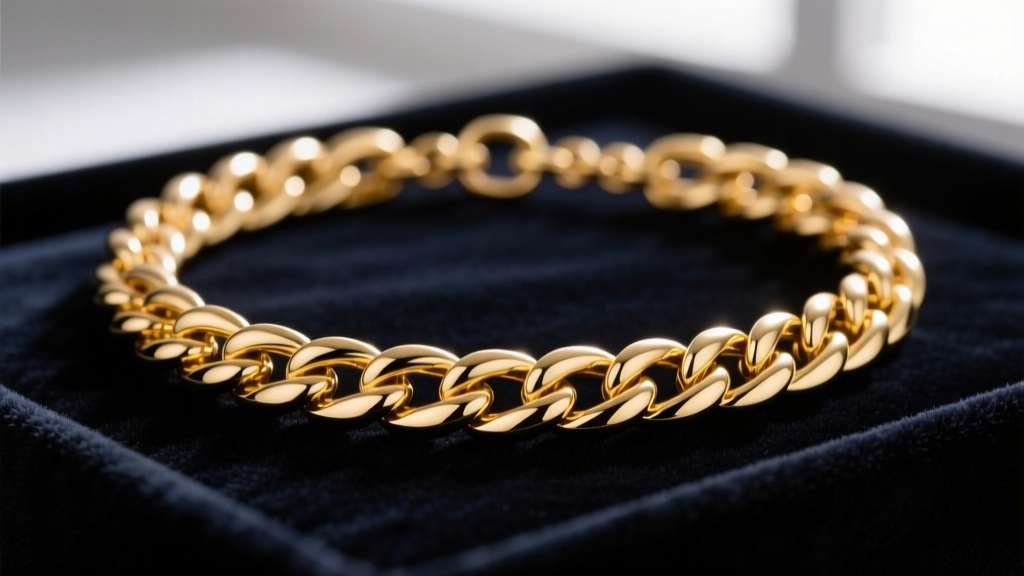
When jewelry designers and consumers discuss necklaces, the conversation often revolves around aesthetics, gemstone settings, and layering trends. However, from a metallurgical and engineering perspective, a long necklace chain (typically defined as 28 inches and beyond) presents a unique set of structural challenges that standard 16-to-18-inch princess chains simply do not face. The increased length introduces complex kinetic forces, material fatigue vectors, and clasp stress points that dictate the lifespan of the piece.
In this technical deep dive, we bypass basic styling advice to examine the mechanical engineering, wire gauge requirements, and link architecture necessary to manufacture and maintain a durable long necklace chain. Whether you are sourcing chains for heavy pendants or designing standalone opera and rope-length pieces, understanding these physical properties is critical.
The Physics of Length: Why 28+ Inch Chains Fail
The primary enemy of a long necklace chain is the pendulum effect. When a chain exceeds 24 inches, it hangs below the clavicle, entering a zone of high kinetic movement. As the wearer walks, the lower arc of the chain swings, generating momentum. This momentum translates into tensile stress at two critical failure points: the clasp mechanism at the nape of the neck (the fulcrum) and the bottom-most link resting at the sternum.
According to manufacturing data from Rio Grande, a leading jewelry supply authority, the kinetic force exerted on a 32-inch chain with a 15-gram pendant can generate up to three times the static weight in dynamic shear stress during a brisk walk. Standard lightweight chains (under 1.0mm in thickness) lack the cross-sectional mass to absorb this shock, leading to micro-fractures in the wire that eventually result in catastrophic link failure.
Link Architecture: Tensile Strength by Style
Not all chain links distribute stress equally. The geometry of the link dictates how kinetic energy is dispersed across the metal. Below is a technical breakdown of common link styles and their structural viability for long-length applications.
| Link Style | Min. Gauge for 30+ Inches | Tensile Yield | Primary Failure Mode |
|---|---|---|---|
| Cable | 1.2mm (16ga) | Low | Link elongation and ovaling |
| Box | 1.0mm (18ga) | Medium | Corner crevice cracking |
| Wheat | 1.5mm (14ga) | High | Internal wire fraying |
| Rope | 2.0mm (12ga) | Very High | Torsional twisting and kinking |
For long chains, Wheat and Rope links are metallurgically superior. The woven, multi-wire structure of a wheat chain distributes kinetic shock across four to six intersecting wires per link, rather than relying on a single continuous loop like a cable chain. Rope chains, while incredibly strong in tension, are highly susceptible to torsional kinking if stored improperly, which can permanently deform the helical structure.
Welded vs. Soldered Links: The Microscopic Difference
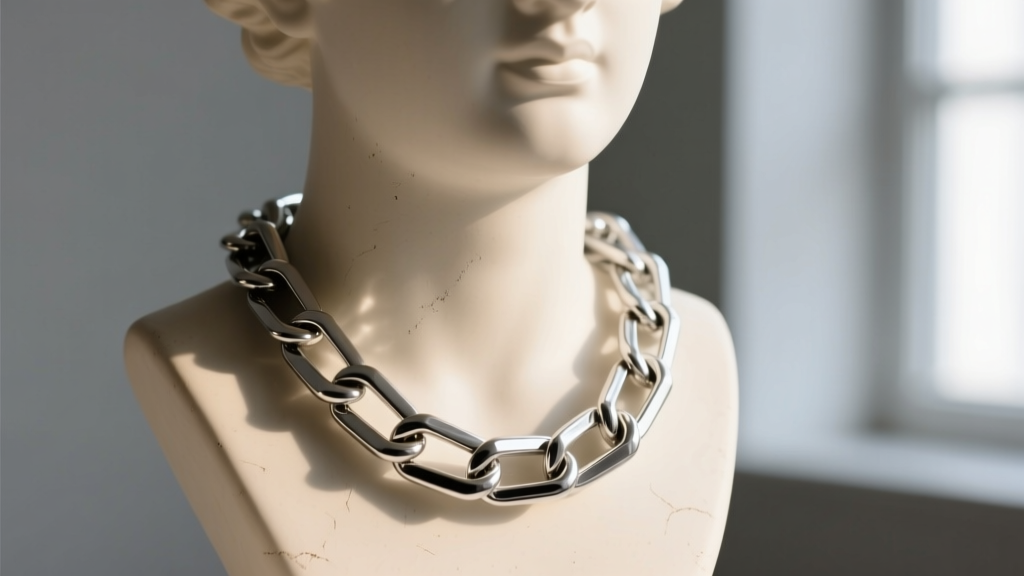
When evaluating a long necklace chain, you must determine if the links are soldered or laser-welded. Traditional torch soldering uses a filler metal with a lower melting point (e.g., 14k gold solder flows at approximately 750°C). This creates a bimetallic seam that is inherently more brittle than the surrounding wire. Over years of pendulum-swing stress, these solder seams are the first to fracture.
Conversely, modern laser welding fuses the exact same alloy without introducing foreign filler metals. According to the Gemological Institute of America (GIA), laser-welded joints retain up to 95% of the base metal's original tensile strength, making them an absolute requirement for heavy, long-length chains intended for daily wear.
Wire Gauge vs. Chain Length: The Golden Ratio
Jewelry manufacturers utilize a baseline formula to scale wire thickness relative to chain length. As the chain gets longer, the wire diameter must increase exponentially, not linearly, to compensate for the increased swing arc mass. We refer to this as the 'Long Chain Gauge Ratio':
- 18 to 22 Inches (Standard): 0.8mm to 1.0mm wire diameter is sufficient for most lightweight pendants.
- 24 to 28 Inches (Matinee/Short Opera): Minimum 1.2mm wire diameter. The increased leverage requires a 20% thicker cross-section to prevent plastic deformation.
- 30 to 36 Inches (Opera/Rope): Minimum 1.5mm to 2.0mm wire diameter. At this length, the chain must support its own compounding weight plus dynamic movement.
Ignoring this ratio results in 'chain stretch,' where the links permanently deform into ovals, thinning the wire at the stress points and accelerating metal fatigue.
Clasp Engineering for Heavy, Long Chains
The clasp is the most vulnerable component of any necklace, but on a long necklace chain, it is subjected to violent, repetitive micro-tugs. Standard lobster clasps are fundamentally flawed for lengths over 28 inches. The internal spring mechanism and the delicate trigger lever are easily compromised by the sudden jerking motion of a heavy chain swinging and stopping abruptly.
For chains exceeding 30 inches and weighing over 25 grams, always upgrade to a locking parrot clasp or a high-grade magnetic clasp. The mechanical locking sleeve of a parrot clasp prevents accidental depression, while modern magnetic clasps eliminate mechanical moving parts entirely.
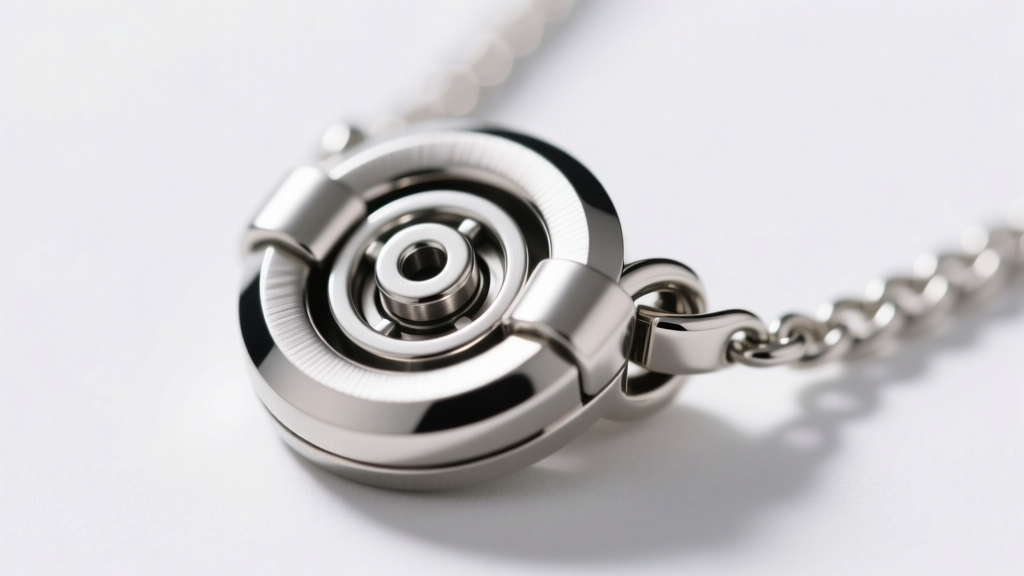
When specifying magnetic clasps for long chains, ensure the internal magnet is an N52 grade neodymium core, encased in a stainless steel or 14k gold shell. N52 magnets provide a pull force of up to 12-15 lbs, which is more than enough to withstand the kinetic shock of a swinging opera-length chain without snapping open. Avoid standard ferrite magnets, which degrade in pull strength over time and lack the shear resistance required for heavy jewelry.
Material Fatigue and Maintenance Protocols
All precious metals suffer from work hardening—the process where metal becomes harder and more brittle as it is repeatedly bent or stressed. A long necklace chain undergoes thousands of micro-bends annually. Sterling silver (925), which contains 7.5% copper, work-hardens significantly faster than 14k or 18k gold alloys. Over a period of 3 to 5 years, an unworn but poorly stored long silver chain can become brittle enough to snap under its own weight if bent sharply.
To combat material fatigue, long chains must undergo periodic annealing by a professional jeweler. This process involves heating the metal to a specific recrystallization temperature (around 650°C for sterling silver) and then quenching it, which realigns the crystalline grain structure and restores the metal's ductility. Furthermore, storing long chains flat and fully extended, rather than coiled tightly in a jewelry box, prevents the introduction of torsional stress that leads to kinking and structural weakening.
Conclusion: Specifying Your Chain
Selecting a long necklace chain requires looking past the surface polish and evaluating the underlying mechanical engineering. By prioritizing laser-welded wheat or rope links, adhering to the Long Chain Gauge Ratio, and utilizing N52 magnetic or locking parrot clasps, you ensure the piece can withstand the rigorous physics of daily wear. True luxury in jewelry is not just about the carat weight of the gold or the sparkle of the pendant; it is about the invisible structural integrity that allows the piece to endure for generations.


