How Are Necklace Chains Measured? Gauge, Weight & Materials
Learn exactly how necklace chains are measured by length, gauge, and weight, and how metal density impacts sizing and durability.

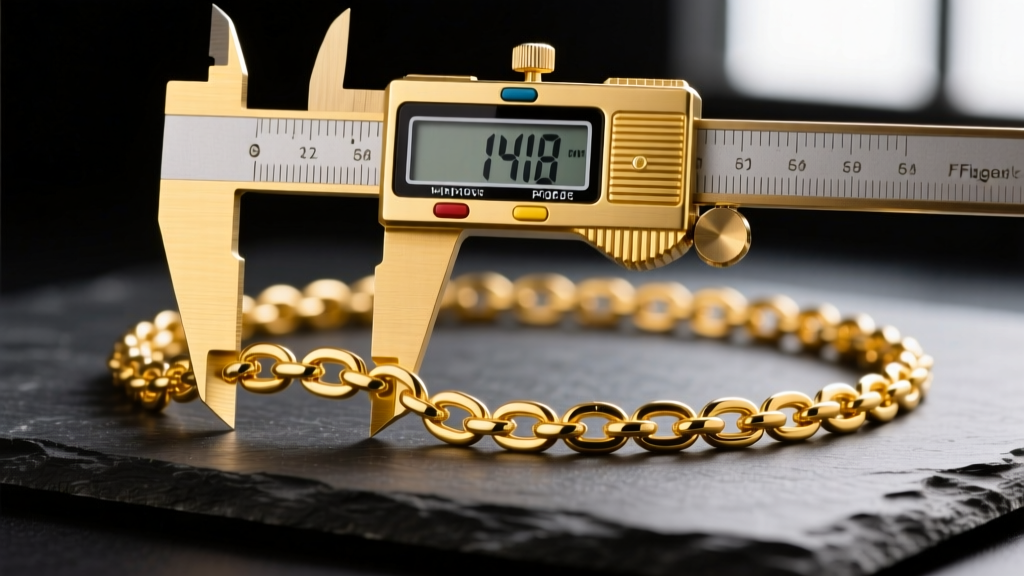
The Core Dimensions: Length, Width, and Wire Gauge
When consumers and jewelers ask how are necklace chains measured, the immediate answer usually revolves around length. However, from a metallurgical and fabrication perspective, chain measurement is a multi-dimensional science that bridges physical geometry with material properties. Understanding these measurements is critical for determining how a chain will drape, how much weight it can support, and how its material composition affects its overall mass.
Length is the most basic metric, measured end-to-end in inches or centimeters, including the clasp. An 18-inch (45cm) chain is the industry standard for a collarbone-resting drape. Width, measured in millimeters (mm), dictates the visual footprint of the chain—ranging from a delicate 0.8mm cable to a heavy 6mm Cuban link. But the most misunderstood measurement is wire gauge.
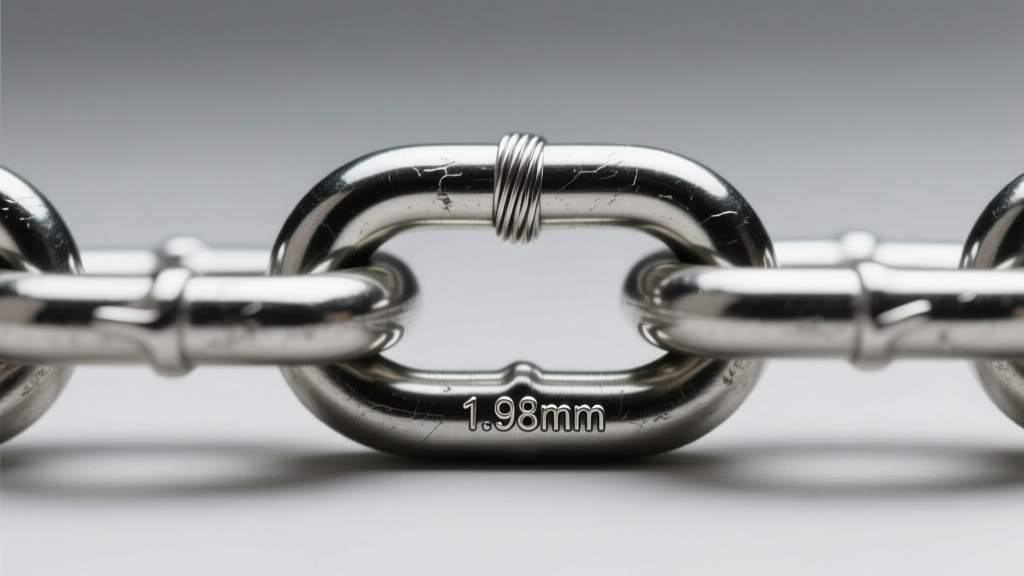
Wire gauge refers to the thickness of the individual metal wire before it is woven, twisted, or soldered into links. Jewelers typically use the American Wire Gauge (AWG) system. Counterintuitively, a lower AWG number means a thicker wire. For example, a 20-gauge wire is roughly 0.81mm thick, while a robust 14-gauge wire is 1.63mm. A chain's outer width and its wire gauge are not the same; a 3mm rope chain might be constructed from much thinner 18-gauge (1.02mm) wire that is tightly twisted to create the wider outer diameter.
Material Density and Weight Measurements
The physical dimensions of a chain only tell half the story. To truly understand how necklace chains are measured in a professional setting, you must account for specific gravity—the density of the metal alloy used. Two chains with the exact same length, width, and link pattern will have vastly different weights (measured in grams or pennyweights) depending on their material composition.
Precious metals are heavy. Platinum and high-karat gold possess high specific gravities, meaning they pack more mass into the same physical volume. Conversely, alternative metals like titanium are remarkably lightweight. According to the GIA Gem Encyclopedia, understanding metal density is crucial for predicting how a chain will feel on the neck and how it will balance with a pendant.
| Material Alloy | Specific Gravity (g/cm³) | Approximate Weight | Yield Strength (MPa) |
|---|---|---|---|
| 14k Yellow Gold | ~13.0 | 16.5 grams | ~350 |
| 18k Yellow Gold | ~15.5 | 19.8 grams | ~300 |
| Sterling Silver (925) | 10.36 | 13.2 grams | ~280 |
| Platinum (950/50 Ru) | ~20.1 | 25.6 grams | ~450 |
| Grade 5 Titanium (Ti-6Al-4V) | 4.43 | 5.6 grams | ~830 |
As the data illustrates, an 18-inch platinum chain weighs nearly double its sterling silver counterpart. This mass measurement directly impacts the chain's drape; heavier chains lay flatter against the clavicle, while lightweight titanium chains may shift or float more easily.

Tensile Strength: Measuring Chain Durability by Metal
When evaluating how necklace chains are measured for durability, jewelers look at tensile and yield strength, measured in Megapascals (MPa). This metric determines how much pulling force a chain can withstand before the links permanently stretch or snap.
The Alloy Hardness Factor
Pure 24k gold is incredibly soft and entirely unsuitable for chain fabrication. By alloying gold with copper, silver, or zinc, manufacturers increase the yield strength. However, even hardened 14k gold (approx. 350 MPa) is relatively malleable compared to modern alternative metals. Rio Grande's metallurgical guides emphasize that platinum, despite being the densest and heaviest precious metal, is highly malleable. A thin platinum chain can stretch over time under the weight of a heavy pendant.
Conversely, Grade 5 Titanium boasts a massive yield strength of over 800 MPa. This means a 1.5mm titanium cable chain can safely support a much heavier pendant than a 2.5mm 18k gold chain. When measuring a chain's load-bearing capacity, the material's tensile strength is just as critical as the physical thickness of the wire gauge.
Caliper vs. Scale: How Jewelers Actually Measure Chains
In a professional workshop or retail environment, guessing a chain's dimensions is unacceptable. Jewelers rely on precision instruments to measure the exact specifications of necklace chains:
- Digital Vernier Calipers: Used to measure outer width and link thickness to a precision of 0.01mm. This is essential for ensuring a pendant's bail will slide smoothly over the chain without catching.
- Milligram Pocket Scales: Chains are weighed on scales accurate to 0.01 grams. This mass measurement is the foundation for pricing precious metal chains based on daily spot markets.
- Mandrels and Tapes: Flexible, non-stretch fiberglass tapes are used to measure total length, ensuring the clasp hardware is included in the final metric.
Hardware Ratios and Clasp Measurements
An often-overlooked aspect of how necklace chains are measured involves the hardware. The clasp must be proportionate to the chain's mass and width. A common manufacturing flaw in low-tier jewelry is pairing a delicate 1.2mm chain with a massive, heavy lobster clasp. This creates a center-of-gravity imbalance, causing the chain to constantly rotate and the clasp to slide to the front of the neck.
The 15% Rule: Master jewelers generally adhere to a rule where the clasp and jump ring assembly should not exceed 15% of the total chain's weight. For hollow or lightweight chains, magnetic or specialized spring-ring clasps are measured and selected to maintain a balanced drape without compromising security.
Pricing Measurements: Spot Price, Premiums, and Pennyweights
Finally, measurement dictates cost. In the United States, precious metal chains are often measured and priced using the pennyweight (dwt) system, where 1 dwt equals exactly 1.55517 grams. To calculate the base material value of a gold chain, its weight in grams is divided by 1.555, then multiplied by the current spot price of the specific karat alloy.
However, the final retail price includes a manufacturing premium. Machine-made chains like standard cable or curb links carry lower premiums. Complex, hand-soldered, or diamond-cut chains (like Byzantine or Wheat patterns) require immense labor and material loss during polishing, resulting in premiums that can be 300% to 500% above the raw melt value of the measured metal.
Ultimately, understanding how necklace chains are measured requires looking past the simple length tag. By analyzing wire gauge, specific gravity, tensile strength, and hardware ratios, you can accurately predict a chain's performance, longevity, and true value across any material spectrum.


