How to Clean a Necklace Chain Without Ruining the Finish
Learn how to clean a necklace chain safely without damaging delicate finishes, platings, or gemstones. Expert troubleshooting for gold, silver, and platinum.

The Chemistry of Chain Tarnish and Sebum Buildup
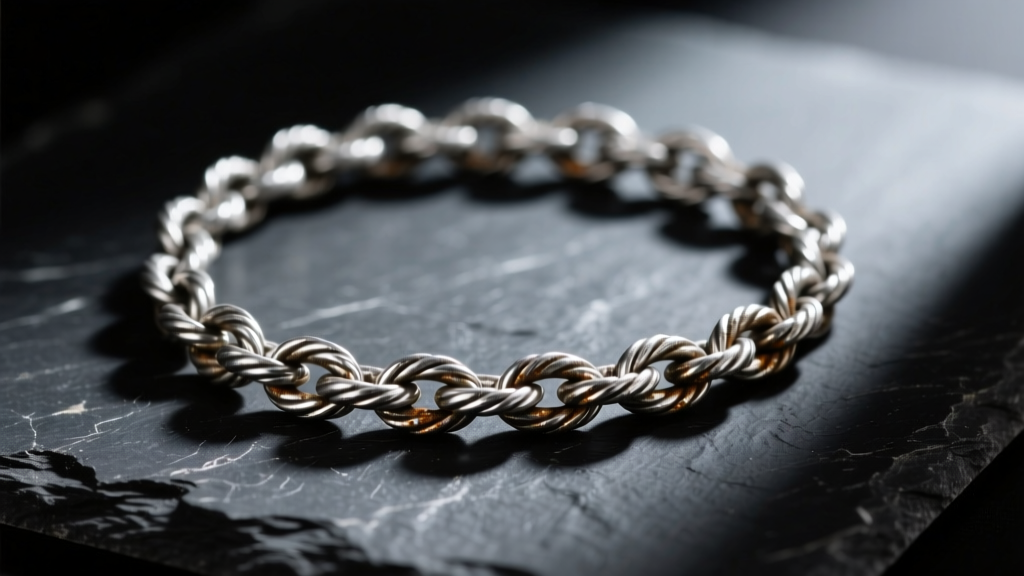
Understanding how to clean a necklace chain requires more than just soap and water; it demands a basic grasp of metallurgy and skin chemistry. Chain necklaces sit directly against the pulse points of the neck, making them prime collectors of sebum, dead skin cells, cosmetic residues, and environmental pollutants. Over time, this organic matrix hardens between the links, dulling the metal's refractive properties and accelerating chemical tarnish.
For silver alloys, the primary culprit is hydrogen sulfide in the atmosphere, which reacts with the copper content in 925 sterling silver to form silver sulfide—a dark, stubborn patina. Gold, while inherently non-reactive, is alloyed with metals like copper, zinc, and nickel to increase tensile strength. These base metals can oxidize when exposed to the chloride ions in human sweat or the harsh chemicals in swimming pools. Before reaching for a generic jewelry cleaner, you must identify your chain's exact material composition to avoid catastrophic finish failure.
Material-Specific Cleaning Protocols
According to the Gemological Institute of America (GIA), the most common cause of jewelry damage is the use of inappropriate cleaning agents. Below is a diagnostic matrix to guide your cleaning protocol based on metal type and finish.
| Material Grade | Safe Cleaning Agents | Forbidden Agents | Primary Failure Mode |
|---|---|---|---|
| 925 Sterling Silver | pH-neutral dish soap, thiourea-based dips | Bleach, baking soda paste | Micro-pitting, rhodium stripping |
| 14k / 18k Solid Gold | Mild soap, diluted ammonia (1:6 ratio) | Chlorine, toothpaste | Alloy corrosion, abrasive scratching |
| Gold Vermeil / Plated | Lint-free microfiber, lukewarm water | Ultrasonic cleaners, chemical dips | Delamination, base metal exposure |
| Platinum (950pt) | Ammonia solutions, 40kHz ultrasonic | Hydrofluoric acid, hard abrasives | Unwanted patina removal |
Solid Gold and Gold Vermeil Chains
For solid 14k or 18k gold chains, the safest and most effective method involves a lukewarm bath of distilled water and a few drops of pH-neutral dish soap (such as Dawn). Avoid using toothpaste. Toothpaste contains silica and calcium carbonate abrasives with a high Relative Dentin Abrasivity (RDA) value. While these abrasives are safe for tooth enamel, they will inflict micro-scratches on high-polish gold, creating a matte, cloudy appearance over time.
If you are cleaning gold vermeil (a thick layer of gold over a sterling silver base) or standard gold-plated brass, you must abandon liquid soaks entirely. The microscopic pores in the electroplating layer can trap moisture, leading to sub-surface oxidation that causes the plating to blister and peel. Instead, use a slightly damp microfiber cloth to gently wipe down the links, followed immediately by a dry buffing.
Sterling Silver and Rhodium-Plated Chains
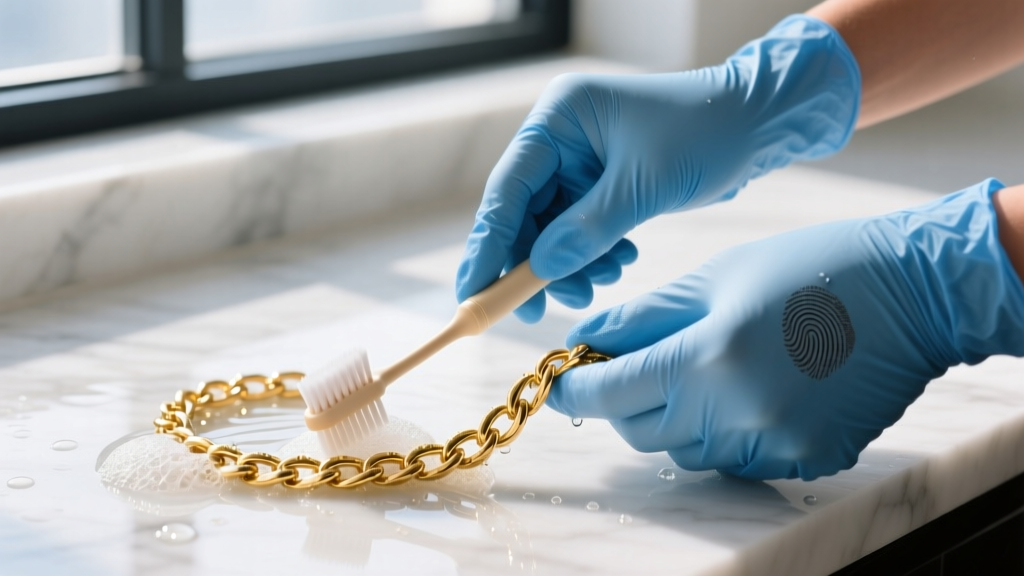 Sterling silver requires a more aggressive approach to remove silver sulfide tarnish. For light tarnish, a baby toothbrush with extra-soft bristles and mild soapy water will dislodge sebum buildup from the crevices of rope or box chains. For heavy, blackened tarnish, you need a chemical reduction reaction.
Line a glass bowl with aluminum foil (shiny side up), add a tablespoon of sodium bicarbonate (baking soda), and pour in boiling water. Submerge the silver chain. The aluminum acts as a sacrificial anode, drawing the sulfur away from the silver and transferring it to the foil. This ion-exchange process removes tarnish without stripping away the underlying silver. However, if your sterling silver chain is rhodium-plated to prevent tarnish, do not use this method; the high heat and alkaline environment can degrade the rhodium flash.
Platinum and Stainless Steel Chains
Platinum is remarkably dense and chemically inert. It does not tarnish, but it does develop a natural patina—a satin-like finish caused by microscopic surface scratches. To clean a platinum chain, a solution of warm water and a few drops of mild ammonia will cut through oils and restore its brilliance. Stainless steel chains (typically 316L surgical grade) are virtually indestructible in a domestic setting and can be cleaned with standard dish soap or even isopropyl alcohol to dissolve stubborn cosmetic residues.
Troubleshooting Common Cleaning Disasters
Even with careful maintenance, jewelry owners frequently encounter specific failure modes. Here is how to troubleshoot the most common chain-related disasters.
Problem: The Chain Turned My Neck Green
This is not a sign of a fake chain, but rather a predictable chemical reaction. The green stain is copper chloride or copper carbonate, formed when the copper alloyed in 10k, 14k gold, or sterling silver reacts with the chloride ions in your sweat or the acids in your skin. To solve this, you must create a barrier. Have a professional jeweler apply a microscopic layer of rhodium plating to the inside of the chain links, or apply a thin coat of clear, jewelry-safe polyurethane lacquer to the metal.
Problem: Gold Plating is Peeling After Cleaning
If your gold-plated or vermeil chain began flaking after a cleaning session, it was likely exposed to an ultrasonic cleaner or a harsh chemical dip. Ultrasonic waves create cavitation bubbles that implode with immense localized force, literally blasting the electroplated layer off the base metal. Once delamination occurs, the chain cannot be cleaned back to life; it must be professionally polished down to the base metal and re-plated.
Advanced Ultrasonic Cleaning: When to Use and When to Avoid
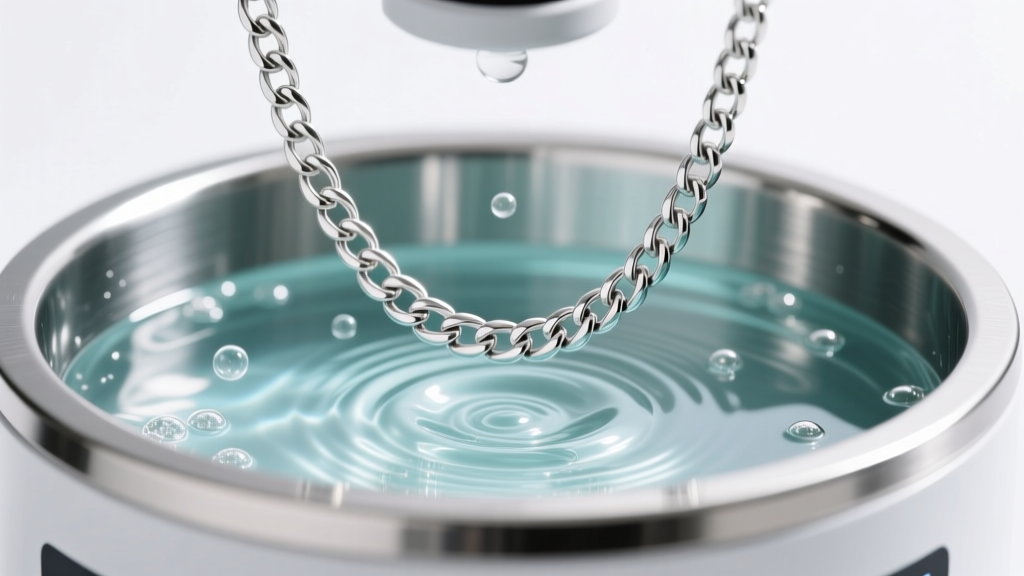 Ultrasonic cleaners operate at high frequencies (typically 40kHz to 45kHz for jewelry), using sound waves to create microscopic vacuum bubbles in a liquid solvent. When these bubbles collapse against the surface of the chain, they generate shockwaves that dislodge microscopic debris from the tightest link intersections.
While ultrasonic cleaning is a miracle for solid platinum and solid gold chains without gemstones, it is highly destructive to certain finishes. Never place oxidized silver (where dark patina is intentionally left in the crevices for contrast) into an ultrasonic tank; the cavitation will strip the oxidation, leaving the piece looking flat and washed out. Furthermore, if your chain features a pendant with porous gemstones like turquoise, opal, or lapis lazuli, the high-frequency vibrations can fracture the stones internally. The London Assay Office frequently warns against using ultrasonic methods on antique or heavily textured jewelry where the structural integrity of the solder joints may already be compromised.
Preventative Maintenance Framework
The most effective way to minimize deep cleaning is to adopt a strict preventative maintenance framework. The golden rule of jewelry wear is Last On, First Off. Your necklace chain should be the final item you put on after applying perfumes, hairsprays, and lotions, and the very first item you remove when you begin your evening routine.
"Cosmetic chemicals, particularly those containing volatile organic compounds (VOCs) and alcohols, act as mild solvents that degrade the protective oxide layers on base metals and accelerate the breakdown of electroplated finishes."
Store your chains flat or hanging vertically to prevent the links from kinking and trapping moisture. For silver chains, keep them in an airtight anti-tarnish ziplock bag with a 3M anti-tarnish strip, which actively absorbs ambient hydrogen sulfide. By understanding the metallurgical realities of your jewelry and respecting the chemical boundaries of each alloy, you can maintain the structural integrity and brilliant luster of your necklace chains for decades.