Material Guide: Decoding Your Vintage Faux Pearl Necklace
Discover the material differences in a vintage faux pearl necklace. Learn to identify glass, plastic, and coated shell beads and test their authenticity.

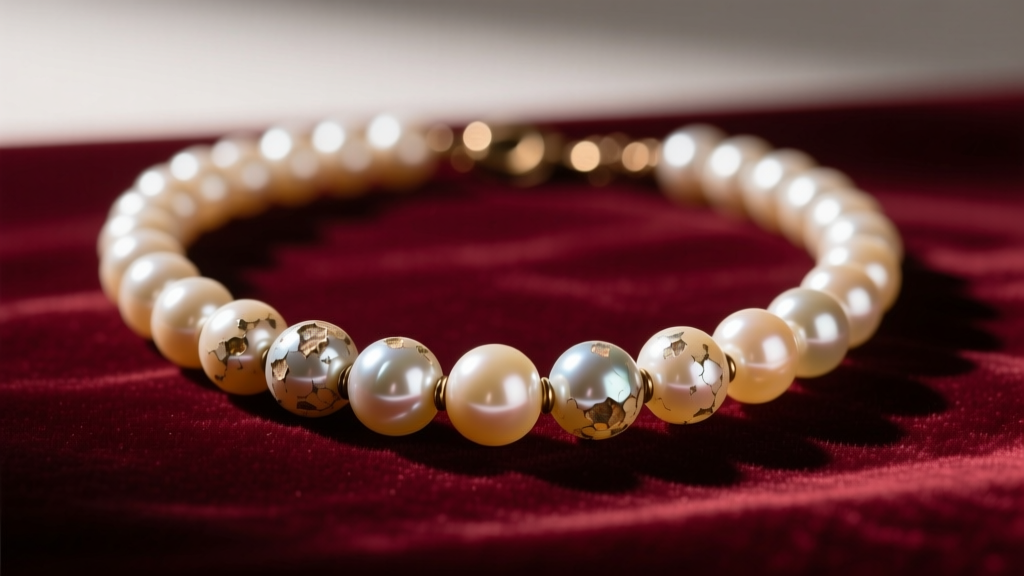
The Anatomy of a Vintage Faux Pearl Necklace
The allure of the vintage faux pearl necklace lies not in its gemological rarity, but in its rich history of material innovation and haute couture craftsmanship. From the roaring 1920s to the mid-century modern era, costume jewelers like Miriam Haskell, Coco Chanel, and Trifari elevated simulated pearls from mere imitations to highly coveted collectibles. However, as a collector or appraiser in 2026, understanding the specific material properties of these pieces is critical. A vintage faux pearl necklace is not a monolith; its value, longevity, and care requirements are entirely dictated by its core bead material and the chemical composition of its pearlescent coating.
Unlike cultured pearls, which are formed by mollusks secreting nacre over a bead nucleus, faux pearls are entirely manufactured. The base bead provides the structural integrity and weight, while the exterior coating mimics the orient and luster of natural nacre. Over the decades, the transition from organic bases to early synthetics, and eventually to advanced polymers, has created a complex landscape for vintage jewelry identification. According to the Gemological Institute of America (GIA), identifying pearl simulants requires a keen understanding of these synthetic and organic layering techniques.
Core Material Comparison: Glass vs. Plastic vs. Shell
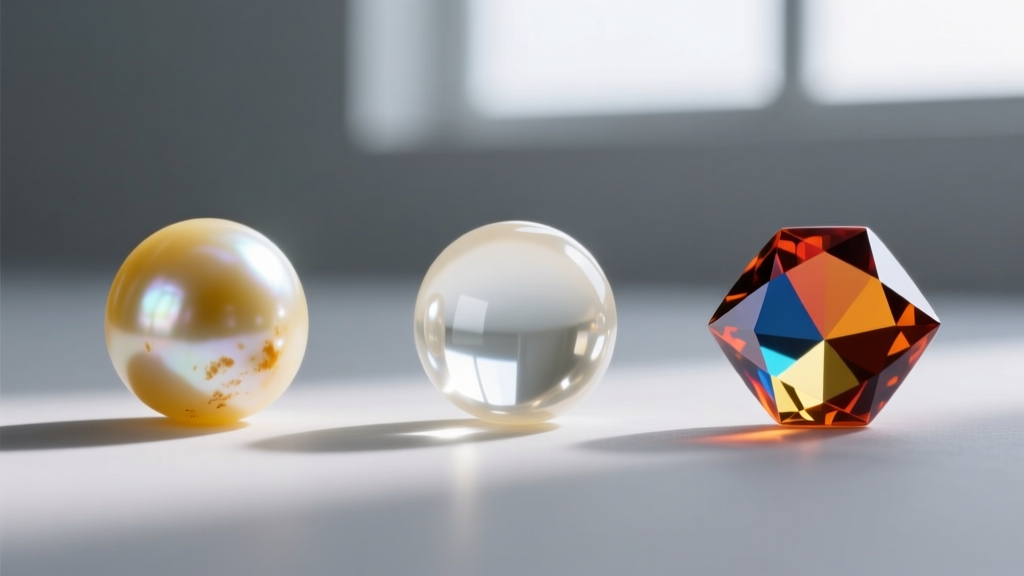
To accurately assess a vintage faux pearl necklace, you must first identify the core bead. The three primary materials used in the 20th century each possess distinct physical properties, specific gravities, and thermal conductivities.
1. Glass Cores (The Gold Standard)
High-end vintage costume jewelry predominantly utilized glass beads, often imported from Japan or Czechoslovakia. Glass has a specific gravity of approximately 2.5 to 2.8, giving the necklace a satisfying, luxurious weight that closely mimics natural saltwater pearls. Thermally, glass is cool to the touch and takes longer to warm against the skin. Miriam Haskell’s most prized pieces from the 1930s and 1940s feature Japanese glass pearls with remarkably thick, hand-dipped coatings. The primary failure mode for glass-core pearls is not the core itself, but the delamination of the coating due to impact or improper storage.
2. Early Plastics: Celluloid and Bakelite
In the 1920s and 1930s, celluloid was widely used as a lightweight, inexpensive alternative to glass. Celluloid (cellulose nitrate) has a much lower specific gravity (~1.4) and feels noticeably light and warm to the touch. However, celluloid is chemically unstable. As it degrades, it off-gasses nitric acid, which can cause the pearl coating to blister and can severely tarnish or corrode adjacent metal clasps and findings. Bakelite (phenol formaldehyde) was also used for heavier, novelty beads, but it lacks the translucency required for high-quality pearl simulation.
3. Lucite and Modern Acrylics
By the 1950s, polymethyl methacrylate (PMMA), commonly known as Lucite or acrylic, replaced celluloid. Lucite is highly stable, optically clear, and lightweight. While the core itself is virtually indestructible under normal wear, the mismatch in thermal expansion between the rigid acrylic core and the brittle pearlescent coating often leads to micro-cracking and eventual flaking in vintage pieces.
Material Matrix: Properties and Failure Modes
| Core Material | Specific Gravity | Thermal Feel | Era Prevalence | Primary Failure Mode |
|---|---|---|---|---|
| Leaded Glass | 2.5 - 2.8 | Cool, slow to warm | 1920s - 1960s | Coating delamination via impact |
| Celluloid | 1.35 - 1.45 | Warm, lightweight | 1920s - 1940s | Off-gassing, crazing, acid burn |
| Lucite (PMMA) | 1.18 - 1.20 | Neutral, very light | 1950s - Present | Thermal expansion coating cracks |
| Shell (Majorica) | 2.7 - 2.9 | Cool, dense | 1950s - Present | Extreme abrasion (rare) |
The Coating: Essence d'Orient and Synthetic Alternatives
The magic of a vintage faux pearl necklace lies entirely in its coating. The traditional formula, known as essence d'orient, was created by suspending crystalline guanine (extracted from herring scales) in a lacquer or cellulose nitrate binder. Guanine crystals possess a high refractive index (approximately 1.85), which produces the deep, iridescent luster characteristic of high-quality vintage simulants.
As the cost of natural guanine rose and environmental regulations tightened in the late 20th century, manufacturers transitioned to synthetic alternatives. Modern and late-vintage pieces often utilize synthetic mica coated with titanium dioxide or bismuth subcarbonate to achieve the pearlescent effect. While these synthetic coatings are more uniform and resistant to yellowing, they often lack the deep, multi-dimensional orient of authentic fish-scale guanine.
Definitive Testing Protocols
Many amateur collectors rely on the "tooth test" (rubbing the pearl against the biting edge of the front teeth). While natural and cultured pearls feel distinctly gritty due to their aragonite platelets, the tooth test is unreliable for vintage faux pearls. High-end vintage pieces coated with crystalline guanine can actually feel slightly textured or gritty, leading to false positives. Furthermore, rubbing abrasive vintage coatings can permanently damage the delicate lacquer.
Instead, utilize the drill hole inspection method. Using a 10x jeweler's loupe, examine the area surrounding the drill hole. A vintage faux pearl necklace will reveal a distinct boundary line where the pearlescent coating ends and the bare glass or plastic core begins. You may also spot tiny flakes of coating peeling away from the hole's edge, a definitive hallmark of a manufactured simulant.
Identifying Degradation and Failure Modes
When evaluating a vintage faux pearl necklace, recognizing material-specific degradation is essential for accurate valuation and conservation.
- Peeling and Flaking: Most common in plastic-core pearls. The lacquer binder dries out over decades, losing its plasticizers and becoming brittle. Any exposure to moisture or cosmetics accelerates this delamination.
- Yellowing and Darkening: Celluloid cores are notorious for yellowing. Because the pearlescent coating is often slightly translucent, the degrading yellow core will alter the overall hue of the pearl, giving it a sickly, off-white tint.
- Crazing: A network of fine, spiderweb cracks on the surface. This is almost exclusively seen in early plastics and indicates that the chemical structure of the core is breaking down. Crazed celluloid pearls should be isolated from other jewelry, as their acidic off-gassing can damage adjacent metals and gemstones.
Valuation and Collector Pricing Tiers
The market for vintage faux pearl necklaces is highly stratified, driven by the maker, the core material, and the condition of the coating. As of 2026, the collector market heavily favors pieces with intact, original glass pearls.
- Tier 1: Haute Couture & Designer Glass ($300 - $2,500+)
Pieces by Miriam Haskell, early Chanel, or Schiaparelli featuring Japanese or Czech glass pearls with thick, luminous guanine coatings. Provenance and original clasps significantly impact the upper end of this range. - Tier 2: Mid-Century Branded & Majorica ($75 - $300)
Trifari, Coro, or Monet pieces utilizing glass or high-quality Lucite. Majorica pearls (which use an opaque glass core and a proprietary, highly durable synthetic coating) hold steady value due to their exceptional longevity. - Tier 3: Unbranded Plastic & Degraded Pieces ($10 - $50)
Mass-produced celluloid or acrylic necklaces with visible peeling, yellowing, or crazing. These are generally purchased only for bead harvesting or historical study rather than wear.
Preservation: Material-Specific Care Protocols
Caring for a vintage faux pearl necklace requires a drastically different approach than caring for organic cultured pearls. The Victoria and Albert Museum's conservation guidelines emphasize that simulated pearls are highly vulnerable to the very chemicals often used to clean jewelry.
Never use ultrasonic cleaners, steam cleaners, or ammonia-based solutions on vintage faux pearls. The high-frequency vibrations and harsh alkaloids will instantly strip the delicate essence d'orient coating, leaving you with a strand of bare glass or plastic beads.
For routine cleaning, use a barely damp, lint-free microfiber cloth to gently wipe away skin oils and cosmetics. If the necklace requires restringing, always use a high-quality nylon thread or silk, and employ French wire (gimp) at the clasp to prevent the thread from abrading against the metal. Avoid storing vintage faux pearls in airtight plastic bags; the lacquer binders require a stable, moderate humidity environment (around 45-55% RH) to prevent the plasticizers from evaporating and the coating from cracking.
By understanding the intricate material science behind these beautiful imitations, collectors can properly identify, value, and preserve the legacy of the vintage faux pearl necklace for future generations.


