How to Clean Tarnished Silver Necklace: Expert Troubleshooting Guide
Learn how to clean tarnished silver necklace chains and pendants safely. Expert troubleshooting for sterling, oxidized, and gemstone-set jewelry.

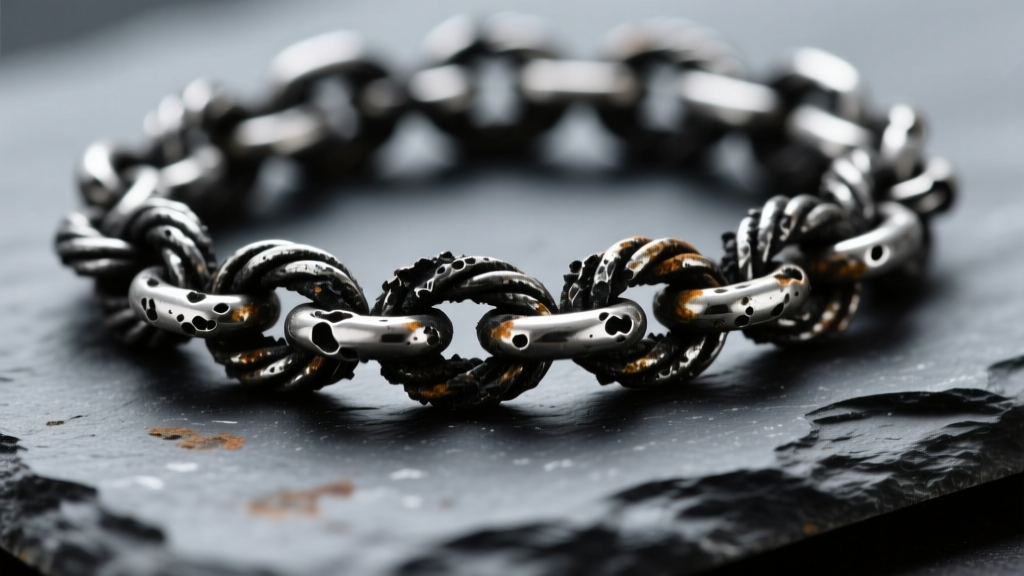
There are few things more frustrating than pulling your favorite sterling silver chain from the jewelry box, only to find it dull, yellowed, or coated in a black film. Understanding how to clean tarnished silver necklace pieces requires more than just scrubbing; it demands an understanding of metallurgy, chemical reactions, and gemstone porosity. As a senior jewelry stylist, I see countless chains ruined by abrasive pastes or harsh chemical dips that strip rhodium plating and dissolve porous gems. This guide provides a scientifically grounded, step-by-step troubleshooting framework to safely restore your silver necklaces in 2026 and beyond.
The Chemistry of Silver Tarnish: Why It Happens
Before applying any cleaning solution, you must understand what tarnish actually is. Pure silver (Ag) is highly unreactive, which is why it is rarely used in jewelry. Instead, we use Sterling Silver (92.5% silver, 7.5% copper). It is the copper alloy that reacts with hydrogen sulfide ($H_2S$) and sulfur dioxide ($SO_2$) in the atmosphere to form silver sulfide ($Ag_2S$), the black compound you see on your chain.
According to Compound Interest's chemical analysis, everyday items like wool, rubber bands, eggs, and even certain paints off-gas sulfur compounds that accelerate this reaction. High humidity and airborne salinity act as catalysts, creating an electrolyte solution on the metal's surface that speeds up the oxidation process. Knowing this helps you realize that tarnish is a surface-level chemical bond, not 'dirt' that can simply be wiped away with water.
Assessing Your Necklace: Identifying Silver Types & Vulnerabilities
Not all silver necklaces can be treated equally. Applying an electrochemical bath to an oxidized or gemstone-set piece will result in irreversible damage. Use the matrix below to identify your necklace type before proceeding.
| Silver Type | Tarnish Susceptibility | Safe Cleaning Methods | Methods to Avoid |
|---|---|---|---|
| Sterling (925) | High | Foil bath, polishing cloth | Abrasive pastes, bleach |
| Oxidized Silver | Intentional Tarnish | Mild soap, dry flannel | Foil bath, chemical dips |
| Silver-Plated | Medium (Base dependent) | Mild soap, gentle cloth | Foil bath, heavy rubbing |
| Argentium (935/960) | Very Low | Mild soap, polishing cloth | Harsh chemical dips |
| Rhodium-Plated 925 | Low (Until plating wears) | Mild surfactant wash | Polishing cloths with rouge |
The Danger to Porous Gemstones
If your pendant features turquoise, malachite, opal, pearl, or coral, do not submerge it. These stones are highly porous and rank low on the Mohs hardness scale (Pearls are 2.5-4.5; Turquoise is 5-6). The alkaline pH (around 8.3) of common DIY silver cleaning baths will etch pearl nacre and permanently alter the copper-based color matrix of turquoise.
How to Clean Tarnished Silver Necklace: Step-by-Step Methods
Once you have identified your metal and stone types, select the appropriate method below. Always work in a well-ventilated area.
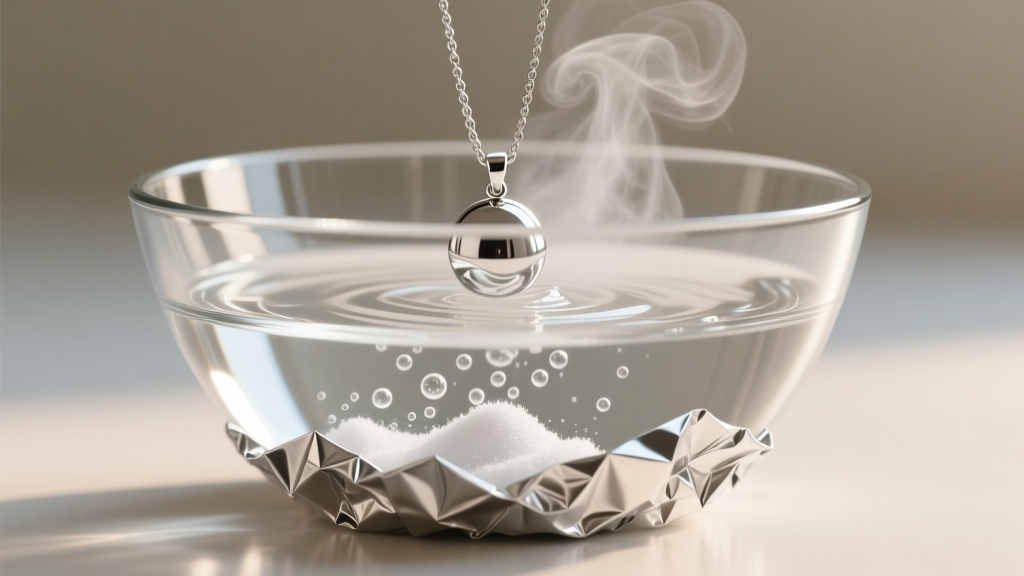
Method 1: The Aluminum Foil & Baking Soda Bath (For Solid Sterling Only)
This method relies on an electrochemical redox reaction, not abrasion. Aluminum is more anodic (reactive) than silver. When connected by an electrolyte solution, the sulfur atoms abandon the silver and bond to the aluminum, leaving pure silver behind.
- Prepare the Cell: Line a glass or ceramic bowl with aluminum foil, shiny side up. Do not use metal bowls, which will interfere with the ionic transfer.
- The Electrolyte: Add 1 tablespoon of baking soda (sodium bicarbonate) and 1 tablespoon of sea salt per cup of boiling water. Stir until dissolved.
- The Reaction: Submerge the solid sterling silver chain. Ensure the metal physically touches the aluminum foil. You will see bubbles and smell a faint 'rotten egg' odor (hydrogen sulfide gas being released).
- Extraction: Leave for 2 to 5 minutes. Remove with wooden or plastic tongs (metal tongs will disrupt the circuit). Rinse thoroughly in distilled water and pat dry with a microfiber cloth.
Method 2: Mild Surfactant Wash (For Gemstone & Pearl Settings)
For necklaces that cannot be submerged in alkaline solutions, mechanical removal via a mild surfactant is the safest route recommended by the Jewelers of America.
- Mix 3 drops of pH-neutral dish soap (like Dawn) into a bowl of lukewarm distilled water. Avoid hot water, which can fracture heat-sensitive gems like opals or melt the adhesives used in foil-backed antique pendants.
- Use an extra-soft baby toothbrush to gently agitate the solution over the silver links, avoiding direct scrubbing on the gemstones.
- Rinse under a slow stream of lukewarm distilled water and dry immediately with a lint-free cotton cloth to prevent water spots.
Method 3: Polishing Cloth Technique (For Light Tarnish & Rhodium Plating)
If your necklace is rhodium-plated (a common 2026 industry standard to prevent tarnish), chemical baths are unnecessary and polishing pastes will strip the 0.75-micron rhodium layer. Instead, use a 100% untreated cotton flannel cloth to gently buff the chain. For stubborn spots on unplated silver, use a jeweler's rouge-impregnated cloth, but never use it on satin or matte finishes, as it will burnish them into a high shine.
Troubleshooting Common Cleaning Disasters
Expert Insight: The majority of 'ruined' necklaces I evaluate aren't actually damaged; they are suffering from improper rinsing or misunderstood metallurgical properties. Let's troubleshoot the most frequent issues.
Issue 1: Chalky White Residue in the Chain Links
Cause: This is unreacted baking soda and aluminum hydroxide trapped in the microscopic crevices of rope or box chains after a foil bath.
Fix: Do not scrub. Submerge the chain in a bowl of distilled water with a single drop of white vinegar for 60 seconds to neutralize the alkaline residue. Rinse again with pure distilled water and use a hairdryer on a cool setting to blow the moisture out of the links.
Issue 2: The 'Tarnish' is Actually Brass Showing Through
Cause: If you are cleaning a silver-plated necklace and notice a yellowish or pinkish hue that won't polish away, you haven't failed at cleaning; you have worn through the plating. Silver plating is typically only 1 to 3 microns thick. Once the base metal (usually brass or copper) is exposed, no chemical cleaner will turn it silver again.
Fix: The only solution is to take the piece to a professional bench jeweler for electroplating. Stop polishing immediately, as further friction will only widen the bare spot.
Issue 3: Accidental Removal of Oxidized Details
Cause: You used a foil bath or silver dip on an intentionally oxidized (blackened) pendant, stripping the dark contrast from the engraved crevices and leaving it flat and white.
Fix: You must re-oxidize the piece. You can purchase a liver of sulfur (potassium sulfide) gel. Dilute a pea-sized amount in warm water, dip the pendant for 10 seconds until it turns black, and then gently buff only the high points of the metal with a polishing cloth, leaving the dark patina in the recessed engravings.
Preventative Storage & Maintenance Protocols
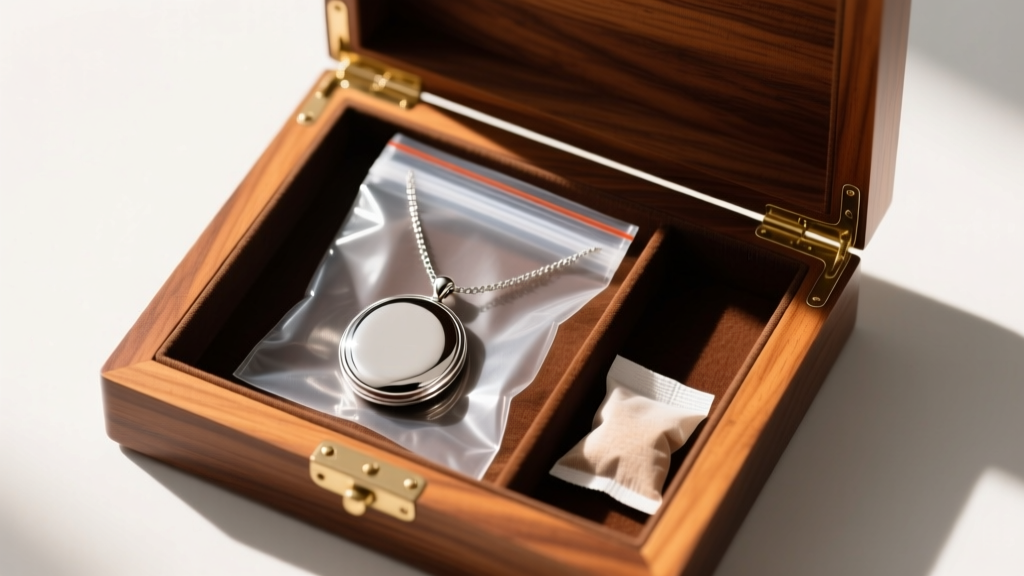
Cleaning is reactive; proper storage is proactive. To drastically reduce the frequency of deep cleaning, implement these archival storage techniques:
- Activated Charcoal & Silica: Store your necklaces in an airtight environment with 3M Anti-Tarnish strips, which absorb airborne sulfur compounds before they reach the metal. Silica gel packets control humidity, removing the electrolyte catalyst required for rapid oxidation.
- Isolate by Hardness: Never store a silver chain loose in a drawer with diamonds or sapphires. Diamonds (Mohs 10) will easily scratch sterling silver (Mohs 2.5-3), creating micro-abrasions that trap sulfur and tarnish faster than smooth metal.
- Wear It Often: The natural oils and gentle friction from your skin actually slow down tarnish buildup on solid sterling silver. Necklaces worn daily rarely require the heavy-duty electrochemical baths detailed above.
Conclusion
Mastering how to clean tarnished silver necklace pieces is about matching the chemical intervention to the specific metallurgy and gemology of the jewelry. By abandoning abrasive toothpastes and harsh commercial dips in favor of targeted redox reactions and gentle surfactants, you preserve the structural integrity and historical patina of your collection. When in doubt regarding a rare antique or a highly fragile gemstone, always consult a certified gemologist before introducing any solution to the metal.


