Messika Butterfly Necklace: 2026 Value & Investment Guide
Is the Messika butterfly necklace worth the luxury price tag? We analyze diamond grades, 18k gold weight, and 2026 secondary market value retention.

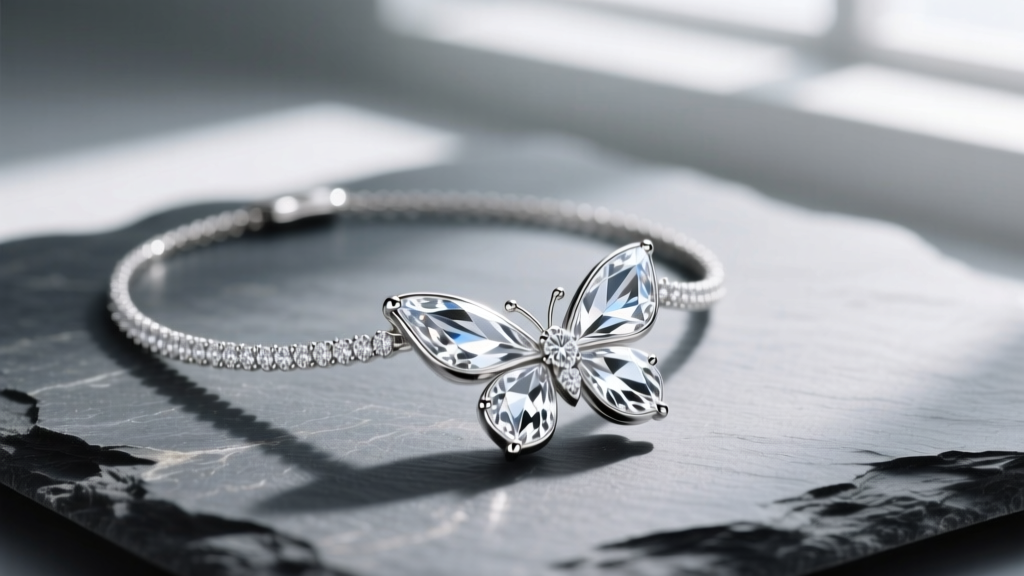
The Allure and Economics of the Messika Butterfly
When evaluating high-end contemporary jewelry, few brands command the immediate recognition and modern prestige of Messika. Founded by Valérie Messika in 2005, the Parisian maison revolutionized the diamond industry by taking diamonds out of the vault and into everyday wear. While the brand is globally renowned for its iconic Move collection featuring sliding diamonds, the Messika butterfly necklace—often realized through their exquisite Papillon high jewelry motifs and exclusive diamond butterfly pendants—represents a different tier of investment. This piece merges intricate, nature-inspired silhouettes with the brand's signature diamond-setting prowess.
For collectors and luxury buyers in 2026, assessing the budget and long-term value of a Messika butterfly diamond necklace requires looking past the boutique lighting. You must evaluate the precise material grades, the structural integrity of the 18k gold chains, and the harsh realities of luxury jewelry depreciation. This comprehensive value assessment breaks down exactly what you are paying for, how the piece holds up on the secondary market, and how to authenticate pre-owned models to ensure your investment is protected.
Material Breakdown: What You Are Actually Paying For
The retail price of a luxury diamond pendant is rarely just about the raw materials; it encompasses design, brand equity, and craftsmanship. However, understanding the baseline material costs is the first step in any serious budget assessment.
Diamond Quality and Carat Weight
Messika maintains stringent quality controls for its diamond sourcing. For their standard production diamond jewelry, the brand typically utilizes diamonds in the G-H color range (near-colorless) and VS1-VS2 clarity (very slightly included). These grades are strategically chosen: they offer exceptional brilliance and eye-cleanliness to the naked eye without the exponential price premium associated with D-color, Flawless stones.
The butterfly motif relies heavily on light reflection across the "wings," which are usually constructed using a combination of marquise-cut and round brilliant-cut diamonds. The marquise cuts are critical for creating the elongated, sweeping shape of the wings. According to the Gemological Institute of America (GIA), the cut quality of fancy shapes like the marquise is paramount for avoiding the "bow-tie" effect (a dark shadow across the center of the stone). Messika's master jewelers meticulously select marquise stones with excellent symmetry to ensure uniform light return. A standard Messika butterfly pendant typically features a total carat weight (CTW) ranging from 0.80 CTW to 2.50 CTW, with retail prices scaling from $6,500 to over $25,000 depending on the exact stone size and metal color.
18k Gold Chain and Clasp Mechanics
The chain accompanying a Messika butterfly pendant is not an afterthought; it is a robust, finely engineered component. Most pieces are strung on 18k (750) gold cable or box chains, typically measuring between 1.2mm and 1.5mm in gauge. The total gold weight for a standard 42cm chain with a 3cm extension usually falls between 4.5 grams and 7.2 grams. While the intrinsic melt value of this gold is relatively low compared to the diamond value, the durability of a 1.5mm 18k gold chain is highly rated for everyday wear, resisting the kinking that plagues thinner 0.9mm chains.
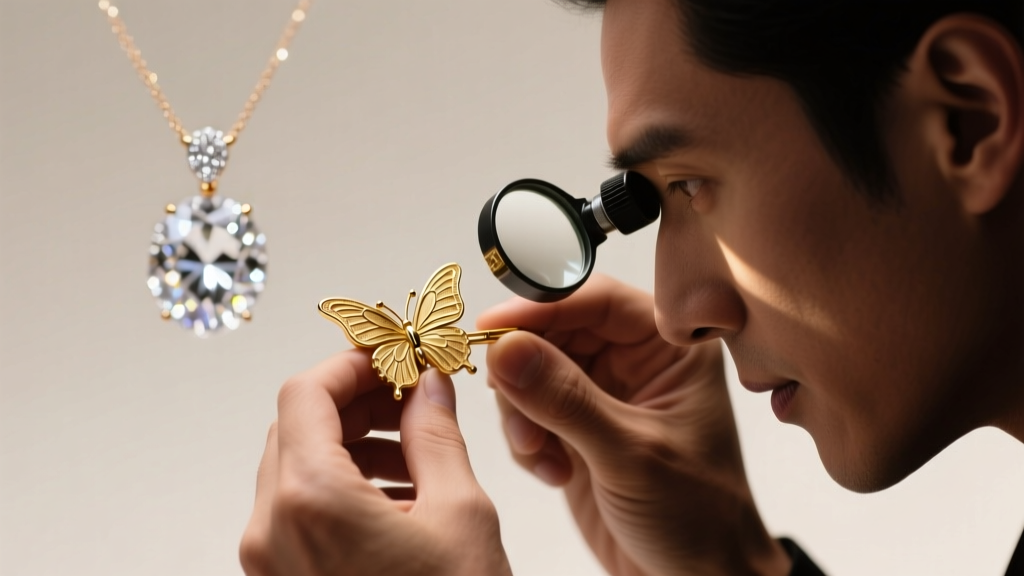
Furthermore, because Messika is manufactured in France, the gold components must pass strict assay office regulations. You will find the tête d'aigle (eagle head) hallmark stamped on the clasp or the jump ring, guaranteeing the metal is at least 75% pure gold, alongside the poinçon de maître (maker's mark) indicating the specific Messika workshop.
Retail vs. Secondary Market: The Depreciation Curve
The most critical aspect of any luxury jewelry budget assessment is understanding the depreciation curve. Unlike certain heritage brands (e.g., Van Cleef & Arpels' Alhambra collection) which can sometimes retain or even exceed retail value, contemporary luxury brands like Messika experience an immediate drop in value the moment they leave the boutique.
In 2026, the secondary market for Messika jewelry is robust, but buyers must be prepared for a 35% to 45% initial depreciation. The table below illustrates the estimated value retention for a 1.50 CTW Messika 18k White Gold Butterfly Diamond Necklace across different market conditions.
| Market Condition | Estimated Price Range (USD) | Value Retention vs. Retail ($14,500) | Key Value Drivers |
|---|---|---|---|
| Retail (Boutique) | $14,500 | 100% | Full warranty, brand experience, sizing adjustments |
| Pre-Owned (Excellent) | $8,700 - $9,800 | 60% - 67% | Original box, papers, certificate, no visible scratches |
| Pre-Owned (Good) | $6,500 - $7,800 | 44% - 53% | Minor gold scuffs, missing outer packaging, polished |
| Auction / Liquidation | $4,200 - $5,500 | 28% - 37% | Sold as scrap + loose diamond value, no papers |
Budget Strategy: If your primary goal is financial preservation, purchasing a pre-owned Messika butterfly necklace in "Excellent" condition from a vetted luxury reseller is the smartest move. You absorb none of the initial boutique markup, and the piece will hold its secondary market value relatively steadily over the next 3 to 5 years, provided you maintain the original GIA or Messika authenticity certificates.
Comparing the Messika Butterfly to Competitors
To truly assess the value, we must contextualize the Messika butterfly necklace against its direct competitors in the luxury diamond motif space. How does it stack up against Chopard and Graff?
- Messika vs. Chopard (Happy Diamonds Butterflies): Chopard's butterfly motifs often feature their signature free-moving diamonds encased in sapphire crystal bezels. While Chopard offers a playful, kinetic design, Messika's butterfly pendants rely on traditional, highly intricate micro-pavé and prong settings. Messika's designs generally offer a higher total diamond carat weight for the price point, giving it an edge in pure brilliance and material value, whereas Chopard charges a premium for the patented kinetic crystal mechanism.
- Messika vs. Graff (Butterfly Silhouettes): Graff represents the absolute pinnacle of diamond sourcing, often using D-F color and Internally Flawless stones. Consequently, a Graff butterfly pendant will easily cost 2.5x to 4x more than a comparable Messika piece. For buyers whose budget caps at $20,000, Messika offers a vastly superior design-to-carat ratio, delivering high-end Parisian aesthetics without the ultra-high-jewelry markup of Graff.
Authentication and Red Flags in the Pre-Owned Market
Because the Messika butterfly necklace commands a high price on the secondary market, it is a target for sophisticated counterfeiters. When evaluating a pre-owned piece for your budget, authentication is non-negotiable. Here are the specific technical details you must verify:
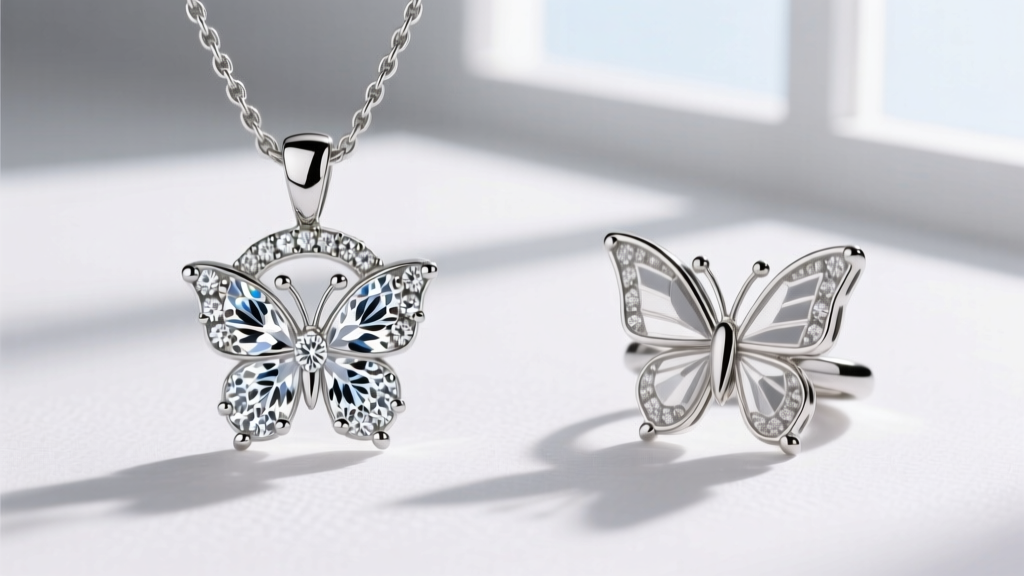
1. The Prong Settings and Metal Finish
Authentic Messika pieces feature incredibly precise, uniform prong settings. The prongs holding the marquise diamonds at the tips of the butterfly wings should be perfectly rounded, smooth, and symmetrical. Counterfeiters often struggle with the tension and finishing on fancy-cut stones, resulting in flat, jagged, or uneven prongs. Additionally, the underside (gallery) of the pendant should be meticulously polished, not rough or porous.
2. Hallmark Precision
As mentioned, the French eagle head hallmark is mandatory for 18k gold produced in France. On a genuine Messika clasp, this stamp is microscopically crisp and deeply struck. Fakes often feature laser-etched or shallow, blurry stamps that look smeared under a 10x jeweler's loupe. According to Messika's official authentication guidelines, every piece also comes with a unique serial number that corresponds to the brand's internal registry.
3. Certificate Matching
Any Messika butterfly pendant featuring a center stone or primary marquise stones over 0.30 carats will typically be accompanied by a GIA or HRD certificate, alongside the Messika store certificate. You must verify that the laser inscription on the diamond's girdle matches the certificate number exactly. If the seller claims the certificate is "lost," factor at least $300 into your budget to have the piece independently appraised and graded by a certified gemologist before finalizing the purchase.
Final Verdict: Is It a Sound Financial Purchase?
The Messika butterfly necklace is a triumph of modern jewelry design, offering exceptional brilliance, premium 18k gold construction, and a distinctly Parisian edge that separates it from more traditional heritage brands. However, from a strict budget and value assessment perspective, it is a depreciating luxury asset rather than a financial investment.
The Bottom Line: If you are buying retail, do so for the emotional value, the boutique experience, and the comprehensive after-sales warranty. Do not expect to resell it for a profit. If you are a value-driven buyer, target the secondary market. By acquiring a pre-owned model in excellent condition, complete with its original box and certificates, you can secure a breathtaking diamond butterfly pendant at roughly 60% of its original retail cost, effectively bypassing the steepest part of the luxury depreciation curve.


