How to Layer and Style Foundrae Necklaces: Expert Guide
Master the art of layering Foundrae necklaces. Learn step-by-step techniques for balancing heavy 18k gold medallions, chain lengths, and clasp mechanics.


The Anatomy of a Foundrae Necklace
Founded by Beth Bugdaycay, Foundrae has fundamentally shifted the landscape of luxury talismanic jewelry. Unlike delicate, mass-produced pendants, Foundrae necklaces are engineered as substantial, heirloom-quality artifacts. To properly style and layer these pieces, you must first understand their physical anatomy and material composition.
The brand exclusively utilizes 18k yellow gold. According to the Gemological Institute of America (GIA), 18k gold consists of 75% pure gold alloyed with metals like copper and silver. Foundrae’s specific alloy ratio yields a distinctly warm, rich hue that avoids the brassy tint of lower karats or the sterile pallor of white gold. Furthermore, the signature medallions feature vitreous enamel—a glass-like substance fused to the gold at temperatures exceeding 1,500°F—and meticulously set VS-clarity diamond pavé.
Because of these premium materials, the physical weight of the jewelry is significant. A standard large Foundrae medallion (approximately 38mm in diameter) can weigh between 35 and 45 grams, while a medium medallion (28mm) hovers around 20 to 25 grams. This weight dictates everything about how you layer, balance, and secure the necklaces. Treating them like lightweight fashion jewelry will result in tangled chains, stretched links, and damaged hardware.
Step 1: Selecting Your Anchor Medallion
Every successful layered necklace stack requires an anchor. In the context of Foundrae, your anchor is the largest, heaviest medallion in the grouping. This piece will sit at the lowest point of your décolletage and dictate the visual weight of the entire arrangement.
- The Large Medallion (38mm): Best suited as a standalone statement piece or the bottom anchor in a two-piece stack. Its sheer visual footprint commands attention, making it ideal for deep V-necklines or open silk blouses.
- The Medium Medallion (28mm): The most versatile size for layering. It provides enough surface area to showcase the intricate enamel motifs (such as the Karma, Strength, or Resilience symbols) without overwhelming a three-piece stack.
- The Small Medallion (20mm): Functions best as a secondary or tertiary layering piece, sitting higher on the collarbone to frame the face.
When selecting your anchor, consider the diamond pavé coverage. A fully pavéed anchor medallion will catch ambient light and serve as the focal point, meaning your secondary layers should feature simpler, enamel-dominant designs to prevent visual clutter.
Step 2: Calculating Chain Lengths and Drop Distances
The most common mistake when layering heavy gold medallions is inadequate spacing. If chains are too close in length, the heavy bails (the loops connecting the pendant to the chain) will collide, causing friction, gold scratching, and severe tangling.
The 2-to-3 Inch Rule
For heavy 18k gold pendants, you must maintain a minimum drop distance of 2 to 3 inches between each layer. This ensures that the medallions rest in distinct visual zones and move independently against the body.
- Layer 1 (The Choker/Collarbone): 15 to 16 inches. Use a small medallion or a simple diamond solitaire on a delicate chain. This frames the face and draws the eye upward.
- Layer 2 (The Sternum): 18 to 19 inches. A medium medallion rests perfectly here, sitting just above the neckline of a standard crew-neck sweater or t-shirt.
- Layer 3 (The Anchor): 22 to 24 inches. The large medallion sits at the solar plexus, creating a dramatic, elongating effect on the torso.
Adjusting for Necklines
The geometry of your clothing must inform your chain lengths. A crisp, button-down collared shirt requires shorter, tighter layers (16" and 18") that sit neatly within the V of the collar. Conversely, a draped cowl-neck sweater demands longer, heavier chains (20" and 24") that rest against the fabric without getting swallowed by the folds.
Step 3: Mixing Chain Textures and Weight Capacities
Foundrae offers a variety of chain styles, but they are not created equal in terms of tensile strength. Pairing a 40-gram medallion with an inadequate chain will lead to catastrophic hardware failure. You must match the chain’s structural integrity to the weight of the pendant.
| Chain Style | Average Width | Weight Capacity | Best Pairing |
|---|---|---|---|
| Cigar Link | 2.5mm - 3.5mm | High (40g+) | Large Medallions, Bottom Anchors |
| Paperclip | 2.0mm - 3.0mm | Medium (25g-35g) | Medium Medallions, Middle Layers |
| Rope Chain | 1.5mm - 2.0mm | Low (Under 20g) | Small Medallions, Top Collarbone Layers |
| Figaro | 2.2mm - 3.0mm | Medium-High (30g-40g) | Mixed Stacks, Vintage Aesthetics |
Mixing textures is crucial for a curated, organic look. If your anchor is a heavy Cigar link chain, pair it with a Paperclip or Rope chain for the upper layers. The contrast between the rounded, continuous links of a rope chain and the flat, geometric links of a cigar chain creates depth and prevents the stack from looking like a uniform, mass-produced set.
Step 4: Securing Heavy Clasps and Preventing Tangles
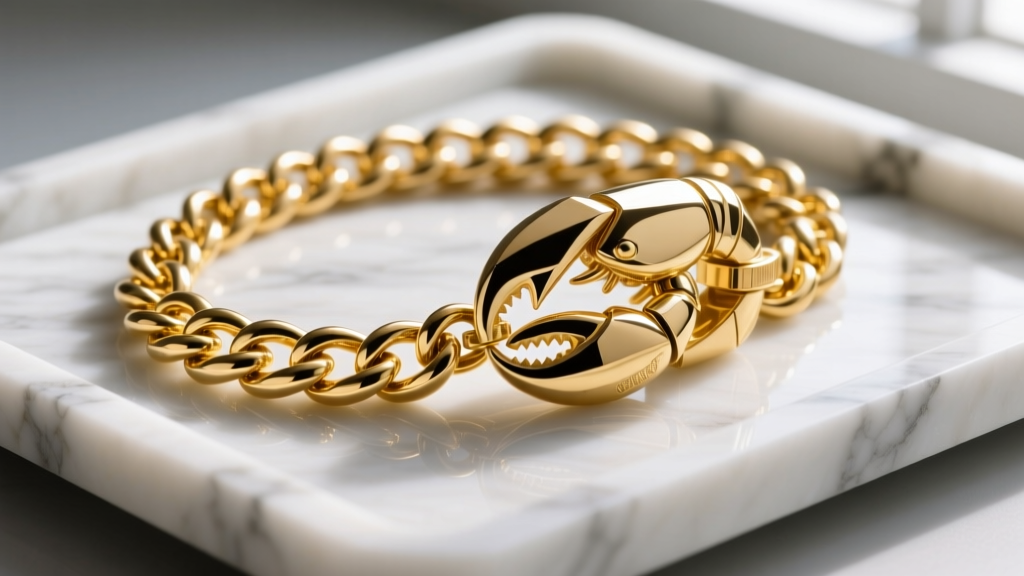
The clasp is the single most vulnerable point of failure on any necklace. Standard spring-ring clasps are entirely insufficient for Foundrae’s heavy medallions; the internal spring mechanism will warp under the constant kinetic pull of a 30-gram pendant.
Always ensure your chains are fitted with oversized, solid 18k gold lobster clasps or custom fold-over box clasps. Lobster clasps provide a secure, mechanical lock that can withstand the pendulum-like swinging of a heavy medallion. Furthermore, pay attention to the bail. Foundrae’s custom bails are often integrated with diamond accents and are specifically sized to glide smoothly over their proprietary chain links. Never force a thick chain through a small bail, as this will warp the gold and stress the diamond settings.
The 'Clasp-Down' Storage Method
Tangling occurs when the open links of one chain weave through the links of another during storage. To prevent this, always store your layered necklaces hanging vertically. If you must store them in a travel pouch, clasp each necklace individually, and thread the chain of the second necklace through the chain of the first before clasping it, creating a continuous, closed loop that physically cannot knot.
Maintenance: Caring for Enamel and Pavé Diamonds
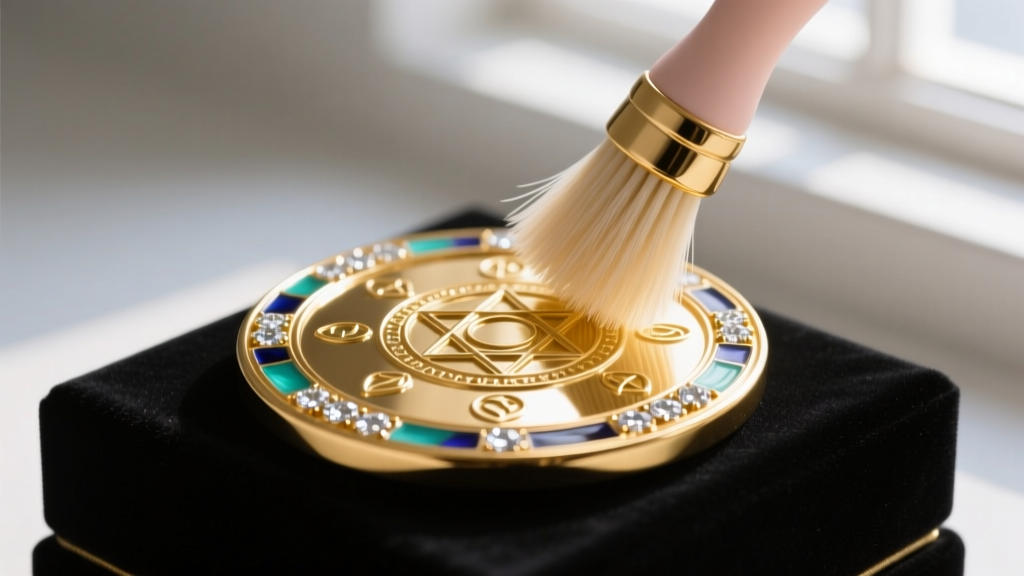
Because Foundrae necklaces are worn close to the skin, they are constantly exposed to body oils, lotions, and environmental dust, which can dull the diamond pavé and obscure the vibrant vitreous enamel. However, the cleaning process requires extreme caution.
What to Avoid
Never use an ultrasonic cleaner. Ultrasonic waves create microscopic cavitation bubbles that implode against the jewelry. While this is excellent for shaking dirt out of diamond settings, the high-frequency vibrations can easily crack or shatter vitreous enamel, which is essentially fused glass. Similarly, avoid harsh chemical dips or steam cleaners, which can degrade the alloys and strip the polish from the gold.
The Proper Cleaning Protocol
- Soak: Submerge the necklace in a bowl of lukewarm water mixed with a few drops of mild, phosphate-free dish soap for 5 to 10 minutes.
- Agitate: Use a soft-bristled baby hair brush (not a standard toothbrush, which is too abrasive) to gently sweep across the diamond pavé and the recessed enamel grooves.
- Rinse and Dry: Rinse thoroughly under lukewarm running water. Pat dry with a lint-free microfiber cloth. Do not air dry, as hard water spots will ruin the high-polish finish of the 18k gold.
Conclusion
Layering Foundrae necklaces is an exercise in balancing art, symbolism, and physical mechanics. By respecting the substantial weight of the 18k gold, calculating precise drop distances, matching chain tensile strengths to pendant weights, and adhering to strict enamel-safe cleaning protocols, you ensure that your talismanic stack remains both visually breathtaking and structurally sound for generations. Approach your layering not just as a styling choice, but as the curation of a deeply personal, wearable armor.


