Expert Guide to Choosing the Perfect Pearl Necklace Box
Discover the material science behind the perfect pearl necklace box. Learn how to control humidity, prevent off-gassing, and protect nacre.

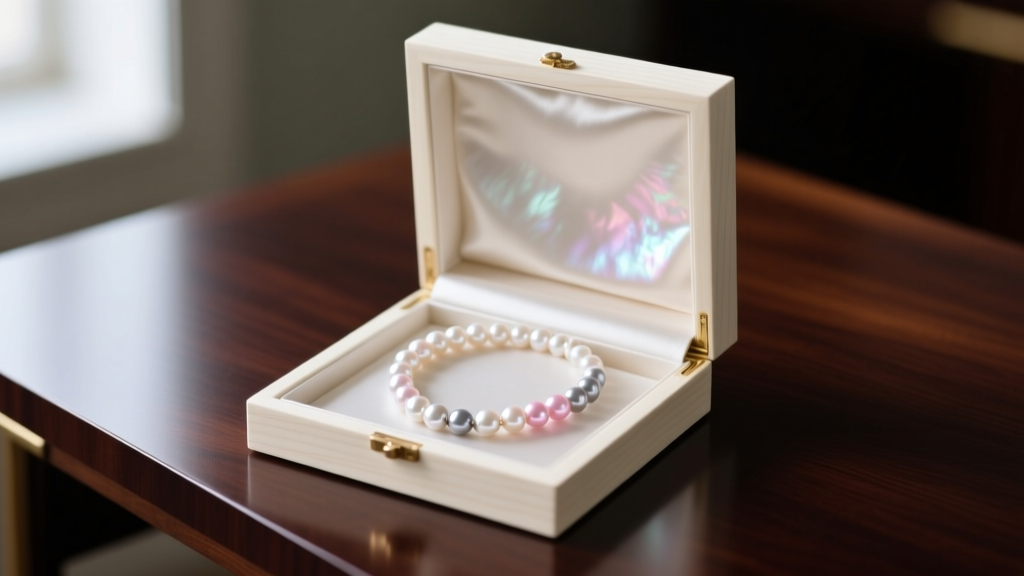
When investing in high-caliber organic gemstones, the storage environment is just as critical as the jewelry itself. Unlike faceted diamonds or sapphires, pearls are biological constructs composed of aragonite platelets bound together by an organic protein called conchiolin. This unique biochemical makeup makes them extraordinarily vulnerable to their microclimate. A standard jewelry case is not sufficient; selecting the ideal pearl necklace box requires a deep understanding of material science, humidity dynamics, and structural preservation. In this expert deep dive, we explore the technical specifications required to protect your nacre from dehydration, acidic off-gassing, and mechanical degradation.
The Microclimate: Why Pearls Demand Specialized Storage
Pearls rank between 2.5 and 4.5 on the Mohs hardness scale, making them highly susceptible to scratching. However, the greater threat in a poorly designed pearl necklace box is chemical and environmental degradation. The conchiolin matrix that holds the nacre layers together requires a specific moisture level to remain flexible. If the ambient relative humidity (RH) drops below 40%, the organic protein dries out, leading to microscopic crazing, peeling, and eventual structural failure of the pearl's surface.
Conversely, excessive humidity (above 65%) combined with poor air circulation creates an incubator for mold spores, which can permanently etch the nacre's surface. According to conservation guidelines published by the Gemological Institute of America (GIA), pearls must be stored in environments that balance moisture retention with breathable air exchange. A proper pearl necklace box acts as a buffer zone, slowing down rapid fluctuations in ambient temperature and humidity that occur in modern, climate-controlled homes.
Material Science: Evaluating Box Linings and Shells
The interior lining of your storage vault is the most critical point of contact. Many mass-market jewelry boxes utilize synthetic velvets, polyurethane foams, or chemically treated cardboards. These materials frequently off-gas volatile organic compounds (VOCs), including hydrogen chloride and sulfur dioxide. When these gases interact with the calcium carbonate in pearls, they cause a mild acid-base reaction that dulls the luster and creates a chalky, irreversible patina.
Museum conservators rely on the Oddy Test to evaluate the safety of storage materials. For your pearl necklace box, you must seek out linings that are inherently inert. Untreated, unbleached cotton or Pacific Silvercloth (a specialized cotton embedded with microscopic silver particles to trap tarnishing gases) are the gold standards. Avoid PVC plastics entirely, as they degrade over time and release plasticizers that will physically adhere to and ruin the nacre.
Lining Material Comparison Chart
| Material | pH Level | Off-Gassing Risk | Moisture Retention | Verdict for Pearls |
|---|---|---|---|---|
| Untreated Cotton | 7.0 (Neutral) | None | Moderate | Excellent (Industry Standard) |
| Synthetic Velvet (Polyester/Nylon) | 6.0 - 6.8 | Low to Moderate | Low | Poor (Traps static and dust) |
| Acidic Cardboard / Pulp | 4.5 - 5.5 | High (Acidic VOCs) | Variable | Dangerous (Causes nacre etching) |
| Polyurethane Foam | Variable | High (Chlorides) | Low | Dangerous (Causes chemical spotting) |
| Pacific Silvercloth | 7.0 (Neutral) | None (Traps VOCs) | Moderate | Superior (Best for mixed-metal clasps) |
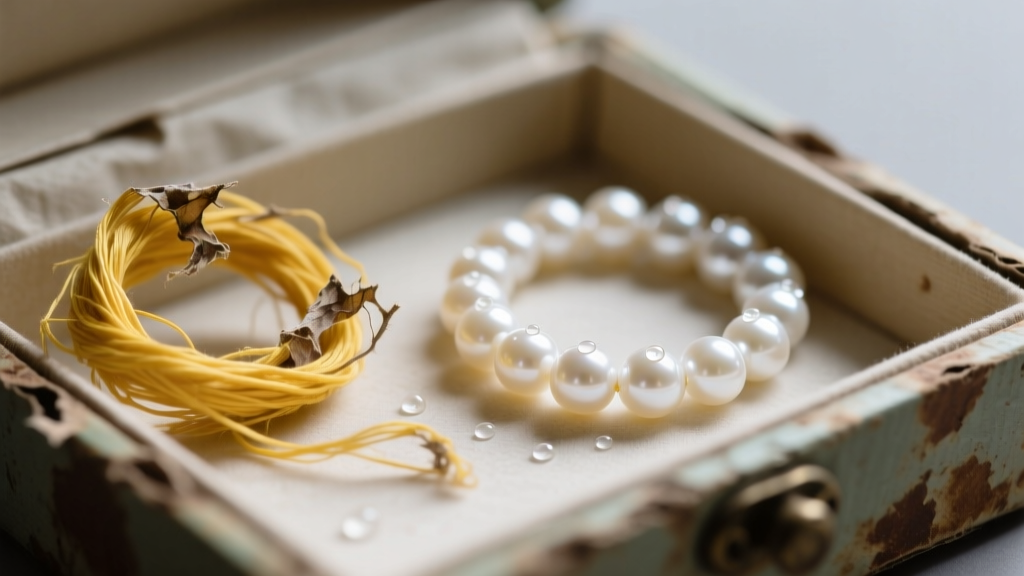
Structural Dimensions and Thread Preservation
A frequently overlooked aspect of pearl necklace box design is the physical geometry of the interior compartment. High-quality pearl necklaces are strung on pure silk thread with individual knots between each bead. This knotting prevents pearl-on-pearl abrasion and limits loss if the strand breaks. However, silk is highly susceptible to gravity-induced stretching and tension fatigue.
Never store a knotted pearl necklace by hanging it on a hook inside a jewelry armoire or box. Hanging places continuous tensile stress on the silk, causing the thread to stretch, thin, and eventually snap. The ideal pearl necklace box features a wide, shallow, flat-bottomed compartment that allows the necklace to rest in a relaxed, coiled, or figure-eight pattern without sharp bends. The compartment depth should be at least 1.5 inches to accommodate the clasp and any protective flaps without compressing the pearls against the lid.
Furthermore, the American Institute for Conservation (AIC) recommends that organic artifacts be stored in enclosures that provide rigid physical support. A box with a softly padded, contoured base prevents the heavier center pearls from bearing down on the delicate silk knots at the clasp ends.
Humidity Control: The 45-55% RH Sweet Spot
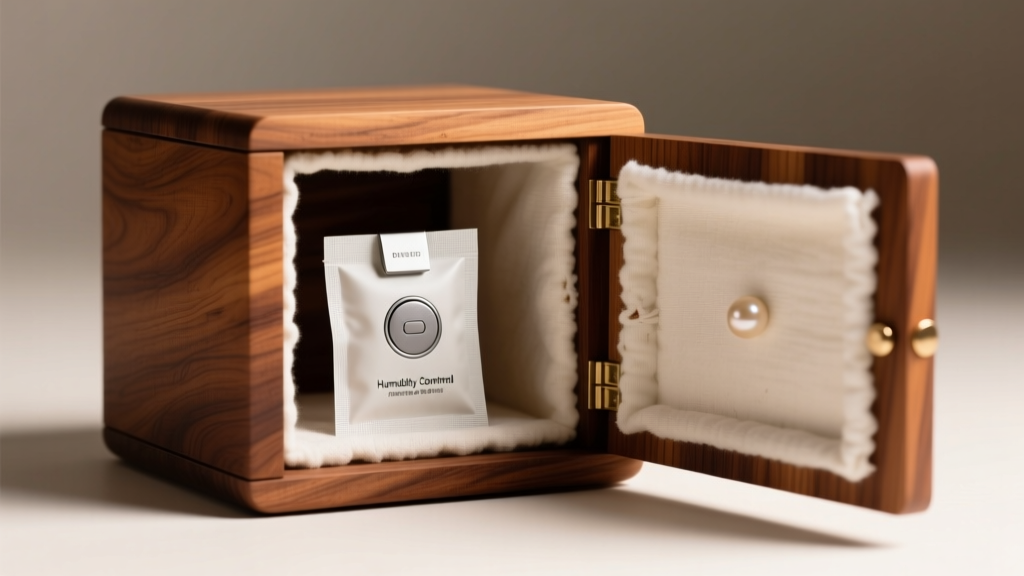
To maintain the structural integrity of the conchiolin protein, the relative humidity inside your pearl necklace box must be stabilized between 45% and 55%. In arid climates or during winter months when indoor heating plummets ambient humidity, passive storage is insufficient.
Expert collectors integrate two-way humidity control packets, such as Prosorb or specialized Boveda packs designed for wooden instruments and organic artifacts, into a discreet side compartment of the box. Unlike standard silica gel desiccants—which only absorb moisture and can over-dry the pearls—two-way beads are preconditioned to a specific RH (typically 50%). If the box interior drops below 50%, the beads release microscopic amounts of pure water vapor; if it rises above 50%, they absorb the excess. This creates a perfect, self-regulating microclimate that prevents the nacre from crazing and the silk thread from becoming brittle.
Troubleshooting Common Storage Failures
Even with a premium pearl necklace box, environmental anomalies can occur. Here is how to diagnose and troubleshoot the most common storage-related failures:
- Chalky or Dull Nacre: This indicates acid exposure or severe dehydration. Check the box lining for hidden synthetic adhesives or acidic glues used in the manufacturing of the box shell. Move the pearls to an untreated cotton pouch immediately and consult a lapidary for professional re-polishing if the damage is superficial.
- Yellowing Silk Thread: Silk degrades when exposed to UV light and trapped VOCs. If your thread is yellowing despite being in a dark box, the lining material is likely off-gassing. Restringing the necklace is mandatory, as the structural integrity of the silk is compromised.
- Sticking or Tacky Surface: This is a sign of plasticizer migration from PVC or low-grade synthetic linings. The chemicals have physically bonded to the pearl's surface. This is a critical failure mode that requires immediate intervention by a professional gemological conservator.
- Metal Clasp Tarnish Transfer: If your necklace features a sterling silver or gold-alloy clasp, sulfur gases can cause tarnish that may rub off onto the adjacent pearls. Utilizing a Pacific Silvercloth lining or storing the clasp in a separate micro-pocket within the box prevents this cross-contamination.
Conservator's Note: A pearl necklace box is not merely a container; it is an active preservation chamber. By prioritizing neutral pH materials, flat structural support, and precise humidity buffering, you ensure that the organic beauty of your nacre survives for generations.
Ultimately, the investment in a technically sound pearl necklace box is a fraction of the cost of replacing a degraded silk strand or attempting to restore chemically etched nacre. Prioritize inert materials, respect the geometry of the silk thread, and actively manage your microclimate to protect your most delicate organic treasures.


