How to Layer a Green and Gold Necklace: A Step-by-Step Guide
Learn how to choose, layer, and style a green and gold necklace. Expert gemologist tips on stone selection, gold karats, and neckline matching.

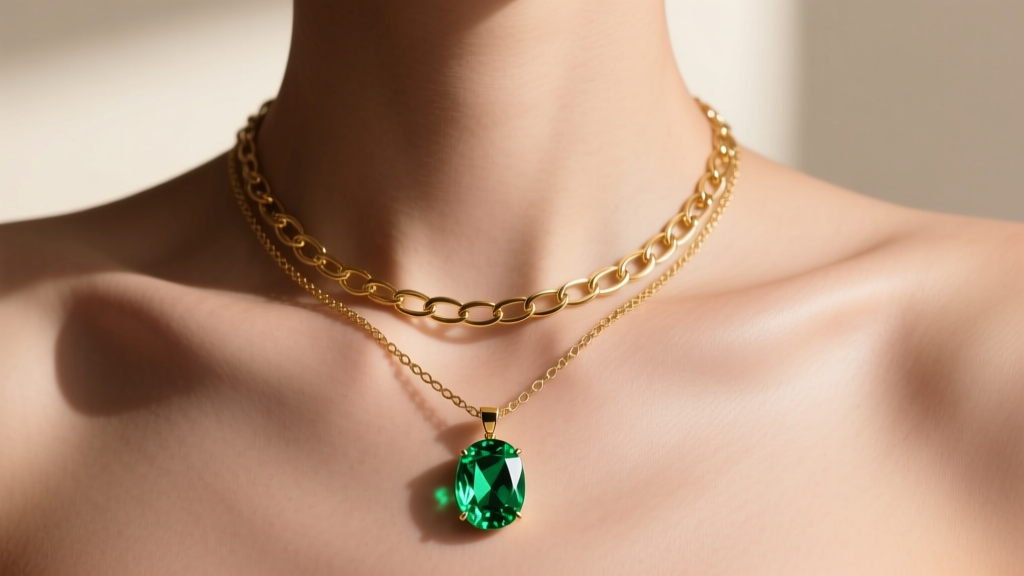
The combination of verdant gemstones and warm yellow metal is a cornerstone of fine jewelry design. A well-crafted green and gold necklace offers a striking contrast that complements virtually every skin tone and wardrobe palette. However, moving from a single pendant to a curated, multi-strand layered look requires an understanding of chain gauges, gemstone durability, and spatial proportion. This step-by-step guide will walk you through selecting the right materials, building a balanced layering stack, and matching your arrangement to specific necklines.
The Anatomy of a Green and Gold Necklace
Before you begin layering, you must establish a high-quality anchor piece. The term 'green gemstone' covers a wide spectrum of mineral families, each with distinct physical properties that dictate how they should be set and worn alongside gold chains.
Selecting the Perfect Green Gemstone
Not all green stones are created equal. When investing in a centerpiece pendant, you must consider the Mohs hardness scale, toughness, and required treatments. According to the Gemological Institute of America (GIA), understanding these traits is vital for daily wear.
| Gemstone | Mohs Hardness | Toughness & Inclusions | Best Gold Setting |
|---|---|---|---|
| Emerald | 7.5 - 8.0 | Low toughness; heavily included (jardin). Requires cedar oiling. | 14k Yellow Gold Bezel |
| Tsavorite Garnet | 7.0 - 7.5 | High toughness; no treatments required. Excellent brilliance. | 18k Yellow Gold Prong |
| Peridot | 6.5 - 7.0 | Moderate toughness; strong double refraction. Sensitive to acid. | 14k Yellow Gold Bezel |
| Chrysoprase | 6.5 - 7.0 | Opaque chalcedony; high toughness. Can fade in prolonged heat. | 18k Yellow Gold Cabochon |
For a vibrant, maintenance-free green and gold necklace, Tsavorite garnet is the superior choice. It possesses a higher refractive index than emerald, meaning it sparkles more brilliantly in low light, and it does not require the periodic oil treatments that emeralds demand to maintain their luster.
Matching the Gold Karat to Your Lifestyle
The 'gold' in your necklace stack is equally critical. Pure 24k gold is too soft for jewelry, so it is alloyed with metals like copper and silver. For the anchor chain holding a valuable green gemstone, 14k gold (58.5% pure gold) is highly recommended. The higher alloy content provides superior tensile strength, ensuring the chain will not snap under the weight of a 3-carat pendant. If you prefer a richer, deeper yellow hue to contrast with a light peridot or chrysoprase, 18k gold (75% pure gold) offers a warmer aesthetic, though it is slightly more prone to micro-scratches over time.
Step-by-Step Guide to Layering Your Necklaces
Layering is not simply throwing multiple chains over your head; it is an exercise in visual weight and spatial distribution. To avoid tangling and ensure each piece is visible, follow this three-tier framework.
Step 1: Establish the Base (14-16 Inches)
Your foundational layer should sit snugly against the base of the neck. Opt for a delicate 14k or 18k yellow gold cable or box chain measuring 1.2mm to 1.5mm in width. At 15 inches, this chain acts as a subtle metallic frame for the collarbone. If desired, add a 2mm gold bead or a tiny 0.10-carat diamond solitaire to provide a subtle glint without competing with the green gemstone below.
Step 2: Anchor with the Green Pendant (18 Inches)
The second layer is the focal point of your green and gold necklace stack. This chain should be exactly 18 inches long, allowing the pendant to rest perfectly in the hollow of the décolletage. Use a slightly heavier chain here—a 2.0mm rope chain or a 2.5mm box chain provides the necessary structural support for a 2-to-4-carat gemstone. The visual weight of this chain should be roughly double that of your base layer to create a clear hierarchy.
Step 3: Add the Matinee Extension (20-24 Inches)
The final layer elongates the torso and ties the stack together. A 22-inch paperclip chain or a 24-inch rope chain in 3.0mm to 4.0mm width introduces a modern, textural element. Because this layer lacks a heavy pendant, the larger, hollow links of a paperclip chain reflect light beautifully and add an architectural contrast to the delicate base chain and the smooth cabochon or faceted green pendant above it.
Neckline Pairing Framework
The effectiveness of your layered green and gold necklace depends heavily on the garment underneath. Use this framework to adjust your stack based on your outfit's neckline:
- The V-Neck: The natural geometry of a V-neck perfectly mirrors a layered stack. Keep all three layers (15", 18", 22") intact. The 18-inch green pendant will naturally sit in the center of the 'V', drawing the eye downward.
- The Crew Neck: High, tight collars can make a full stack look cluttered. Remove the 22-inch matinee chain. Wear the 15-inch choker and let the 18-inch green pendant rest just below the fabric line of the crew neck.
- The Strapless / Off-Shoulder: This neckline exposes maximum skin, allowing for bolder choices. Add a 14-inch solid gold choker or collar as a 'zero' layer, and push the rest of the stack down by one inch (16", 19", 24") to utilize the negative space.
- The Button-Down Shirt: Unbutton the top two buttons. Wear only the 18-inch green pendant and the 22-inch paperclip chain. The delicate 15-inch base chain often gets lost in the collar folds and can cause tangling against the cotton fabric.
Care and Maintenance Protocols
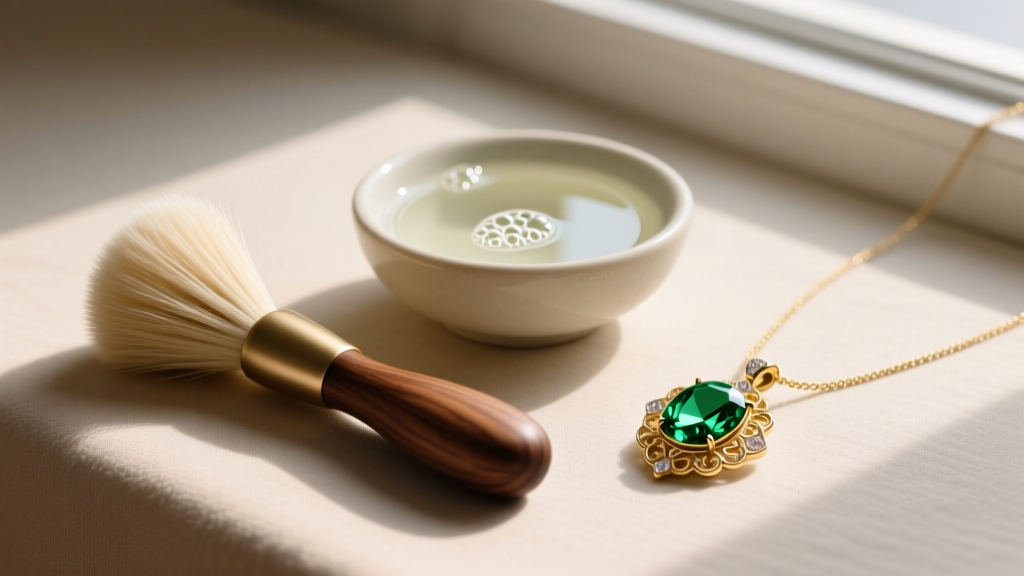
Proper maintenance ensures the gold retains its warm luster and the green gemstone remains vibrant. The cleaning protocol changes drastically depending on the stone you selected in step one.
For Tsavorite Garnet and Peridot, a simple solution of warm water and a few drops of mild, phosphate-free dish soap is sufficient. Soak the necklace for 10 minutes, then gently agitate the setting with a soft-bristled horsehair brush. Rinse with distilled water to prevent hard water spots and pat dry with a microfiber cloth.
However, if your green and gold necklace features an Emerald, you must never use ultrasonic cleaners or steamers. As noted in GIA's Emerald Care Guidelines, ultrasonic vibrations can fracture the stone along its natural inclusions, and heat can strip away the cedar oils used to enhance the stone's clarity. Instead, wipe emeralds gently with a damp, untreated cloth and store them in a soft pouch separate from your gold chains to prevent the metal from scratching the stone's surface. By following these precise material selections and layering measurements, you will achieve a sophisticated, balanced stack that elevates your personal style with gemological precision.


