How to Choose a Red Jewel Necklace: 2026 Buyer Guide
Discover how to choose the perfect red jewel necklace in 2026. Compare rubies, garnets, and spinels, learn about treatments, and find your ideal piece.

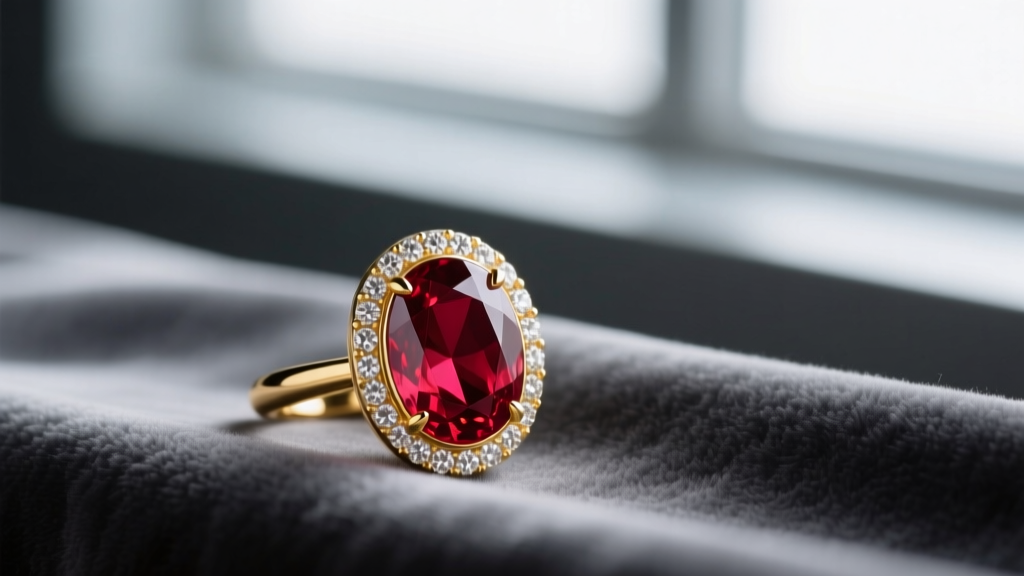
The Enduring Appeal of the Red Jewel Necklace
The red jewel necklace remains one of the most coveted and emotionally resonant items in fine jewelry. Whether you are drawn to the fiery depths of a Burmese ruby, the neon brilliance of a Mahenge spinel, or the deep crimson of a rhodolite garnet, purchasing a red gemstone pendant requires navigating a complex landscape of treatments, origins, and setting mechanics. In 2026, the market for colored gemstones has shifted dramatically. With lab-grown alternatives becoming more prevalent and advanced fracture-filling techniques making expert verification more critical than ever, buyers must be armed with gemological knowledge. This comprehensive buying guide will equip you with the specific data and practical frameworks needed to invest in a red jewel necklace that offers both lasting beauty and structural integrity.
Decoding the 'Red Jewel': Ruby vs. Spinel vs. Garnet vs. Tourmaline
When shoppers search for a 'red jewel necklace,' they are usually looking for one of four primary gemstones. Each possesses distinct optical properties, durability metrics, and pricing structures.
Ruby (Corundum)
The undisputed king of red gemstones. Natural, unheated rubies from Myanmar (Burma) command astronomical premiums, often exceeding $50,000 per carat at auction. However, the 2026 retail market is heavily supplied by Mozambican rubies, which offer exceptional clarity and a slightly purplish-red hue at a fraction of the cost. When evaluating a ruby, look for 'silk' (rutile needle inclusions). In moderate amounts, silk actually enhances the stone's value by scattering light and softening its color, giving it a velvety appearance.
Spinel
Historically mistaken for ruby (the famous Black Prince's Ruby is actually a spinel), this single-refractive gemstone boasts incredible brilliance. Mahenge spinels from Tanzania are currently the most sought-after, prized for their vivid, neon-like red saturation without the secondary brown or purple modifiers often found in other red stones. With a Mohs hardness of 8, spinel is an exceptionally durable choice for everyday wear and lacks the cleavage planes that make other gems prone to splitting.
Garnet
While often thought of as an affordable alternative, fine garnets are serious collector stones. Rhodolite garnet offers a gorgeous purplish-red (raspberry) hue, while Pyrope garnet delivers a deep, classic blood-red. Garnets are almost never treated, making them a 'safe' buy for purists who want a 100% natural stone. However, their Mohs hardness of 7 to 7.5 requires protective settings to prevent abrasion over time.
Tourmaline (Rubellite)
Rubellite tourmaline ranges from pinkish-red to deep crimson. It is heavily included by nature, so eye-clean specimens are rare and highly valuable. Tourmaline is pleochroic, meaning it shows different colors when viewed from different angles, requiring the cutter to orient the stone perfectly to maximize the red saturation.
Comparative Gemstone Data Chart
| Gemstone | Mohs Hardness | Refractive Index | Typical 2026 Price (per ct) | Durability Notes |
|---|---|---|---|---|
| Ruby | 9 | 1.76 - 1.77 | $1,500 - $100,000+ | Excellent; suitable for all settings |
| Spinel | 8 | 1.718 | $500 - $20,000 | Very Good; resists chipping well |
| Garnet | 7 - 7.5 | 1.73 - 1.76 | $50 - $1,500 | Good; avoid high-impact prong settings |
| Rubellite | 7 - 7.5 | 1.62 - 1.64 | $200 - $3,000 | Fair to Good; prone to internal stress |
Navigating Treatments and Enhancements
Understanding gemstone treatments is the most critical step in buying a red jewel necklace. The price difference between a treated and untreated stone can be over 500%.
Heat Treatment vs. Fracture Filling
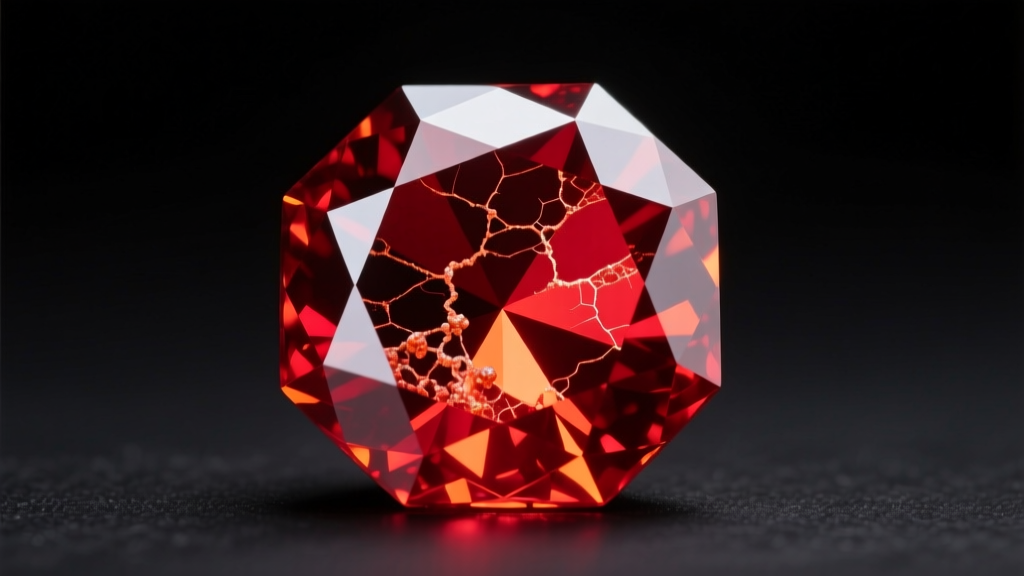
Heat treatment is standard for rubies and sapphires. It permanently improves color and clarity by dissolving inclusions and enhancing saturation. A heated ruby is still a valuable, natural gemstone and is widely accepted in the fine jewelry trade. Fracture filling, however, is a major red flag. Low-quality, opaque rubies are infused with lead-glass to hide fractures and improve transparency. These stones sell for $10 to $30 per carat but are often deceptively marketed as natural rubies. You can identify them using a 10x loupe to look for a 'blue flash' effect along the fracture planes and trapped gas bubbles. Never buy a glass-filled ruby for a fine jewelry necklace, as mild acids (even lemon juice or household cleaners) will permanently destroy the filling.
Selecting the Right Metal and Setting
The setting must protect the gemstone while maximizing its optical performance.
- Prong Settings: Ideal for Rubies and Spinels (Mohs 8-9). Prongs allow maximum light entry, enhancing the stone's brilliance. Ensure the prongs are thick enough to withstand daily wear; V-prongs are recommended for stones with sharp corners.
- Bezel Settings: Mandatory for Garnets and Tourmaline (Mohs 7-7.5). A full or partial metal rim protects the vulnerable girdle (edge) of the stone from chipping against hard surfaces.
- Metal Pairing: 18k yellow gold enhances the warm, orangey tones of Mozambican rubies and garnets. Platinum or 18k white gold provides a high-contrast backdrop that makes the red saturation of spinels and rubellites pop dramatically.
Chain Lengths and Neckline Synergy
The chain length dictates how the pendant interacts with your wardrobe. For a red jewel necklace, the chain must support the weight of the pendant without overpowering it.
- 16-Inch (Choker): Sits at the base of the neck. Best for V-necks, scoop necks, and off-shoulder tops. Ideal for smaller pendants (under 1.00 carat).
- 18-Inch (Princess): The universal standard. Rests perfectly on the collarbone. This length draws the eye directly to the center of the chest and works with almost every neckline.
- 20 to 24-Inch (Matinee): Drops below the collarbone. Ideal for layering with shorter gold chains or wearing over turtlenecks and business attire. Best for larger, statement-sized red jewels.
Certification and Pricing in 2026
Expert Tip: Never rely solely on a retailer's in-house appraisal for colored gemstones. The grading of red saturation and origin determination requires advanced spectroscopic equipment.
For any ruby or spinel necklace priced over $2,000, insist on a report from a top-tier, independent laboratory. The GIA (Gemological Institute of America) is the global standard for identifying treatments and synthetic stones. However, for colored gemstones, many collectors also rely on AGL (American Gemological Laboratories), which is particularly renowned for its detailed colored gemstone grading and origin determination reports. If a vendor cannot provide a GIA or AGL report for a high-ticket ruby, walk away.

The Ultimate Pre-Purchase Checklist
Before finalizing your purchase, whether in a boutique or online, run through this actionable checklist:
- Verify Dimensions: Check the exact carat weight AND the millimeter dimensions. A 2-carat ruby cut too deep will face up smaller than a well-cut 1.5-carat stone.
- Written Disclosure: Ask for the treatment disclosure in writing on the receipt. It must explicitly state if the stone is heated, unheated, or fracture-filled.
- Inspect the Bail: The bail (the loop connecting the pendant to the chain) is a high-stress point. Ensure the solder joints are smooth and the metal gauge is thick enough to support the pendant's weight.
- Return Policy: Only buy from jewelers who offer a minimum 14-day return policy, allowing you time to take the necklace to an independent local gemologist for a second opinion.
By prioritizing gemological data over marketing terms, you can confidently select a red jewel necklace that will serve as a breathtaking, durable heirloom for decades to come.


