How to Make Necklaces: Best Wire & Stringing Materials
Master how to make necklaces by comparing wire gauges, metal hardness, and stringing tensile strengths for durable, professional jewelry.

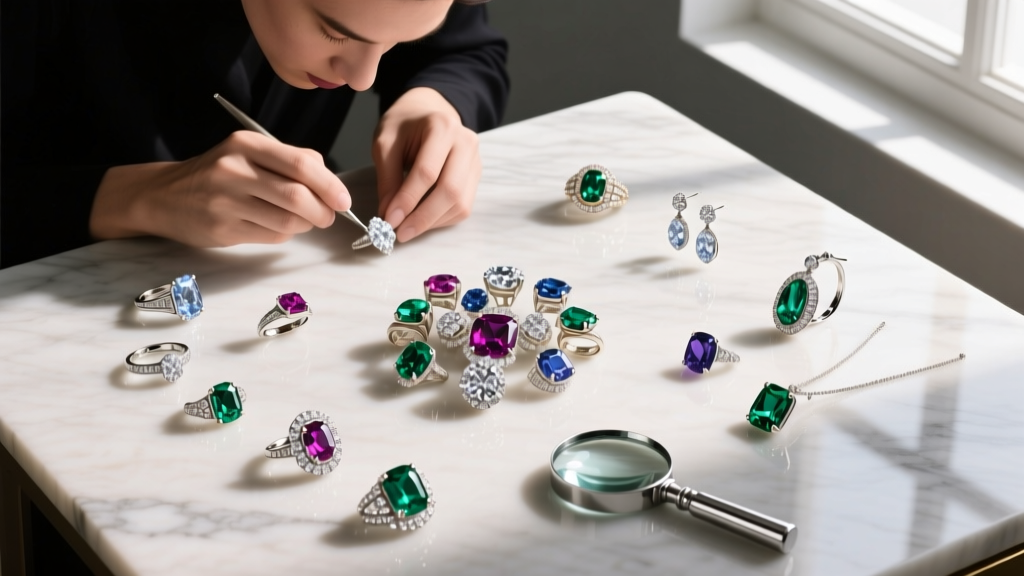
Learning how to make necklaces that are both beautiful and structurally sound requires more than an eye for design; it demands a foundational understanding of metallurgy and material physics. A necklace is essentially a flexible suspension bridge for gemstones and metalwork. If the tensile strength of your stringing material fails, or if your wire gauge is too soft to support a heavy pendant, the piece will inevitably break. This guide bypasses basic aesthetic theory and dives deep into the mechanical properties, gauge specifications, and material degradation factors you must evaluate when selecting components for necklace fabrication.
Decoding Wire Gauges and Hardness Levels
The American Wire Gauge (AWG) system is inversely proportional to thickness: the higher the gauge number, the thinner the wire. Selecting the correct AWG is the first critical decision when figuring out how to make necklaces that withstand daily wear. Equally important is the wire's temper, or hardness, which dictates its malleability and structural memory.
| AWG Size | Diameter (mm) | Primary Necklace Application | Recommended Temper |
|---|---|---|---|
| 18 Gauge | 1.02 mm | Heavy structural collars, thick jump rings, custom clasps | Half-Hard |
| 20 Gauge | 0.81 mm | Standard jump rings, wire-wrapped bails, headpins | Half-Hard |
| 22 Gauge | 0.64 mm | Delicate chain links, wrapping small briolettes | Dead Soft / Half-Hard |
| 24 Gauge | 0.51 mm | Coiling, weaving, securing pearls to silk | Dead Soft |
| 26 Gauge | 0.40 mm | Micro-macrame armatures, intricate wire weaving | Dead Soft |
Dead Soft (Annealed): This wire has been heated and cooled to relieve internal stresses. It bends effortlessly but lacks structural memory. It is ideal for wire weaving but will work-harden and snap if bent repeatedly.
Half-Hard: This temper offers a balance of malleability and rigidity. It holds its shape well under moderate stress, making it the industry standard for jump rings and custom hook clasps.
Full-Hard: Extremely stiff and brittle. It is rarely used in necklace making except for rigid, spring-loaded components like pin stems.
Metallurgical Breakdown of Core Wire Materials
When sourcing wire, the alloy composition directly impacts tarnish rates, skin reactivity, and workability. According to the Gemological Institute of America (GIA), understanding silver alloys is paramount for preventing premature degradation.
Sterling Silver vs. Argentium
Standard 925 Sterling Silver contains 7.5% copper, which provides necessary tensile strength but reacts with atmospheric sulfur and moisture to form silver sulfide (tarnish). Argentium 960 Silver replaces a portion of the copper with germanium. When exposed to oxygen, the germanium forms a transparent, self-healing layer of germanium dioxide on the surface. This metallurgical upgrade makes Argentium roughly 7 to 8 times more tarnish-resistant than standard sterling. While Argentium costs approximately 15-20% more per ounce, the reduction in customer returns due to tarnishing justifies the investment for high-end necklace makers.
Titanium and Niobium (The Hypoallergenic Heavyweights)
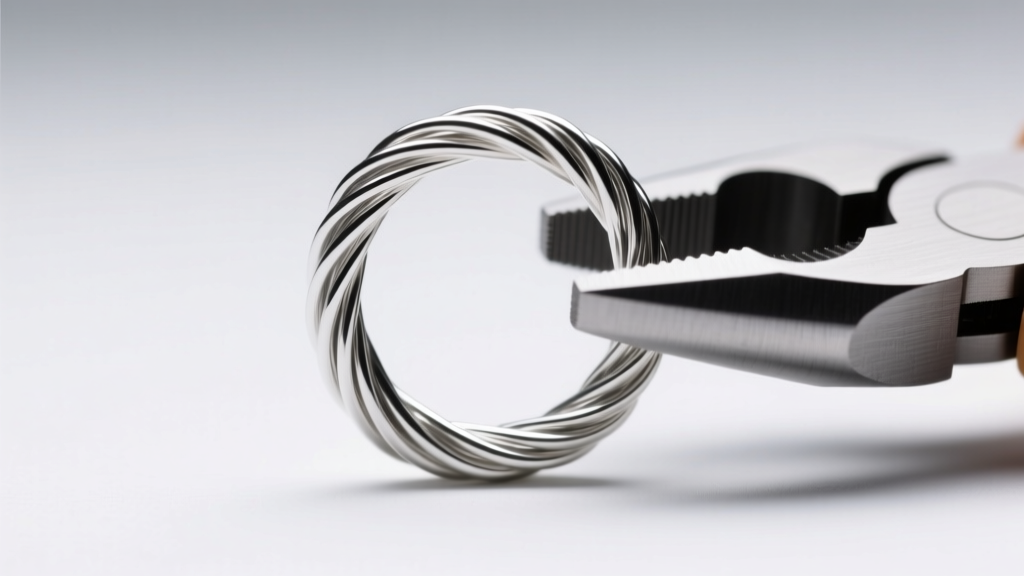
For clients with severe contact dermatitis, commercial white gold or surgical steel often triggers reactions due to hidden nickel alloys. Grade 1 or Grade 2 commercially pure Titanium and Niobium are the ultimate hypoallergenic solutions. However, their mechanical properties present fabrication challenges. Titanium has an extremely high yield strength and will destroy standard steel jewelry saw blades and flush cutters. You must use specialized carbide-tipped tools or laser welders to manipulate titanium wire for structural necklace collars.
Flexible Stringing Materials: Tensile Strength Compared
When learning how to make necklaces featuring heavy stone beads or sharp-drilled crystals, flexible stringing materials are your primary defense against catastrophic failure. The market is dominated by braided stainless steel cables coated in nylon, but not all cables are engineered equally.
- 7-Strand Micro-Wire: The most economical option. Composed of seven twisted steel bundles. It has a lower tensile strength (approx. 20 lbs) and a high memory, meaning it kinks easily. Once a 7-strand wire kinks, the structural integrity of the individual steel filaments is compromised, leading to sudden snapping.
- 19-Strand Micro-Wire: A mid-tier option offering better drape and a tensile strength of around 30 lbs. Suitable for lightweight glass and semi-precious stone necklaces.
- 49-Strand Micro-Wire (0.018" / 0.46mm): The professional standard. Composed of 49 individually braided steel micro-filaments encased in a heavy nylon sheath. It boasts a tensile strength exceeding 40 lbs, mimics the drape of silk thread, and is virtually immune to kinking. This is mandatory for heavy quartz, jasper, or large-holed lampwork beads.
Expert Insight: Never use standard round crimp beads on 49-strand wire. The round shape fails to compress the braided steel evenly, causing the wire to slip. Always use 2x2mm sterling silver or gold-filled crimp tubes, and finish them with a micro-crimping tool that folds the tube into a secure, rounded U-shape, increasing the grip friction by over 30%.
Jump Ring Aspect Ratios and Chainmaille Integrity
If your necklace design incorporates chainmaille or linked wire components, you must calculate the Aspect Ratio (AR). The AR is the mathematical relationship between the Inner Diameter (ID) of the jump ring and the Wire Diameter (WD). The formula is simple: AR = ID / WD.
For a standard European 4-in-1 chainmaille necklace collar, an AR between 4.6 and 5.0 is structurally required. If you use 18-gauge wire (1.02mm WD), you need a jump ring with an inner diameter of roughly 4.7mm to 5.1mm. If the AR is too low (e.g., 3.5), the rings will bind, twist, and snap under tension. If the AR is too high (e.g., 6.5), the necklace will lack rigidity, and the clasps will easily pull through the open links. Suppliers like Rio Grande provide precise ID measurements for their machine-cut jump rings, which is vastly superior to the inconsistent tolerances of hand-wound, saw-cut rings from unverified vendors.
Environmental Degradation and Preventative Finishes
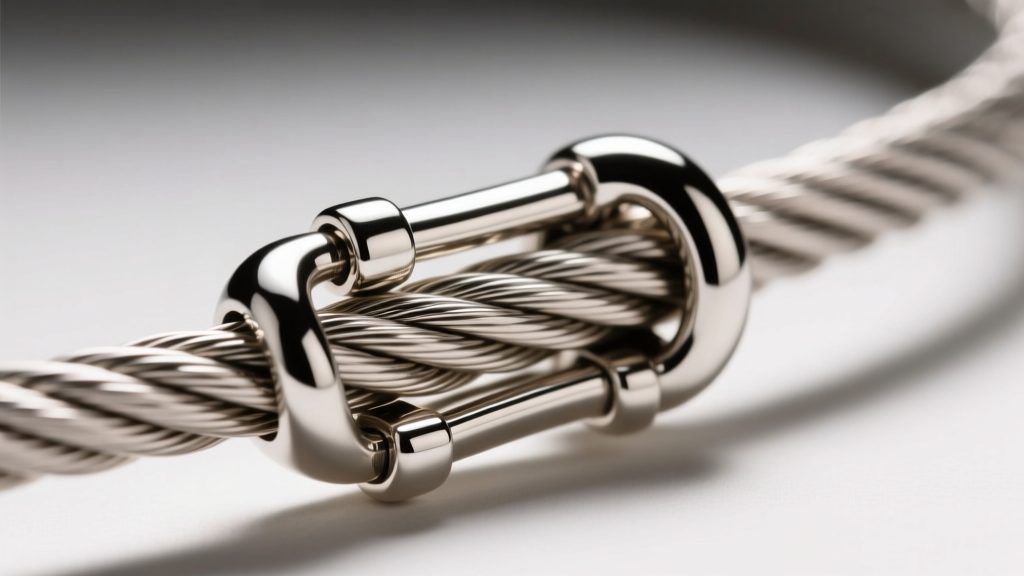
The final step in material selection is anticipating environmental degradation. Brass and copper components, often used for their warm aesthetic and low cost, will oxidize rapidly when exposed to the pH levels of human sweat. To combat this without resorting to toxic clear-coats, modern jewelers utilize E-coating (electro-coating). This process submerges the finished copper or silver necklace into a water-based polyurethane solution and applies an electrical current, bonding a microscopic, flexible, and invisible polymer layer to the metal. E-coated base metals can withstand years of daily wear without oxidizing, provided the coating is not subjected to heavy abrasion from layered chains.
Conclusion: Engineering for Longevity
Mastering how to make necklaces is an exercise in micro-engineering. By pairing a 49-strand braided cable with folded crimp tubes, utilizing Argentium silver for high-contact clasps, and strictly adhering to calculated Aspect Ratios for wire links, you elevate your jewelry from fragile crafts to enduring, professional-grade accessories. Always prioritize the mechanical properties of your materials over their initial cost to ensure your designs stand the test of time.


