The Israel Necklace: Eilat Stone, Metal Grades & Chain Gauges
An expert technical guide to the Israel necklace, covering Eilat stone authentication, 14k/18k gold alloys, and chain gauge load limits.

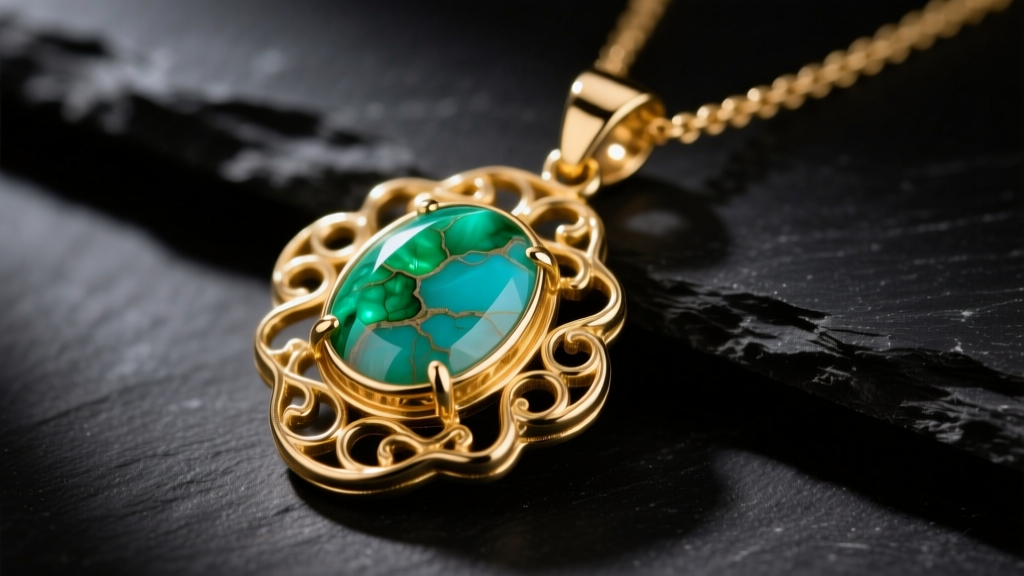
The Metallurgy of Authentic Israeli Jewelry
When collectors and enthusiasts search for an authentic Israel necklace, they are often navigating a market saturated with mass-produced souvenirs. However, high-end Israeli jewelry, particularly pieces originating from the master goldsmiths near the Israel Diamond Exchange (IDE) in Ramat Gan, represents a distinct intersection of cultural heritage and precise metallurgical engineering. Understanding the metal grades used in these pieces is the first step in differentiating fine jewelry from tourist-grade trinkets.
In the Israeli domestic market, 14k gold (stamped 585) is the standard for everyday wear due to its optimal balance of tensile strength and malleability. However, the alloy composition of Israeli 14k gold often differs from its American or European counterparts. Israeli smiths frequently utilize a higher copper-to-silver ratio in the alloy mix, resulting in a distinct, warm rose-yellow hue rather than the pale, greenish-yellow tint common in US-manufactured 14k chains. This specific alloy yields a Vickers hardness (HV) of approximately 135-145, making it highly resistant to the micro-abrasions that cause chain links to thin over time.
For premium pendants featuring precious inlays, 18k gold (stamped 750) is the mandated standard. The higher gold content increases the metal's density and provides a richer luster, but it lowers the Vickers hardness to roughly 115-125 HV. This softer metal is intentionally chosen for bezel settings, as it allows the jeweler to burnish the gold tightly over fragile gemstones without applying excessive pressure that could fracture the stone.
Eilat Stone: Geological Profile and Authentication
No technical deep dive into the Israel necklace is complete without an exhaustive analysis of the Eilat stone. Often mistakenly referred to as a single mineral, the Eilat stone is actually a heterogeneous rock matrix composed primarily of chrysocolla, malachite, azurite, and turquoise, with varying inclusions of pseudomalachite and native copper. Mined almost exclusively from the Timna Valley in the Negev desert, this material is geologically unique and highly porous.
According to the Gemological Institute of America (GIA), the chrysocolla and malachite components of this matrix sit at a mere 3.5 to 4.0 on the Mohs hardness scale. This extreme softness dictates strict parameters for jewelry design:
- Setting Requirements: Eilat stone must never be set with prongs. The localized pressure of a prong will inevitably cause cleavage along the malachite banding. A full or partial bezel setting in 18k gold is the only structurally sound method.
- Stabilization Protocols: Because the raw stone is highly porous, it will absorb skin oils, lotions, and moisture, leading to discoloration and structural degradation. High-quality manufacturers stabilize the stone using opticon or high-grade epoxy resins under a vacuum chamber. This process fills the microscopic voids without altering the stone's natural copper and azurite banding patterns.
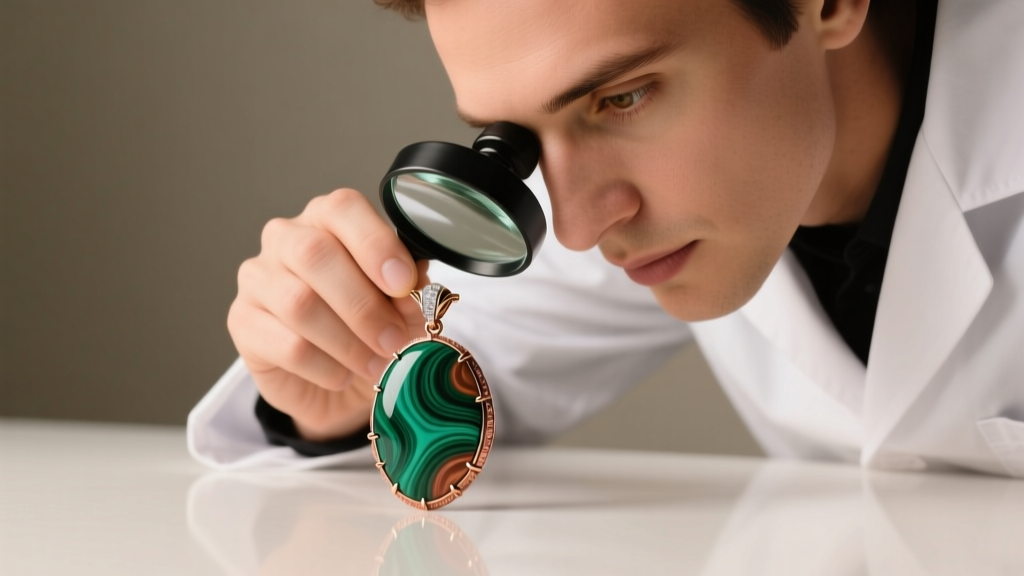
- Authentication Markers: Fakes are rampant, usually consisting of dyed howlite or crushed malachite dust bound in resin. Authentic Eilat stone features distinct, chaotic banding with metallic copper flashes visible under 10x magnification. If the banding looks perfectly concentric or lacks metallic inclusions, it is likely a synthetic imitation.
The Danger of Heat and Chemicals
The copper content within the Eilat stone matrix makes it highly reactive to ammonia and harsh acids. Exposure to standard commercial jewelry dips will strip the copper, leaving the stone with a chalky, bleached appearance that cannot be reversed. Furthermore, the differing thermal expansion rates of the chrysocolla and azurite mean that exposing the pendant to sudden temperature changes (such as wearing it in a sauna or hot tub) will cause internal micro-fracturing.
Chain Gauge Engineering for Heavy Pendants
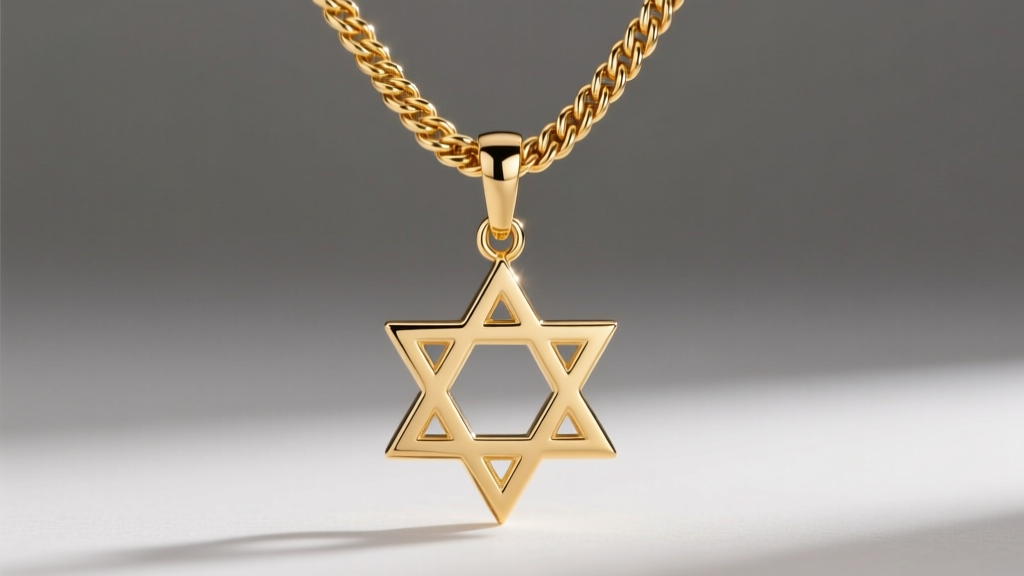
Traditional Israel necklace pendants—such as solid cast Star of David (Magen David) or Hamsa motifs—are remarkably dense. A solid 18k gold Star of David pendant measuring 25mm across can easily weigh between 12 and 18 grams. Suspending this weight requires a chain engineered for high tensile strength, not just aesthetic appeal. Selecting the wrong chain gauge is the leading cause of catastrophic jewelry failure.
| Chain Style | Recommended Gauge (mm) | Max Pendant Weight | Failure Mode / Weak Point |
|---|---|---|---|
| Rope Chain | 2.0 - 3.0 mm | Up to 45g | Link twisting if caught; highly durable otherwise. |
| Cuban Link | 3.0 - 5.0 mm | Up to 80g+ | Clasp failure under extreme loads; links rarely snap. |
| Box Chain | 1.5 - 2.5 mm | Up to 25g | Links can dent and kink, weakening the structural integrity. |
| Snake Chain | 1.5 - 3.0 mm | Max 12g | Prone to severe kinking and snapping; poor for heavy pendants. |
| Figaro Chain | 2.5 - 4.0 mm | Up to 35g | The smaller intermediate links are the primary stress points. |
Clasp Mechanics and Load Distribution
The chain is only as strong as its clasp. For any Israel necklace pendant exceeding 10 grams, the standard spring-ring clasp is entirely inadequate. The internal steel spring in a spring-ring clasp is prone to fatigue and can easily deform under constant pendulum-like motion. A forged lobster clasp or a magnetic locking clasp with a secondary safety catch is mandatory. Furthermore, the jump ring connecting the clasp to the chain must be soldered shut. An unsoldered jump ring will slowly pry open under the dynamic load of a heavy pendant, leading to inevitable loss.
Hallmarks and Sourcing Verification
Verifying the provenance of an Israel necklace requires an understanding of local hallmarking laws. The Israeli Ministry of Economy enforces strict standards regarding precious metal fineness. Authentic pieces will bear a registered maker's mark (often a symbol or Hebrew initials inside a shield or rectangle) alongside the fineness stamp (e.g., 750 for 18k gold, 925 for sterling silver).
Expert Tip: Sterling silver (925) Israel necklaces are highly susceptible to rapid oxidation due to the high sulfur content in certain urban environments and the natural oils of the wearer. If opting for silver, ensure the piece has been treated with a rhodium or e-coat plating to delay tarnishing, or be prepared to polish it weekly with a treated silver cloth.
When purchasing from international vendors, request a macro-photograph of the hallmark. If the fineness stamp is laser-etched rather than struck with a steel punch, or if it lacks the accompanying maker's mark, the piece was likely cast overseas and merely features an "Israel" motif without being manufactured in the region.
Care and Maintenance Protocols
Maintaining an Israel necklace, particularly one featuring an Eilat stone or intricate filigree work, requires a departure from standard jewelry cleaning routines. Never place an Eilat stone pendant in an ultrasonic cleaner. The high-frequency acoustic cavitation will shatter the malachite matrix and strip away any stabilizing resins.
For the gold chains and solid metal pendants, a mild solution of warm water and phosphate-free dish soap, agitated with a soft-bristled baby toothbrush, is the safest method for removing sebum and environmental dust. For the Eilat stone itself, simply wipe the surface with a dry, lint-free microfiber cloth. By adhering to these strict metallurgical and gemological guidelines, collectors can ensure their Israel necklace remains a structurally sound and visually stunning heirloom for generations.


