How to Match the Meaning of a Cross Necklace to Your Style
Discover how to choose the perfect piece by understanding the meaning of a cross necklace. A step-by-step guide to styles, metals, and chains.

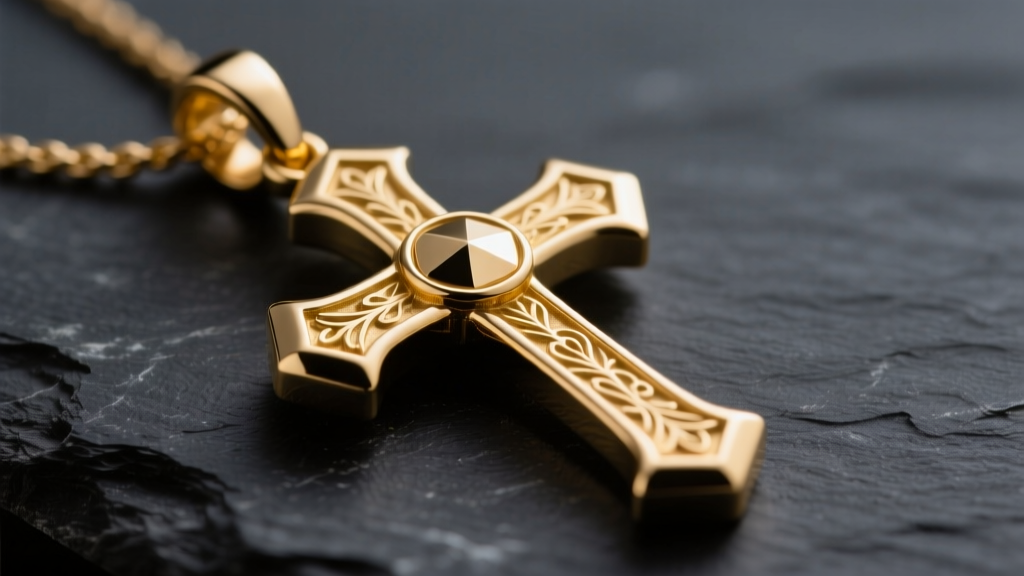
Introduction: Decoding the Intent Behind the Icon
Jewelry is rarely just an accessory; it is a deeply personal statement of identity, faith, and heritage. When evaluating the meaning of a cross necklace, one must look far beyond the general silhouette. The cross is one of the most historically complex symbols in human history, with variations that denote specific theological beliefs, cultural roots, and historical eras. According to Encyclopedia Britannica, the cross evolved from early Roman execution instruments into a vast array of distinct religious and cultural emblems by the 4th century.
As a buyer or collector in 2026, selecting a cross pendant requires an understanding of these nuances. Wearing a Russian Orthodox cross carries a vastly different historical weight than wearing a minimalist sideways cross. This step-by-step guide will teach you how to decode these meanings, select the appropriate metal grades for your lifestyle, and pair your pendant with the correct chain gauge and length for a cohesive, intentional look.
Step 1: Identify the Core Symbolism and Variant
The first step in choosing your necklace is identifying the specific variant that aligns with your personal, spiritual, or aesthetic intentions. Here is a breakdown of the five most prominent cross designs and their distinct meanings.
The Latin Cross vs. The Crucifix
The Latin Cross (crux immissa) features a longer descending arm and is the most universally recognized symbol of Protestant Christianity and general Christian faith. It represents the resurrection and the empty cross. In contrast, the Crucifix includes the corpus (the figure of Christ) and is predominantly worn within Catholic, Anglican, and Lutheran traditions to emphasize the sacrifice and passion of Christ. When shopping, note that Latin crosses are typically lighter and more geometric, while crucifixes require highly skilled sculptural casting.
The Celtic Cross
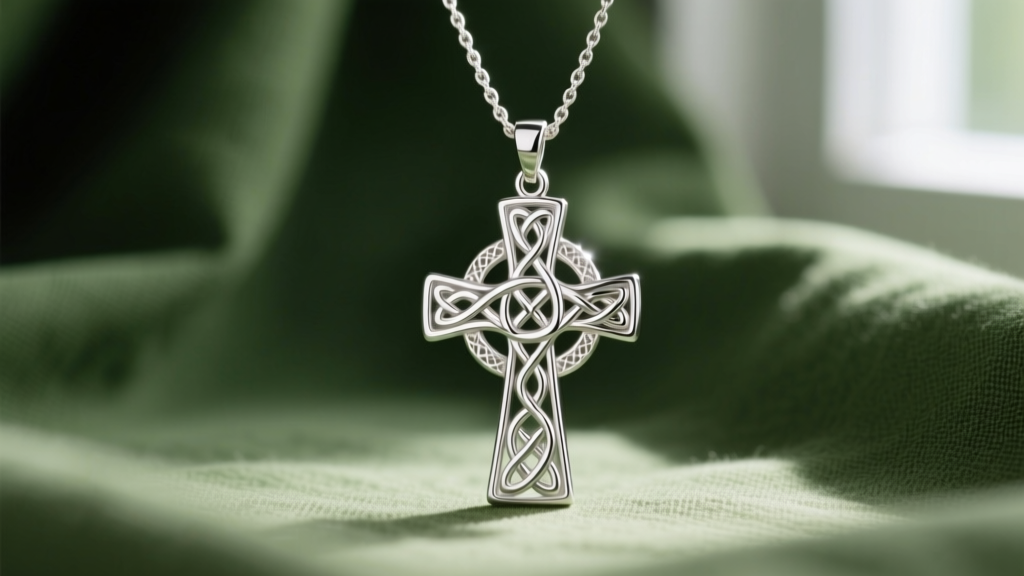
Characterized by a circle intersecting the four arms, the Celtic Cross is deeply rooted in Irish and Scottish heritage. The ring is often interpreted as a symbol of eternity or the sun, merging pre-Christian Celtic traditions with early Insular Christianity. These pendants are usually heavier, featuring intricate knotwork or zoomorphic carvings, and serve as powerful markers of ancestral pride.
The Russian Orthodox Cross
The Orthodox Cross (or Suppedaneum cross) features three horizontal beams. The top bar represents the inscription placed by Pontius Pilate, the middle is the main crossbeam, and the slanted bottom bar represents the footrest. The slant points upward toward the repentant thief and downward toward the unrepentant one. This design is highly specific to Eastern Orthodox traditions and requires a wearer who appreciates deep theological symbolism.
The Jerusalem Cross
Also known as the Crusader's Cross, this design features one large central cross surrounded by four smaller Greek crosses. It symbolizes the five wounds of Christ or the spread of the gospel to the four corners of the earth. It is a bold, highly geometric design that makes a striking statement piece.
Step 2: Match Metal Grades to Wearability and Meaning
The material of your cross necklace not only dictates its longevity but also its visual weight and maintenance requirements. The Gemological Institute of America (GIA) emphasizes that understanding metal alloys is critical for jewelry that will be worn daily against the skin.
- 925 Sterling Silver: Composed of 92.5% pure silver and 7.5% copper. It is an excellent, affordable choice for intricate designs like the Celtic cross. However, the copper content makes it prone to oxidation. For daily wear, ensure your silver cross is plated with a thick layer of rhodium to prevent tarnishing and provide a bright, white-metal finish.
- 14k Gold (58.5% Pure Gold): The industry standard for fine jewelry. It offers the perfect balance between the rich, warm color of gold and the structural durability needed to hold prongs and resist bending. Ideal for Latin crosses and crucifixes worn 24/7.
- 18k Gold (75% Pure Gold): Softer and more vibrant in color than 14k. It is best reserved for special-occasion pieces or pendants that will not be subjected to heavy physical impact, as the higher gold content makes the metal more susceptible to scratching.
- Grade 5 Titanium (Ti-6Al-4V): For those with active lifestyles or severe metal allergies, aerospace-grade titanium is the ultimate modern choice. It is completely hypoallergenic, impervious to water, and incredibly lightweight, making it perfect for larger, solid Orthodox or Jerusalem crosses that would otherwise be too heavy in gold or silver.
Step 3: Select the Right Chain Gauge and Length
A common mistake buyers make is pairing a heavy, historically significant pendant with a chain that is too thin, leading to inevitable breakage. The chain must be engineered to support the pendant's specific weight and visual density. Below is a decision matrix to help you pair your cross variant with the correct chain specifications.
| Cross Variant | Typical Weight & Size | Ideal Chain Style | Recommended Gauge (Thickness) | Optimal Length |
|---|---|---|---|---|
| Latin Cross (Minimalist) | 2g - 5g (10mm - 15mm) | Cable or Box Chain | 1.0mm - 1.2mm | 16" - 18" (Collarbone) |
| Crucifix (Detailed) | 8g - 15g (25mm - 40mm) | Figaro or Curb Chain | 1.5mm - 2.0mm | 20" - 22" (Chest) |
| Celtic Cross (Solid) | 15g - 30g (30mm - 50mm) | Rope or Wheat Chain | 2.5mm - 3.5mm | 22" - 24" (Sternum) |
| Orthodox Cross | 10g - 20g (35mm - 45mm) | Byzantine or Curb Chain | 2.0mm - 3.0mm | 20" - 24" (Chest/Sternum) |
| Sideways Cross | 3g - 6g (15mm - 20mm) | Delicate Cable Chain | 0.8mm - 1.0mm | 15" - 16" (Choker/High) |
When evaluating the meaning of a cross necklace, the way it sits on the body changes its impact. A 24-inch heavy rope chain holding a solid Celtic cross projects a bold, heritage-focused aesthetic, while a 16-inch delicate cable chain with a tiny sideways cross offers a subtle, modern, and highly personalized nod to faith or fashion.
Step 4: Styling and Layering Protocols
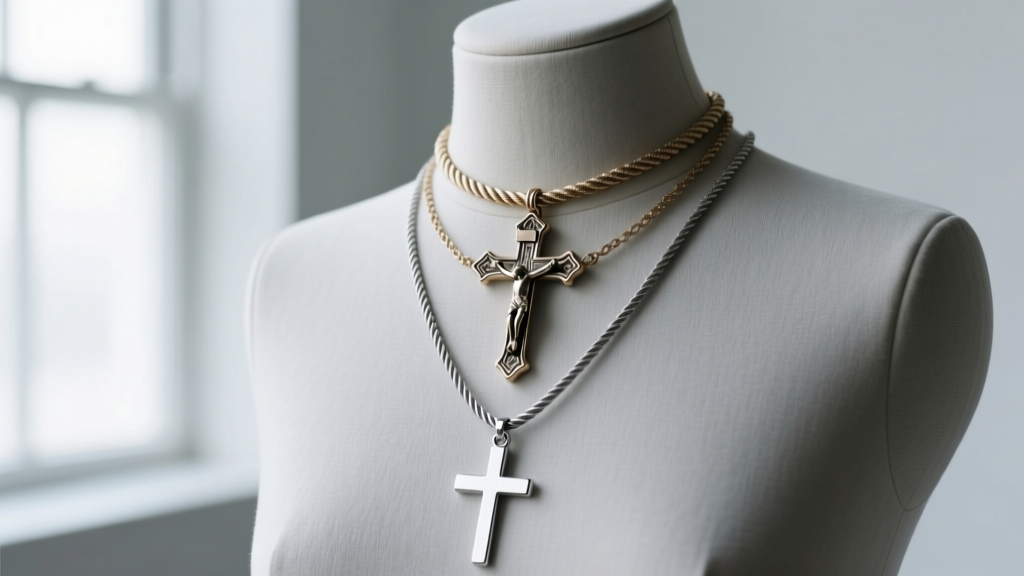
Layering cross necklaces requires a strict adherence to spatial distribution to prevent the chains from tangling and the pendants from scratching one another. If you are layering a cross with other secular pendants (like coins or gemstones), follow the "Rule of Three" for optimal visual hierarchy:
- The Anchor (16 inches): Start with a lightweight, non-pendant chain or a very small 10mm sideways cross. This sits high on the clavicle and frames the face.
- The Focal Point (20 inches): This is where your primary cross pendant should rest. A 25mm Latin cross or Crucifix on a 2.0mm chain draws the eye directly to the center of the chest.
- The Terminator (24 inches): Finish with a heavier, longer chain featuring a textured bead or a larger, secondary cultural pendant. This creates a cascading V-shape that elongates the neck and torso.
Always ensure that the metals in your layered stack share the same finish (e.g., all high-polish or all matte/brushed) to maintain a cohesive aesthetic, even if you are mixing metal colors like yellow gold and oxidized silver.
Final Thoughts on Intentional Jewelry
Understanding the meaning of a cross necklace transforms it from a simple metallic shape into a profound extension of your personal narrative. Whether you are honoring your Eastern Orthodox roots with a slanted-bar pendant, celebrating Irish ancestry with a knotwork Celtic cross, or simply appreciating the geometric perfection of a minimalist Latin silhouette, the key lies in intentional selection. By matching the historical weight of the symbol with the correct metal grade, chain gauge, and styling protocol, you ensure that your necklace is not only deeply meaningful but also structurally engineered to last a lifetime.


