How to Store Necklaces: Expert Guide to Preventing Tarnish & Tangling
Learn exactly how to store necklaces by metal type. Expert protocols to prevent galvanic corrosion, tangling, and tarnish for fine and fashion jewelry.

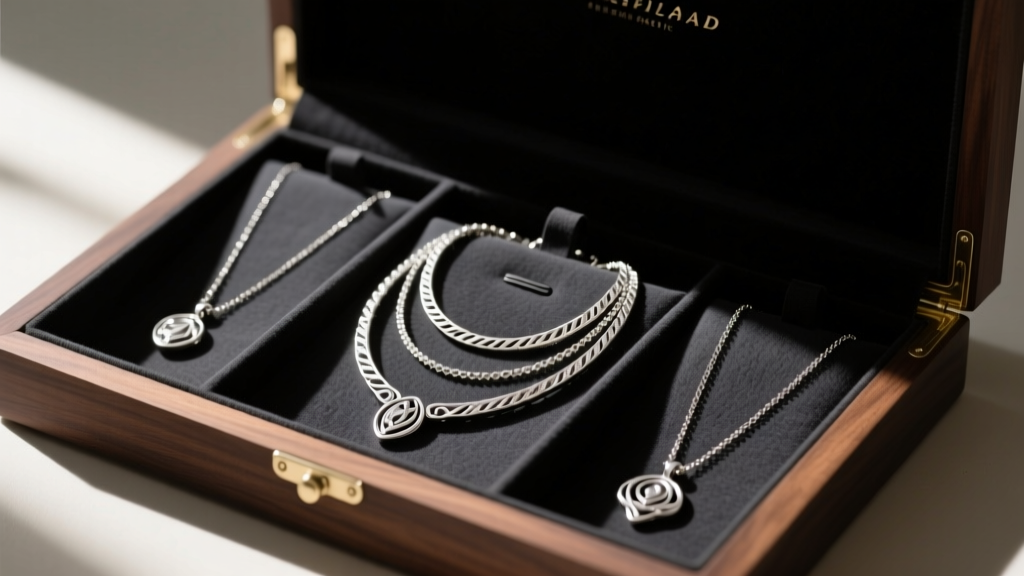
The Chemistry of Tarnish: Why Your Current Method is Failing
Most jewelry owners treat storage as a simple organizational task, but from a metallurgical perspective, it is an active chemical defense strategy. When asking how to store necklaces properly, you must first understand the enemy: hydrogen sulfide (H2S) and ambient moisture. Sterling silver (92.5% silver, 7.5% copper) reacts with trace atmospheric H2S to form silver sulfide (Ag2S), the black compound we recognize as tarnish. According to conservation guidelines from the Smithsonian Institution, maintaining relative humidity (RH) below 50% is critical to halting this electrochemical reaction.
Storing mixed metals together accelerates degradation through galvanic corrosion. If a sterling silver chain rests against a copper or brass pendant in a humid environment, the less noble metal (copper) acts as a sacrificial anode, rapidly oxidizing and transferring corrosive salts to the silver. Therefore, the cardinal rule of archival jewelry storage is strict material segregation.
Material-Specific Storage Matrix
Different alloys possess distinct vulnerabilities. Use the following technical matrix to determine the optimal micro-environment for your specific necklace collection.
| Metal / Alloy | Primary Vulnerability | Ideal Storage Environment | Required Anti-Tarnish Agent |
|---|---|---|---|
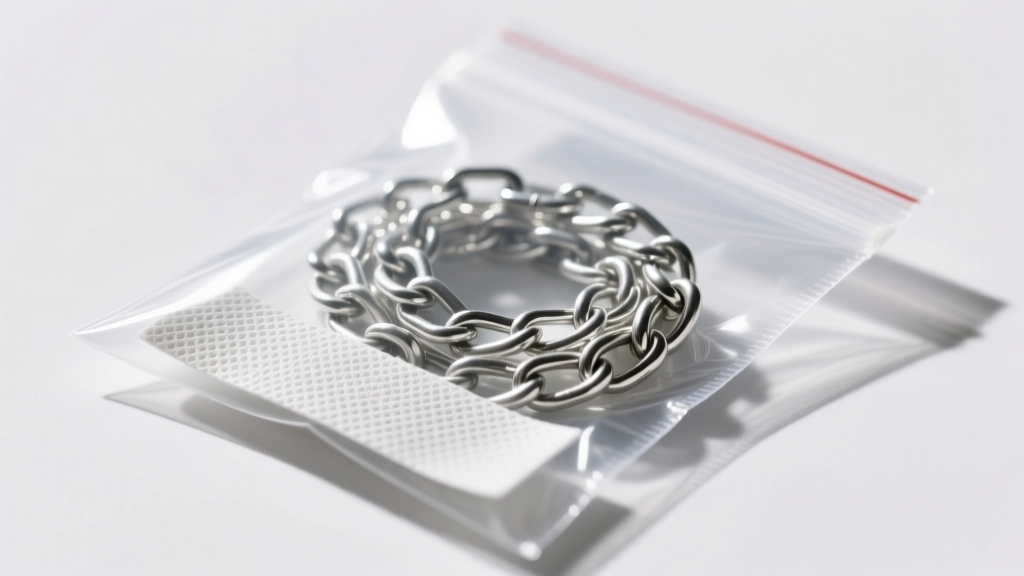
| Sterling Silver (925) | H2S & Moisture (Ag2S formation) | Airtight Polyethylene Ziploc | 3M Anti-Tarnish Strips (Copper-based) |
| 14k / 18k Yellow Gold | Surface scratching, Chlorine pitting | Breathable Flannel Pouch | None required (Keep away from PVC) |
| Platinum (950) | Patina transfer, Micro-scratching | Individual Felt-Lined Slots | Silica Gel (Desiccant only) |
| Gold Vermeil / Plated | Friction wear, Moisture delamination | Original Rigid Box + Acid-Free Tissue | Pacific Silvercloth (Zinc-treated) |
| Stainless Steel (316L) | Chloride-induced pitting | Open Hanging Rack | None required |
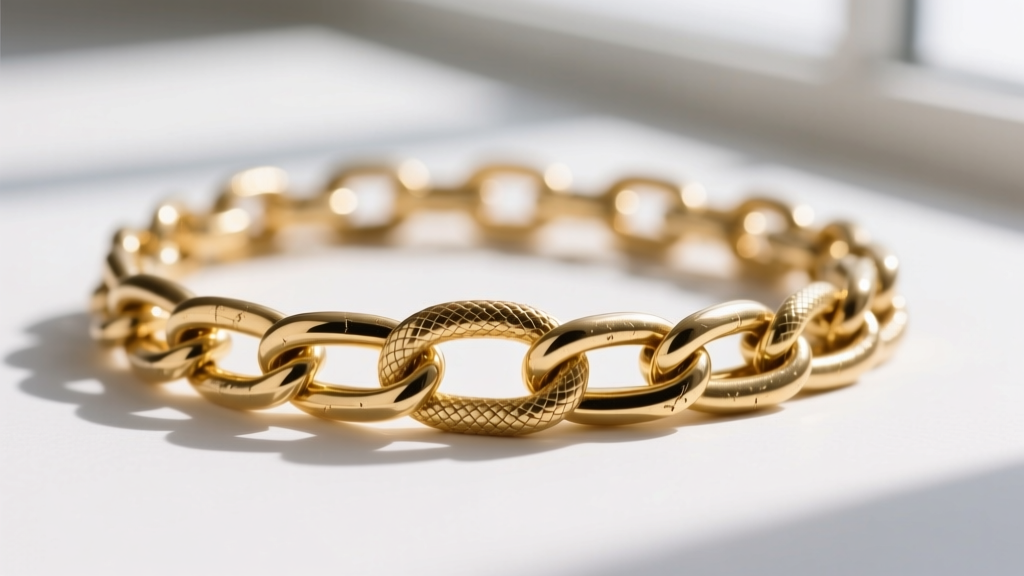
Structural Mechanics: Chain Types and Yield Points
Understanding how to store necklaces also requires an understanding of structural mechanics. Not all chains possess the same tensile strength or bend radius. Storing a heavy pendant on a delicate chain, or folding a rigid chain, will cause irreversible plastic deformation.
1. Snake and Omega Chains
These chains are constructed from tightly interlocking metal bands that create a smooth, continuous surface. They have an extremely low yield point for lateral bending. If folded or crushed in a jewelry box, the internal metal core kinks. Once a snake chain kinks, the structural integrity is permanently compromised, and it will eventually snap under the weight of a pendant. Storage Rule: Must be stored perfectly flat or hanging in a wide, relaxed arc. Never coil tightly.
2. Box and Cable Chains
While highly flexible, the hinges in box chains act as microscopic traps for sebum, cosmetic powders, and environmental grit. Over time, this debris acts as an abrasive lapping compound, wearing away the interior of the links. Storage Rule: Must be ultrasonically cleaned and fully dried before being placed in flat, segmented trays to prevent the links from twisting and binding.
3. The Weight-to-Bail Ratio
If a pendant exceeds 15 grams, storing it while attached to a fine chain (under 1.5mm width) places continuous static stress on the chain's bail and the connecting jump ring. Over months, this causes creep deformation, where the metal slowly stretches and thins. Always detach heavy pendants from fine chains prior to long-term storage.
Clasp Mechanics and Spring Fatigue
The spring ring and lobster clasp are the most common closure mechanisms, yet they are highly susceptible to metal fatigue and environmental degradation. Inside a spring ring clasp is a tiny steel spring. If stored in a high-humidity environment without desiccants, this internal steel spring will rust and seize long before the external gold or silver casing shows any signs of tarnish. Furthermore, storing a necklace with the clasp in the "open" position keeps the internal spring under continuous tension, accelerating metal fatigue and leading to eventual failure. Storage Rule: Always store necklaces with the clasp securely closed, and occasionally apply a microscopic drop of synthetic watch oil to the moving lever hinge to prevent friction wear.
The Physics of Tangling and the "Straw Method"
Tangling is not merely an annoyance; it is a topological inevitability driven by kinetic energy and friction. When multiple delicate chains are placed in a single compartment, ambient vibrations (from walking, closing drawers, or even foot traffic) cause the chains to act like cooked spaghetti, seeking the lowest energy state by intertwining. To prevent this during travel or temporary storage without specialized boxes, jewelers utilize the "straw method." By threading one end of the chain through a rigid plastic or paper straw and securing the clasp, you alter the chain's structural rigidity. This prevents the chain from crossing its own center line, mathematically eliminating the possibility of knot formation. For long-term home storage, rigid velvet-lined channel trays are the professional standard, as they restrict lateral movement entirely.
"The physics of tangling is governed by friction coefficients and the center of gravity. A necklace left in a confined space will naturally seek the lowest energy state, which often results in complex topological knots. Isolating pieces eliminates the kinetic movement required for tangling."
Advanced Anti-Tarnish Technologies
Many commercial storage solutions rely on marketing buzzwords rather than chemical efficacy. Here is a technical breakdown of what actually works to preserve your necklaces.
- 3M Anti-Tarnish Strips: These utilize a proprietary copper-based particle system that chemically binds with hydrogen sulfide and other corrosive gases before they can reach your silver. They are sacrificial; the strip turns dark grey as it absorbs sulfur. They must be replaced every 6 months in an airtight container.
- Pacific Silvercloth: A specialized cotton flannel embedded with microscopic silver particles. The cloth acts as a sacrificial anode, tarnishing itself to protect the jewelry inside. It requires an airtight environment to function properly and should never be washed, as laundering removes the active silver/carbon particles.
- Silica Gel vs. Activated Charcoal: Silica gel is a desiccant; it only controls moisture (RH). It does not absorb sulfur gases. Activated charcoal can absorb some volatile organic compounds (VOCs) and odors, but is largely ineffective against H2S. For comprehensive protection, you must use a desiccant in combination with a sulfur-absorbing agent like the 3M strips.
Environmental Variables: Temperature and Light Exposure
Beyond humidity and atmospheric gases, thermal fluctuations and UV radiation play a silent role in jewelry degradation. While metals themselves are largely impervious to standard UV light, the gemstones often set in necklace pendants are not. Prolonged exposure to direct sunlight can cause the dehydration of opals, leading to crazing (a network of fine cracks), and can fade heat-treated stones like kunzite or amethyst. Furthermore, extreme temperature fluctuations cause the metal settings to expand and contract at different rates than the gemstones they hold. This differential thermal expansion can loosen prongs over time, increasing the risk of stone loss. Therefore, archival storage must occur in a climate-controlled interior room, avoiding attics, basements, or exterior-facing walls where thermal bridging occurs.
The Archival Preparation Protocol
Before a necklace enters long-term storage, it must be stripped of human biological contaminants. Sebum (skin oils), sweat (which contains lactic acid and chlorides), and cosmetics create a localized acidic micro-environment that accelerates corrosion, particularly on the copper alloys found in 14k gold and sterling silver.
- Degreasing: Wash the necklace in warm distilled water with a single drop of pH-neutral dish soap (avoiding any soaps with added moisturizers or citrus extracts).
- Agitation: Use a baby-soft toothbrush to gently dislodge debris from the clasp mechanisms and link hinges.
- Rinsing: Rinse thoroughly with distilled water. Tap water contains chlorine and dissolved minerals that will leave spotting and promote pitting.
- Drying: Pat dry with a lint-free microfiber cloth, then use a hair dryer on the "cool" setting to ensure zero moisture remains trapped in the clasp springs or link crevices.
- Sealing: Place the completely dry necklace in a polyethylene (PE) ziplock bag. Avoid polyvinyl chloride (PVC) plastics, as PVC off-gasses hydrochloric acid over time, which will severely damage silver and copper alloys. The Gemological Institute of America (GIA) specifically warns against storing jewelry in PVC-containing materials.
By treating your necklace storage as an exercise in applied chemistry and structural engineering, you will eliminate tangling, halt galvanic corrosion, and ensure your pieces remain in pristine, wearable condition for decades.


