A Beginner's Guide to Choosing an Ancient Stone Necklace
Discover how to identify, authenticate, and style an ancient stone necklace. Learn about bead materials, stringing methods, and care tips.

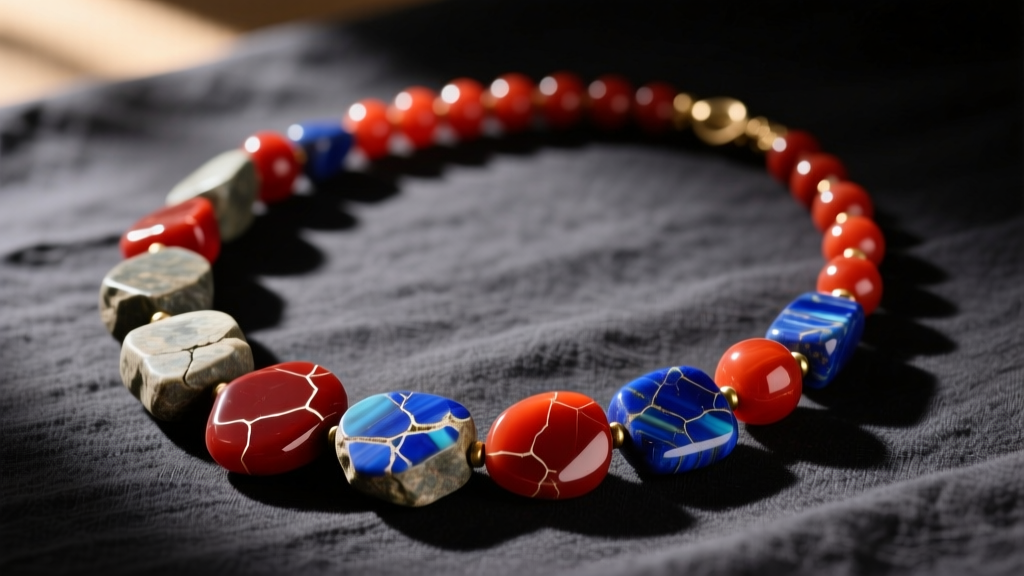
Wearing an ancient stone necklace is not just a fashion statement; it is an intimate connection to human history. Whether you are drawn to the deep blues of Afghan lapis lazuli or the fiery oranges of Indian carnelian, ancient beads carry the weight of centuries. However, the antiquities market is flooded with modern replicas, reconstituted stones, and artificially aged glass. For beginners, navigating this space requires a blend of historical knowledge and gemological observation.
This guide will teach you how to authenticate, restring, and properly care for genuine ancient stone bead necklaces, ensuring your investment is both historically significant and structurally sound.
What Defines an 'Ancient' Stone Necklace?
In the realm of jewelry history, the term 'ancient' generally refers to artifacts created before the fall of the Western Roman Empire (circa 476 CE). When you are shopping for an ancient stone necklace, you are typically looking at pieces originating from:
- Mesopotamia and the Indus Valley (c. 3300–1300 BCE): Known for intricately banded agates, etched carnelian, and steatite.
- Ancient Egypt (c. 3100–30 BCE): Famous for broadcollar necklaces featuring turquoise, lapis lazuli, and carnelian.
- The Roman Empire (c. 27 BCE–476 CE): Popularized the use of engraved gemstones, amber, and rock crystal.
Unlike modern jewelry, which prioritizes symmetrical cuts and uniform bead sizing, ancient stone beads were shaped by hand using abrasive sand and bow drills. This results in a distinct, organic asymmetry that is highly prized by collectors today.
Authentication: The Beginner's Checklist
Distinguishing a genuine antiquity from a 'vintage-style' modern bead requires close inspection. Before purchasing an ancient stone necklace, examine the beads for these three critical hallmarks.
1. The Biconical Drill Hole
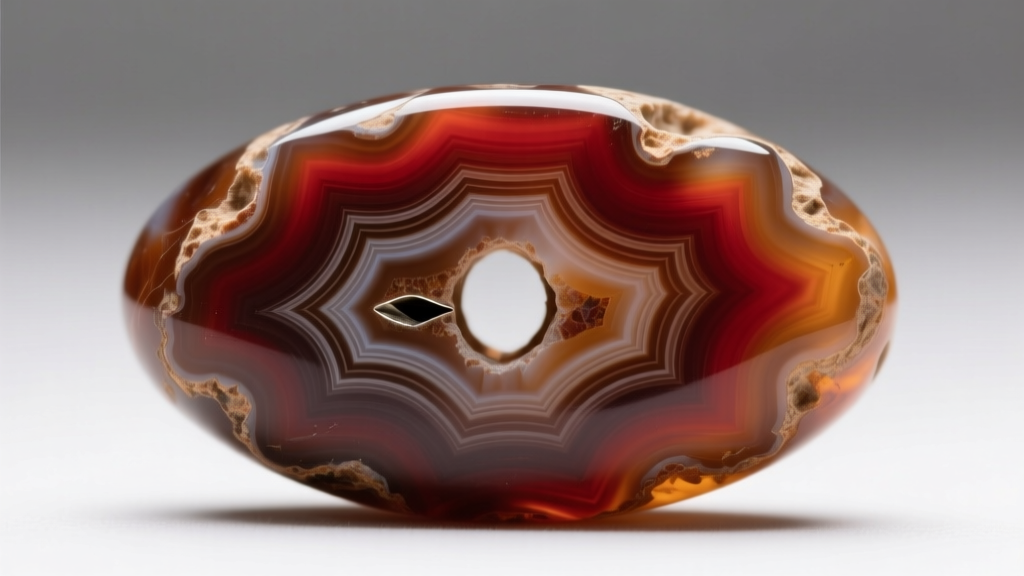
Ancient artisans did not have the long, rigid steel drill bits used today. Instead, they used bow drills with copper or bronze tips and abrasive sand. Because the drill bit would often wander or break if pushed too deep, beads were drilled from both ends until the two holes met in the middle. This creates a biconical (hourglass-shaped) hole. If you look through the bead and see a perfectly straight, uniform cylinder, it is almost certainly a modern, laser- or machine-drilled replica.
2. Keyhole Wear and Patina
Centuries of wear against rough organic cords (like sinew or early plant fibers) create distinct wear patterns. Look for 'keyholing'—a smooth, elongated widening of the drill hole at the bead's surface. Additionally, genuine ancient stones develop a soft, muted patina. The microscopic scratches from thousands of years of friction give the stone a subtle, waxy luster that cannot be easily replicated by modern tumbling.
3. Asymmetry and Tool Marks
Run your fingers along the surface of the bead. You should feel slight undulations, flat facets from hand-grinding, or subtle grooves left by ancient abrasive stones. Perfectly round, uniformly polished beads are a red flag for modern manufacturing.
Expert Tip: Always use a 10x jeweler's loupe to inspect the interior of the drill hole. Modern fakes often feature 'frosted' glass-like interiors from high-speed diamond core bits, whereas ancient holes will show concentric, uneven grinding striations.
Common Materials and Their Historical Origins
Understanding the geological and geographical origins of ancient stones is crucial for authentication. According to the Gemological Institute of America (GIA), certain stones were only available from specific ancient trade routes. If a seller claims a bead is ancient Roman but features a stone not available to that empire, proceed with caution.
| Stone Material | Primary Ancient Source | Mohs Hardness | Avg. Price (Per Authentic Bead) |
|---|---|---|---|
| Lapis Lazuli | Sar-e-Sang Mines, Afghanistan | 5.0 - 5.5 | $40 - $150+ |
| Carnelian | India, Egypt (often heat-treated) | 6.5 - 7.0 | $20 - $80 |
| Banded Agate | Yemen, India, Anatolia | 6.5 - 7.0 | $50 - $300+ |
| Turquoise | Sinai Peninsula, Iran | 5.0 - 6.0 | $30 - $120 |
| Rock Crystal | Various (Alps, Anatolia) | 7.0 | $25 - $90 |
For a deeper dive into how ancient civilizations enhanced these stones, the GIA's Carnelian Guide explains how heat treatment was used as far back as the Neolithic era to deepen the red-orange hues of chalcedony.
Stringing and Restringing: Preserving Integrity
One of the most common mistakes beginners make is restringing an ancient stone necklace on modern beading wire (like Beadalon or Soft Flex). Never use steel wire on ancient beads. The steel wire acts like a microscopic saw against the softer stone (especially lapis and turquoise) and will eventually cut through the bead from the inside out due to friction and movement.
The Proper Restringing Protocol
To preserve the historical integrity and physical structure of your necklace, use traditional or high-quality organic-compatible materials:
- Size F or G Silk Cord: Griffin natural silk is the gold standard. It is strong, flexible, and historically appropriate.
- French Wire (Gimp): Use fine silver or gold-filled French wire at the clasp ends to protect the silk from fraying against the metal jump rings.
- Knotting: Tie a square knot between every single bead. This prevents the beads from grinding against one another and ensures that if the cord breaks, you only lose one bead rather than the entire necklace.

Everyday Care and Maintenance
Ancient stones have survived millennia, but they are highly vulnerable to modern chemicals and cleaning methods. Treat your ancient stone necklace as a fragile museum artifact.
- Avoid Ultrasonic Cleaners: The high-frequency vibrations will shatter ancient agates and carnelians that possess invisible, microscopic internal fractures.
- Keep Away from Cosmetics: Perfumes, lotions, and hairsprays can penetrate the porous surfaces of turquoise and lapis lazuli, causing permanent discoloration.
- Water Exposure: While quartz-based stones (carnelian, agate) can handle brief water exposure, copper-bearing stones like turquoise and lapis lazuli should never be submerged. Water can cause the copper matrix to oxidize and turn green or black.
- Storage: Store the necklace flat in a soft, acid-free linen pouch. Hanging heavy ancient bead necklaces can put undue stress on the silk cord over time, leading to stretching and eventual failure.
Where to Buy (and Red Flags to Avoid)
When sourcing an ancient stone necklace, provenance is everything. Reputable dealers will provide a certificate of authenticity and, ideally, a history of the piece's excavation or previous collection (such as an old European estate).
Red Flags: Avoid sellers offering 'unearthed' ancient necklaces fully strung on modern elastic or nylon. Genuine antiquities are almost always sold as loose beads or on decaying, original organic cords that require immediate professional restringing. Furthermore, be highly skeptical of perfectly matched, uniform strands of ancient lapis lazuli; ancient artisans simply did not have the tools to create perfectly calibrated 8mm round beads.
By understanding the tool marks, historical trade routes, and proper preservation techniques, you can confidently build a collection of ancient stone jewelry that honors the artisans who first shaped them thousands of years ago.


