How to Style and Layer a Crystal Teardrop Necklace
Master the art of styling a crystal teardrop necklace. Expert guide on layering techniques, neckline pairings, chain weaves, and gemstone care.


The crystal teardrop necklace is a masterclass in versatile elegance, bridging the gap between raw, earthy energy and refined, high-end jewelry. Whether you are working with a faceted Swarovski piece, a raw unpolished quartz point, or a smooth rose quartz cabochon, the teardrop silhouette naturally draws the eye downward, elongating the neck and creating a striking focal point. However, styling a pendant with such a distinct center of gravity requires more than just throwing it on a chain. In 2026, the trend has shifted heavily toward intentional, mixed-metal layering and hyper-personalized gemstone curation.
This comprehensive guide will walk you through the exact mechanics of styling, layering, and maintaining your crystal teardrop necklace, ensuring it sits perfectly and lasts for years.
The Anatomy of a Teardrop Pendant: Bails and Settings
Before you begin layering, you must understand the structural connection point of your pendant: the bail. The bail dictates how the crystal hangs and which chains are compatible. According to Fire Mountain Gems, choosing the wrong bail for a teardrop shape can lead to premature wear or the stone snapping off entirely.
- Glued Bails (Epoxy): Common in mass-market crystal jewelry. A metal pad is glued to the flat top of the teardrop using two-part jeweler's epoxy. Warning: Over time, exposure to UV light, perfumes, and skin oils causes the epoxy to yellow and become brittle. Avoid wearing glued bails in high heat or while swimming.
- Wire-Wrapped Bails: The superior choice for raw or tumbled teardrops. Using 20-gauge or 22-gauge dead-soft sterling silver or gold-filled wire, the pendant is mechanically secured. This method allows the crystal to swing freely without stress on the stone's tip.
- Prong-Set Bails: Reserved for faceted crystals (like quartz or lead glass). The metal prongs grip the crystal's girdle. Ensure the prongs are checked annually for lifting, as a loose prong will cause the teardrop to fall out and shatter.
Gemstone Hardness and Chain Pairings
Not all crystals are created equal. The GIA Gem Encyclopedia utilizes the Mohs scale of mineral hardness to determine a stone's resistance to scratching and abrasion. Pairing the correct chain weave with your crystal's weight and hardness is critical for longevity.
| Crystal Type | Mohs Hardness | Best Chain Weave | Weight Tolerance & Notes |
|---|---|---|---|
| Clear / Rose Quartz | 7.0 | Box Chain or Wheat Chain | Handles heavy pendants (15g+). Resists kinking. |
| Amethyst | 7.0 | Cable or Rolo Chain | Best for medium pendants (5g-15g). Classic look. |
| Fluorite | 4.0 | Snake Chain | Very soft. Keep away from diamonds/sapphires to prevent scratching. |
| Moldavite | 5.5 | Bezel-Set on Cord | Brittle natural glass. Prone to chipping if struck against metal. |
| Swarovski (Lead Glass) | ~5.5 | Delicate Cable Chain | Usually lightweight (under 8g). High refraction, requires frequent cleaning. |
Step-by-Step Layering Framework
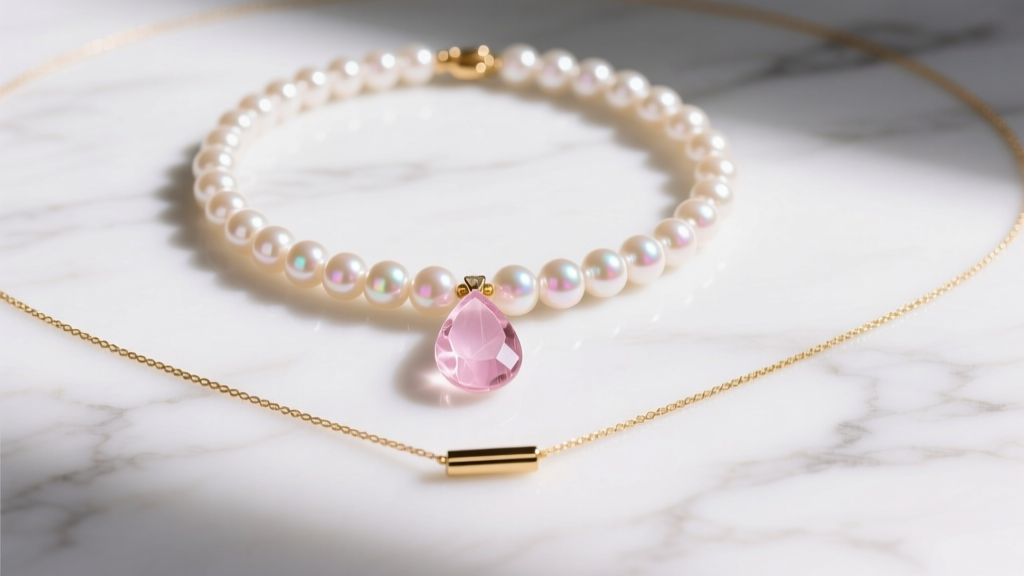
Layering a crystal teardrop necklace requires adherence to the "2-4-6 Rule" to prevent the chains from tangling and to ensure each piece is visible. The teardrop shape demands vertical space, so it should almost always serve as the middle or bottom layer.
Step 1: The Anchor (14 to 16 Inches)
Start with a lightweight, textural choker. A 14-inch pearl strand or a 16-inch delicate gold herringbone chain works perfectly. This layer sits above the collarbone and frames the face without competing with the teardrop's vertical drop.
Step 2: The Teardrop Focal Point (18 to 20 Inches)
Place your crystal teardrop necklace on an 18-inch or 20-inch chain. This allows the teardrop to rest precisely in the hollow of the throat or just above the bust line. If the teardrop is raw and dark (like smoky quartz), use a contrasting chain metal—such as oxidized silver or rose gold—to make the stone's internal inclusions pop.
Step 3: The Extension (24 to 28 Inches)
Finish with a long, lightweight lariat or a simple chain with a tiny geometric charm (like a small gold bar or a minimalist moon phase). This layer draws the eye downward, elongating the torso and balancing the visual weight of the teardrop pendant.
Matching the Teardrop to Specific Necklines
The elongated nature of a teardrop pendant makes it highly responsive to the geometry of your clothing's neckline.
- The V-Neck: The ultimate pairing. The V-shape of the shirt mimics the silhouette of the teardrop. Choose an 18-inch chain so the crystal rests exactly one inch above the vertex of the V-neck. Avoid pendants longer than 1.5 inches, or they will look cluttered against the fabric seams.
- The Crew Neck: A crew neck creates a horizontal block. To break this up, wear your crystal teardrop necklace on a longer 22-inch chain, allowing it to hang entirely below the collar line. Alternatively, wear a tight 16-inch choker and skip the teardrop entirely to avoid a "floating" pendant effect.
- The Turtleneck: Dark, solid turtlenecks act as a blank canvas. This is where you can wear an oversized, statement-sized crystal teardrop (2 inches or longer) on a heavy 20-inch box chain. The contrast between the dark fabric and a bright, faceted clear quartz teardrop is visually stunning.
- Off-the-Shoulder: With bare collarbones exposed, opt for a delicate, minimalist approach. A single, small rose quartz teardrop on a 16-inch cable chain provides a soft, romantic touch without overwhelming the exposed skin.
Cleansing and Caring for Crystalline Pendants
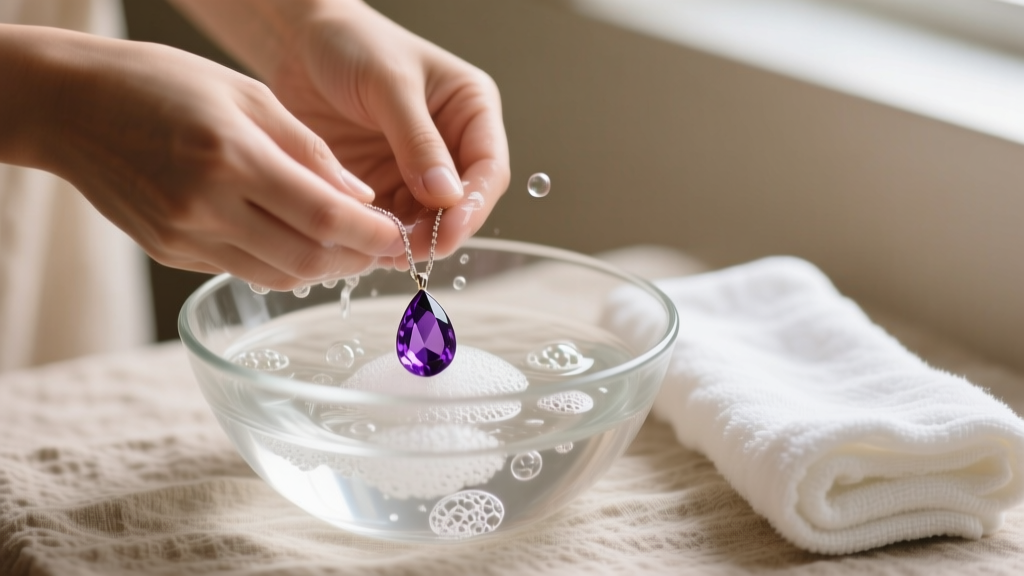
Crystals accumulate skin oils, lotions, and environmental dust, which dull their optical clarity. However, improper cleaning can destroy both the stone and the setting.
The Safe Wash Method: Fill a glass bowl with lukewarm water and two drops of mild, phosphate-free dish soap. Submerge the necklace for 3 to 5 minutes. Use a baby-soft toothbrush to gently sweep behind the teardrop, where dust accumulates against the bail. Rinse under a gentle stream of distilled water (to prevent hard water spots) and pat dry with a lint-free microfiber cloth.
What to Avoid: Never place a crystal teardrop necklace in an ultrasonic cleaner. The high-frequency vibrations can shatter fracture-filled quartz, loosen glued bails, and cause internal stress fractures in softer stones like fluorite or moldavite. Furthermore, avoid harsh chemicals like bleach or ammonia, which will strip the polish from tumbled stones and tarnish silver chains instantly.
Troubleshooting: The Flipping Pendant Problem
The most common frustration with a crystal teardrop necklace is the pendant constantly flipping backward, hiding the stone and showing only the bail. This is a physics issue related to the center of gravity and bail friction.
Because teardrops are bottom-heavy, they naturally seek equilibrium. If the inner diameter of the bail is significantly larger than the wire thickness of your chain, the pendant will slide off-center and flip. The Fix: You have two options. First, switch to a thicker chain weave (like a 2.0mm box chain) that fills at least 60% of the bail's interior space, restricting lateral movement. Second, if you prefer a delicate chain, insert a tiny, 1mm clear silicone O-ring into the bail before threading the chain. This adds invisible friction, keeping the teardrop perfectly centered and facing forward all day.


