How to Style a Gold Palm Tree Necklace: Step-by-Step Guide
Learn how to style a gold palm tree necklace with our step-by-step guide. Discover layering techniques, chain lengths, and neckline pairings.

The Enduring Appeal of the Tropical Motif
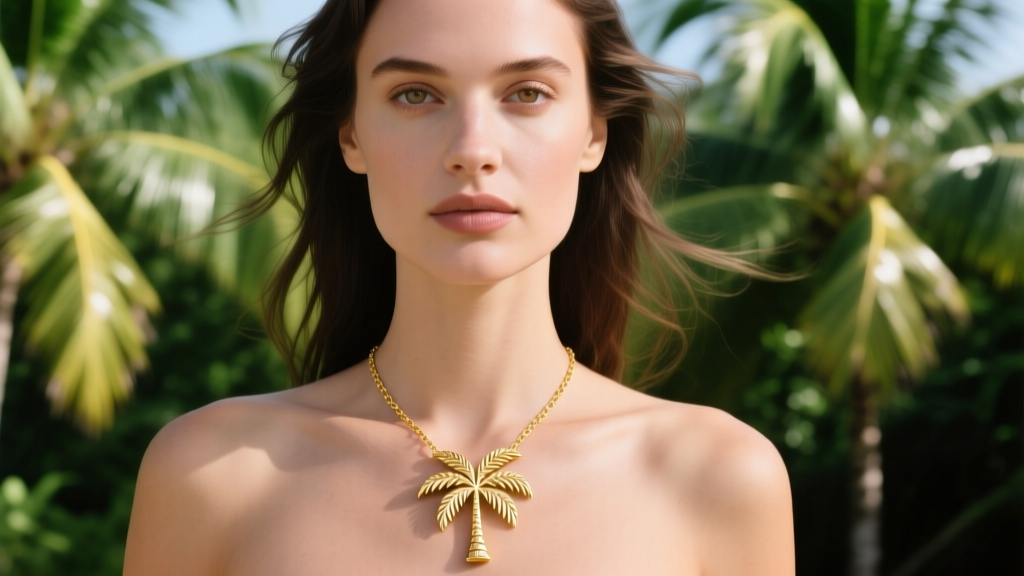
The gold palm tree necklace has transcended its origins as a mere vacation souvenir to become a staple of fine jewelry layering. Symbolizing resilience, relaxation, and eternal summer, this motif offers a unique blend of organic texture and metallic elegance. As we navigate the resort and everyday styling trends of 2026, the palm tree pendant remains a versatile anchor piece. However, styling it correctly requires an understanding of metallurgy, chain mechanics, and spatial layering. This comprehensive, step-by-step guide will teach you how to select, layer, and maintain your gold palm tree necklace with expert precision.
Step 1: Selecting the Right Gold Karat and Finish
Before you can style your necklace, you must understand the material you are working with. The intricate fronds and textured trunk of a palm tree pendant require a gold alloy that balances malleability for casting with durability for daily wear. According to the Gemological Institute of America (GIA), pure 24K gold is too soft for intricate pendants, making alloyed gold the industry standard.
| Gold Karat | Gold Purity | Durability | Best Use Case for Palm Pendants |
|---|---|---|---|
| 10K Gold | 41.7% | Very High | Budget-friendly, highly resistant to bending, but lacks rich color. |
| 14K Gold | 58.5% | High | The sweet spot for intricate palm fronds; holds detail well without warping. |
| 18K Gold | 75.0% | Moderate | Rich, buttery yellow hue ideal for luxury pieces, but prone to scratching. |
When examining a gold palm tree necklace, look for a dual-finish technique. High-end jewelers often use a sandblasted or matte finish on the palm fronds to mimic natural texture, while keeping the trunk and bail high-polished to catch the light. This contrast adds depth and prevents the pendant from looking like a flat, stamped piece of metal.
Step 2: Choosing the Ideal Chain Length and Type
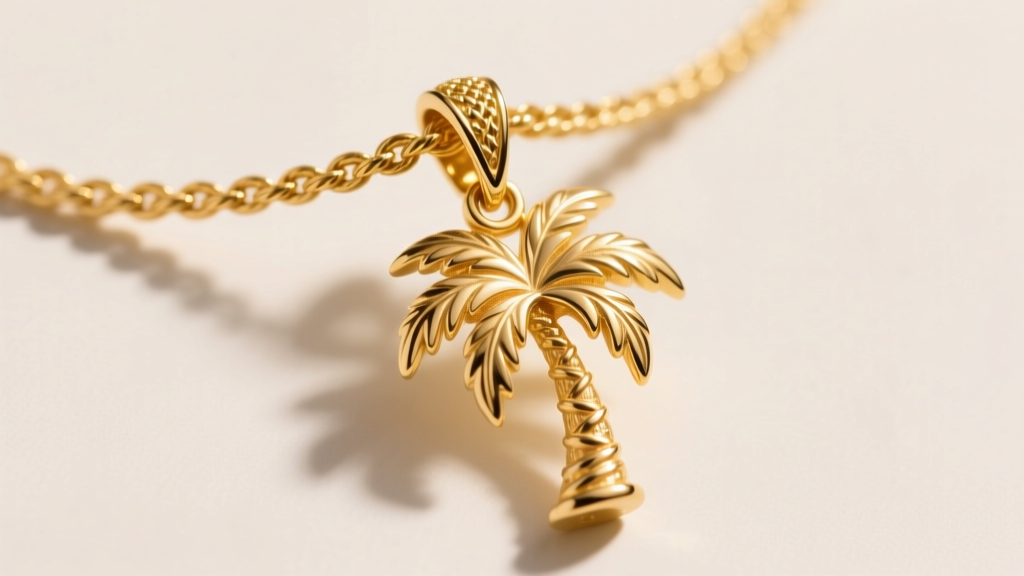
The chain you select dictates how the pendant sits on your sternum and how it interacts with your clothing. A standard palm tree pendant measures between 15mm and 22mm in height. To support this weight without overpowering the delicate motif, you need a chain gauge between 1.0mm and 1.5mm.
Chain Style Recommendations
- Cable Chain (1.0mm - 1.2mm): The classic choice. Its uniform oval links provide a clean, unobtrusive backdrop that lets the palm tree pendant take center stage.
- Box Chain (1.2mm): Offers a modern, geometric contrast to the organic shape of the palm tree. However, ensure the pendant's bail is at least 4mm wide, as box chains can be stiff and may cause friction against smaller bails.
- Rope Chain (1.5mm): The twisted links reflect light brilliantly, complementing the tropical, sun-drenched vibe of the palm tree motif. Ideal for wearing the pendant as a standalone statement piece.
For the clasp, always opt for a 5mm or 6mm lobster claw rather than a spring ring. Lobster claws offer superior tensile strength and are significantly easier to manipulate when layering multiple chains.
Step 3: Mastering the Layering Technique
Layering is where the gold palm tree necklace truly shines. The goal is to create a cascading effect that draws the eye downward, elongating the neck and torso. To avoid a tangled, cluttered look, follow the strict 'Two-Inch Drop Rule' popularized by editorial stylists.
'The secret to flawless layering is mathematical. Never layer chains that are less than two inches apart in length, or they will twist and obscure the pendants.' — Adapted from Vogue's definitive layering guide.
The Ultimate Tropical Layering Formula
- The Anchor (14 to 15 inches): Start with a simple, minimalist chain or a delicate pearl choker. This sits high on the collarbone and frames the face.
- The Focal Point (17 to 18 inches): Place your gold palm tree necklace here. At this length, the pendant rests perfectly in the hollow of the clavicle or just above the neckline of a standard V-neck shirt.
- The Elongator (20 to 22 inches): Finish with a heavier chain featuring a complementary pendant, such as a gold compass, a turquoise coin, or a simple horizontal bar. This grounds the look and adds visual weight to the lower chest.
Pro Tip: If you are mixing metals, ensure the palm tree pendant remains the undisputed centerpiece by keeping the supporting chains in a muted tone, like oxidized silver or low-karat rose gold.
Step 4: Pairing with Necklines and Occasions
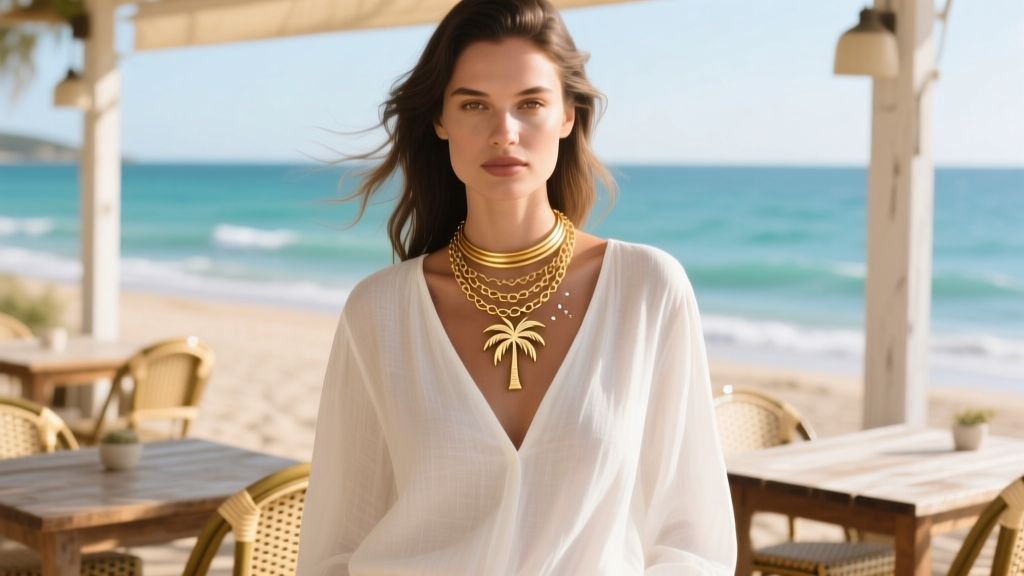
A gold palm tree necklace is incredibly versatile, but its impact changes drastically depending on the neckline of your garment. Here is a structural breakdown of how to pair your jewelry with your wardrobe.
Neckline Compatibility Chart
- The V-Neck: The natural geometry of a V-neck mirrors the triangular silhouette of a palm tree pendant. Use an 18-inch chain so the pendant floats exactly one inch above the apex of the V. This is ideal for resort wear and linen blouses.
- The Scoop Neck: A wider, curved neckline requires a slightly shorter chain (16 inches) to keep the pendant resting on the skin rather than getting lost in the fabric's hem.
- The Boatneck / Off-the-Shoulder: This horizontal neckline contrasts beautifully with the vertical drop of the palm tree. Opt for a longer, 20-inch chain to break up the horizontal expanse of bare skin, creating a bohemian, effortless aesthetic.
- The Crew Neck: Avoid wearing a delicate palm tree pendant directly against a tight crew neck t-shirt; it will look cramped. Instead, layer it over the fabric using a 22-inch chain, or skip it entirely in favor of a chunkier statement piece.
Maintenance and Care for Intricate Gold Palms
The very details that make a palm tree necklace beautiful—the tiny etched fronds, the textured coconuts, the granulated trunk—also make it a magnet for oils, lotions, and environmental debris. Proper maintenance is non-negotiable to preserve the gold's luster.
Step-by-Step Cleaning Protocol
- The Soak: Mix three drops of mild, phosphate-free dish soap into a bowl of lukewarm distilled water. Submerge the necklace for exactly 10 minutes. Do not use hot water, as it can weaken the solder points on the chain links.
- The Agitation: Using an extra-soft baby toothbrush, gently brush the pendant. Pay special attention to the underside of the palm fronds and the bail, where skin oils accumulate. Brush in a downward motion to avoid bending delicate gold tips.
- The Rinse and Dry: Rinse thoroughly under a gentle stream of lukewarm water. Pat dry with a lint-free microfiber cloth. Never air-dry, as water spots will dull the high-polish areas of the trunk.
Crucial Warning: If your gold palm tree necklace features micro-pave diamonds or enamel accents in the trunk, never use an ultrasonic cleaner. The high-frequency vibrations can easily dislodge tiny stones or crack the enamel, causing irreversible damage to the piece. Stick to the manual cleaning method outlined above to ensure your tropical treasure remains pristine for years to come.


