How to Style and Layer Ring Necklaces: A Step-by-Step Guide
Learn how to style and layer ring necklaces with our step-by-step guide. Discover chain pairings, length ratios, and neckline tips for circular pendants.


Ring necklaces—whether they feature geometric circular pendants, vintage signet rings, or sentimental repurposed wedding bands—are among the most versatile pieces in modern jewelry styling. However, wearing a ring on a chain requires more consideration than a standard stamped pendant. The weight distribution, bail friction, and visual geometry of a ring demand specific styling techniques to ensure the piece sits correctly and avoids premature wear.
This step-by-step guide will walk you through the exact mechanics of selecting, layering, and maintaining ring necklaces, ensuring your circular pendants look intentional and structurally sound.
Understanding Ring Necklace Variations
Before styling, it is crucial to identify the specific type of ring necklace you are working with, as each dictates a different approach to chain selection and layering.
- Signet Rings: Typically heavy (10g–25g) with a flat, engraved face. They require robust chains and tend to flip if the bail is too loose.
- Geometric Ring Pendants: Perfect circles or open hoops crafted specifically as pendants. These are usually lightweight (3g–8g) and feature integrated, soldered bails.
- Sentimental Bands: Repurposed wedding bands or family heirlooms threaded directly onto a chain. These lack a traditional bail, meaning the chain passes directly through the ring's interior, creating high friction.
According to the Gemological Institute of America (GIA), understanding the karat and alloy of your ring is also vital. A 24k gold band will scratch and wear down rapidly if threaded onto a harsh steel chain, whereas a 14k or 18k alloy offers better durability for daily wear.
Step 1: Matching Chain Widths to Ring Weights
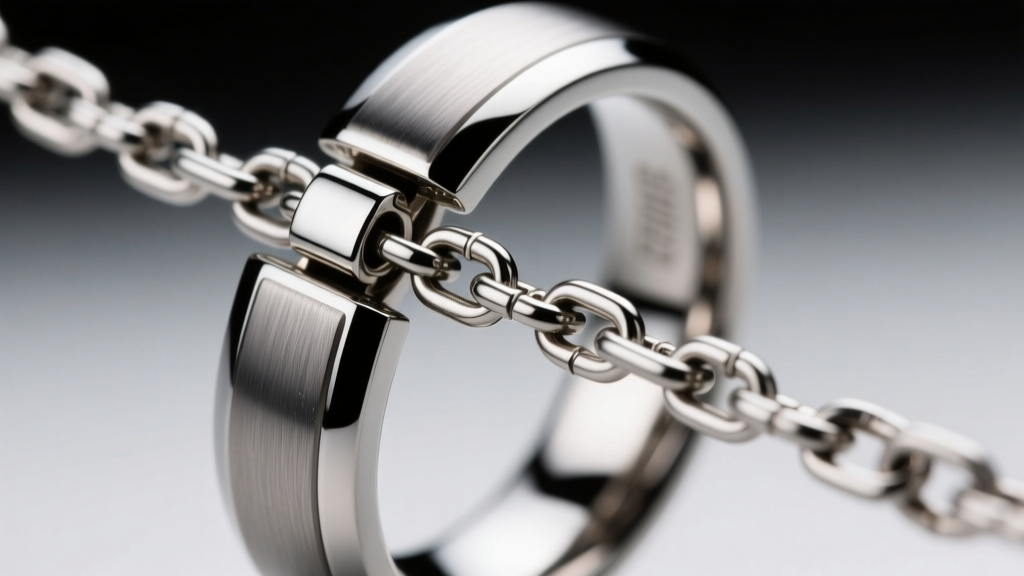
The most common mistake when styling ring necklaces is pairing a heavy ring with a delicate chain. This not only looks visually unbalanced but creates a structural failure point at the clasp or jump ring. You must match the chain's tensile strength and width to the physical weight of the ring.
| Ring Weight (Grams) | Recommended Chain Width | Ideal Chain Style | Clasp Requirement |
|---|---|---|---|
| Under 5g | 1.0mm - 1.5mm | Cable, Bead, or Snake | Spring Ring (5mm) |
| 5g - 15g | 2.0mm - 3.0mm | Box, Rope, or Wheat | Lobster Claw (10mm) |
| Over 15g | 4.0mm - 6.0mm | Curb, Figaro, or Miami | Heavy Lobster (15mm+) |
For heavy signet rings exceeding 15 grams, avoid hollow chains entirely. Solid curb or figaro chains provide the necessary rigidity to prevent the chain from kinking under the pendulum motion of a heavy ring.
Step 2: The 2-Inch Layering Framework
Layering ring necklaces requires strict adherence to spacing rules to prevent tangling and visual clutter. Because ring pendants have a wide, open silhouette, they can easily overlap and snag on smaller adjacent pendants.
Utilize the 2-Inch Drop Rule. Each subsequent layer in your necklace stack should be exactly two inches longer than the one above it.
- Layer 1 (16 inches): A delicate 1.0mm cable chain with a small, 4mm geometric ring pendant or a simple gold bead. This sits at the collarbone.
- Layer 2 (18 inches): Your primary ring necklace. A 2.5mm rope chain holding a 12mm signet or band ring. This rests just below the clavicle, allowing the ring to sit flat against the sternum.
- Layer 3 (20 inches): A longer, heavier chain featuring a vertical bar pendant or a lariat drop. The vertical line contrasts beautifully with the circular geometry of the ring necklace above it.
Pro Tip: When layering a ring necklace with a gemstone pendant, ensure the gemstone's Mohs hardness is higher than the metal of the ring. If a diamond pendant rests against a soft 22k gold band, the diamond will eventually carve into the gold over time.
Step 3: Neckline Integration Strategies
A ring necklace interacts with clothing necklines differently than a teardrop or rectangular pendant. The circular shape demands specific framing.
The V-Neck and Scoop Neck
Ring necklaces thrive in V-necks and scoop necks. The circular pendant naturally echoes the curved or angled lines of the exposed skin. Ensure the ring pendant sits at least one inch above the fabric hem to avoid looking swallowed by the garment.
The Button-Down Collar
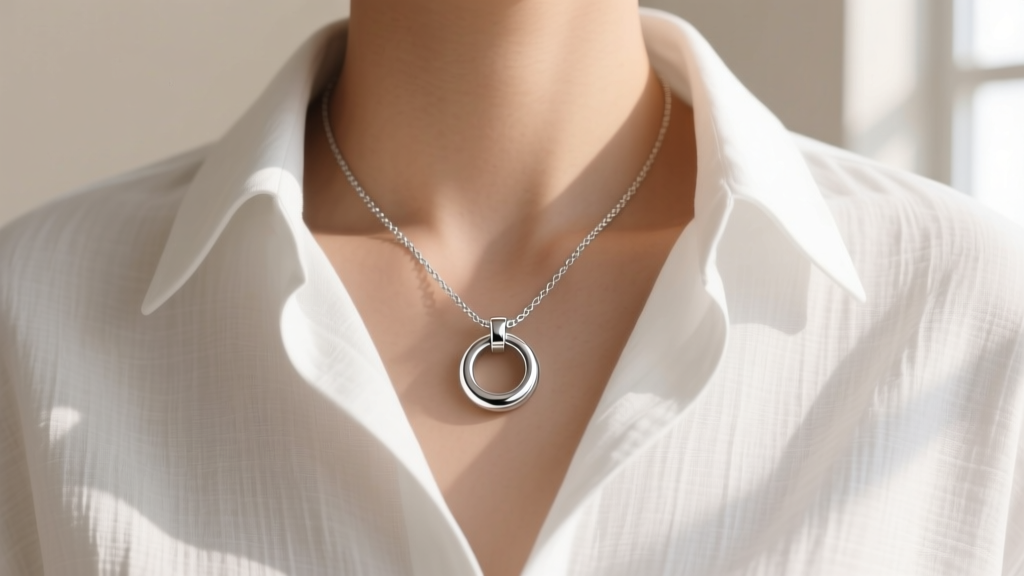
For a tailored, sophisticated look, wear an 18-inch ring necklace inside the collar of an unbuttoned linen or cotton shirt. The ring acts as a minimalist tie alternative, drawing the eye vertically down the placket.
The Crew Neck
Avoid wearing large ring necklaces (over 15mm diameter) over tight crew necks, as the circular shape competes with the high, rounded collar. Instead, opt for a smaller, delicate ring pendant on a 16-inch chain that sits entirely above the collar line.
Step 4: Bail Hardware and Wear Prevention
The bail—the loop that connects the ring to the chain—is the highest friction point on any ring necklace. If you are threading a chain directly through a sentimental band, the constant metal-on-metal grinding will eventually wear a groove into the ring.
To prevent this, consult a jeweler to have a soldered hidden bail attached to the inner or outer edge of the ring. If you prefer the look of the chain passing directly through the band, use a silicone o-ring insert or a protective Teflon sleeve inside the band to absorb the friction. The Jewelers of America recommends inspecting these friction points every six months for signs of thinning.
Troubleshooting Common Ring Necklace Issues
The Pendant Keeps Flipping Upside Down
This occurs when the center of gravity is misaligned, or the bail is too wide. If using a jump ring, ensure it is a tight-fitting gauge (e.g., 16-gauge or 14-gauge wire) so the ring cannot rotate freely. For signet rings, a custom-fitted tapered bail will lock the pendant into a forward-facing position.
The Chain Keeps Slipping Through the Ring
If you are wearing a chain through a wide band, the clasp or jump ring might slip through the ring's interior. Always ensure the jump ring connecting your pendant has an outer diameter at least 2mm larger than the inner diameter of the ring band.
Tarnish Transfer
If your silver ring necklace is leaving black marks on your skin or clothing, it is likely reacting to sulfur or high acidity. Rhodium plating the interior of the ring where it touches the skin can permanently solve this issue without altering the exterior aesthetic.
Final Thoughts on Ring Necklace Styling
Mastering the ring necklace requires a balance of structural awareness and geometric styling. By respecting the weight ratios between chain and pendant, adhering to strict layering intervals, and protecting your hardware from friction, your ring necklaces will remain secure, comfortable, and effortlessly elegant for years to come.


