How to Style and Care for a Zelda Heart Container Necklace
Learn how to choose, style, and maintain your Zelda Heart Container necklace. Expert tips on chain gauges, enamel care, and layering techniques.

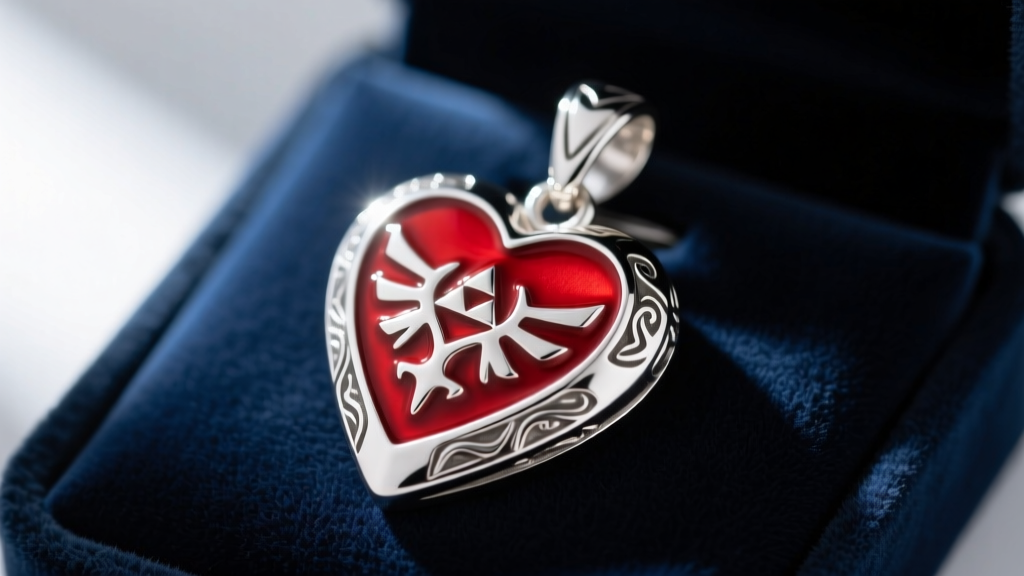
The evolution of gamer jewelry has transformed novelty trinkets into sophisticated, everyday accessories. Among the most iconic pieces in this niche is the zelda heart container necklace, a tribute to one of gaming’s most recognizable symbols of health and vitality. Whether you are referencing the classic 8-bit era of The Legend of Zelda or the sprawling landscapes of recent titles, wearing a heart container pendant is a subtle yet powerful way to showcase your fandom. However, transitioning a gaming motif from a convention floor to a smart-casual wardrobe requires an understanding of metallurgy, chain mechanics, and enamel preservation.
This comprehensive guide will walk you through the exact steps to select, layer, and maintain your pendant, ensuring it remains a pristine part of your jewelry rotation for years to come.
Step 1: Decoding Base Metals and Enamel Grades
Not all gaming merchandise is created equal. When shopping for a zelda heart container necklace, the base metal and the type of enamel used dictate the piece's longevity, weight, and skin safety. Cheap replicas often use zinc alloy (pot metal) plated with a microscopic layer of silver or gold. These are prone to rapid oxidation, turning your skin green and causing contact dermatitis due to hidden nickel content.
For a piece you intend to wear daily, you must look for specific material grades:
- 316L Surgical Stainless Steel: Highly durable, hypoallergenic, and resistant to tarnish. It has a slightly darker, cooler tone than silver but requires almost zero maintenance.
- 925 Sterling Silver: The premium standard for licensed and artisan gamer jewelry. It offers a brilliant luster and holds intricate detail work, though it requires occasional polishing to prevent silver sulfide tarnish.
Equally important is the 'heart' itself. Most mass-market pendants use cold enamel (epoxy resin). While vibrant, epoxy is susceptible to UV yellowing and micro-scratches over a 3-to-5-year period. High-end artisan jewelers sometimes use hot enamel (vitreous enamel), which is essentially powdered glass fired at over 1400°F. Vitreous enamel will never yellow and is highly scratch-resistant, though it can shatter if dropped on a hard tile floor.
Step 2: Selecting the Optimal Chain Gauge and Length
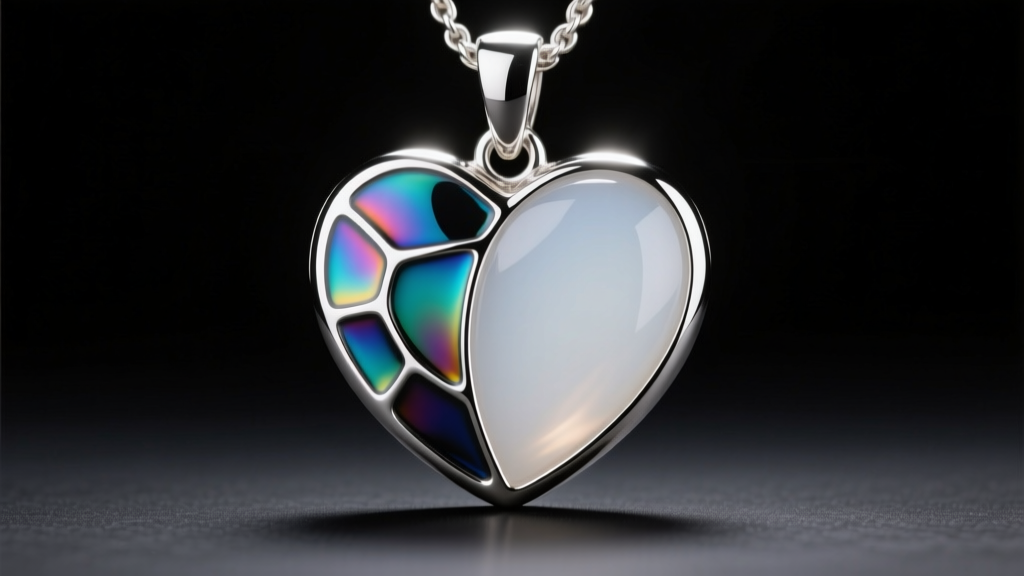
A heavy cast pendant paired with a flimsy chain is a recipe for a broken clasp and a lost necklace. The heart container motif is inherently top-heavy due to its wide, geometric base. You need a chain that provides adequate structural support while complementing the pendant's scale.
According to jewelry manufacturing standards outlined by suppliers like Rio Grande, the chain gauge (thickness) must be proportional to the pendant's bail (the loop the chain passes through). For a standard 1-inch heart container pendant, a chain gauge between 1.5mm and 2.5mm is ideal. Anything thinner risks snapping; anything thicker overpowers the delicate pixel-art or geometric lines of the pendant.
| Chain Length | Style / Fit | Best Wardrobe Pairing | Recommended Chain Type |
|---|---|---|---|
| 16 Inches | Choker / Collarbone | Crewneck t-shirts, summer dresses | 1.5mm Box Chain |
| 18 Inches | Standard / Mid-Chest | V-necks, button-downs (unbuttoned) | 2.0mm Rope Chain |
| 20 Inches | Low Chest / Streetwear | Hoodies, oversized graphic tees | 2.5mm Figaro Chain |
| 24 Inches | Long Layer / Overgarment | Turtlenecks, denim jackets | 2.0mm Curb Chain |
For everyday versatility, an 18-inch rope chain in 925 sterling silver offers the perfect balance of durability and subtle sparkle, allowing the red or green enamel of the heart container to remain the focal point.
Step 3: Mastering the Gamer-Chic Layering Technique
Layering is the secret to integrating a zelda heart container necklace into a mature, fashion-forward wardrobe. The goal is to treat the gaming pendant not as a costume piece, but as a geometric accent within a broader jewelry stack. To achieve this, employ the 'Rule of Thirds' in necklace layering.
The Rule of Thirds for Necklaces
- The Anchor (16-18 inches): Start with a minimalist chain. A simple 1mm sterling silver bead chain or a delicate satellite chain sits high on the collarbone. This draws the eye upward and frames the face.
- The Focal Point (20 inches): This is where your heart container pendant lives. The 2-to-4-inch gap between the first and second chain prevents tangling and ensures each piece is distinctly visible.
- The Terminator (24-26 inches): Finish with a longer, heavier chain featuring a subtle, non-competing pendant—such as a simple silver bar, a small Triforce geometric outline, or a plain signet ring on a chain.
When layering, always mix chain textures. If your heart container is on a rope chain, use a box chain for the anchor and a curb chain for the terminator. Mixing textures prevents the chains from intertwining and knotting throughout the day.
Step 4: Precision Cleaning and Enamel Preservation
Cleaning a pendant that combines metal and enamel requires a delicate touch. The most common mistake gamers make is tossing their jewelry into an ultrasonic cleaner. While ultrasonic waves are excellent for removing dirt from diamond solitaires, the high-frequency vibrations will literally shatter vitreous enamel and cause cold epoxy resin to peel away from the metal backing.
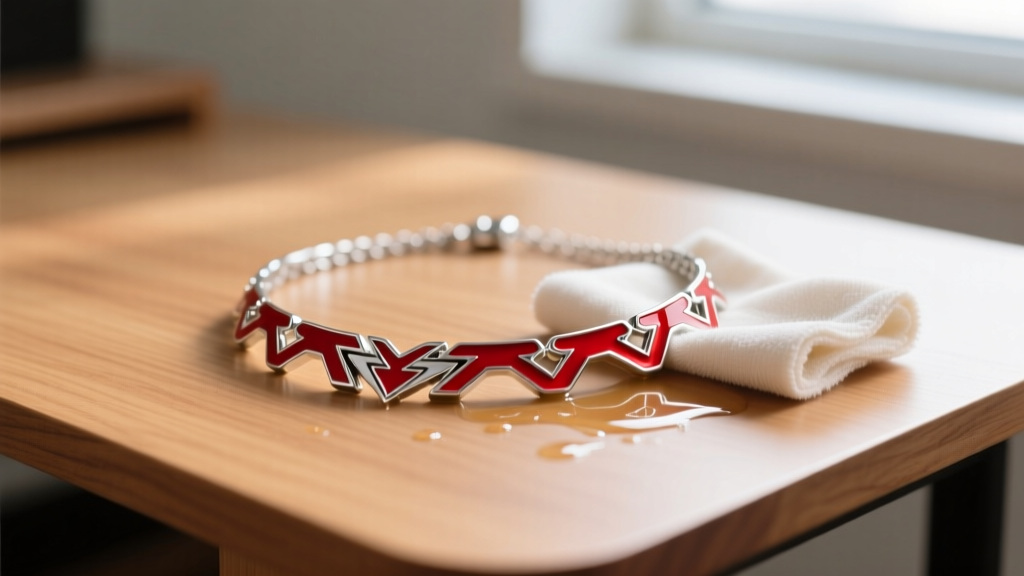
For safe, effective cleaning, follow this step-by-step protocol recommended by gemological authorities like the Gemological Institute of America (GIA) for delicate jewelry pieces:
- Step A: Mix a few drops of mild, phosphate-free dish soap into a bowl of lukewarm (never hot) water.
- Step B: Submerge the necklace for no more than 3 to 5 minutes to loosen body oils and skin cells.
- Step C: Using an ultra-soft baby toothbrush, gently brush the metal portions of the pendant and the chain. Avoid scrubbing the enamel directly, as trapped micro-grit on the brush can cause fine scratches in epoxy resin.
- Step D: Rinse under a gentle stream of lukewarm water, ensuring the drain is securely plugged.
- Step E: Pat dry with a lint-free microfiber cloth. Do not use paper towels, as their wood-pulp fibers can leave micro-scratches on both the silver and the enamel finish.
Troubleshooting Common Heart Container Flaws
Even high-quality gaming jewelry can experience wear and tear. Here is how to troubleshoot the most common issues associated with geometric, enameled pendants:
Epoxy Yellowing or Clouding
If your red or green heart container begins to look yellowish or muddy, the epoxy resin has likely suffered UV degradation. Unfortunately, this chemical change is irreversible. To prevent this, store your necklace in a dark, velvet-lined box when not in use, and avoid wearing it during prolonged outdoor activities in direct sunlight.
Loose or Rattling Bails
The bail is the small loop connecting the pendant to the chain. Because heart containers are wide and swing like a pendulum, the solder joint at the bail experiences high shear stress. If the bail feels loose, stop wearing the necklace immediately. Take it to a local jeweler to have the bail re-soldered or replaced with a heavier, cast-integral bail. This minor repair usually costs under $30 and will save you from losing a beloved piece of gaming history.
By understanding the materials, mastering the art of the layering stack, and adhering to strict enamel-safe cleaning protocols, your zelda heart container necklace will remain a vibrant, stylish testament to your love for the franchise, seamlessly bridging the gap between Hyrule and high fashion.


