The World's Most Expensive Necklace & High Jewelry Gifting
Explore the world's most expensive necklace and master the art of gifting ultra-high jewelry for milestone anniversaries and legacy wealth transfers.

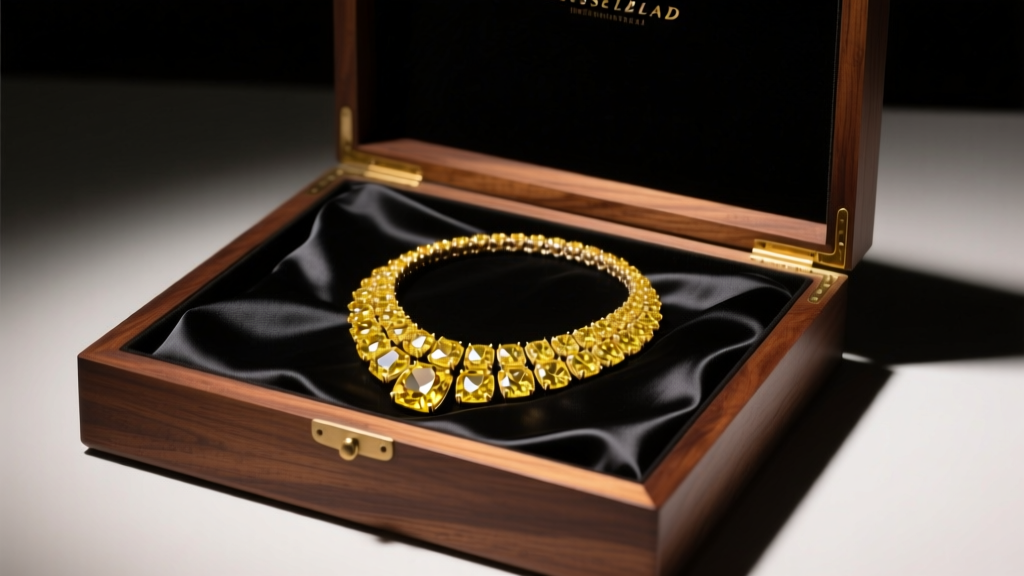
When standard luxury fails to capture the magnitude of a life-defining moment, connoisseurs turn to the absolute apex of gemology. Gifting high jewelry is not merely a romantic gesture; it is a complex transfer of generational wealth, museum-grade art, and geological rarity. In this comprehensive guide, we explore the pinnacle of these assets—anchored by the world's most expensive necklace—and provide a masterclass in matching ultra-high jewelry to the most significant occasions of a lifetime.
The Pinnacle of Gifting: The World's Most Expensive Necklace
To understand the upper echelon of jewelry gifting, one must examine the benchmark of the industry. The world's most expensive necklace is widely recognized as the "L'Incomparable" Diamond Necklace, created by the luxury house Mouawad. Valued at an astonishing $55 million, this masterpiece is anchored by a 407.48-carat Internally Flawless (IF) Fancy Yellow diamond. The sheer scale of the center stone is complemented by a setting of 90 white diamonds totaling over 230 carats, including 35 round brilliants, 27 pear shapes, and various emerald and cushion cuts.
However, in the realm of contemporary high jewelry art, Wallace Chan’s "A Heritage in Bloom" pushes the boundary to a reported $200 million. Featuring 11,551 diamonds and a modular design that can be worn in 27 different configurations, it represents the intersection of wearable art and legacy asset gifting. When you are operating at this tier, you are not just buying a necklace; you are acquiring a piece of global heritage.
High Jewelry as an Heirloom: Occasion Matching for the Ultra-Wealthy
Gifting a necklace in the six-to-eight-figure range requires precise occasion matching. These pieces are rarely spontaneous purchases; they are meticulously planned acquisitions tied to major life events or financial milestones.
Milestone Anniversaries vs. Liquidity Events
For a 50th (Golden) Anniversary, the traditional choice leans toward Fancy Yellow diamonds, echoing the gold milestone while offering superior rarity. A 20-carat Fancy Vivid Yellow diamond pendant on a platinum and pavé chain is the quintessential choice. Conversely, liquidity events—such as the sale of a business, an IPO, or a major real estate transaction—often call for "trophy assets." In these scenarios, collectors gravitate toward Argyle pink diamonds or Kashmir sapphires, which serve as portable, high-density stores of value that celebrate newfound financial freedom.
The Connoisseur's Journey: Bespoke Maisons
When commissioning a bespoke piece from elusive maisons like JAR (Joel Arthur Rosenthal) or Hemmerle, the gifting process itself becomes an exclusive journey. These houses produce fewer than 100 pieces a year, and acquiring one requires a proven relationship with the brand. Gifting a Hemmerle necklace, characterized by its revolutionary tension settings and use of unconventional materials like iron or copper alongside flawless diamonds, signals a deep, connoisseur-level understanding of avant-garde jewelry design. It transforms the gift from a mere display of wealth into a profound statement of artistic alignment.
Scaling the Carat Weight: A Tiered Gifting Matrix
Not every legacy gift requires a $55 million budget. Below is a structured matrix for scaling your high jewelry gift based on the occasion and investment tier.
| Tier | Price Range | Occasion | Material & Gemstone Specs |
|---|---|---|---|
| Entry High Jewelry | $50,000 - $250,000 | 25th Silver Anniversary, Major Promotion | 5-15 ct total weight, D-F color, VVS1-VVS2 clarity, Platinum setting |
| Investment Grade | $250,000 - $2,000,000 | 40th Ruby Anniversary, Corporate Exit | 15-50 ct center stone, Fancy Intense/Vivid colors, IF clarity, Museum provenance |
| Museum / Trophy | $2,000,000 - $10,000,000+ | 50th Golden Jubilee, Generational Legacy | 50+ ct Internally Flawless, Type IIa diamonds, Historic cuts, Bespoke Maison |
Sourcing, Grading, and Authenticity Protocols
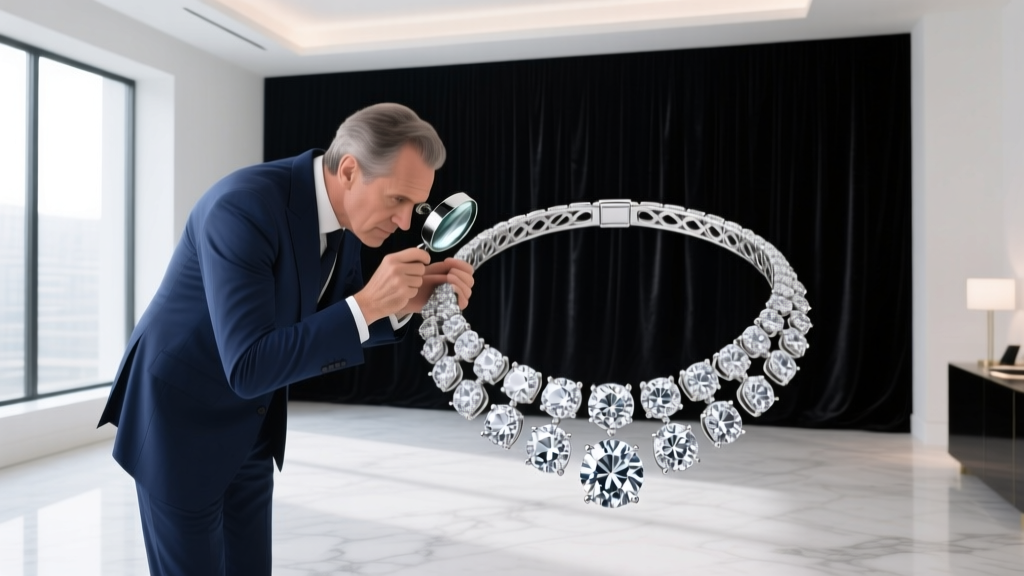
Acquiring the world's most expensive necklace or any comparable high jewelry piece requires bypassing traditional retail storefronts. Purchases at this level are conducted through private salons at heritage maisons or via the private jewelry departments of elite auction houses like Christie's and Sotheby's.
Authentication is non-negotiable. Every stone must be accompanied by a dossier of certificates. The Gemological Institute of America (GIA) is the baseline for diamond grading, but for ultra-rare colored diamonds and historical gemstones, reports from the SSEF (Swiss Gemmological Institute) or Gübelin are mandatory. A Type IIa diamond classification from the GIA, indicating chemical purity and exceptional optical transparency, can increase a stone's value by 30% to 50% compared to a standard Type I diamond of the same carat weight.
Beware of advanced treatment concealment. In the ultra-luxury market, fracture-filled diamonds or stones subjected to high-pressure high-temperature (HPHT) treatment to alter color can masquerade as natural marvels. Always demand that the SSEF or GIA report explicitly states "No indications of heating or treatment." Furthermore, synthetic detection is paramount; even at the highest echelons, sophisticated lab-grown diamonds can occasionally infiltrate secondary estate markets. Relying solely on a loupe is a critical failure mode—advanced photoluminescence (PL) spectroscopy is required to confirm natural origin.
The Logistics of Gifting Million-Dollar Assets
The physical act of gifting a necklace worth millions involves intense logistical and security planning. You cannot simply hand over a shopping bag.
- Armored Transport: Delivery is handled by specialized secure logistics firms like Brinks or Malca-Amit, often requiring climate-controlled, GPS-tracked briefcases.
- Insurance Binders: Before the recipient even opens the box, a specialized fine art and jewelry insurance policy (via underwriters like Chubb or AXA Art) must be bound. Standard homeowner policies cap jewelry coverage at a fraction of these values.
- The Decoy Presentation: For security reasons, the actual presentation often involves a "decoy" box or a high-resolution holographic projection during a private dinner, with the physical asset remaining in a secure facility until the recipient arranges for a personal security detail.
- Freeport Storage: For recipients who travel frequently or reside in jurisdictions with high luxury taxes, the physical necklace is often immediately transferred to a Geneva Freeport or a Singapore Le Freeport. These high-security, tax-neutral storage facilities allow the asset to appreciate and be passed down to heirs without ever crossing a customs border or triggering immediate import duties.
The 2026 Investment Outlook for High Jewelry
As we navigate the 2026 high jewelry market, the gifting landscape is shifting toward extreme rarity. The closure of the Argyle mine in Australia has caused Fancy Vivid Pink and Red diamonds to appreciate at an annualized rate exceeding 10%, making them the ultimate legacy gift for wealth preservation. Furthermore, provenance is commanding unprecedented premiums. A necklace with documented ties to European royalty or Hollywood royalty from the mid-20th century carries an intangible prestige that newly mined stones simply cannot replicate. When selecting the ultimate gift, you are not just buying carats; you are securing a tangible piece of history that will outlast generations.


