How to Tie Lariat Necklace Styles: 4 Essential Knots & Fit Guide
Master how to tie lariat necklace styles with our step-by-step guide. Discover 4 elegant knots, material care tips, and neckline pairings.

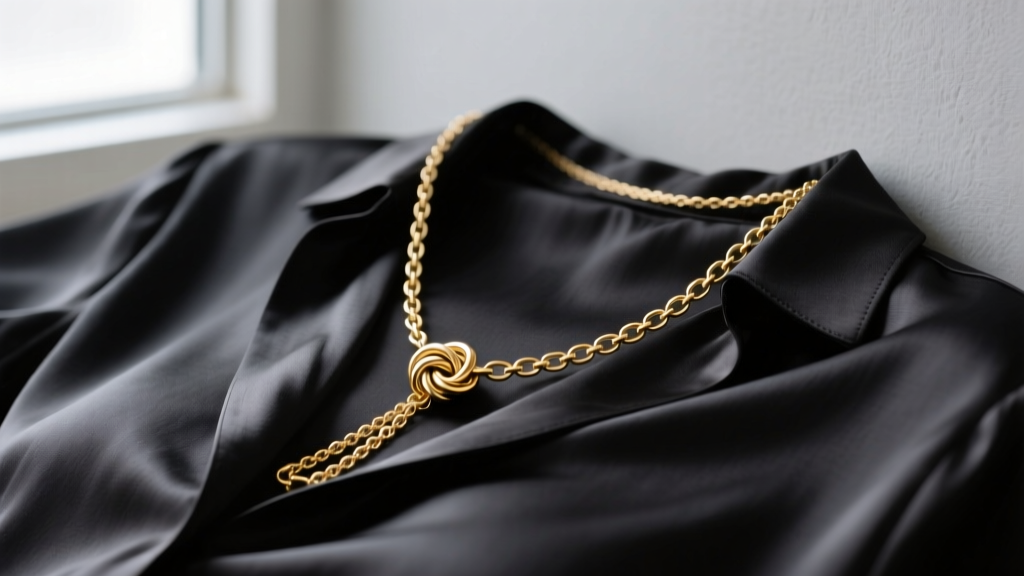
The Art of the Clasp-Free Drape
Lariat necklaces, often referred to as Y-necklaces or rope necklaces, defy traditional jewelry conventions by entirely eliminating the clasp. This design choice offers unparalleled versatility, allowing the wearer to customize the length, drape, and focal point of the piece. However, this freedom comes with a mechanical challenge: securing the jewelry without causing metal fatigue or damaging delicate cords. If you are wondering how to tie lariat necklace chains and cords securely while maintaining an elegant aesthetic, you must understand both knot mechanics and material science.
In this comprehensive guide, we will break down the exact gauges suitable for knotting, four essential tying techniques, and a structural matrix for pairing your lariat with specific necklines.
Material Science: Choosing the Right Chain & Gauge
Not all chains are engineered to be tied. The physical act of knotting forces the outer radius of a chain link to stretch and the inner radius to compress. Repeatedly tying the wrong chain will lead to micro-fractures and permanent kinking.
Chain Types & Flexibility
- Rope & Cable Chains: These are the gold standard for lariats. Their interlocking oval or twisted links allow for multi-directional movement, making them highly resistant to kinking when tied in a slip knot.
- Foxtail Chains: Woven in a V-shaped pattern, foxtail chains behave almost like a liquid textile. They are incredibly flexible and ideal for complex wrapping techniques.
- Snake & Herringbone Chains: Avoid tying these. Their flush, interlocking plates lack lateral flexibility. Bending a snake chain into a tight knot will permanently crease the metal, ruining the piece.
Gauge & Thickness Recommendations
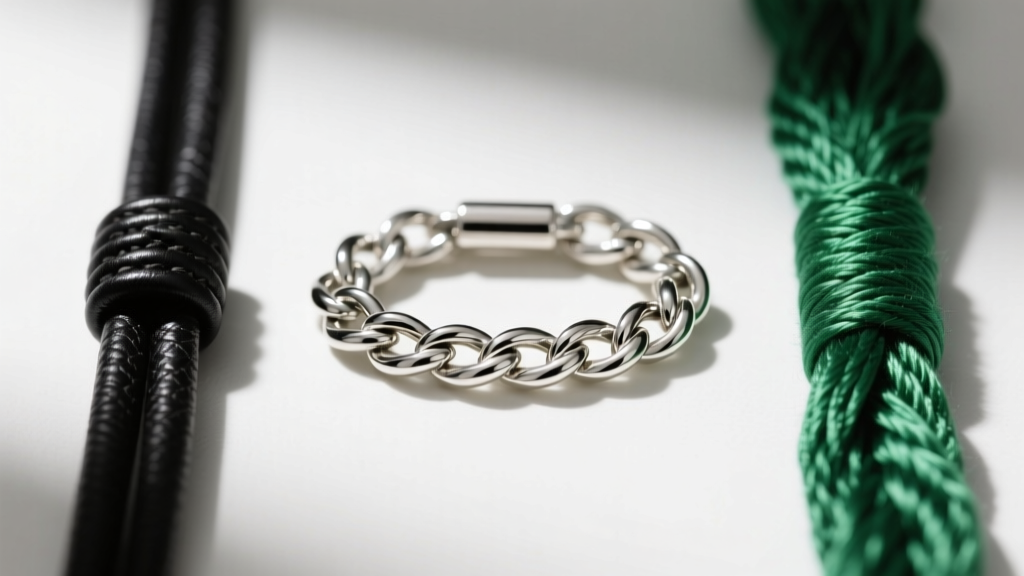
For metal lariats, a gauge between 1.5mm and 2.5mm provides the perfect balance of structural integrity and draping fluidity. Chains thinner than 1.0mm (like delicate 0.8mm box chains) are prone to severe tangling and can snap under the tension of a pulled slip knot. For leather or silk cord lariats, opt for a 2.0mm to 3.0mm round profile to ensure the knot holds its shape without slipping throughout the day.
Step-by-Step: 4 Essential Lariat Knots
Mastering how to tie lariat necklace variations requires knowing which knot suits which occasion. Here are four foundational techniques used by professional stylists.
1. The Classic Y-Drape (Slip Knot)
This is the most recognizable lariat style, creating a deep V-shape that elongates the neck.
- Fold the necklace in half to find the exact center point.
- Drape the folded loop behind your neck, bringing both the loop and the two trailing ends to the front.
- Take the two trailing ends, bundle them together, and thread them through the front loop.
- Gently pull the ends downward to tighten the loop around the bundled chains, creating a sliding slip knot.
- Stylist Tip: Adjust the knot to sit precisely at the sternum for a balanced look.
2. The Lark’s Head Loop (Cow Hitch)
Best for lariats featuring a heavy pendant or tassel at one end, this knot secures the piece without requiring you to thread the heavy element through a small chain loop.
- Fold the lariat in half and place the loop behind your neck.
- Bring the loop and the two ends to the front of your chest.
- Pull the two trailing ends completely through the loop.
- Tug the ends downward. The loop will cinch tightly at the base of your neck, allowing the ends to hang parallel.
3. The Asymmetric Side Tie
For a modern, editorial look that breaks the symmetry of traditional jewelry styling.
- Drape the lariat unevenly around your neck, leaving one-third of the length on the left and two-thirds on the right.
- Cross the longer right end over the shorter left end near your collarbone.
- Wrap the right end under and through the space between your neck and the left chain.
- Pull gently to create a loose overhand knot resting on the side of your neck.
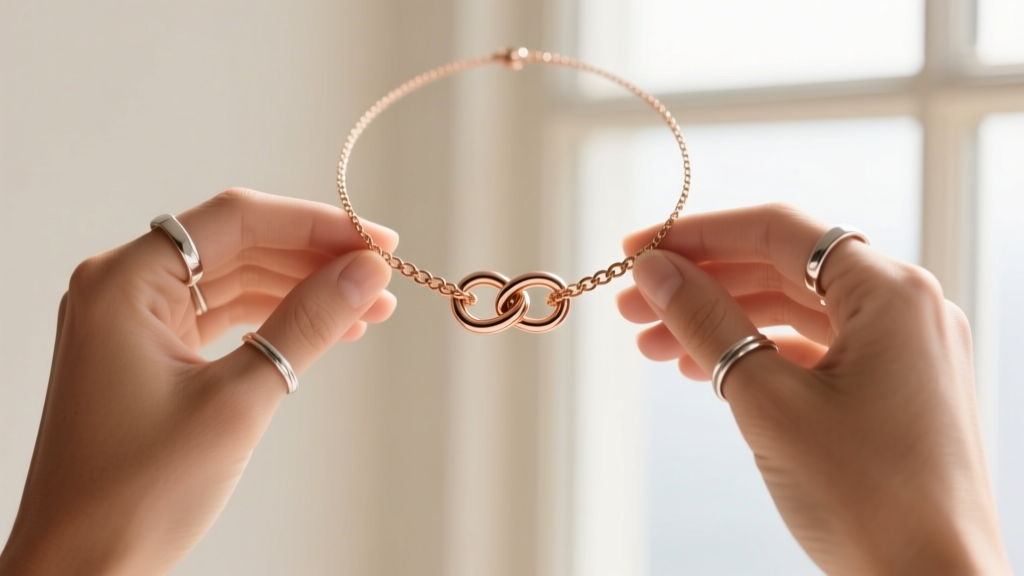
4. The Double-Wrap Choker
Ideal for extra-long lariats (40 inches or more) and high-necked garments.
- Wrap the entire length of the lariat around your neck twice, ensuring the layers sit flush against one another.
- Let the two remaining ends hang down the center of your chest.
- Tie a simple square knot (right over left, then left over right) at the base of your throat or sternum.
The Neckline Pairing Matrix
Knowing how to tie lariat necklace cords is only half the battle; knowing where to place the knot relative to your clothing is what elevates the outfit. Use this structural matrix to guide your styling decisions.
| Neckline Type | Ideal Knot Technique | Knot Placement | Recommended Lariat Length |
|---|---|---|---|
| Deep V-Neck | Classic Y-Drape | 2 inches below the fabric's V-point | 30 - 34 inches |
| Crew Neck | Double-Wrap Choker | Flush against the collarbone | 40+ inches |
| Sweetheart | Lark’s Head Loop | Resting just above the bustline | 28 - 32 inches |
| Off-the-Shoulder | Asymmetric Side Tie | Off-center on the exposed collarbone | 34 - 38 inches |
Troubleshooting: Preventing Kinks and Metal Fatigue
Even with the correct chain type, repeated knotting can introduce stress to the metal. According to metallurgical guidelines from jewelry suppliers like Rio Grande, metals in a 'half-hard' state are more prone to work-hardening and snapping when repeatedly bent into tight knots. When purchasing or crafting a metal lariat, seek out 'dead-soft' wire chains or annealed links that possess greater malleability.
How to Remove Chain Kinks
If your lariat chain develops a kink from improper storage or a knot pulled too tightly, do not simply yank it straight. This will weaken the link. Instead, follow these steps recommended by gemological and jewelry care experts at the Gemological Institute of America (GIA):
- Lay the necklace flat on a clean, soft microfiber cloth.
- Use two pairs of smooth-jawed nylon pliers (never metal pliers, which will scratch the finish) to gently massage the kinked link back into its original oval shape.
- For stubborn kinks in rope chains, suspend the necklace from a hook and apply gentle, indirect heat from a hairdryer on a low setting for 30 seconds. The mild thermal expansion can help the links relax back into their natural alignment.
Final Styling Thoughts
The lariat necklace remains a staple in fine and fashion jewelry because of its interactive nature. By selecting the correct chain gauge, avoiding rigid weaves like snake chains, and mastering these four foundational knots, you transform a simple length of metal or leather into a dynamic, customizable accessory. Remember to always un-knot your lariat before storing it, hanging it vertically to preserve the structural integrity of the links for years to come.


