How to Style and Tie a Sautoir Necklace: A Step-by-Step Guide
Master the art of the sautoir necklace with our step-by-step guide. Learn how to tie, layer, and style long chains for any modern neckline.


The Modern Renaissance of the Sautoir Necklace
Originally popularized during the Roaring Twenties as a symbol of liberation and fluid movement, the sautoir necklace has transcended its flapper-era origins. While historically defined as a long, continuous necklace often terminating in a tassel or fringe, the modern 2026 interpretation embraces architectural knots, asymmetrical drapes, and intentional layering. A true sautoir measures between 30 and 48 inches, providing ample length for complex styling techniques that shorter opera or princess chains simply cannot achieve.
According to the Metropolitan Museum of Art's Costume Institute, the 1920s sautoir was designed to swing with the body's movement, drawing the eye downward. Today, we use that same length to create visual anchors, manipulate proportions, and introduce texture to minimalist wardrobes. This guide will walk you through the exact mechanics of tying, layering, and maintaining these statement pieces.
Anatomy of a Sautoir: Chain Types and Knot Security
Before attempting complex knots, you must understand how different chain weaves behave under tension and friction. A 40-inch snake chain, for example, will permanently kink if tied in a tight overhand knot, whereas a rope chain thrives in looped configurations. Below is a structural breakdown of common sautoir materials and their styling limitations.
| Chain Type | Ideal Gauge (mm) | Drape Quality | Knot Security | Best Styling Method |
|---|---|---|---|---|
| Rope Chain | 2.0 - 3.5 | Heavy, Fluid | High (Interlocking) | Lariat Loops & Wraps |
| Snake Chain | 1.5 - 2.5 | Stiff, Sleek | Low (Slips/Kinks) | Asymmetrical Drapes |
| Bead Chain | 1.2 - 2.0 | Delicate, Catchy | Medium (Friction) | Double-Wrap Chokers |
| Cable Chain | 1.5 - 3.0 | Classic, Structured | High (Rigid Links) | Side-Knots & Pins |
Expert Note: When purchasing a continuous-loop sautoir (one without a clasp), ensure the soldered jump ring at the closure is flush. Protruding rings will catch on silk garments and ruin the fluid drape.
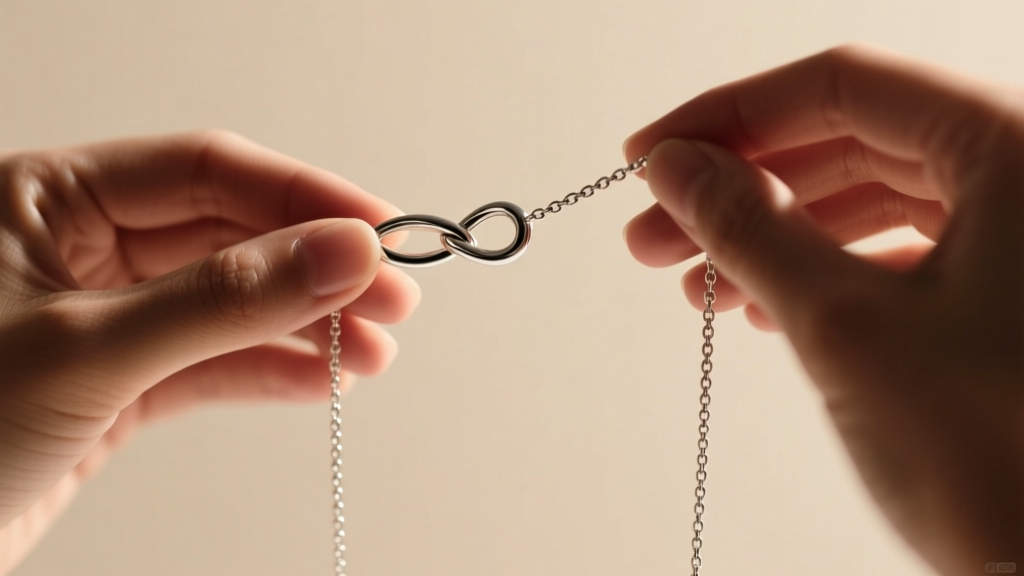
Step-by-Step: 3 Ways to Tie and Knot a Sautoir
Tying a long chain requires more than just a simple loop; it requires an understanding of gravity and friction. Here are three foundational techniques for styling your sautoir necklace.
1. The Classic Lariat Loop (The Y-Silhouette)
This technique transforms a continuous loop into a Y-necklace, elongating the torso and drawing attention to the waist.
- The Pinch: Gather the necklace and let it hang in a single, doubled loop down your chest.
- The Pull-Through: Reach into the center of the loop about 12 inches down from your collarbone.
- The Catch: Pull the bottom tassel or pendant end of the necklace through the gap you've created.
- The Adjustment: Gently tighten the slip knot. Warning: Do not pull tight on box chains or snake chains, as the sharp bending angle will weaken the metal links.
2. The Double-Wrap Choker Effect
Perfect for 36-inch to 40-inch sautoirs, this method creates the illusion of a layered choker and matinee necklace from a single piece.
- The First Wrap: Wrap the entire length of the necklace around your neck once, letting the two ends hang unevenly (one side roughly 8 inches, the other 24 inches).
- The Second Wrap: Take the longer end and wrap it around your neck a second time, bringing it to the front.
- The Secure: Use a small, clear silicone jewelry tie or a discreet enamel jump ring to bind the two front-hanging ends together, or simply tuck the shorter end into the wrapped loop for a friction hold.
3. The Asymmetrical Side-Knot
Ideal for heavy bead chains or pearl sautoirs, this technique shifts the visual weight to one shoulder, pairing beautifully with one-shoulder gowns or structured blazers.
- The Offset: Drape the necklace so that 70% of the chain hangs on your left side, and 30% on your right.
- The Overhand: Take the longer left section and tie a loose, single overhand knot about 4 inches below your collarbone.
- The Slide: Slide the knot laterally toward your left shoulder. Allow the remaining chain to cascade loosely over the shoulder blade.
How to Layer a Sautoir with Shorter Chains
Layering a 40-inch sautoir with shorter chains can quickly result in a tangled mess if you ignore the rules of gauge and spacing. The Gemological Institute of America (GIA) notes that mixing different metal alloys in close friction can cause micro-scratching, so layering requires strategic spacing.
The golden rule of necklace layering is the 4-inch gap. If your choker sits at 14 inches, your next chain must be at least 18 inches, and your sautoir should begin its primary visual weight below 24 inches.
- Layer 1 (14-16 inches): A rigid, thick-gauge choker (e.g., 4mm herringbone). This acts as the anchor.
- Layer 2 (20-22 inches): A mid-weight pendant chain (e.g., 2mm cable chain with a solitaire gemstone). This bridges the gap.
- Layer 3 (36+ inches): Your sautoir necklace. Ensure the sautoir is a delicate gauge (under 1.5mm) or a lightweight silk-cord design so it doesn't physically weigh down and distort the shorter chains.
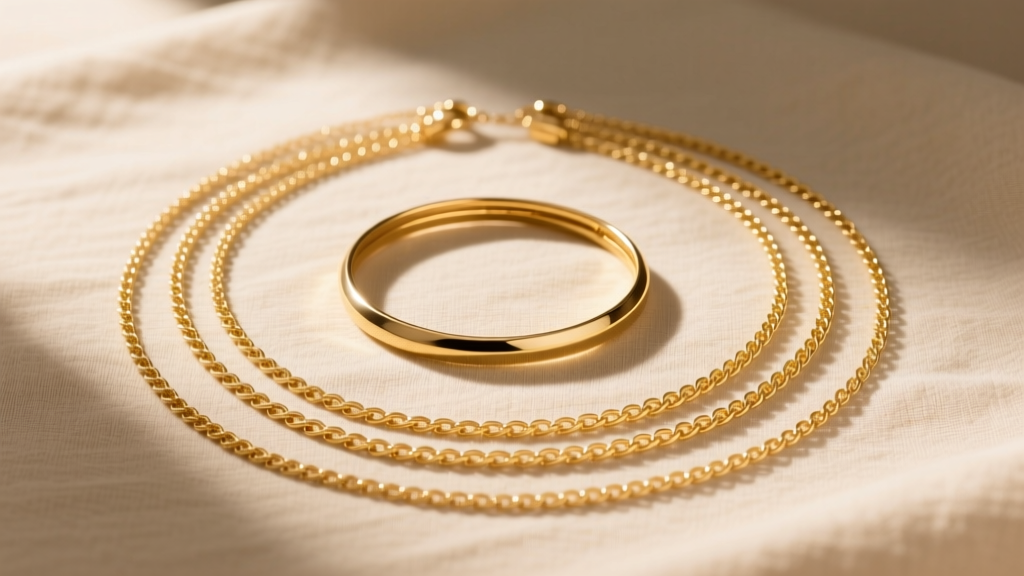
Neckline Pairing Matrix: Matching Sautoirs to Garments
The length and terminal finding (the tassel, pendant, or geometric drop at the end of the sautoir) must complement, not fight, your garment's neckline.
- V-Neck Blouses: Pair with a Y-knotted sautoir that mimics the V-shape. The terminal finding should rest exactly 2 inches above the hem of the V-neck to maintain visual continuity.
- Crew Necks & Turtlenecks: Wear the sautoir unknotted and fully extended. The long vertical line breaks up the horizontal block of fabric created by a crew neck, creating a slimming optical illusion.
- Open Button-Downs: Utilize the double-wrap technique. The bulk of the wrapped chain fills the negative space of an open collar, acting as a structural focal point.
- Backless Dresses: Reverse the sautoir. Wear the chain around your neck but let the tassel or pendant drop down your bare back. This requires a continuous-loop sautoir or one with a very discreet, flush clasp.
Care and Maintenance for Long-Chain Necklaces
Because sautoirs are exceptionally long, they are highly susceptible to tangling, stress fractures, and environmental damage, particularly at the terminal findings.
Preventing the 'Pocket Tangle'
Never store a sautoir loosely in a jewelry box. The sheer length guarantees it will weave through other pieces. Always store a sautoir hanging on a velvet-lined hook, or use the 'straw trick': thread one end of the chain through a plastic drinking straw and clasp it. The rigid straw prevents the chain from looping back on itself.
Cleaning Tassels and Porous Drops
Many vintage and modern sautoirs feature silk tassels, lapis lazuli, or turquoise drops. Never put these in an ultrasonic cleaner. The high-frequency vibrations will shatter porous stones and fray silk threads. Instead, clean the metal chain with a soft polishing cloth, and use a barely damp microfiber cloth to gently wipe the stone drops. If your sautoir features a silk tassel, use a fine-toothed comb and a light mist of fabric detangler to restore the fringe's fluid movement.
By mastering the physical properties of your chain and understanding the geometry of your wardrobe, the sautoir necklace transforms from a vintage novelty into an indispensable, modern styling tool.


