How to Wash Silver Necklace Pieces: An Expert Guide
Learn exactly how to wash silver necklace chains and pendants. Expert chemical and mechanical cleaning methods for 925 sterling and gemstone pieces.

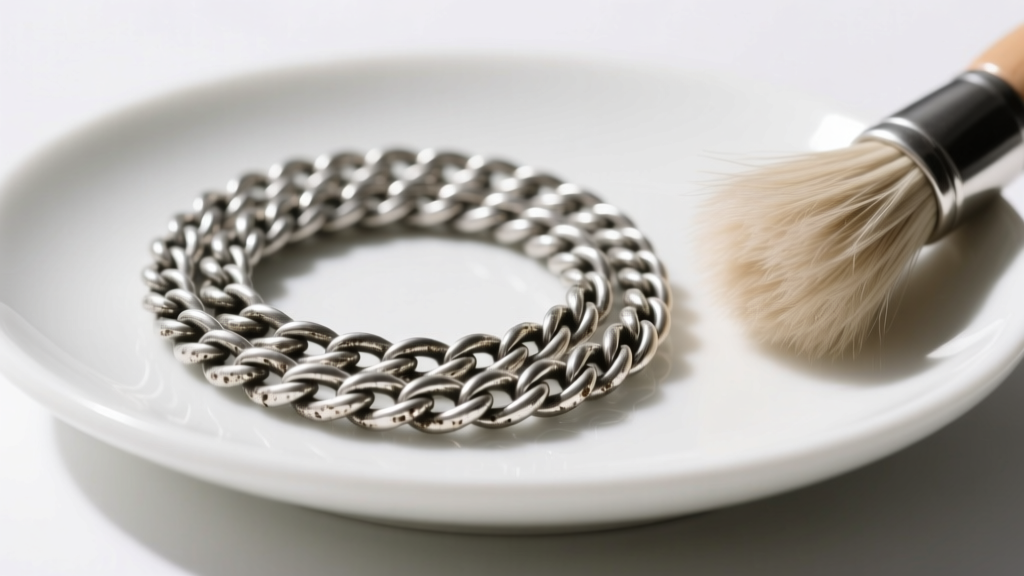
Knowing how to wash silver necklace chains and pendants properly requires an understanding of metallurgy, chemistry, and gemology. Silver tarnish is not merely accumulated dirt or oils; it is a chemical reaction between the silver alloy and sulfur compounds in the environment. Using the wrong cleaning agents can strip protective platings, scratch soft alloys, or permanently fracture porous gemstones. This expert guide bypasses generic home remedies to provide a technical, material-specific framework for restoring your silver jewelry.
The Chemistry of Silver Tarnish
Pure silver is highly resistant to tarnish, but it is too soft (2.5 on the Mohs scale) for functional necklace chains. To create sterling silver (925), metallurgists alloy 92.5% pure silver with 7.5% copper. It is this copper content—and the silver itself reacting to hydrogen sulfide (H2S) in the air—that creates silver sulfide (Ag2S), the blackish-yellow crust we recognize as tarnish. Furthermore, the copper in 925 sterling silver reacts with oxygen and moisture to form copper oxide, which can present as a dark red or black localized stain. Understanding this dual-reaction model is critical when selecting a cleaning solvent.
Identifying Your Silver Alloy and Plating
Before applying any liquid or abrasive, you must identify the exact composition of your necklace. The cleaning protocol for bare sterling silver will destroy other common finishes.
Sterling (925) vs. Fine (999) vs. Argentium
- Sterling Silver (925): Prone to both silver sulfide and copper oxide tarnish. Requires chemical reduction or mild surfactant washing.
- Fine Silver (999): Often used in bezels or delicate pendants. Tarnishes very slowly but is highly susceptible to mechanical scratching.
- Argentium Silver: A modern alloy where copper is partially replaced by germanium. It forms a transparent germanium oxide layer that prevents tarnish. Never use electrochemical dip cleaners on Argentium, as it can disrupt the protective oxide layer.
The Rhodium Plating Factor
Many high-end 925 silver necklaces are flash-plated with rhodium, a platinum-group metal that provides a bright, white-gold-like finish and prevents tarnish. If your necklace is rhodium-plated, you are technically washing rhodium, not silver. Abrasive polishes or harsh electrochemical baths will strip this micron-thin plating, exposing the yellowish sterling silver beneath and necessitating an expensive professional re-plating.
Step-by-Step: How to Wash Silver Necklace Chains
Select your method based on the severity of the tarnish and the presence of gemstones.
Method 1: The Surfactant Wash (For Routine Maintenance)
For light body oils, cosmetic buildup, and minimal surface tarnish, a pH-neutral surfactant wash is the safest mechanical approach.
- Mix 4 drops of pH-neutral dish soap (like Dawn) into a bowl of distilled water. Avoid tap water, as dissolved chlorine and minerals can cause spotting.
- Submerge the bare silver chain for 3 to 5 minutes to loosen sebum and cosmetic debris.
- Using a soft horsehair detailing brush or an extra-soft baby toothbrush, gently agitate the chain links. Focus on the interior of the links where friction and oils accumulate.
- Rinse thoroughly under a gentle stream of distilled water.
- Pat dry with a lint-free microfiber cloth. Do not air dry, as water spots will form on the polished metal.
Method 2: Electrochemical Reduction (For Heavy Sulfide Tarnish)
For heavy, blackened silver sulfide tarnish on bare silver chains (no gemstones, no rhodium plating), electrochemical reduction reverses the chemical reaction without removing any base metal.
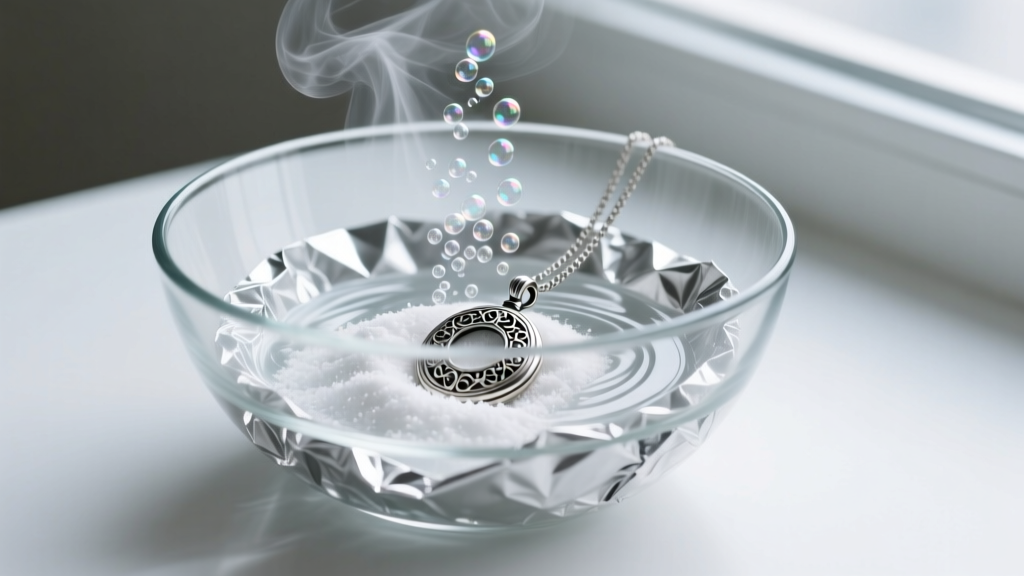
- Line a glass or ceramic bowl with aluminum foil, shiny side up.
- Place the tarnished silver necklace in direct physical contact with the aluminum foil. This contact is mandatory to complete the galvanic cell.
- Sprinkle 2 tablespoons of sodium bicarbonate (baking soda) over the jewelry.
- Pour boiling water into the bowl. The heat accelerates the ion transfer. You will immediately smell a rotten egg odor (hydrogen sulfide gas being released) and see tiny bubbles.
- Allow it to sit for exactly 2 to 4 minutes. Leaving it too long can cause the dissolved sulfides to re-deposit on the silver as a dull, gray film.
- Remove with wooden tongs, rinse in distilled water, and buff with a microfiber cloth.
Note: According to the Silver Institute, this method is highly effective for chains but should never be used on intentionally oxidized (blackened) silver designs, as it will strip the dark antiquing from the crevices.
Gemstone and Porous Pendant Protocols
When washing a silver necklace with a pendant, the gemstone's Mohs hardness and porosity dictate the cleaning method. Submerging a porous stone in an electrochemical bath or ultrasonic cleaner can cause catastrophic fracturing or color leaching.
| Gemstone | Mohs Hardness | Porosity | Safe Cleaning Method |
|---|---|---|---|
| Diamond | 10 | None | Ultrasonic, Surfactant, Electrochemical |
| Sapphire / Ruby | 9 | None | Surfactant, Ultrasonic (with caution) |
| Amethyst / Quartz | 7 | Low | Surfactant Wash Only |
| Turquoise | 5 - 6 | High | Dry Microfiber Wipe Only |
| Opal | 5.5 - 6.5 | High (Water content) | Dry Microfiber Wipe Only |
| Pearl | 2.5 - 3 | Organic / High | Damp Cloth, No Solvents |
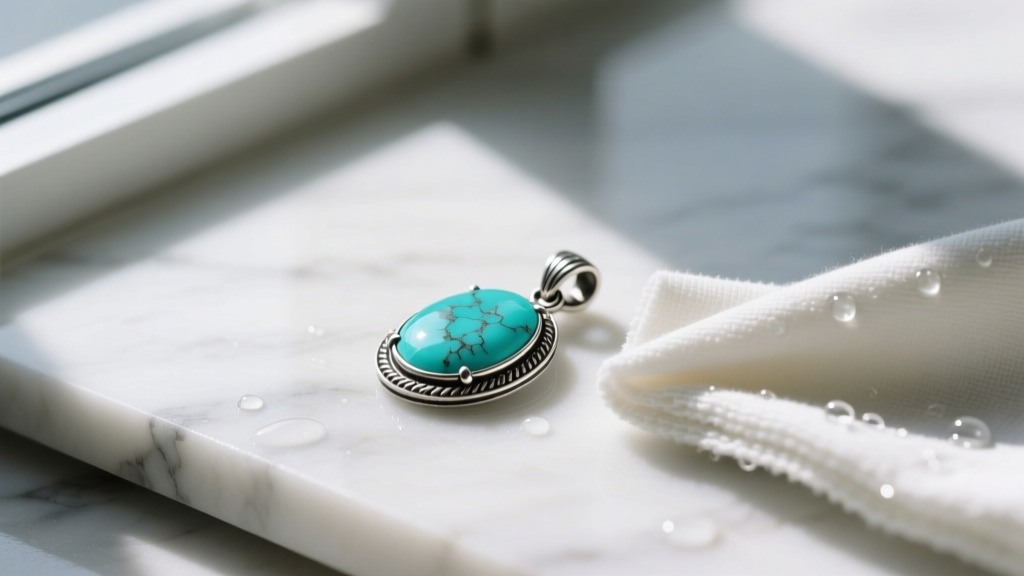
For porous stones like turquoise or opal, you must isolate the silver chain during cleaning. Drape the pendant over the edge of the bowl so only the silver chain is submerged in your chosen solution, or use a Q-tip dipped in the surfactant solution to carefully clean the silver bezel surrounding the stone without touching the gem itself. The Gemological Institute of America (GIA) strongly advises against using any chemical dips on organic or porous gems, as the chemicals can penetrate microscopic fissures and cause internal clouding.
What to Avoid: Destructive Cleaning Agents
To preserve the structural integrity and luster of your silver necklaces, strictly avoid the following common household cleaners:
- Chlorine Bleach: Chlorine reacts violently with silver to form silver chloride, a white, crusty compound that causes deep, irreversible pitting in the metal. Never wear silver necklaces in swimming pools or clean them with bleach-based products.
- Toothpaste: Toothpaste contains abrasive silica particles designed to clean tooth enamel (which is 5 on the Mohs scale). Silver is only 2.5 to 3. Toothpaste will leave thousands of micro-scratches on your silver chain, permanently dulling the mirror finish and creating microscopic grooves where future tarnish will accumulate faster.
- Commercial Silver Dips (Thiourea-based): While they remove tarnish instantly, commercial liquid dips often contain thiourea and strong acids. They strip the natural patina, leave a white residue if not rinsed perfectly, and can cause severe allergic reactions if trapped in tight chain links.
Preventative Storage and Anti-Tarnish Tech
The most effective way to manage silver tarnish is to prevent the chemical reaction from occurring in the first place. Store your clean, completely dry silver necklaces in an airtight environment alongside active sulfur absorbers. Anti-tarnish strips (such as 3M brand) contain copper-based compounds that preferentially react with hydrogen sulfide in the air, sacrificing themselves to protect your silver. Alternatively, store pieces in Pacific Silvercloth, a specialized flannel embedded with microscopic silver particles that trap sulfide gases before they reach your jewelry. Avoid storing silver in cardboard boxes or wrapping it in rubber bands, as both materials off-gas high levels of sulfur and will cause rapid, severe blackening of your chains.


