How to Wear Scapular Necklace Pieces: A Beginner's Guide
Discover how to wear scapular necklace pieces with confidence. Learn chain lengths, layering techniques, and material care in this beginner's guide.

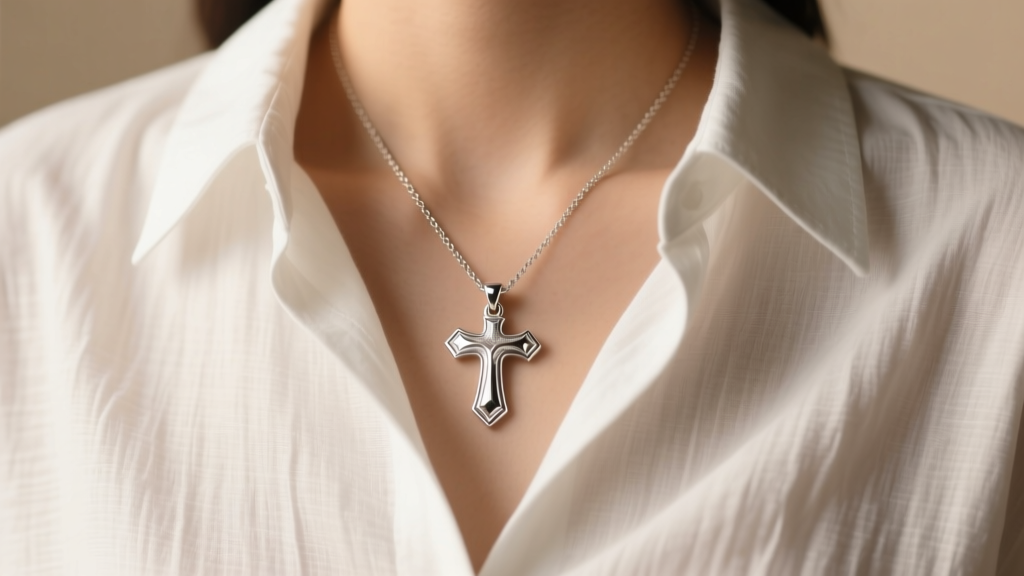
The Modern Revival of the Scapular Necklace
Historically rooted in religious devotion, the scapular has evolved far beyond its traditional boundaries. Today, learning how to wear scapular necklace designs is a staple in the wardrobes of jewelry enthusiasts who appreciate meaningful, layered, and versatile accessories. Originally a garment worn by monks, the modern scapular necklace consists of two small flat pendants connected by a long chain, designed so one rests on the chest and the other hangs between the shoulder blades. According to Britannica, the devotional scapular dates back centuries, but its translation into fine and fashion jewelry requires a specific approach to sizing, styling, and material selection.
Whether you are wearing it for spiritual protection, cultural connection, or purely aesthetic layering, this beginner-friendly explainer will break down the exact specifications, chain types, and styling frameworks you need to wear a scapular necklace flawlessly.
The Golden Rules of Scapular Sizing
The most common mistake beginners make is treating a scapular like a standard pendant necklace. A standard necklace sits at the collarbone (16 to 18 inches). A scapular, however, requires enough length to drape over the shoulders and allow the back pendant to hang comfortably between your shoulder blades without choking you or riding up.
Standard Length Guidelines
- 24 Inches (The High Drop): Best for petite frames or those who prefer the front pendant to sit just below the sternum. The back pendant will rest near the upper back.
- 28 Inches (The Classic Drop): The most universally flattering length. The front pendant rests on the solar plexus, and the back pendant sits comfortably in the mid-back.
- 32 Inches (The Long Drop): Ideal for taller individuals or for wearing over thick winter clothing and bulky sweaters.
Pro Tip: Before purchasing, use a soft measuring tape or a piece of string to simulate the 28-inch drop around your neck. Ensure the back pendant does not catch on your bra strap or shoulder blades when you move your arms.
Choosing the Right Metal for 24/7 Wear
Because scapulars are often intended for continuous, never-take-off wear, the metallurgy of your chain is critical. Sweat, body oils, and shower water will quickly degrade low-quality alloys. The GIA Gem Encyclopedia notes that metal porosity and alloy composition dictate how jewelry reacts to daily environmental exposure.
| Metal Grade | Durability & Tarnish | Price Range | Best For |
|---|---|---|---|
| 316L Surgical Steel | Highly durable, waterproof, zero tarnish | $25 - $60 | 24/7 wear, showering, active lifestyles |
| 925 Sterling Silver | Prone to oxidation/tarnish from sweat | $50 - $150 | Occasional wear, easy to polish |
| 14k Gold Vermeil | Gold plating over silver; will wear off | $80 - $200 | Layering over clothes, dry wear only |
| 14k Solid Gold | Indestructible, waterproof, heirloom | $350 - $800+ | Lifetime 24/7 wear, luxury investment |
Chain Thickness and Gauge
For a scapular, you want a chain that is visible enough to hold the weight of two pendants but delicate enough to look elegant. Look for a chain gauge between 1.2mm and 1.5mm. Anything thinner (like a 0.8mm thread chain) will easily snap when caught on clothing. Anything thicker (over 2.0mm) will look bulky and feel heavy on the back of the neck.
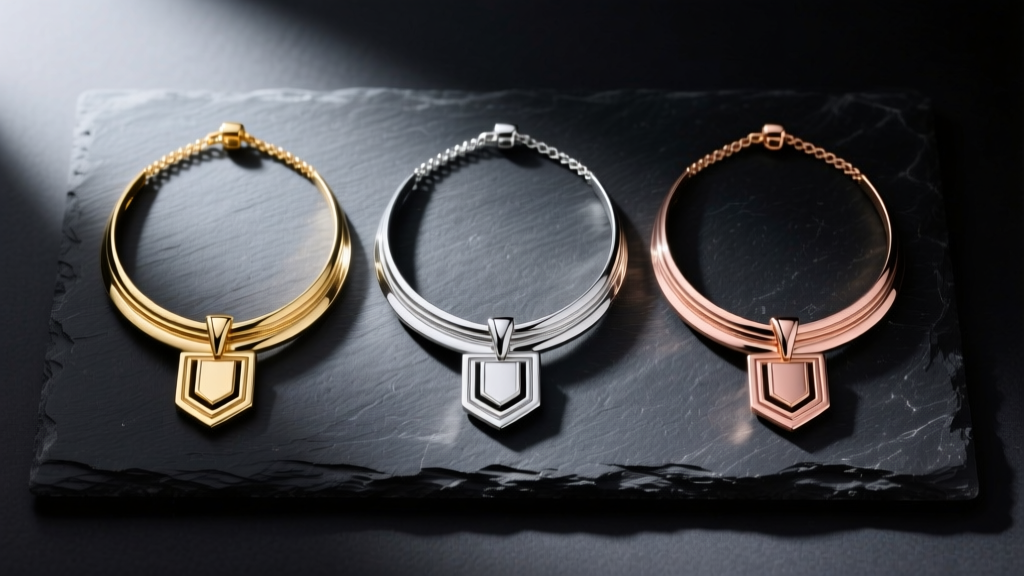
How to Wear a Scapular Necklace: Over vs. Under Clothing
Styling a scapular depends entirely on the neckline of your outfit and the message you want to convey.
Wearing It Over Clothing
Wearing your scapular on the outside turns it into a statement piece. This works best with V-neck and scoop-neck tops, which naturally frame the front pendant. Avoid high crew necks or turtlenecks, as the chain will compete with the fabric's hemline, creating visual clutter. If you are wearing a button-down shirt, leave the top two buttons undone to let the pendant rest against your skin while the chain lays over the fabric.
Wearing It Under Clothing
If you prefer a minimalist look or are wearing the piece for private devotion, wear it under your shirt. In this case, opt for a 316L stainless steel or solid gold chain. Sterling silver worn directly against the skin 24/7 will oxidize rapidly due to body acidity, leaving a green or gray residue on your chest and back.
The Layering Framework: Avoiding Tangles
Layering a scapular with secular jewelry is a major trend, but mixing multiple long chains often results in a frustrating, tangled mess. To master the layering technique, follow the Two-Inch Rule.
- Layer 1 (The Choker/Collar): 14 to 16 inches. A simple gold band or a small gemstone choker.
- Layer 2 (The Mid-Pendant): 18 to 20 inches. A standard pendant necklace or a lariat.
- Layer 3 (The Scapular): 24 to 28 inches. The scapular acts as the foundational base layer.
By maintaining at least a two-inch gap between the termination points of each necklace, the chains will glide past one another rather than wrapping together. Furthermore, avoid pairing a scapular with other heavy pendant necklaces; let the dual-pendant design of the scapular be the focal point of your lower chest.
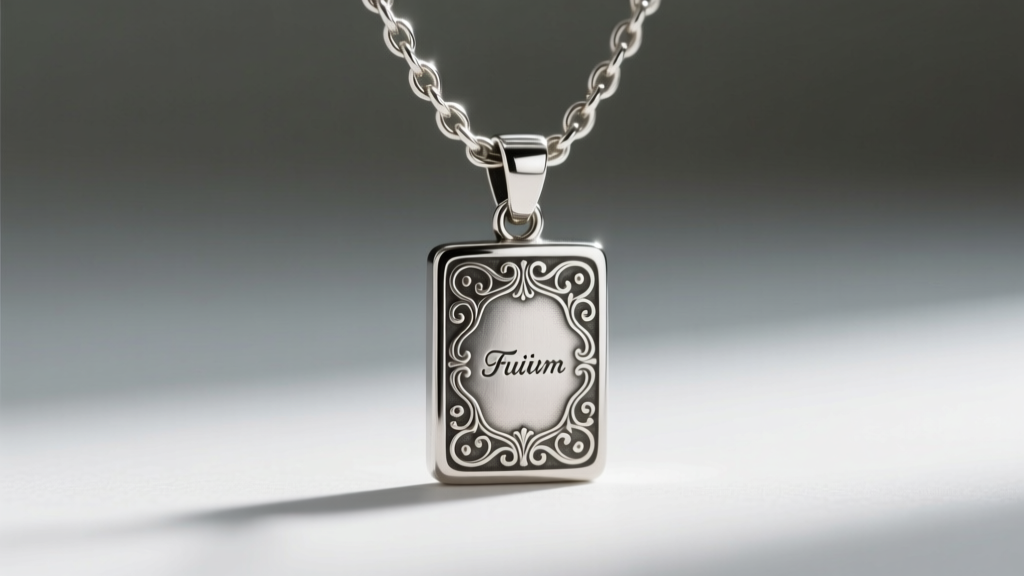
Chain Types and Failure Modes
Not all chains are created equal. The structural integrity of the chain links will determine how long your scapular survives daily wear.
Recommended: Cable and Curb Chains
Standard cable chains (uniform oval links) and curb chains (flattened, interlocking links) are the most resilient. Their simple geometry means there are fewer stress points, and if a link does bend, it can be easily repaired by a jeweler.
Avoid: Box and Snake Chains
Box chains and snake chains are notoriously fragile for 24/7 wear. Box chains are prone to kinking if bent at a sharp angle, and once a box chain kinks, it weakens the entire structural line. Snake chains are made of tightly wound metal rings that easily catch on hair and fabric; once pulled, they develop permanent 'dents' that cannot be fixed.
The Clasp Matters
Always check the clasp before buying. Avoid spring ring clasps, which rely on a tiny internal spring that frequently fails or gets stuck. Insist on a lobster clasp or, ideally, a chain that is welded shut with a soldered jump ring for absolute security.
Care and Maintenance
Even the most durable scapular requires basic maintenance to keep the pendants legible and the chain bright.
- For Metal Pendants: Use a microfiber polishing cloth once a month to remove sebum and dead skin cells that accumulate in the engraved grooves of the pendants.
- For Cloth/Insert Pendants: Some traditional scapulars feature a small cloth insert sealed inside a metal bezel. Never submerge these in water. Clean only the metal frame with a damp cotton swab.
- Storage: When traveling, never toss your scapular loosely into a bag. The dual pendants will act as weights, pulling and tangling the chain. Store it flat in a dedicated jewelry pouch or hang it on a multi-tier jewelry stand.
By understanding the precise mechanics of length, metal grade, and chain structure, you can seamlessly integrate a scapular necklace into your daily rotation. It is a piece that bridges the gap between historical significance and modern aesthetic layering, provided it is sized and styled with intention.


