Huguenot Cross Necklace: Metal & Material Comparison Guide
Compare metals for your Huguenot cross necklace. Explore 925 silver, 14k/18k gold, and platinum properties, durability, and chain pairings.

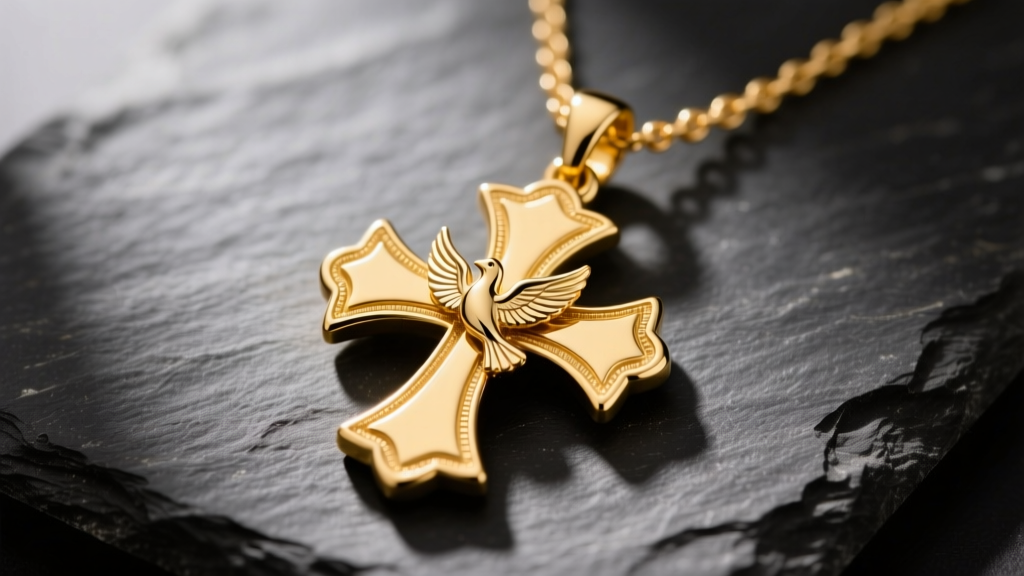
The Anatomy of the Huguenot Cross and Material Demands
The Huguenot cross necklace is far more than a simple religious pendant; it is a masterclass in intricate jewelry design and historical symbolism. Originating in the Languedoc region of France in the late 17th century, this emblem of French Protestantism features a complex anatomy: a central Maltese cross, four fleur-de-lis motifs connecting the arms, a central dove (representing the Holy Spirit), and a series of delicate connecting loops. When selecting a Huguenot cross necklace, the choice of metal is not merely an aesthetic decision—it is a structural necessity.
Because of the intricate openwork and the articulated pendant dove (often suspended by a tiny jump ring or bélière), the metal must possess high tensile strength and excellent casting detail retention. A metal that is too soft will result in bent fleur-de-lis points or a sheared dove bail, while a metal with poor flow characteristics during casting will result in muddy, undefined details. In this comprehensive guide, we break down the metallurgical properties of the most common precious metals used for the Huguenot cross necklace, helping you make an informed, lifelong investment.
Precious Metal Showdown: Silver, Gold, and Platinum
Sterling Silver (925) vs. Argentium Silver (960)
Traditional Sterling Silver (92.5% silver, 7.5% copper) is the most accessible entry point for a Huguenot cross necklace. The copper alloy provides a Vickers Hardness (HV) of roughly 65-70, which is adequate for the main body of the Maltese cross. However, the copper content makes it highly susceptible to oxidation (tarnish), particularly in the deep recesses of the fleur-de-lis detailing, which can be difficult to polish without a jeweler's ultrasonic machine or magnetic tumbler.
For a superior alternative, seek out Argentium Silver 960. By replacing a portion of the copper with germanium, Argentium achieves a higher purity (96% silver) while dramatically increasing tarnish resistance and eliminating firestain during the manufacturing process. According to research presented at the Santa Fe Symposium on Jewelry Manufacturing Technology, Argentium's work-hardening capabilities also allow the tiny loops holding the dove pendant to withstand greater shear stress before deforming, making it a vastly superior choice for intricate, articulated historical crosses.
14K vs. 18K Yellow Gold: Balancing Purity and Yield Strength
Gold remains the traditional and most coveted metal for the Huguenot cross necklace, but the karatage drastically alters its structural viability. 18K Yellow Gold (75% gold) offers a rich, buttery hue that beautifully complements the historical weight of the piece. However, its Vickers Hardness sits around 125 HV, and its yield strength is relatively low. If the pendant is cast with very thin loops connecting the dove, 18K gold may slowly stretch under the pendant's own weight over decades of daily wear.
Conversely, 14K Yellow Gold (58.5% gold) is alloyed with higher proportions of silver, copper, and sometimes zinc. This increases its hardness to approximately 140-150 HV. The Gemological Institute of America (GIA) notes that the specific alloy mix in 14K gold provides superior tensile strength, making it the optimal choice for the delicate jump rings and articulated joints of the Huguenot cross. While the color is slightly less saturated than 18K, the structural integrity it provides to the tiny dove bail is unmatched in the gold family.
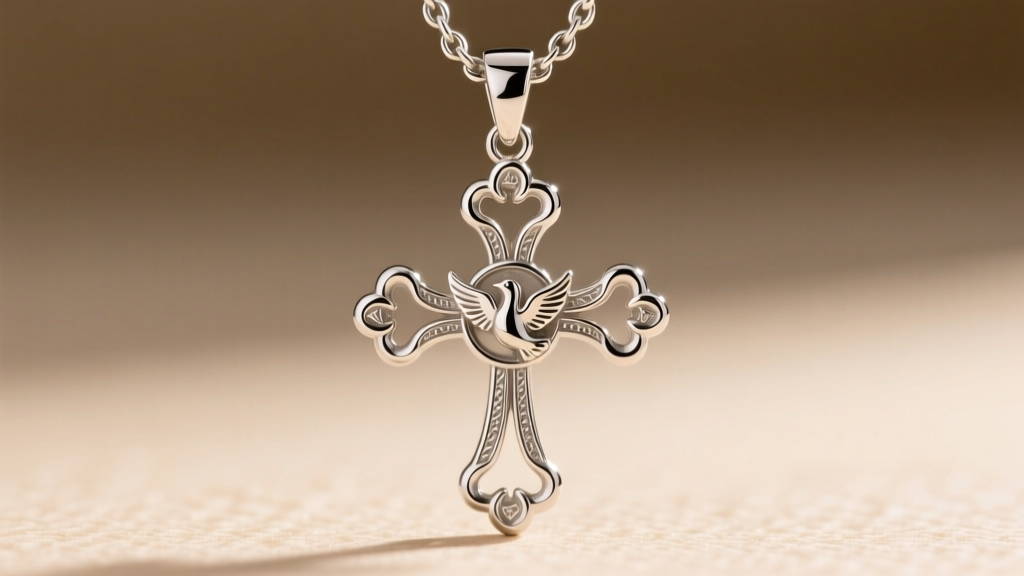
Platinum 950: The Premium Heavyweight
Platinum (typically alloyed with 5% ruthenium for jewelry) is the pinnacle of durability. With a density of 21.45 g/cm³, a solid cast platinum Huguenot cross will feel substantially heavier than its gold or silver counterparts. This density gives the piece a luxurious, heirloom-quality drape. Metallurgically, platinum exhibits unique work-hardening properties; when scratched, the metal is displaced rather than lost, meaning the intricate edges of the Maltese cross will never wear thin over a lifetime of use.
However, platinum's high melting point and casting shrinkage rate require a master jeweler to execute the tiny details of the dove's wings and the central pearl or gemstone often found in vintage-inspired designs. If you choose platinum, ensure the piece is cast using induction melting with a phosphate-bonded investment to guarantee sharp, crisp details on the fleur-de-lis motifs.
Material Properties Comparison Matrix
To visualize how these metals perform under the specific structural demands of a Huguenot cross necklace, refer to the metallurgical comparison table below:
| Metal / Alloy | Purity | Vickers Hardness (HV) | Density (g/cm³) | Tarnish Resistance | Detail Retention |
|---|---|---|---|---|---|
| Sterling Silver | 92.5% | 65 - 75 | 10.36 | Low | Good |
| Argentium 960 | 96.0% | 80 - 95 (Work Hardened) | 10.40 | Excellent | Excellent |
| 18K Yellow Gold | 75.0% | 120 - 130 | 15.50 | High | Very Good |
| 14K Yellow Gold | 58.5% | 140 - 155 | 13.50 | High | Excellent |
| Platinum 950 (Ru) | 95.0% | 130 - 145 | 21.45 | Excellent | Superior |
Expert Insight: If your Huguenot cross features a central gemstone (often a pearl or a small diamond) set within the Maltese cross, avoid purchasing hollow-backed or electroformed gold versions. The prongs or bezels on hollow castings lack the structural mass required to hold stones securely over time, leading to inevitable stone loss.
Chain Selection Based on Pendant Weight and Metal
The material of your Huguenot cross necklace dictates not only the pendant's weight but also the necessary chain gauge. A standard solid 14K gold Huguenot cross with a dove pendant typically weighs between 6 and 12 grams. To prevent fatigue failure at the clasp or the chain links, the chain must have a working load limit that vastly exceeds the pendant's static weight.
- For Silver and 14K Gold (6g - 9g pendants): A 1.2mm to 1.5mm solid cable chain or a 1.5mm Franco chain is ideal. These chains offer excellent flexibility while maintaining enough tensile strength to support the pendant without stretching. Always opt for a solid lobster clasp rather than a spring-ring, which is prone to mechanical failure.
- For 18K Gold and Platinum (10g - 15g+ pendants): The increased density requires a heavier chain. A 1.8mm to 2.2mm rope chain or a 2.0mm wheat chain provides the necessary visual balance and structural support. The interlocking links of a wheat chain are particularly resistant to kinking, which is crucial when supporting a heavy, articulated pendant that swings and rotates during wear.
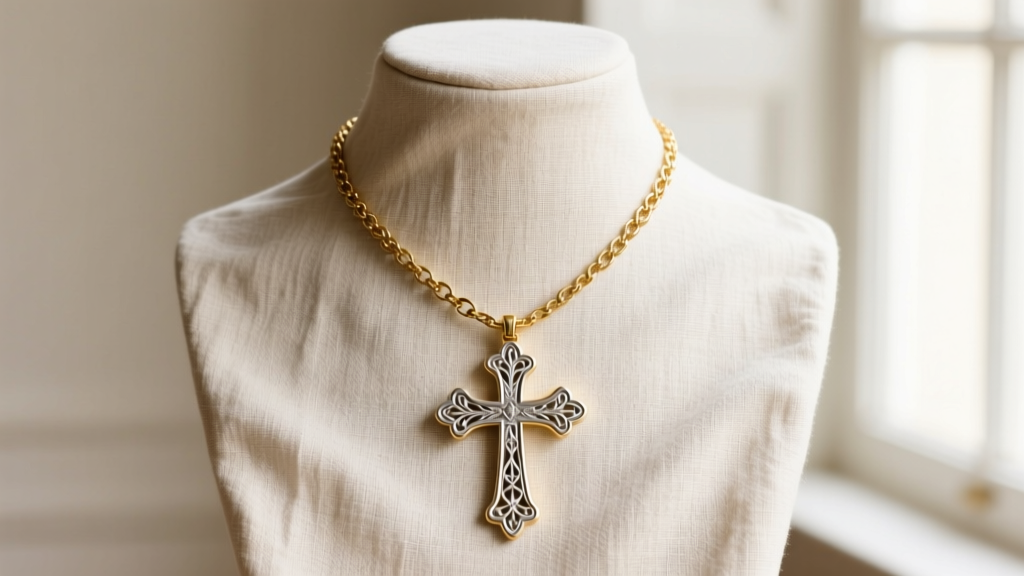
Maintenance and Longevity by Material
Maintaining the crisp details of the Huguenot cross requires material-specific care. For Sterling Silver, the deep crevices around the dove's wings and the Maltese arms will accumulate silver sulfide (tarnish). Use a mild dish soap and a soft-bristled baby toothbrush to clean these areas; avoid harsh silver dips, which can strip the oxidation from the recessed areas that jewelers intentionally leave to provide visual contrast and depth.
For Gold and Platinum, daily wear will result in the accumulation of skin oils and lotions, which can dull the high-polish finish. Platinum will naturally develop a satiny 'patina' over time as the metal is displaced by micro-scratches. While some collectors prize this antique look, a jeweler can easily restore the mirror finish using a high-speed buffing wheel with a rouge compound. However, frequent aggressive polishing of gold will eventually soften the sharp edges of the fleur-de-lis, so limit professional polishing to once every few years.
Final Verdict: Choosing Your Metal
Selecting the right metal for your Huguenot cross necklace requires balancing historical authenticity, budget, and structural longevity. If you desire a budget-friendly option that resists tarnish and protects the delicate dove bail, Argentium Silver 960 is the smartest modern choice. For those seeking the traditional warmth of gold with the structural integrity required for heirloom jewelry, 14K Yellow Gold offers the perfect intersection of yield strength and rich color. Finally, if you are commissioning a bespoke piece meant to be passed down through multiple generations without fear of wear or metal loss, Platinum 950 remains the undisputed king of precious metals.


