Prevent an Allergic Reaction: Necklace Buying Guide for Sensitive Skin
Discover which necklace metals cause contact dermatitis and which are safe. A deep-dive buying guide for sensitive skin and severe nickel allergies.

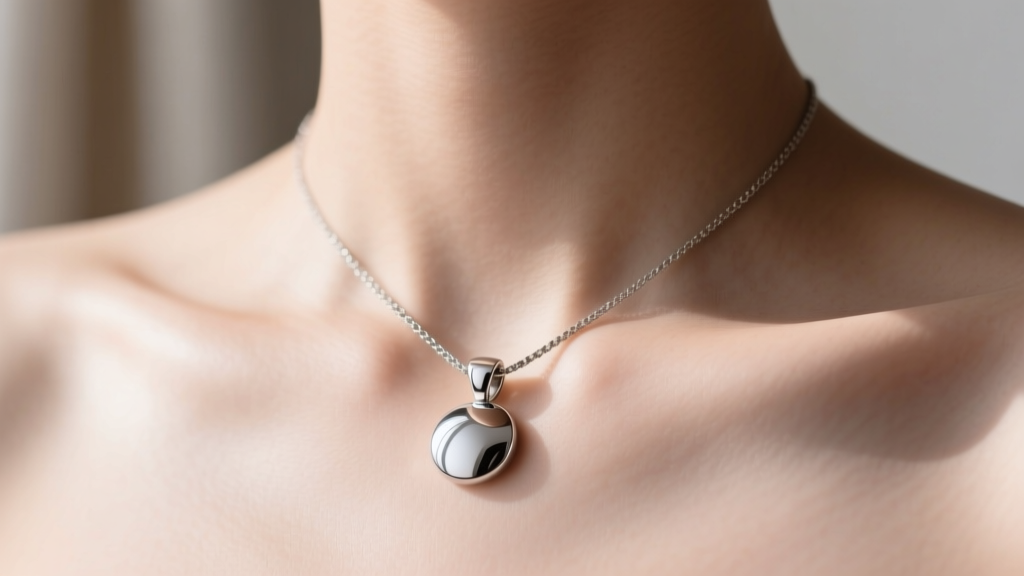
The Immunology of Contact Dermatitis: Why Your Neck is Reacting
When your favorite jewelry turns into an allergic reaction necklace nightmare, the culprit is rarely the precious metal itself. Instead, the irritation is a localized immune response known as allergic contact dermatitis (ACD). According to the Mayo Clinic, nickel is the most common offender, affecting roughly 10% to 20% of the global population. However, cobalt, chromium, and even copper can trigger similar cascades.
The process begins with haptenization. When you sweat, the slightly acidic pH (typically between 4.5 and 6.2) acts as an electrolyte, causing microscopic metal ions to leach from the necklace chain or clasp. These ions penetrate the stratum corneum (the outermost layer of skin) and bind to epidermal proteins. Your immune system's T-cells mistakenly identify these protein-metal complexes as foreign pathogens, launching an inflammatory attack that results in the hallmark redness, blistering, and intense pruritus (itching) along the neckline.
If you are shopping for a new piece, understanding the metallurgical reality of jewelry alloys is the only way to guarantee long-term comfort. This guide bypasses marketing buzzwords and focuses on exact material grades, failure modes, and actionable buying criteria for sensitive skin.
The Hypoallergenic Hierarchy: What to Look For
Not all 'safe' metals are created equal. The jewelry industry frequently conflates 'hypoallergenic' with 'nickel-free,' but true biocompatibility requires looking at specific ASTM (American Society for Testing and Materials) standards and alloy compositions.
Tier 1: The Implant-Grade Standard (Zero Nickel)
- ASTM F136 Titanium (Ti-6Al-4V ELI): This is the gold standard for severe metal allergies. Originally developed for orthopedic implants, F136 titanium contains zero nickel, cobalt, or lead. It is highly resistant to chloride-induced corrosion, meaning it will not degrade when exposed to heavy sweat or ocean water. Look for brands that explicitly certify their titanium to F136 or F67 standards.
- Niobium: A highly unreactive transition metal that is completely nickel-free. Niobium is often anodized to create vibrant colors without the use of surface paints or platings that could chip and expose underlying alloys. It is slightly heavier than titanium but offers unmatched biocompatibility.
Tier 2: The Precious Metal Safeguards
- 950 Platinum: Composed of 95% pure platinum and usually 5% ruthenium or iridium. Platinum is inherently hypoallergenic and incredibly dense. Unlike white gold, it does not require rhodium plating, eliminating a major point of failure for allergy sufferers.
- 18k and 14k Yellow Gold: Pure 24k gold is too soft for chains, so it is alloyed. 18k yellow gold (75% gold, mixed with copper and silver) is generally safe. However, you must verify the alloy mix, as some manufacturers sneak zinc or trace nickel into lower-karat blends to cut costs.
Deceptive Marketing: 'Hypoallergenic' vs. 'Nickel-Free'
In the United States, the term 'hypoallergenic' is entirely unregulated by the FTC or FDA. A brand can legally stamp 'hypoallergenic' on a necklace made of surgical steel that contains up to 14% nickel, simply because the nickel is bound within the crystal lattice. Conversely, the European Union's REACH regulation strictly limits nickel release from jewelry to 0.5 µg/cm²/week.
Furthermore, 'surgical steel' (often 316L) is a massive trap for allergy sufferers. While 316L contains molybdenum for corrosion resistance, it still harbors 10-14% nickel. For someone with a mild sensitivity, 316L might be tolerable. For someone with a severe, clinically diagnosed nickel allergy, a 316L chain will almost certainly cause a flare-up within 48 hours of continuous wear.
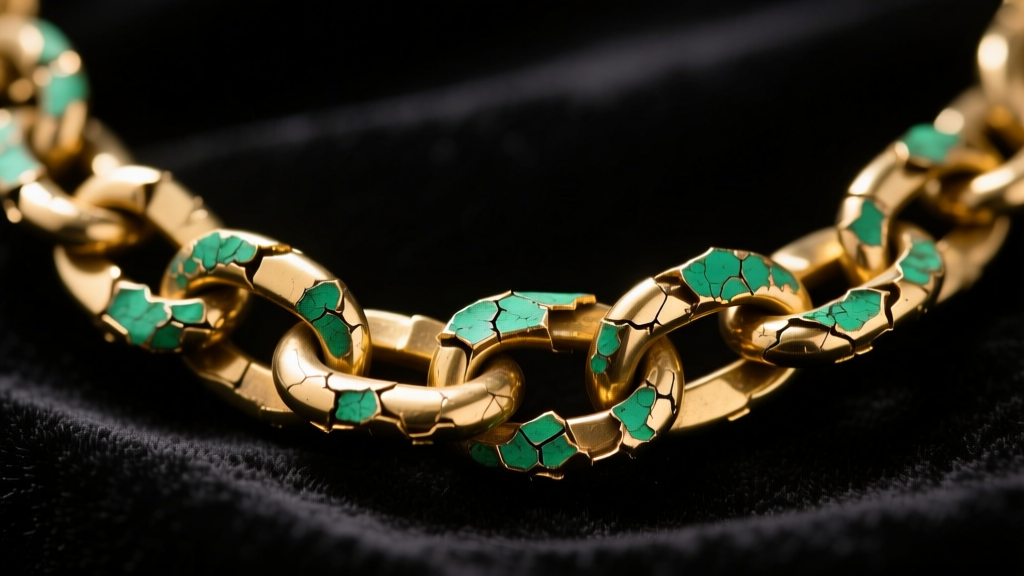
Another common failure mode is gold vermeil or gold-plated brass. Vermeil requires a sterling silver base and a minimum of 2.5 microns of gold. However, once that microscopic layer wears away from friction against the collarbone, the underlying silver (which often contains copper alloys) or brass is exposed to sweat, leading to rapid galvanic corrosion and severe contact dermatitis.
Comprehensive Metal Comparison Chart
| Metal / Grade | Nickel Content | Avg. Price (18' Chain) | Corrosion Resistance | Verdict for Sensitive Skin |
|---|---|---|---|---|
| ASTM F136 Titanium | 0% | $45 - $120 | Exceptional | Highly Recommended |
| 950 Platinum | 0% | $800 - $2,500+ | Exceptional | Highly Recommended |
| 18k Yellow Gold | Usually 0% | $600 - $1,500 | High | Recommended (Verify Alloy) |
| 316L Surgical Steel | 10% - 14% | $20 - $80 | Moderate | Avoid if Severe Allergy |
| Sterling Silver (925) | 0% (but contains Copper) | $30 - $150 | Low (Tarnishes) | Use with Caution |
| Gold Vermeil (Brass base) | Variable / High | $40 - $100 | Very Low | Strictly Avoid |
The Galvanic Corrosion Factor: Sweat, pH, and Chain Failure
One of the most overlooked aspects of jewelry-induced dermatitis is galvanic corrosion. This occurs when two dissimilar metals come into contact in the presence of an electrolyte (your sweat). For example, if you buy a solid 14k gold chain but the manufacturer used a cheap, nickel-heavy alloy for the internal spring of the lobster clasp, a microscopic galvanic cell is formed.
The sweat acts as a salt bridge, accelerating the oxidation of the less noble metal (the base metal clasp spring). This rapid degradation releases a concentrated burst of metal ions directly onto the nape of your neck, causing a localized rash exactly where the clasp rests. According to the American Academy of Dermatology, identifying the exact point of contact is crucial for diagnosing the specific allergen. Always ensure that the clasp, jump rings, and solder points are made of the exact same alloy as the chain itself.
Actionable Buying Checklist for Sensitive Skin
To ensure your next purchase is genuinely safe, use this checklist when evaluating a jeweler or brand:
- Demand the Alloy Breakdown: Do not accept '14k gold' as a sufficient answer. Ask for the specific alloying metals. If they cannot tell you whether their white gold is alloyed with palladium (safe) or nickel (unsafe), walk away.
- Check for Solid Construction: Avoid hollow-core chains. Hollow chains are prone to micro-fractures that trap sweat, dead skin cells, and bacteria, creating an acidic microenvironment that accelerates metal leaching.
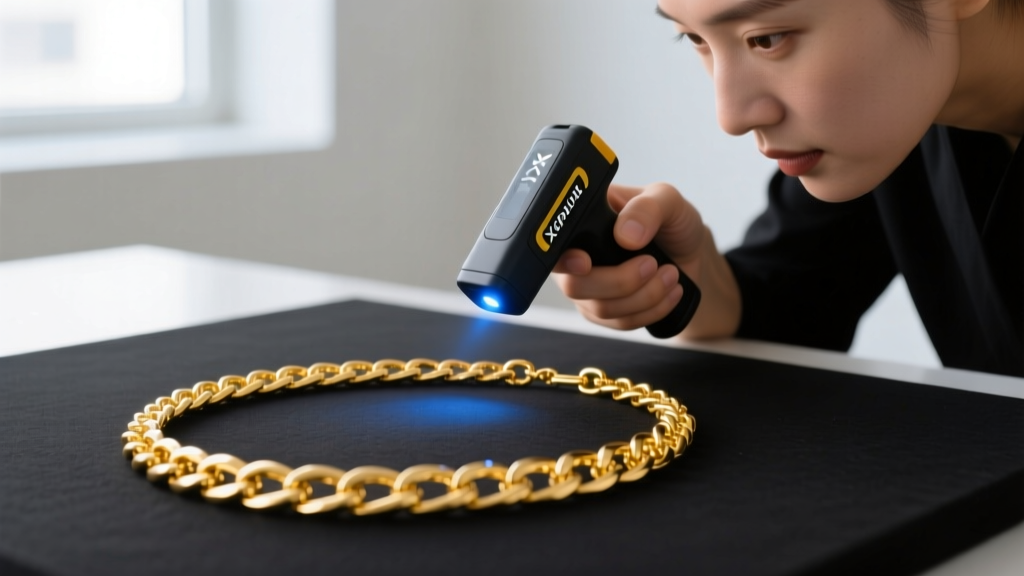
- Request XRF Verification: Reputable high-end jewelers possess an X-ray Fluorescence (XRF) spectrometer. This non-destructive device can scan the necklace in seconds and provide an exact elemental readout, proving the absence of nickel or cobalt.
- Inspect the Solder Points: Look closely at the jump rings and clasp connections. Traditional soldering often uses cadmium or nickel-bearing solder pastes. Laser-welded connections are vastly superior for allergy sufferers as they melt the base metal without introducing foreign alloys.
Pro Tip: If you already own a necklace that causes a mild reaction but you love the design, you can temporarily seal the chain using a specialized jewelry coating like JewelSkin Shield. However, this is a temporary band-aid (lasting 4-6 weeks) and is not a substitute for purchasing inherently biocompatible metals.
Ultimately, preventing an allergic reaction requires treating jewelry as a metallurgical investment rather than a mere aesthetic accessory. By prioritizing implant-grade titanium, pure platinum, and verified high-karat gold, you can build a necklace collection that remains as kind to your skin as it is beautiful to the eye.


