Hysteric Glamour Necklace Technical Guide: Alloys and Hardware
Explore the technical build of a Hysteric Glamour necklace. We analyze brass and silver alloys, hardware durability, and patina maintenance.

The Metallurgy of Japanese Streetwear Jewelry
When analyzing the secondary market for Japanese streetwear, the Hysteric Glamour necklace remains a cornerstone of punk-inspired, Americana-infused fashion. Founded by Nobuhiko Kitamura in 1984, the brand’s accessories division has consistently pushed the boundaries of mixed-media jewelry. However, to truly understand the value and longevity of these pieces, one must look past the provocative graphics and examine the underlying metallurgy. As we navigate the 2026 vintage and contemporary jewelry market, distinguishing between authentic Hysteric Glamour metallurgical standards and the influx of sub-par counterfeits requires a deep understanding of alloy compositions, casting techniques, and hardware tolerances.
According to industry resources like Rio Grande, the structural integrity of any cast pendant relies heavily on the specific alloy blend and the cooling rate during the manufacturing process. Hysteric Glamour primarily utilizes two base metals for their core necklace lines: high-grade cartridge brass and 925 sterling silver. Each material requires a distinct approach to casting, finishing, and long-term maintenance.
C26000 Cartridge Brass Specifications
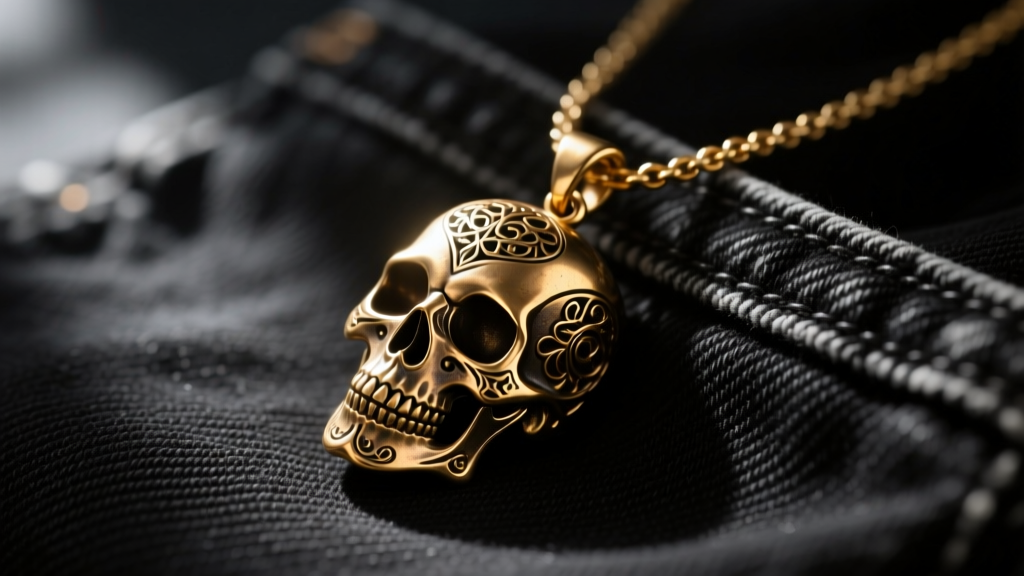
The majority of Hysteric Glamour’s standard production pendants—featuring their signature cherries, pin-up girls, and skull motifs—are cast using C26000 cartridge brass. This specific alloy consists of approximately 70% copper and 30% zinc. This ratio is critical because it provides an optimal balance of tensile strength and malleability, allowing for the deep undercuts and sharp, intricate details seen in the brand's vulcanized rubber mold castings. Unlike cheaper zinc alloys (Zamak) used in fast-fashion replicas, C26000 brass resists porosity during the casting process, resulting in a dense, heavy pendant with crisp edge definition. To prevent premature verdigris (the green oxidation caused by copper reacting with skin acids), authentic pieces are typically sealed with a micro-thin electro-coated (e-coat) polymer layer.
925 Sterling Silver and Intentional Oxidation
For premium and limited-edition releases, Hysteric Glamour employs 925 Sterling Silver (92.5% silver, 7.5% copper). The copper content is necessary to achieve the Vickers hardness required for durable chain links and clasp mechanisms. However, the brand rarely leaves the silver in a high-polish state. Instead, they utilize chemical oxidation—often involving liver of sulfur (potassium sulfide) solutions—to blacken the recessed areas of the pendant. This technique, known as antiquing, artificially ages the piece and highlights the rock-and-roll textures of the design. The raised surfaces are then lightly buffed, creating a high-contrast, three-dimensional effect that is incredibly difficult for counterfeiters to replicate without over-polishing and losing detail.
Chain Link Architecture and Hardware Mechanics
A pendant is only as secure as the chain and hardware supporting it. Hysteric Glamour necklaces are renowned for their heavy, tactile chains, but the engineering of the connections is where the true quality lies.
Jump Ring Tolerances and Failure Points
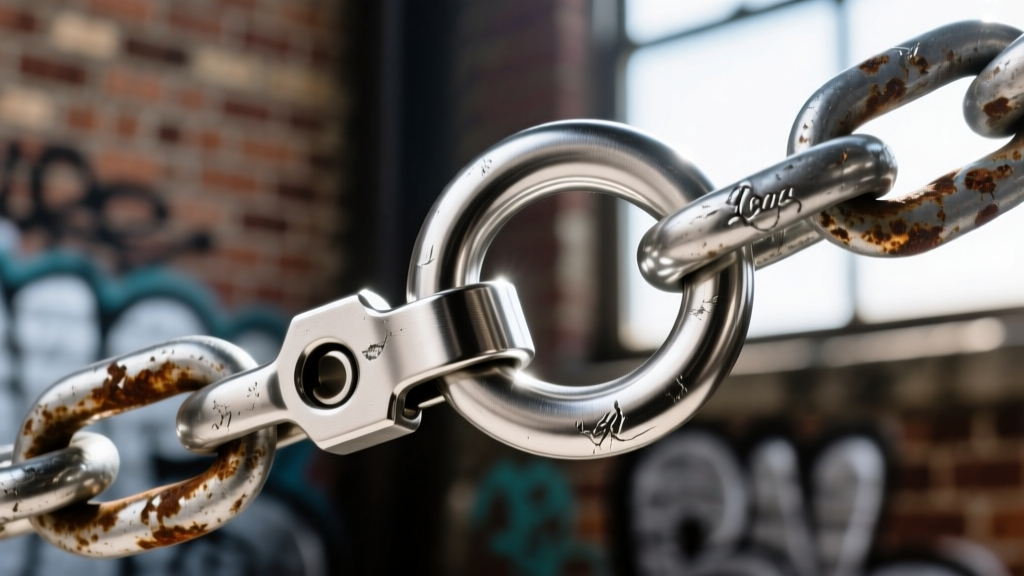
The most common failure point in any streetwear necklace is the jump ring connecting the clasp to the chain, or the pendant to the chain. Authentic Hysteric Glamour pieces typically utilize heavy-gauge wire jump rings with a minimum wire thickness of 1.5mm and an outer diameter (OD) of 5.0mm to 6.0mm. More importantly, the butt joints of these jump rings are either precision-soldered or feature a split-ring design (similar to a miniature key ring) to prevent the ring from pulling apart under the dynamic load of a heavy brass pendant. Counterfeit versions frequently use thin, 0.8mm unsoldered wire that easily deforms and snaps when snagged on clothing.
Clasp Mechanisms
Standard spring-ring clasps are largely absent from genuine Hysteric Glamour heavy chains. Instead, the brand favors custom-cast lobster clasps or heavy-duty fold-over box clasps. The internal spring mechanism of an authentic lobster clasp is calibrated for high tension, ensuring the lever does not accidentally depress against the wearer's chest. Many authentic clasps also feature the 'HG' monogram or the full brand name laser-engraved on the lever arm, with a kerning and depth that is impossible to achieve with cheap stamping dies.
Material and Hardware Data Comparison
| Material Grade | Density (g/cm³) | Vickers Hardness (HV) | Typical HG Application |
|---|---|---|---|
| C26000 Cartridge Brass | 8.53 | 75-150 | Intricate die-cast pendants, standard chain links |
| 925 Sterling Silver | 10.36 | 65-120 | Premium limited editions, heavy Cuban chains |
| Zamak (Zinc Alloy) | 6.60 | 80-100 | *Red Flag*: Common in counterfeit pieces |
| 304 Stainless Steel | 7.93 | 150-200 | Internal clasp springs, heavy-duty split rings |
Authentication Markers: Casting Lines and Hallmarks
As detailed in authentication guides by platforms like Grailed's Dry Clean Only, verifying a Hysteric Glamour necklace requires a meticulous physical inspection. The secondary market is flooded with Zamak-based replicas that fail on multiple technical fronts.
- Parting Lines and Sprue Marks: Die-cast counterfeit molds are made of two halves that press together, leaving a raised 'parting line' along the edge of the pendant. Authentic HG brass pieces are often cast using lost-wax investment casting or high-grade vulcanized molds that minimize these lines. Furthermore, look for the 'sprue mark' (where the molten metal entered the mold). On authentic pieces, this is ground flush and polished; on fakes, it often remains as a rough, raised bump on the back of the pendant.
- Hallmark Typography and Depth: Authentic stamps reading 'HYSTERIC GLAMOUR' or 'SILVER' are either deeply cast into the mold or precisely laser-engraved post-production. The font is typically a specific, tightly kerned sans-serif. Fakes often feature shallow, blurred stamping with uneven letter spacing due to the use of low-quality manual punch stamps.
- Weight and Acoustic Resonance: Because Zamak has a significantly lower density (6.60 g/cm³) than C26000 brass (8.53 g/cm³), a counterfeit pendant of the exact same dimensions will feel noticeably lighter. Additionally, when gently tapped against a hard surface, authentic dense brass emits a high-pitched 'ping', whereas porous zinc alloys produce a dull 'thud'.
Patina Development and Chemical Maintenance
Maintaining a Hysteric Glamour necklace requires an understanding of chemical reactions. The goal is to preserve the intentional antique finishes while preventing destructive corrosion.
Accelerating vs. Removing Oxidation
For brass pieces that have lost their e-coating and are developing an uneven, splotchy patina from skin contact, a mild thiourea-based dip can strip the tarnish back to bare metal. However, this must be done with extreme caution. If the pendant features glued-in enamel, rhinestones, or leather inlays—common in HG's mixed-media designs—chemical dips will dissolve the adhesives. In these cases, mechanical polishing using a treated jeweler's cloth is the only safe method.
Preserving the Antique Silver Finish
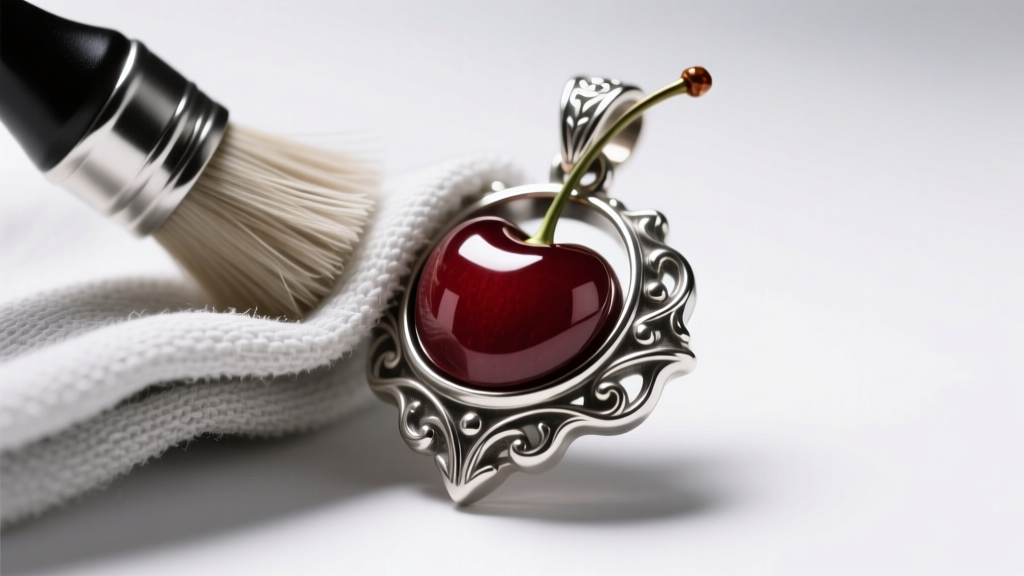
When cleaning an oxidized 925 sterling silver Hysteric Glamour piece, never use ultrasonic cleaners or harsh abrasive pastes. Ultrasonic vibrations can fracture delicate casting points, while abrasives will strip the blackened liver-of-sulfur oxidation from the recessed areas, ruining the high-contrast aesthetic. Instead, use a soft-bristled toothbrush with a dilute solution of mild dish soap and warm water to remove sebum and dirt from the crevices. Follow up by gently buffing only the raised, high-contact areas with a micro-abrasive silver cloth to restore the metallic luster without disturbing the dark patina in the grooves.
Conclusion
The technical execution of a Hysteric Glamour necklace elevates it from a mere fashion accessory to a durable piece of wearable art. By understanding the specific gravity of C26000 brass, the tensile requirements of heavy-gauge jump rings, and the chemical realities of intentional oxidation, collectors and enthusiasts can confidently authenticate, maintain, and appreciate these iconic streetwear artifacts. Whether you are acquiring a vintage 1990s skull pendant or a contemporary sterling silver Cuban link chain, respecting the metallurgy ensures the piece will survive for decades to come.


