Troubleshooting Your Identity Necklace: Fixes for Tarnish & Breaks
Is your identity necklace tarnishing or breaking? Discover expert troubleshooting tips, metal grade comparisons, and repair solutions.

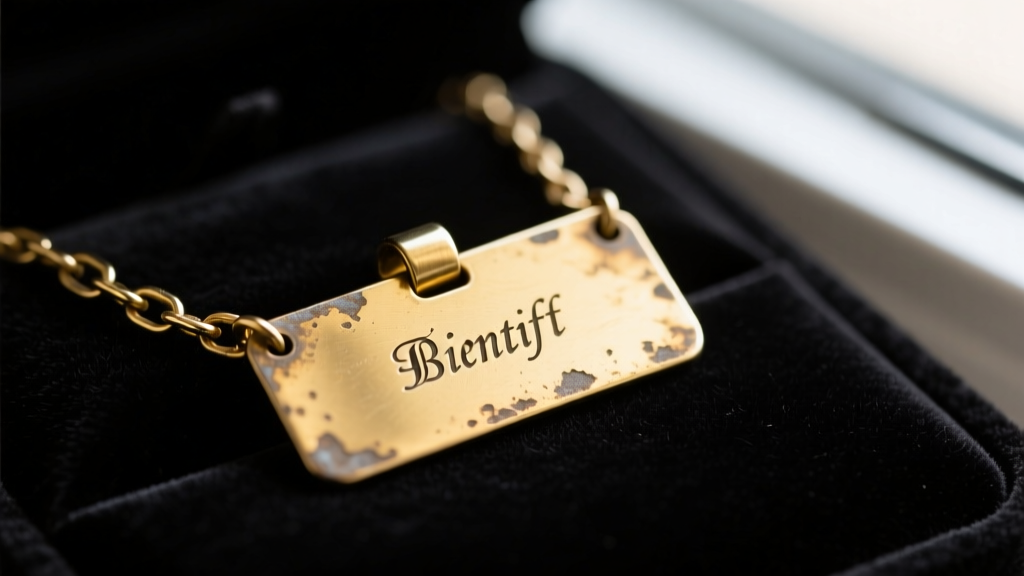
An identity necklace is more than just an accessory; it is a deeply personal artifact. Whether it features a custom nameplate, engraved coordinates, a fingerprint cast, or a meaningful date, these pieces are meant to be worn daily and cherished for a lifetime. However, the very nature of daily wear exposes these sentimental pendants to a host of structural and chemical threats. From the rapid oxidation of sterling silver to the catastrophic failure of undersized chain links, identity necklaces require specific metallurgical and mechanical considerations to survive long-term wear.
If your custom piece is losing its luster, irritating your skin, or snapping at the clasp, you are not alone. This comprehensive troubleshooting guide dives deep into the material science and structural engineering of identity necklaces, providing actionable solutions to restore and protect your most meaningful jewelry.
The Anatomy of Identity Necklace Failures
Unlike simple solitaire pendants, identity necklaces—particularly nameplates and wide dog tags—have a high surface-area-to-weight ratio. This unique geometry creates specific stress points. The bail (the loop connecting the pendant to the chain) experiences concentrated friction, while the broad face of the pendant acts as a lever against the chain when caught on clothing. Furthermore, the engraving process itself alters the structural integrity of the metal surface, creating micro-fissures where moisture, sebum, and environmental pollutants can accumulate, accelerating localized corrosion.
Troubleshooting Metal Tarnish and Engraving Fade
Tarnish and fading engravings are the most common complaints among identity necklace owners. The root cause usually lies in the base metal alloy and the engraving technique used during manufacturing.
Laser vs. Rotary Engraving: Why Your Font is Disappearing
If the blackened fill in your identity necklace's lettering is rubbing away, or the letters themselves are becoming illegible, you are likely dealing with shallow laser engraving on a plated or gold-filled surface.
- Laser Engraving: Typically achieves a depth of only 0.01mm to 0.05mm. On gold-filled or gold-vermeil pieces, a laser can easily burn through the microscopic outer layer of gold (often just 2-3 microns thick), exposing the brass or copper core beneath. This not only ruins the aesthetic but causes rapid, irreversible oxidation.
- Rotary (CNC) Engraving: Uses a physical diamond or carbide drag tool to carve into the metal, achieving depths of 0.10mm to 0.25mm. This is the industry standard for solid 14k gold and platinum identity pieces, ensuring the font remains legible for decades.
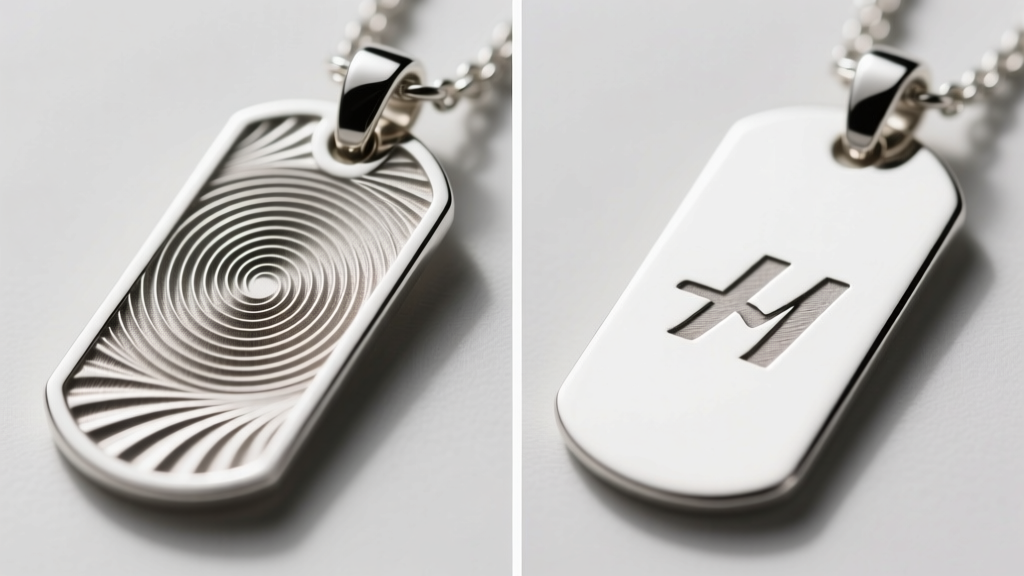
Combating Sterling Silver and Copper Alloy Oxidation
Sterling silver (925) is an alloy containing 92.5% pure silver and 7.5% copper. It is the copper that reacts with sulfur and moisture in the air to create silver sulfide (tarnish). For identity necklaces worn against the skin, the pH of your sweat can accelerate this process dramatically.
The Fix: Avoid abrasive silver dips, which will strip the intentional oxidation (antiquing) inside your engraved letters, leaving them flat and illegible. Instead, use a mild, non-abrasive polishing cloth specifically designed for silver, rubbing only the high-polish surfaces of the nameplate. For long-term prevention, have a jeweler apply a nano-ceramic coating or a thick rhodium flash plating to the unengraved surfaces.
Chain and Clasp Breakage: A Structural Analysis
A solid 14k gold nameplate can easily weigh between 8 and 15 grams. Suspending this weight from a delicate 0.8mm cable chain is a recipe for mechanical failure. The tensile strength of the chain and the shear strength of the clasp must be matched to the pendant's mass.
Chain Link Tensile Strength & Failure Points
Not all chain weaves distribute weight equally. When troubleshooting a broken chain, examine the link geometry. According to manufacturing standards outlined by the Federal Trade Commission's Jewelry Guides, proper karatage and structural integrity must be maintained, but physical durability varies wildly by weave.
| Chain Type | Recommended Gauge (Thickness) | Tensile Strength Profile | Common Failure Mode |
|---|---|---|---|
| Cable | 1.2mm - 1.5mm | Low to Moderate | Links stretch and pull apart at the soldered seam under heavy pendant weight. |
| Curb | 1.5mm - 2.0mm | High | Highly durable; links lay flat and distribute tension evenly. Rarely snaps. |
| Rolo | 1.5mm - 2.5mm | Very High | Thick, round links offer maximum shear strength. Best for heavy identity pendants. |
| Figaro | 1.2mm - 1.8mm | Moderate | The smaller links between the long links are weak points and prone to snapping. |
Upgrading the Clasp Mechanism
Spring ring clasps are notorious for failing on identity necklaces. The internal spring mechanism is prone to corrosion from sweat, and the tiny lever easily bends, causing the clasp to pop open unexpectedly. The Fix: Upgrade to a solid cast lobster clasp or a box clasp with a figure-eight safety catch. A high-quality 10mm or 12mm lobster clasp can withstand up to 8 pounds of tensile force before deformation, providing ample security for a heavy nameplate.
Solving Skin Irritation and Allergic Contact Dermatitis
If your identity necklace is leaving a red, itchy rash on your chest or the back of your neck, you are likely experiencing allergic contact dermatitis. The primary culprit in jewelry allergies is nickel, a hardening metal frequently alloyed with gold—especially in 14k and 18k white gold.
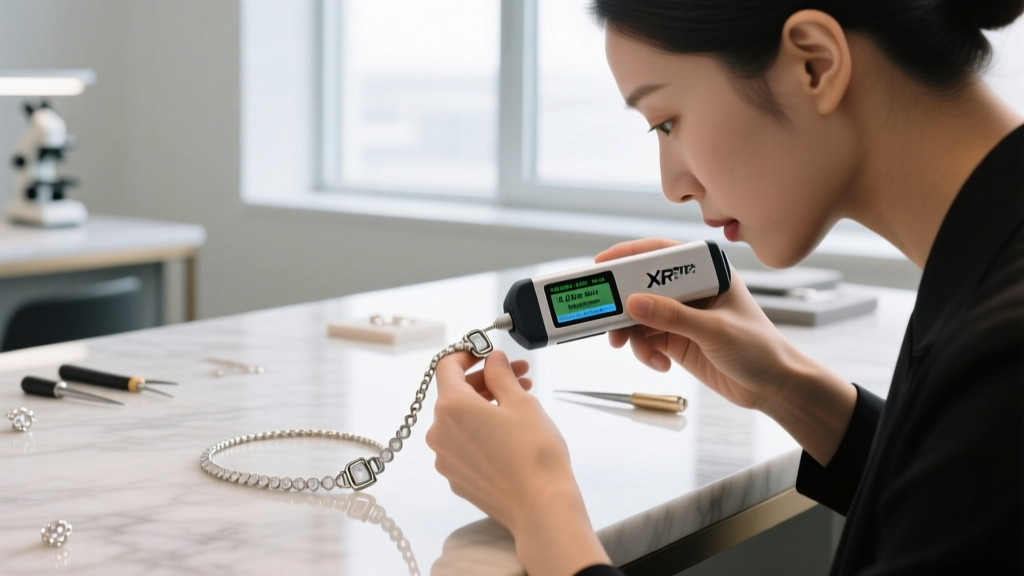
As the Mayo Clinic notes, prolonged skin contact with nickel-releasing alloys is a leading cause of contact dermatitis. In white gold identity necklaces, the rhodium plating that gives the metal its bright white finish eventually wears away (usually within 6 to 18 months of daily wear), exposing the nickel-rich alloy beneath to your skin.
Hypoallergenic Metal Alternatives
If you require a durable, skin-safe identity necklace, consult the Gemological Institute of America (GIA) guidelines on gold alloys and opt for the following materials:
- Platinum (950): Naturally white, incredibly dense, and entirely hypoallergenic. The ultimate choice for heirloom-quality fingerprint or coordinate pendants.
- Palladium (950): A platinum group metal that is lightweight, white, and nickel-free.
- Nickel-Free 18k Yellow or Rose Gold: Ensure the alloy uses copper and silver (for yellow) or copper and zinc (for rose) rather than nickel for hardening.
- 316L Surgical Stainless Steel: An excellent, budget-friendly alternative. While it contains trace amounts of nickel, the alloy is bound so tightly at a molecular level that it rarely leaches or causes reactions.
Step-by-Step Repair Guide for Common Identity Pendant Issues
Before discarding a damaged identity necklace, many structural issues can be resolved by a skilled bench jeweler. Here is how to troubleshoot and repair the most frequent problems:
1. The Bail is Worn Through
The Problem: The hole at the top of the nameplate or dog tag has elongated or worn completely through due to friction against the chain.
The Fix: A jeweler can laser-weld a new, hardened steel or platinum jump ring (minimum 20-gauge wire thickness, 5mm outer diameter) directly to the top of the pendant. Laser welding is preferred over traditional torch soldering, as it prevents heat damage to the delicate engraved lettering or any embedded gemstones.
2. The Chain is Kinked and Weakening
The Problem: Cable or figaro chains easily kink when stored improperly or caught on hair. A kinked link is a structurally compromised link, prone to snapping under the weight of an identity pendant.
The Fix: Do not attempt to pull a kink out with pliers, as this will stress-fracture the soldered seam. Lay the chain flat on a steel bench block and gently tap the kinked area with a rawhide or nylon jewelry mallet to flatten the links back into their natural geometry without compromising the metal's temper.
3. Engraving is Filled with Grime and Polishing Compound
The Problem: Over time, the deep grooves of rotary engravings pack with dead skin cells, lotions, and polishing compounds, making the text look muddy and illegible.
The Fix: Create a solution of warm distilled water and a few drops of mild, phosphate-free dish soap. Use an extra-soft baby toothbrush to gently agitate the grooves. For stubborn polishing compound, a wooden toothpick (which is softer than gold or silver and will not scratch the metal) can be used to carefully pick the debris out of the lettering channels. Rinse with distilled water and dry immediately with a microfiber cloth to prevent water spots.
Final Thoughts on Sourcing Durable Identity Pieces
The longevity of an identity necklace is determined long before it reaches your jewelry box; it is dictated by the manufacturing choices made at the bench. When commissioning or purchasing a custom identity piece, always verify the exact metal alloy, demand rotary engraving for solid metals, and ensure the chain gauge is rated for at least three times the physical weight of the pendant. By understanding the metallurgical and mechanical realities of your jewelry, you can ensure your personal story remains legible, secure, and beautiful for generations to come.


