Kate Spade Butterfly Necklace: Material Analysis & Care Guide
Discover the metallurgy, plating thickness, and enamel techniques behind the Kate Spade butterfly necklace, plus expert tips to prevent tarnish.

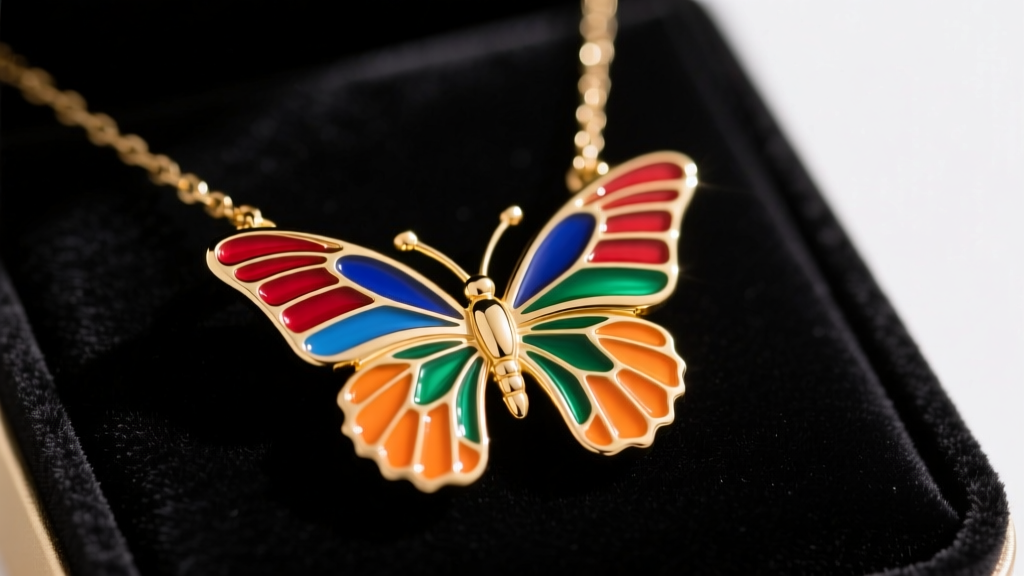
The kate spade butterfly necklace has remained a staple in fashion jewelry for years, celebrated for its whimsical motifs and accessible luxury. However, beneath the charming aesthetic lies a complex assembly of base alloys, micron-thin plating, and synthetic resins. For jewelry enthusiasts and collectors, understanding the technical specifications of fashion jewelry is crucial for managing expectations regarding longevity, wearability, and maintenance. In this expert deep dive, we deconstruct the metallurgy, surface engineering, and mechanical failure modes of this iconic piece, providing you with the scientific context needed to preserve its condition.
The Base Metallurgy: Why Brass Dominates Fashion Casting
Unlike fine jewelry, which relies on the structural integrity of solid precious metals, fashion pendants are typically cast from brass or zinc alloys. The Kate Spade butterfly pendant is predominantly crafted from cast brass—an alloy primarily composed of copper (60-70%) and zinc (30-40%).
Brass is chosen for intricate motifs like butterfly wings due to its exceptional fluidity when molten. It melts at a relatively low temperature (between 900°C and 940°C), allowing it to capture the microscopic filigree and delicate veining of the butterfly design without the porosity issues common in higher-melting-point metals. However, this copper-heavy composition is precisely what makes the necklace susceptible to environmental degradation if the outer protective layers are compromised.
Surface Engineering: Flash Plating and Cold Enamel
The brilliant gold-tone finish of the necklace is not solid gold, but rather a microscopically thin layer applied via electroplating. Fashion jewelry typically utilizes "flash plating," which deposits a gold layer ranging from 0.1 to 0.5 microns thick. By comparison, high-end vermeil requires a minimum of 2.5 microns. This ultra-thin flash layer provides the initial luster but is highly vulnerable to friction, cosmetic chemicals, and the natural acidity of human skin.
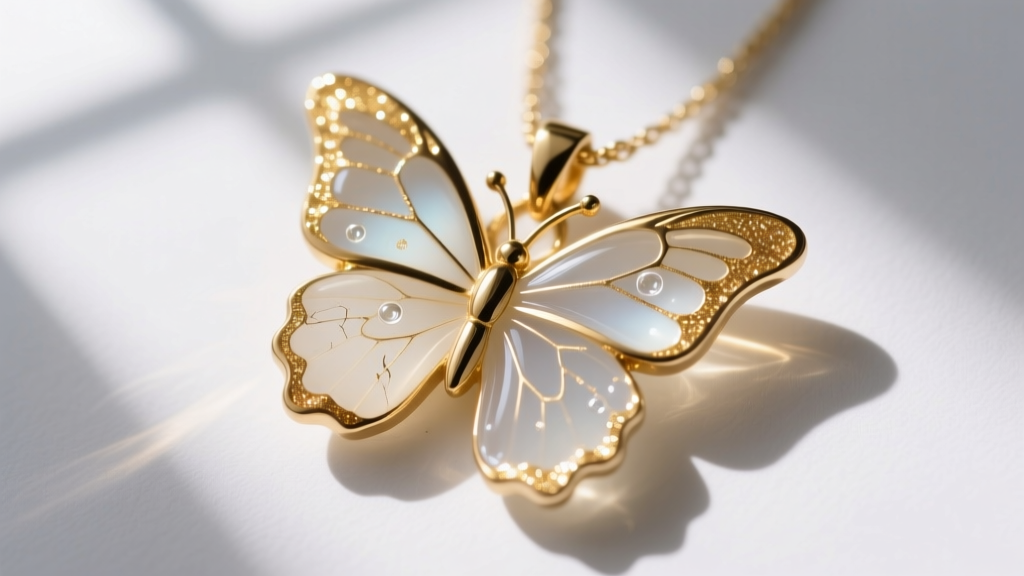
The vibrant colors on the butterfly wings are achieved using cold enamel, technically known as epoxy resin. True vitreous enamel requires firing at temperatures exceeding 800°C, which would instantly melt the brass base and vaporize the gold plating. Epoxy resin is poured into the cast recesses and cured at low temperatures. While it mimics the glass-like finish of vitreous enamel, epoxy is fundamentally a plastic polymer. Over time, prolonged exposure to ultraviolet (UV) light can cause the resin to yellow, and harsh solvents like acetone will dissolve the finish entirely.
The Chemistry of Tarnish: Understanding Copper Oxidation
One of the most common complaints with brass-based fashion jewelry is the "green skin" phenomenon. This is not an allergic reaction, but a predictable chemical reaction. When the flash plating wears thin, the underlying copper is exposed to oxygen, moisture, and the chlorides and lactic acid present in human sweat.
The reaction produces copper chloride and copper sulfide—greenish salts that transfer onto the skin. According to the Jewelers of America, maintaining a barrier between porous base metals and skin acidity is the primary defense against this oxidation process.
Individuals with a lower skin pH (more acidic) or those who live in high-humidity, coastal environments will experience accelerated galvanic corrosion, causing the necklace to tarnish and degrade at a significantly faster rate.
Chain Mechanics and Clasp Failure Modes
The chain accompanying the pendant is typically a delicate cable link, also crafted from brass and flash-plated. The links are machine-soldered, but the soldering points represent structural weak spots. If the chain is snagged, the soldered joints will snap before the brass wire itself bends.
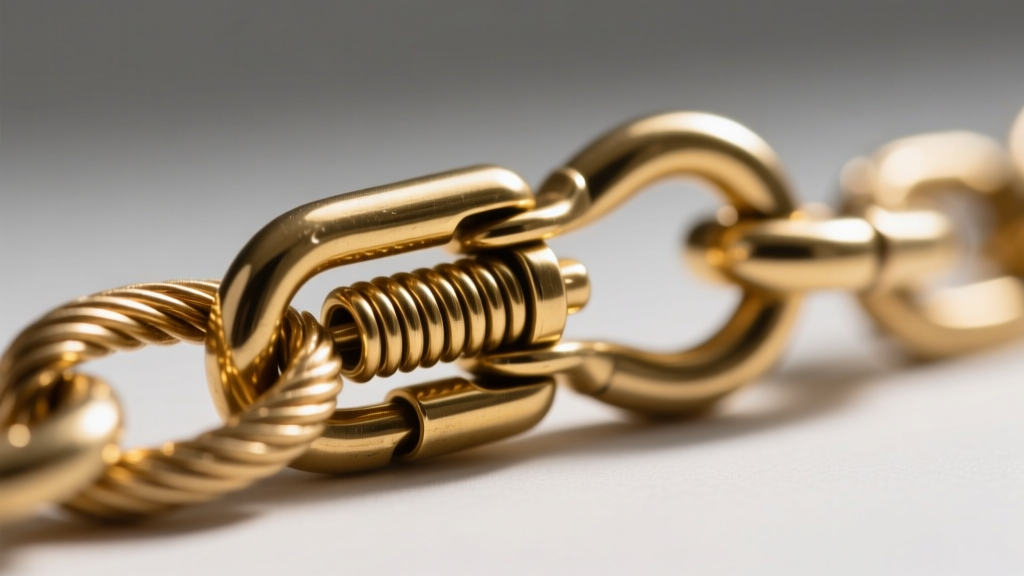
The lobster clasp introduces a hidden vulnerability: the internal spring. While the exterior of the clasp is brass, the internal tension spring is usually made of carbon steel to maintain its mechanical memory. If moisture breaches the clasp housing, the steel spring will rust and seize, rendering the clasp useless even if the exterior brass remains pristine. Regular lubrication with a microscopic drop of mineral oil can prevent this mechanical failure.
Comparative Analysis: Fashion vs. Fine Jewelry
To contextualize the technical profile of the Kate Spade butterfly necklace, it is helpful to compare its material specifications against mid-tier and fine jewelry alternatives.
| Specification | Kate Spade (Fashion) | Mid-Tier (e.g., Gorjana) | Fine Jewelry (Solid 14k) |
|---|---|---|---|
| Base Metal | Cast Brass (Cu/Zn) | Brass or Sterling Silver | Solid 14k Gold Alloy |
| Plating Thickness | Flash (0.1 - 0.5 µm) | Heavy Vermeil (2.0 - 2.5 µm) | N/A (Solid throughout) |
| Colorant | Cold Epoxy Resin | Epoxy or Vitreous Enamel | Vitreous Enamel / Gems |
| Expected Lifespan | 1 - 3 Years (Daily Wear) | 3 - 7 Years (Daily Wear) | Generational / Heirloom |
| Water Resistance | Poor (Rapid tarnishing) | Moderate | Excellent |
Advanced Maintenance and Corrosion Prevention
Preserving a flash-plated brass piece requires a strict, proactive maintenance routine. The Gemological Institute of America (GIA) emphasizes that proper storage and gentle cleaning are paramount for treated and plated surfaces.
What to Avoid
- Ultrasonic Cleaners: The high-frequency cavitation bubbles will literally blast the 0.5-micron gold layer off the brass substrate.
- Ammonia and Silver Dips: These harsh chemicals will strip the flash plating and cloud the epoxy resin fills.
- Friction Polishing Cloths: Treated polishing cloths contain mild abrasives designed for solid metals; they will sand right through fashion plating.
The Optimal Cleaning Protocol
- Mix a solution of lukewarm distilled water and a single drop of pH-neutral dish soap.
- Submerge the necklace for no more than 60 seconds to loosen sebum and cosmetic residue.
- Gently agitate the water; do not scrub the pendant with a brush, as this risks scratching the epoxy.
- Rinse briefly under distilled water (tap water contains chlorine and minerals that accelerate tarnish).
- Pat completely dry with a microfiber cloth and allow it to air-dry fully before sealing it in an anti-tarnish ziplock bag with a silica gel desiccant packet.
Final Verdict: Longevity and Value Proposition
The kate spade butterfly necklace is a triumph of aesthetic design and accessible casting techniques, but it is fundamentally a wearable accessory rather than an enduring asset. By understanding its brass core, flash-plated exterior, and epoxy detailing, owners can adjust their wear habits accordingly. Treat it as a delicate, occasion-specific piece rather than everyday armor, and its whimsical charm will remain intact for years to come.


