Immaculate Heart of Mary Necklace: Tarnish & Repair Guide
Learn how to clean, repair, and restore your Immaculate Heart of Mary necklace. Expert fixes for tarnished silver, broken clasps, and tangled chains.

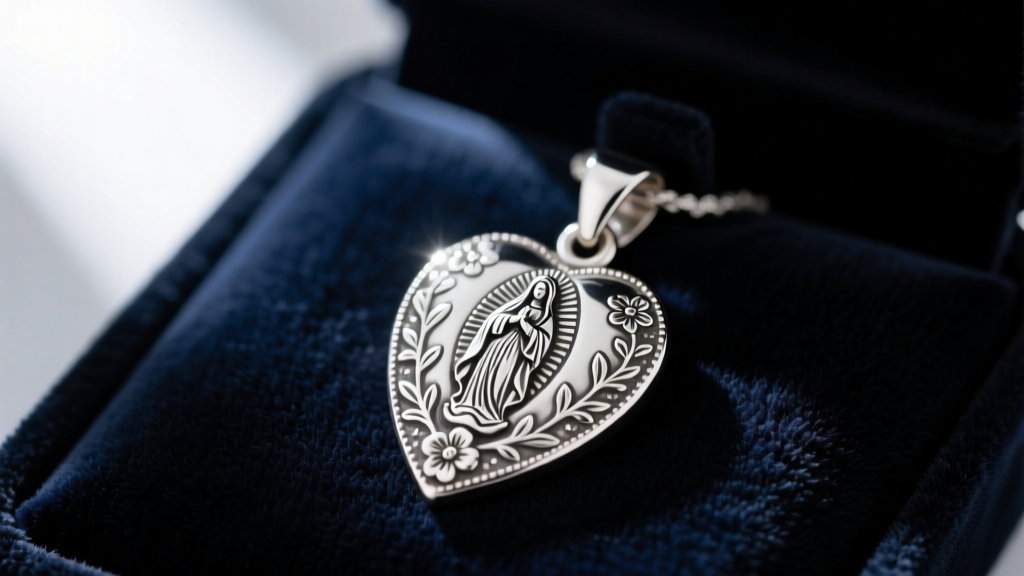
The Anatomy of an Immaculate Heart Medal and Dirt Traps
The Immaculate Heart of Mary necklace is more than a simple accessory; it is a deeply personal sacramental and a profound statement of faith. However, from a jewelry maintenance perspective, the traditional iconography of this specific medal presents unique structural challenges. The classic design features a heart engulfed in flames, pierced by a single sword or multiple arrows, and encircled by a wreath of roses or thorns. While spiritually rich, these deep reliefs, undercuts, and applied elements act as microscopic dirt traps.
Over months of daily wear, dead skin cells, sebum, lotions, and environmental dust become compacted into the crevices of the flames and the hilt of the sword. This compacted debris not only dulls the visual contrast of the medal but also traps moisture against the metal, accelerating localized corrosion. Before attempting any chemical or mechanical cleaning, you must first understand the base metal and the specific finishing techniques used on your pendant, as the wrong troubleshooting method can permanently destroy antique religious jewelry.
Troubleshooting Tarnish: The Electrochemical Bath vs. Polishing
Silver sulfide tarnish is the primary enemy of sterling silver (925) and continental silver (800) religious medals. When sulfur in the air or in your sweat reacts with the copper alloy in the silver, it creates a dark, unsightly layer. Many owners immediately reach for abrasive silver polishing cloths or liquid dips. This is a critical error for Immaculate Heart medals.
Most high-quality vintage and European religious medals feature a deliberate dark patina (oxidation) in the recessed areas to make the raised relief of the heart and flames stand out. Abrasive polishes will strip this contrast, leaving the medal looking flat and washed out. Furthermore, liquid acid dips can cause irreversible pitting.
The Safe Electrochemical Cleaning Method
To remove surface tarnish without destroying the recessed patina, use an electrochemical bath. This method converts silver sulfide back into pure silver using a mild galvanic reaction.
- Line a glass bowl with aluminum foil, shiny side up.
- Place your necklace in the bowl, ensuring the silver medal touches the aluminum foil.
- Sprinkle 1 tablespoon of baking soda and 1 tablespoon of non-iodized salt over the medal.
- Pour boiling water into the bowl until the necklace is fully submerged. You will see bubbling and smell a faint sulfur (rotten egg) odor.
- Leave it for 3 to 5 minutes, then remove with wooden tongs, rinse in distilled water, and pat dry with a microfiber cloth.
Crucial Warning: Never use this method if your Immaculate Heart medal features glued gemstones, pearls, or cold enamel (painted resin), as the boiling water will melt the adhesives and ruin the finishes. For authoritative guidelines on preserving precious metals, always consult GIA's guide on silver care before applying home remedies.
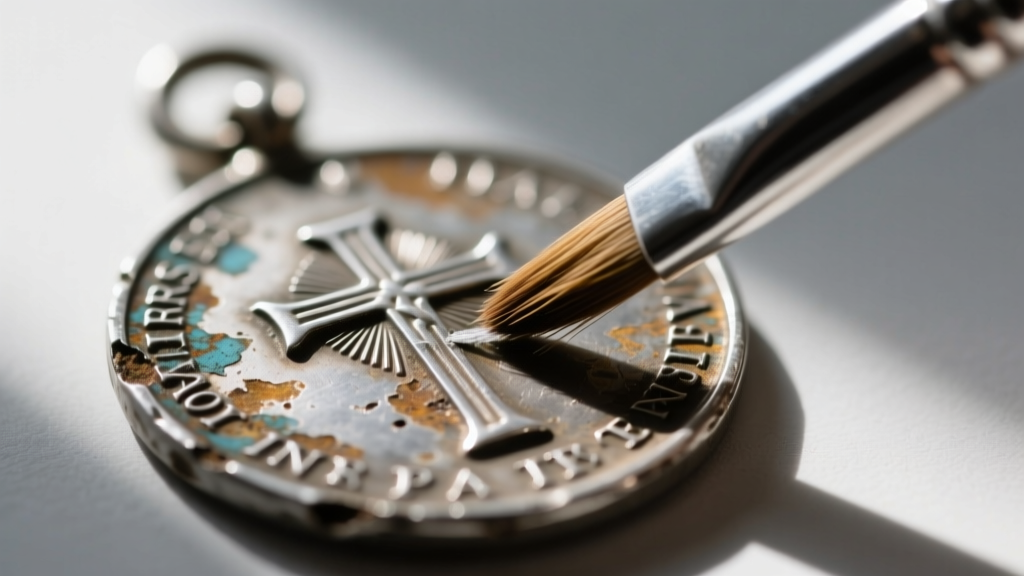
The Ultrasonic Cleaner Trap
Many jewelry owners assume that an ultrasonic cleaner is the ultimate troubleshooting tool for intricate religious medals. The high-frequency sound waves create microscopic cavitation bubbles that blast dirt out of deep crevices. However, if your Immaculate Heart pendant is an antique or features champlevé enamel (where glass powder is fired into carved recesses), the intense vibrations can cause micro-fractures in the glass enamel, leading to catastrophic flaking. Reserve ultrasonic cleaning only for solid, un-enameled, modern die-struck medals without any applied soldered elements.
Chain Failure Modes and Clasp Upgrades
A heavy solid silver or gold Immaculate Heart medal (typically weighing between 8 and 15 grams) will quickly destroy an inadequate chain. The most common failure point is not the chain links themselves, but the jump ring connecting the medal to the chain, or the clasp mechanism. Spring ring clasps, which rely on a tiny internal steel spring, are notorious for failing under the pendulum weight of a heavy religious pendant. The constant swinging fatigues the spring, or the thin outer wire casing bends, leaving the necklace prone to dropping and loss.
Upgrading your clasp to a 5mm or 7mm solid lobster clasp and ensuring the jump ring is soldered shut will eliminate 90% of chain-related losses. For proper chain tensile strength and soldering techniques, reference Rio Grande's soldering basics.
| Chain Style | Gauge (mm) | Max Medal Weight | Common Failure Mode |
|---|---|---|---|
| Box Chain | 0.8 - 1.0 | 3 - 5 grams | Kinking, permanent link deformation |
| Cable Chain | 1.2 - 1.5 | 5 - 8 grams | Unsoldered jump ring pull-apart |
| Rope Chain | 1.5 - 2.0 | 10 - 15 grams | Unraveling if snagged on clothing |
| Figaro Chain | 2.0 - 2.5 | 15+ grams | Clasp mechanism failure |
Restoring Damaged Enamel on the Heart and Flames
Many traditional Immaculate Heart medals feature vibrant red and blue enamel to represent the flames and the purity of Mary. Over decades of wear, this enamel can chip or crack. If your medal uses cold enamel (a modern epoxy resin), you can troubleshoot minor chips at home using a two-part clear jeweler's epoxy mixed with a tiny drop of glass stain or pigment, applied with a fine needle. However, if your piece features true vitreous (glass) enamel, DIY epoxy will look cloudy and ruin the antique value. Vitreous enamel restoration requires a professional enamelist who can clean the metal, pack the recess with finely ground glass frit, and fire the piece in a kiln at roughly 1,400°F (760°C). Expect to pay between $85 and $150 for professional kiln-fired enamel restoration on a small religious medal.
Sizing and the Pendulum Effect
A frequent complaint among wearers of the Immaculate Heart of Mary necklace is that the pendant constantly flips over, hiding the design against the chest, or strikes zippers and buttons, causing physical damage to the metal and enamel. This is a physics issue known as the pendulum effect, dictated by the chain length and the wearer's anatomy.
If you wear an 18-inch chain, the medal likely rests exactly on the sternum or the curve of the bust, creating an unstable fulcrum point that causes the medal to flip. To troubleshoot this, increase the chain length to 20 or 22 inches. This allows the heavier bottom of the heart pendant to rest flat against the lower chest, anchoring it in place and keeping the intricate relief facing outward. Additionally, a longer chain prevents the medal from swinging into metal buttons on coats or jeans, which is the leading cause of chipped enamel and bent swords on these specific medals.
When to Seek a Professional Jeweler
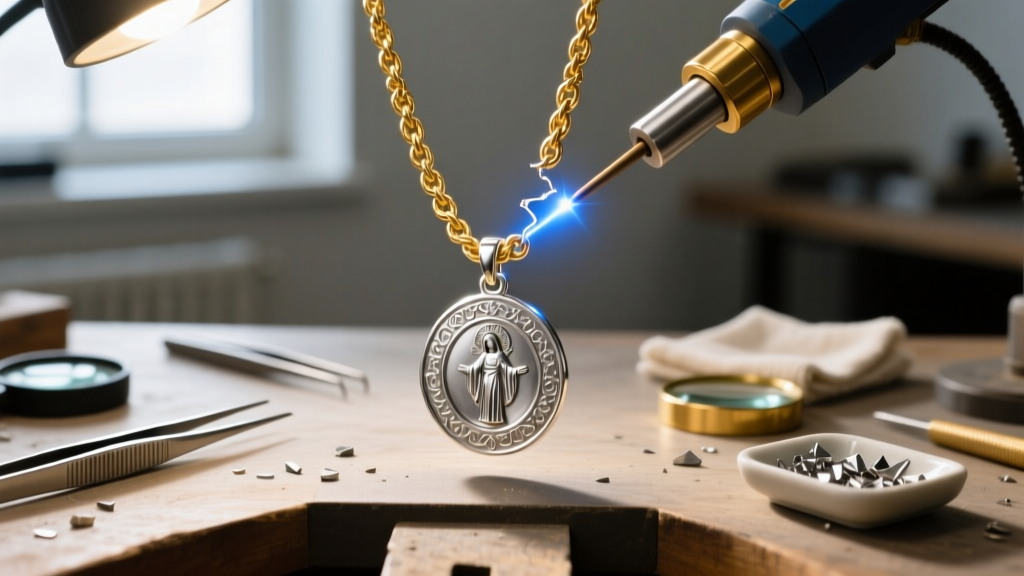
While home maintenance is excellent for surface tarnish and basic chain untangling, certain structural failures require professional intervention. If the bail (the loop at the top of the medal that the chain passes through) is worn thin from years of friction, it is a critical failure risk. A jeweler can use a laser welder to add fresh metal to the bail without heating the entire medal, which would otherwise melt any existing solder joints or damage the enamel. Laser welding typically costs between $45 and $85. Similarly, if a chain link snaps in the middle of a rope or Figaro chain, attempting to bend it back together with pliers will weaken the adjacent links. Professional micro-soldering is required to restore the chain's structural integrity, ensuring your sacred necklace remains secure for decades to come.


