The J Silver Necklace: Top 2026 Initial Letter Trends
Discover why the J silver necklace is 2026's top initial trend. Explore styling tips, sterling silver grades, and layering techniques for letter pendants.

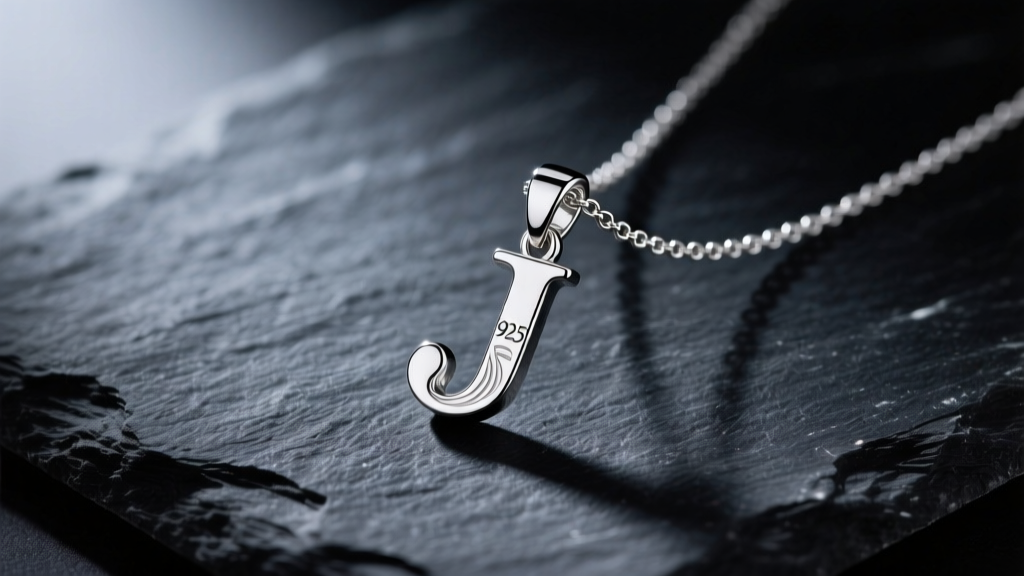
The Resurgence of the Initial Pendant in 2026
Personalization in fine jewelry has evolved from a niche request to a dominant market force. As we navigate 2026, the initial pendant remains a cornerstone of everyday fine jewelry, with the J silver necklace emerging as a standout favorite among collectors and stylists. But why the letter J? Typographically, the J offers a unique structural elegance. Unlike the rigid, symmetrical lines of an A or T, the J features a sweeping lower curve and a distinct top serif or crossbar that interacts beautifully with light. When consumers search for a 'j silver necklace', they are often seeking a piece that balances modern minimalism with a deeply personal narrative.
According to trend analysts at JCK Online, initial jewelry has transcended its traditional association with children's gifts or sentimental lockets, firmly planting itself in the realm of high-fashion layering and everyday luxury. The J initial, in particular, has seen a massive year-over-year increase in bespoke requests, driven by its visual weight and the way its curved tail naturally nests against the collarbone.
Material Breakdown: Choosing the Right Silver Alloy
Not all silver is created equal, and the longevity of your initial pendant depends heavily on the metallurgical composition of the alloy. The Gemological Institute of America (GIA) defines standard sterling silver as an alloy containing 92.5% pure silver and 7.5% copper. While copper provides necessary hardness, it is also the primary culprit behind silver sulfide tarnish—the blackish film that forms when copper reacts with sulfur compounds in the air and on human skin.
For a piece worn daily against the skin, such as a signature J pendant, modern metallurgy offers superior alternatives. Argentium silver, for instance, replaces a portion of the copper with germanium. This creates a transparent germanium oxide layer on the surface that actively blocks sulfur, making it highly tarnish-resistant. The Silver Institute notes that while fine silver (99.9%) is completely tarnish-resistant, it is far too soft for a pendant bail or chain link, making Argentium or hardened 925 the optimal choices for structural integrity.
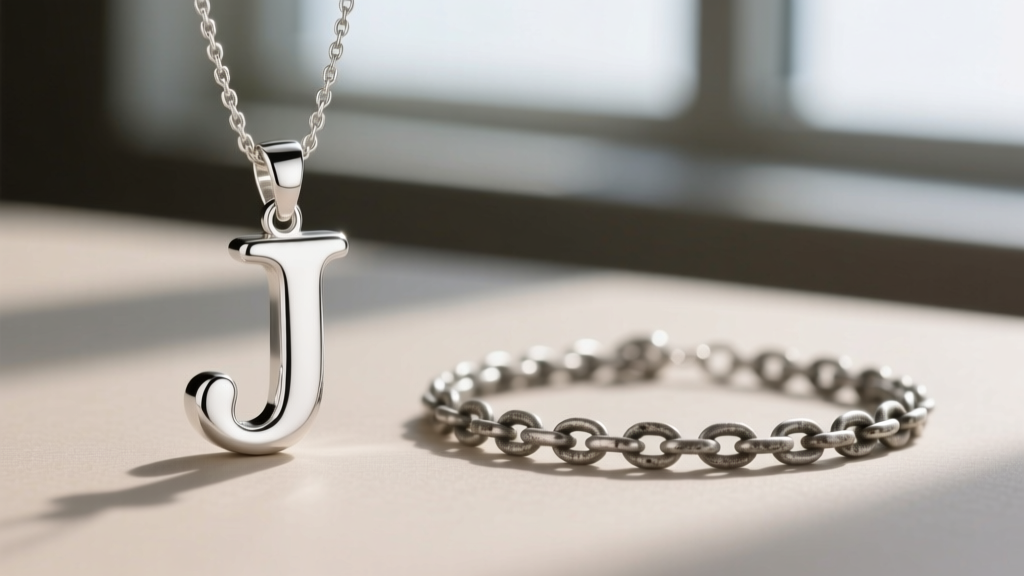
Silver Alloy Comparison Chart for Initial Pendants
| Alloy Type | Composition | Tarnish Resistance | Durability (Vickers Hardness) | Best Use Case |
|---|---|---|---|---|
| 925 Sterling | 92.5% Ag, 7.5% Cu | Moderate (Requires polishing) | ~65 HV (Annealed) | Standard pendants, budget-friendly chains |
| Argentium 960 | 96% Ag, Germanium/Cu | Exceptional (Low maintenance) | ~80 HV (Work-hardened) | Premium J pendants, daily-wear chains |
| 999 Fine Silver | 99.9% Ag | High | ~25 HV (Very soft) | Bezel wire, decorative inlays only |
Chain Pairings: Matching the J Pendant to the Perfect Link
The architecture of the letter J requires a chain that offers structural support without competing for visual dominance. A standard solid silver J pendant typically weighs between 2.5 and 4.0 grams. Pairing this with a delicate 0.6mm cable chain is a common failure point; the tensile strength of a 0.6mm link is insufficient to handle the pendulum effect of a 4-gram weight, leading to micro-fractures at the solder joints.
For optimal longevity and aesthetic balance, we recommend a 1.0mm to 1.2mm box chain or a 1.5mm rolo chain. Box chains feature square, interlocking links that lay flat against the sternum and distribute the pendant's weight evenly. Rolo chains, with their alternating circular links, offer a vintage aesthetic that complements serif-style J pendants. Avoid snake chains for initial pendants; their smooth, tubular surface provides friction that can wear down the pendant's bail over time, and they are notoriously difficult to repair if kinked.
Furthermore, upgrade the clasp. Standard spring-ring clasps are prone to internal spring failure and are frustrating to operate one-handed. A 5mm or 7mm lobster clasp, or a neodymium magnetic clasp for accessibility, ensures the necklace remains secure during daily wear.
Layering Frameworks: The Rule of Thirds for Initial Necklaces
Styling a J silver necklace in 2026 is all about intentional asymmetry and the 'Rule of Thirds' in visual weight. Layering is no longer about simply stacking chains of varying lengths; it is about curating distinct zones of visual interest.
- Zone 1 (14-15 inches): The Anchor. Start with a lightweight, textured silver choker or a simple 1.5mm herringbone chain. This sits high on the collarbone and frames the face without interfering with the initial pendant.
- Zone 2 (16-17 inches): The Focal Point. This is where your J silver necklace lives. The 16-inch length ensures the pendant rests perfectly in the suprasternal notch (the hollow at the base of the neck). The visual weight of the letter J anchors the entire stack.
- Zone 3 (18-20 inches): The Elongator. Finish with a longer, heavier chain, such as a 2.0mm rope chain or a lariat-style Y-necklace. This draws the eye downward, elongating the neck and torso.
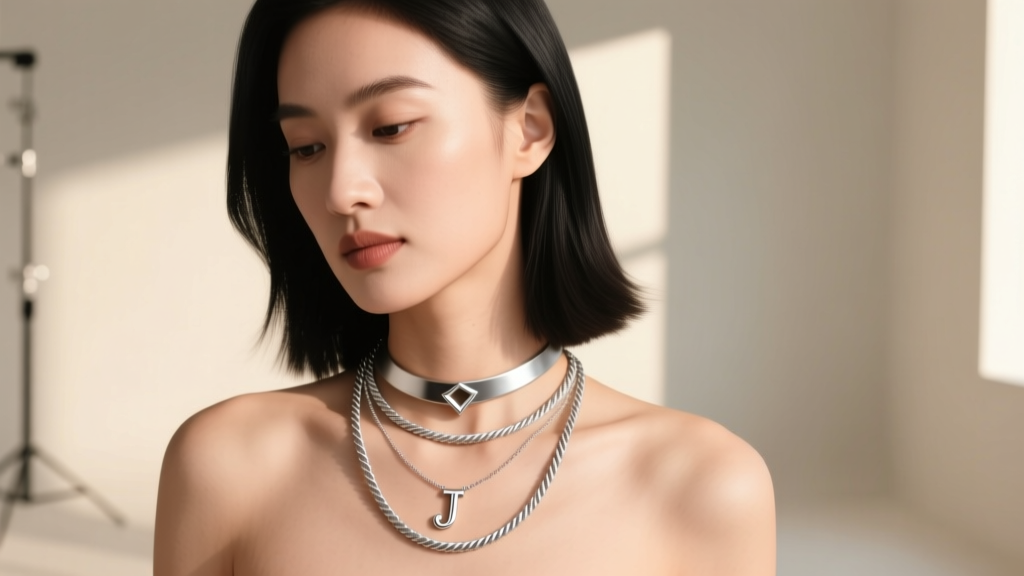
When mixing metals, the 2026 trend allows for silver and platinum tones to blend seamlessly, but keep the J pendant strictly in cool-toned silver to maintain its crisp, reflective edges against the skin.
Maintenance and Tarnish Prevention Protocols
Even the highest-quality J silver necklace requires a baseline maintenance protocol to preserve its mirror finish. Tarnish is not a defect; it is a natural electrochemical reaction. To prevent silver sulfide buildup, store your necklace in an anti-tarnish flannel pouch infused with activated carbon, rather than leaving it exposed to ambient humidity on a bathroom counter.
For routine cleaning, avoid abrasive toothpaste or harsh chemical dips, which can strip the rhodium plating (if applicable) and leave micro-scratches on the silver surface. Instead, use a treated jeweler's cloth, such as a Sunshine cloth, which contains embedded micro-abrasives and anti-tarnish agents. For severe oxidation, an electrochemical bath using warm water, baking soda, and an aluminum foil-lined bowl will reverse the sulfur bond without removing any base silver metal.
Final Verdict: Is the J Silver Necklace a Timeless Investment?
The J silver necklace represents a perfect intersection of personal sentiment and enduring style. By prioritizing advanced alloys like Argentium, selecting structurally sound box or rolo chains, and employing strategic layering techniques, you elevate a simple initial pendant into a sophisticated, lifelong wardrobe staple. Whether you are honoring a name, a milestone, or simply the typographic beauty of the letter itself, the J initial remains a definitive hallmark of modern jewelry curation.


