Initial L Necklace Troubleshooting: Fixes for Bending & Flipping
Discover expert troubleshooting for your initial L necklace. Learn how to fix bending, prevent flipping, and choose durable materials.

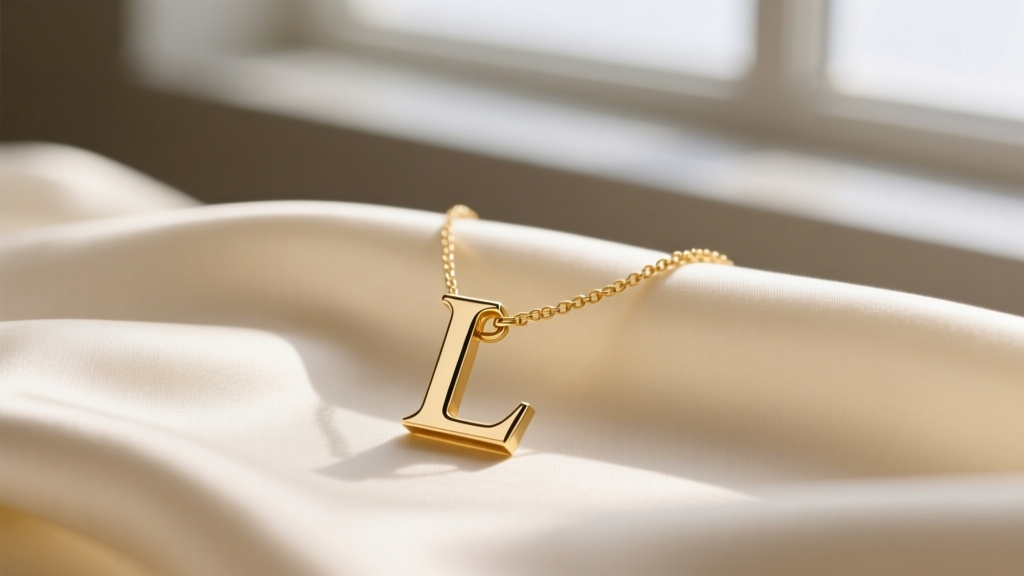
Personalized jewelry remains a dominant trend, but not all letters are created equal. While an 'O' or an 'S' offers natural structural symmetry, the initial L necklace presents unique engineering challenges. The sharp 90-degree interior corner and the extended horizontal base make the letter 'L' highly susceptible to bending, snapping, and constant flipping. If you have invested in a monogram or initial piece featuring the letter L, understanding its structural vulnerabilities is the first step toward preserving it.
In this comprehensive troubleshooting guide, we break down the exact failure modes of the 'L' pendant, provide actionable solutions to stop it from flipping upside down, and outline the precise material gauges required for long-term durability. Whether you are dealing with a bent corner or a tarnished horizontal bar, these expert-level fixes will restore your necklace to its optimal condition.
The Structural Vulnerability of the Letter L
To troubleshoot an initial L necklace, you must first understand why it fails. The primary issue lies in stress concentration. In metallurgy, sharp interior angles act as focal points for mechanical stress. When the pendant catches on a sweater or is subjected to the subtle pulling of a heavy chain, the kinetic energy travels down the vertical stem and concentrates entirely at the 90-degree interior corner.
Furthermore, the horizontal bar of the 'L' acts as a lever. If the pendant is manufactured using thin, stamped sheet metal (typically under 0.8mm in thickness), the horizontal bar will easily bend upward or downward. Over time, this repeated bending causes work hardening, where the metal loses its malleability and eventually snaps at the joint. According to the GIA Gold Jewelry Guide, the alloy composition also plays a role; lower-karat golds (like 10k) are harder but more brittle, making them prone to snapping at sharp angles compared to the softer, more malleable 18k or 22k gold.
Troubleshooting Common Initial L Necklace Problems
Problem 1: The Horizontal Bar Keeps Bending or Snapping
The Cause: The pendant is either die-struck from thin gauge metal or cast with microscopic porosity at the corner joint. Die-struck pendants are work-hardened during manufacturing, making them stiff but brittle at the bend.
The Fix: If your pendant is already snapping, a jeweler can perform a laser weld at the interior corner, adding a microscopic bead of matching gold or platinum to reinforce the joint without altering the visible design. When shopping for a replacement, avoid standard block-font 'L' pendants. Instead, opt for a serif font or a script 'L'. Serif fonts feature small flares at the base of the vertical stem, effectively doubling the surface area of the joint and distributing stress away from the sharp corner.
Problem 2: The Pendant Flips Upside Down Constantly
The Cause: The letter 'L' is inherently asymmetrical and top-heavy. The center of gravity sits high on the vertical stem, while the horizontal bar swings freely. If the bail (the loop connecting the pendant to the chain) is placed perfectly at the top center, the pendant will rotate 180 degrees to find equilibrium.
The Fix: You need to alter the pendulum effect. First, check the bail type. A sliding bail allows the chain to move independently of the pendant, which often exacerbates flipping. Switch to a fixed soldered bail. Second, add a tiny, clear jewelry-grade silicone stopper bead on the chain directly behind the bail to restrict lateral movement. Finally, ensure your chain is heavy enough to anchor the pendant; a flimsy 0.9mm chain will twist, whereas a 2.0mm chain provides the necessary counterweight.
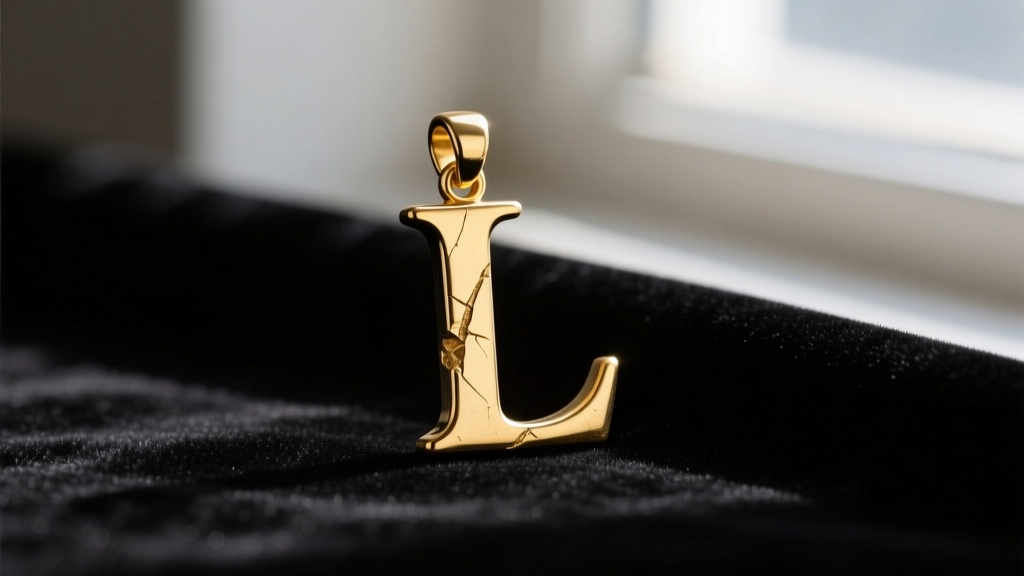
Problem 3: Rapid Tarnish and Plating Loss on the Base
The Cause: The horizontal bar of the 'L' rests directly against the clavicle and sternum, an area prone to friction, sweat, and perfume exposure. If your necklace is gold vermeil or gold-plated over brass, this constant friction will strip the plating within weeks.
The Fix: The Federal Trade Commission mandates specific thicknesses for gold coatings, as outlined in the FTC Jewelry Guides. Standard 'gold plated' items may only have 0.5 microns of gold, which will wear through rapidly on an initial L necklace. Always upgrade to Gold Vermeil, which requires a sterling silver base and a minimum of 2.5 microns of gold. For ultimate friction resistance, choose solid 14k gold or 316L surgical stainless steel, which will not degrade from skin contact.
Material and Gauge Durability Chart
Not all initial L necklaces are manufactured to the same standards. Use this comparison chart to evaluate the structural integrity of your piece based on its material and thickness.
| Material Grade | Minimum Safe Thickness | Structural Pros | Structural Cons | Est. Price Range |
|---|---|---|---|---|
| Solid 14k Gold | 1.2mm | Excellent malleability; bends before breaking; easily repaired. | Softer metal; horizontal bar requires occasional reshaping. | $150 - $350 |
| Solid 18k Gold | 1.5mm | Rich color; highly resistant to tarnish; premium feel. | Very soft; high risk of bending at the 90-degree corner. | $300 - $600+ |
| 316L Stainless Steel | 1.0mm | Extremely rigid; will not bend or snap; hypoallergenic. | Cannot be easily soldered or resized by standard jewelers. | $30 - $80 |
| Sterling Silver (925) | 1.2mm | Affordable; easy to polish and reshape. | Prone to oxidation; requires frequent maintenance. | $40 - $120 |
| Gold Vermeil (Silver base) | 1.0mm (base metal) | Budget-friendly luxury appearance. | Plating wears off at the horizontal friction point. | $60 - $150 |
Step-by-Step: How to Safely Reshape a Bent Pendant
If the horizontal bar of your initial L necklace has been bent out of shape, do not attempt to bend it back with your bare hands. Human fingers apply uneven pressure, which will likely snap the work-hardened corner. Follow this professional troubleshooting method:
- Secure the Piece: Place the pendant flat on a steel bench block or a smooth, hard surface covered with a microfiber cloth to prevent scratching.
- Use the Right Tools: Never use standard steel pliers, as the teeth will permanently mar the gold or silver. Use nylon-jaw pliers or wrap the tips of your flat-nose pliers in painter's tape.
- Apply Even Pressure: Grip the vertical stem firmly with one pair of pliers to anchor it. With the second pair, grip the horizontal bar as close to the corner as possible. Apply slow, steady pressure to bend it back to a 90-degree angle.
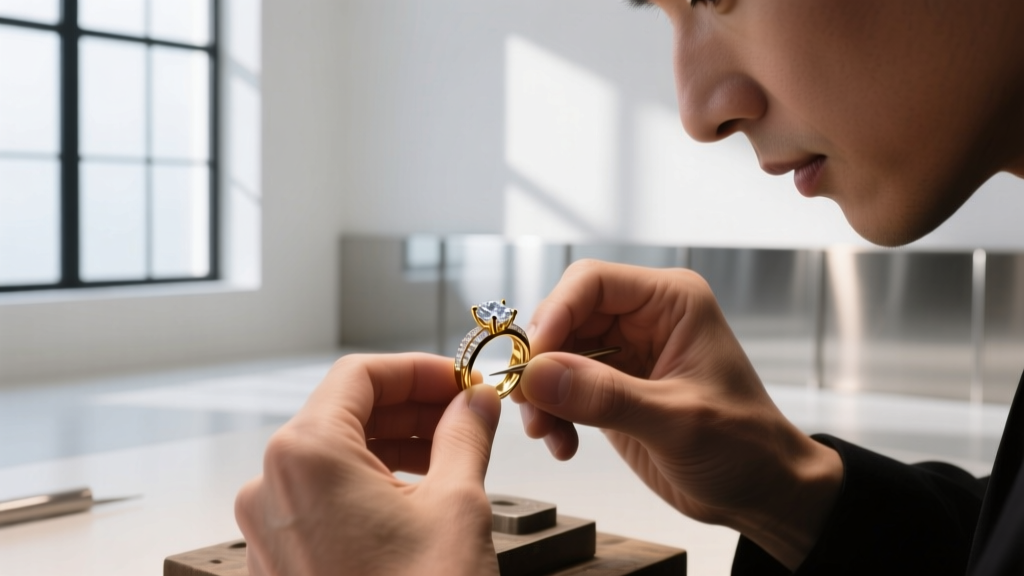
- Check for Micro-Fractures: Inspect the interior corner under a magnifying loupe. If you see a dark hairline fracture, stop immediately and take it to a jeweler for laser welding before it snaps completely.
Chain Selection to Prevent Flipping and Tangling
The chain you pair with your initial L necklace dictates how the pendant behaves throughout the day. Because the 'L' is asymmetrical, the chain must provide stability without overwhelming the delicate lettering.
- Box Chains (1.5mm - 2.5mm): This is the optimal choice for an 'L' pendant. The square, interlocking links of a box chain lay flat against the skin and possess enough structural weight to anchor the top-heavy pendant, significantly reducing the flipping issue.
- Cable Chains (1.0mm - 1.5mm): While classic, lightweight cable chains are highly prone to twisting. When the chain twists, it forces the bail to rotate, dragging the 'L' pendant upside down. If you prefer a cable chain, ensure the links are soldered closed to prevent tangling.
- Rope Chains: Avoid pairing rope chains with initial pendants. The spiraled texture of the rope chain acts like a screw, gradually twisting the bail and forcing the pendant to flip. Furthermore, the textured links can catch on the sharp edges of the letter 'L' if it gets tangled.
- Snake Chains: Snake chains offer a sleek, modern look and lay perfectly flat, which helps keep the pendant facing forward. However, they are notoriously difficult to untangle if the horizontal bar of the 'L' slips between the tight metal links.
Final Maintenance Tips for Asymmetrical Pendants
Troubleshooting an initial L necklace is an ongoing process of managing its unique geometry. To extend the life of your piece, always remove it before sleeping; the tossing and turning of sleep places immense lateral stress on the 90-degree corner. Store the necklace hanging vertically or laid completely flat—never crumpled in a jewelry box where the horizontal bar can be crushed by heavier items. By understanding the metallurgical limits and balancing the center of gravity with the correct chain, your personalized 'L' pendant will remain a flawless, forward-facing staple in your collection for years to come.


