Islam Necklace Buying Guide: Styles, Metals, and Meanings
Discover our expert Islam necklace buying guide. Learn about permissible metals for men and women, calligraphy styles, and chain lengths for daily wear.

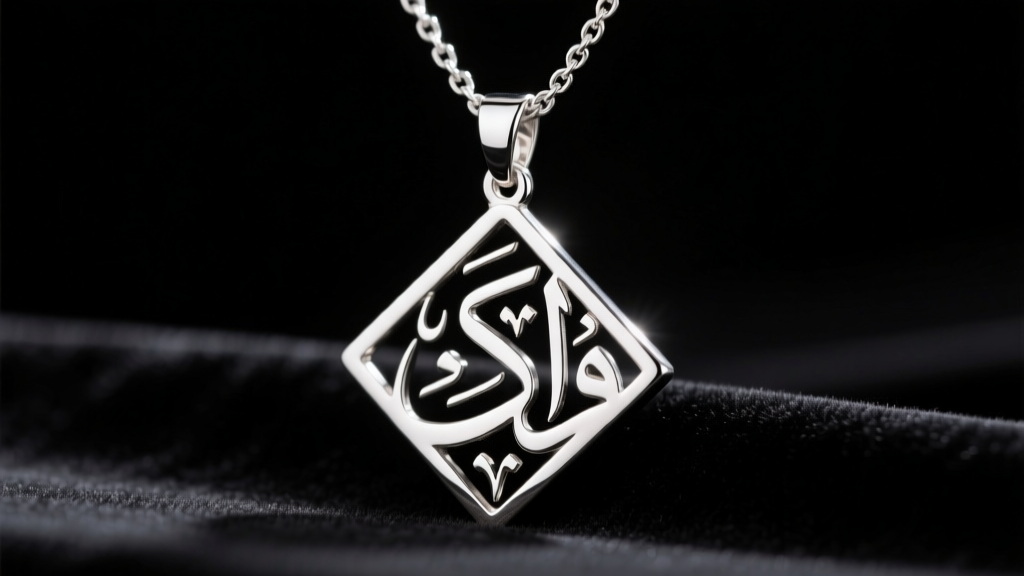
An islam necklace is far more than a simple fashion accessory; it is a profound expression of faith, identity, and cultural heritage. Whether you are shopping for an Ayatul Kursi pendant to seek spiritual protection, a Bismillah charm for daily blessings, or a minimalist Allah nameplate, choosing the right piece requires navigating a unique intersection of metallurgy, art history, and Islamic jurisprudence.
In this comprehensive buying guide, we break down the exact material grades, calligraphy scripts, and religious etiquette you need to know before investing in Islamic jewelry. From understanding why men must avoid certain metals to mastering bathroom etiquette with sacred pendants, this guide ensures your purchase is both beautiful and spiritually sound.
Understanding Calligraphy Scripts and Meanings
The soul of any Islamic pendant lies in its calligraphy. According to Britannica's extensive archives on Islamic art, Arabic calligraphy is considered the highest form of visual art in the Islamic tradition, as it is the vehicle for the divine word. When browsing for an islam necklace, you will typically encounter three primary scripts:
- Thuluth: The most popular script for jewelry. It features flowing, overlapping, and highly ornate curves. It is ideal for complex verses like Ayatul Kursi (The Throne Verse) because it allows the calligrapher to stack words into a cohesive, teardrop, or circular medallion.
- Kufic: An ancient, geometric, and blocky script. Square Kufic is highly sought after in modern, minimalist jewelry designs. It translates beautifully into laser-cut stainless steel or angular gold pendants.
- Diwani: A highly stylized, sweeping script originally used in Ottoman royal courts. It is often shaped into silhouettes, such as a teardrop, a bird, or a boat, making it a favorite for artistic, statement-piece pendants.
Buying Tip: Always purchase from retailers that employ native Arabic speakers or certified calligraphers. Mass-produced, cheap alloys often feature disconnected or grammatically incorrect Arabic letters due to poor font rendering in CAD software.
The Golden Rule: Gender Guidelines in Islamic Jewelry
One of the most critical aspects of buying an islam necklace is understanding the religious rulings (Fatwa) regarding precious metals. In Islamic jurisprudence, there is a strict gender divide concerning gold and silver.
Why Men Must Avoid Gold
According to authentic Hadith literature and consensus among Islamic scholars, the wearing of pure gold is strictly prohibited (Haram) for Muslim men. As outlined in rulings by authorities like IslamQA regarding men wearing gold, this prohibition extends to gold-plated jewelry if the gold layer is substantial enough to be melted down and extracted. Men seeking an islam necklace must opt for alternative metals to ensure their adornment remains permissible (Halal).
Permissible Metals for Men
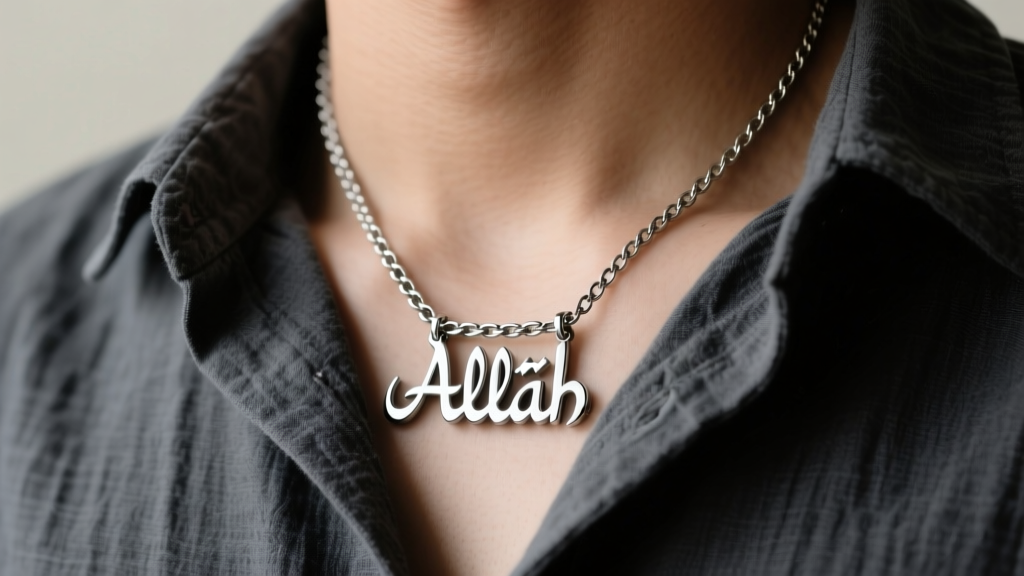
Men are permitted to wear silver, as the Prophet Muhammad (PBUH) wore a silver signet ring. Therefore, 925 Sterling Silver is the premium choice for men. Additionally, modern metals like 316L surgical stainless steel, titanium, and platinum are entirely permissible, as they do not fall under the prohibition of gold.
Guidelines for Women
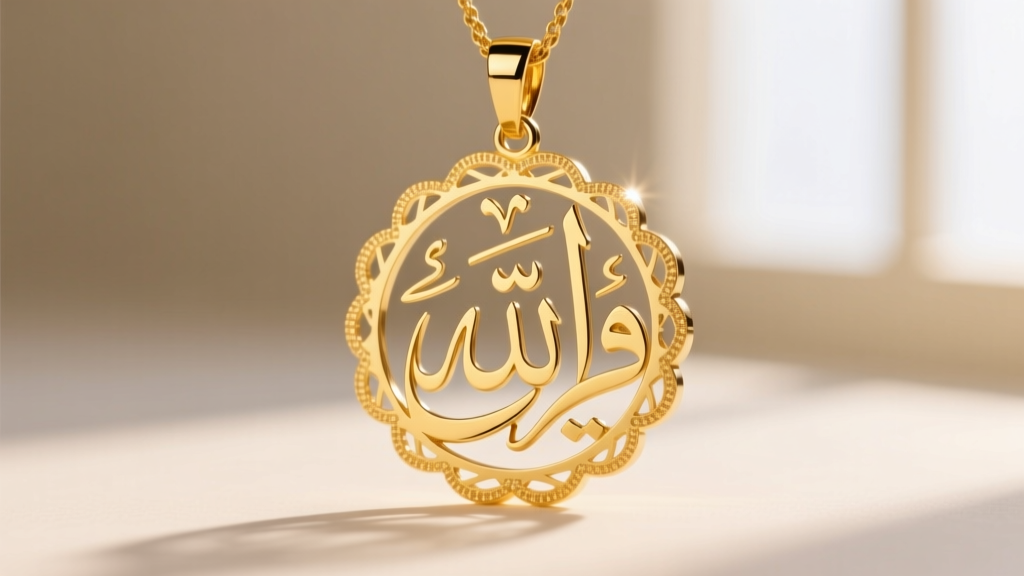
Muslim women are permitted to wear both gold and silver, as well as any other precious or base metals. For women, the choice of metal is dictated purely by budget, skin sensitivity, and aesthetic preference.
Material Breakdown: What to Look For
The longevity of your necklace depends heavily on the base metal. Below is a comparative analysis of the most common materials used in high-quality Islamic jewelry.
| Metal Grade | Best For | Price Range | Durability & Care |
|---|---|---|---|
| 316L Surgical Steel | Men, daily wear, active lifestyles | $25 - $75 | Highly durable, will not tarnish, hypoallergenic. Requires zero maintenance. |
| 925 Sterling Silver | Men & Women, traditional gifts | $80 - $250 | Prone to oxidation (tarnish). Look for rhodium-plated silver to delay tarnishing. Needs occasional polishing. |
| 18k Yellow Gold | Women, premium heirlooms, weddings | $400 - $1,500+ | 75% pure gold. Softer than 14k, prone to scratching, but offers the rich, warm hue preferred in Middle Eastern markets. |
| Platinum | Men & Women, luxury buyers | $600 - $2,000+ | Extremely dense and heavy. Naturally white, hypoallergenic, and will never tarnish or fade. |
Expert Insight: When buying silver, always look for the '925' hallmark stamp. According to the Gemological Institute of America (GIA), sterling silver must contain exactly 92.5% pure silver and 7.5% alloy (usually copper) for structural integrity. Avoid 'Tibetan Silver' or 'Alpaca'—these are base metal alloys that contain zero actual silver and often harbor nickel, which causes severe contact dermatitis.
Pendant Construction: Laser-Cut vs. Cast vs. Engraved
The manufacturing method drastically alters the weight, price, and legibility of the Arabic calligraphy.
- Laser-Cut Pendants: A sheet of metal is precisely cut using a high-powered laser. These pendants are lightweight, feature razor-sharp edges, and allow for incredibly intricate, overlapping Thuluth scripts. They are modern and lay flat against the chest.
- Cast Pendants (Lost-Wax Casting):strong> Molten metal is poured into a mold. These pieces are heavier, three-dimensional, and have slightly rounded, softer edges. Cast pendants are traditional and feel substantial, but fine details in small Arabic letters can sometimes blur if the mold is low quality.
- Engraved Discs/Bars: A solid piece of metal is stamped or laser-engraved with text. This is the most durable option for active individuals, as there are no fragile, protruding loops of calligraphy that can bend or snap off.
Choosing the Right Chain Length and Type
An intricate Ayatul Kursi pendant will be ruined if hung on a weak, incompatible chain. Match your chain to the weight of the pendant and your wardrobe.
Chain Types
- Box Chain: The strongest option for heavier cast pendants. The square links interlock tightly, resisting pulling and tangling.
- Cable Chain: The classic, uniform oval links. Best for lightweight, laser-cut pendants. Avoid for heavy pieces, as the thin links can stretch over time.
- Rope Chain: Offers excellent light reflection and a luxurious drape, but the twisted grooves can trap oils and require ultrasonic cleaning.
Length Guidelines
For women, an 18-inch chain places the pendant right at the collarbone, ideal for open necklines. A 20-to-22-inch chain allows the pendant to rest over a hijab or modest turtleneck. For men, a 22-inch or 24-inch chain is standard, allowing the pendant to rest over a thobe or t-shirt, while remaining easy to tuck beneath the collar when entering sacred or private spaces.
Religious Etiquette: Wudu and Bathroom Considerations
A frequently overlooked aspect of buying an islam necklace is the daily religious etiquette regarding ablution (Wudu) and restroom use. Pendants bearing the name of Allah, Quranic verses, or the Prophet's name command deep respect.
Islamic scholars generally advise against exposing sacred texts in impure places, such as bathrooms. If your necklace features the name 'Allah' or a Quranic verse, it is highly recommended to either remove it before entering the restroom or tuck it securely inside your shirt so it is hidden and protected. For this reason, many daily-wear buyers opt for chains with a sturdy lobster clasp that is easy to take on and off, or they choose to wear the pendant on a longer chain that can easily be pulled over the head without undoing the clasp.
Furthermore, while wearing a necklace does not invalidate Wudu (ablution), ensuring the water reaches the skin of the neck beneath the chain is mandatory. A chain that is too tight or a pendant that sits flat and waterproof against the skin might block water; therefore, slightly looser chains are practically and spiritually preferable.
Final Thoughts on Your Purchase
Investing in an islam necklace is a beautiful way to keep your faith close to your heart. By prioritizing correct calligraphy, respecting the gender guidelines regarding gold, and selecting a durable metal like 316L steel or rhodium-plated 925 silver, you ensure your piece will last a lifetime. Always buy from specialized jewelers who understand the cultural and spiritual weight of the words they cast in metal.


