Italian Chain Necklace Buying Guide: What to Look For
Discover how to authenticate, price, and choose the perfect Italian chain necklace. Learn about hallmarks, styles, and solid vs. hollow construction.

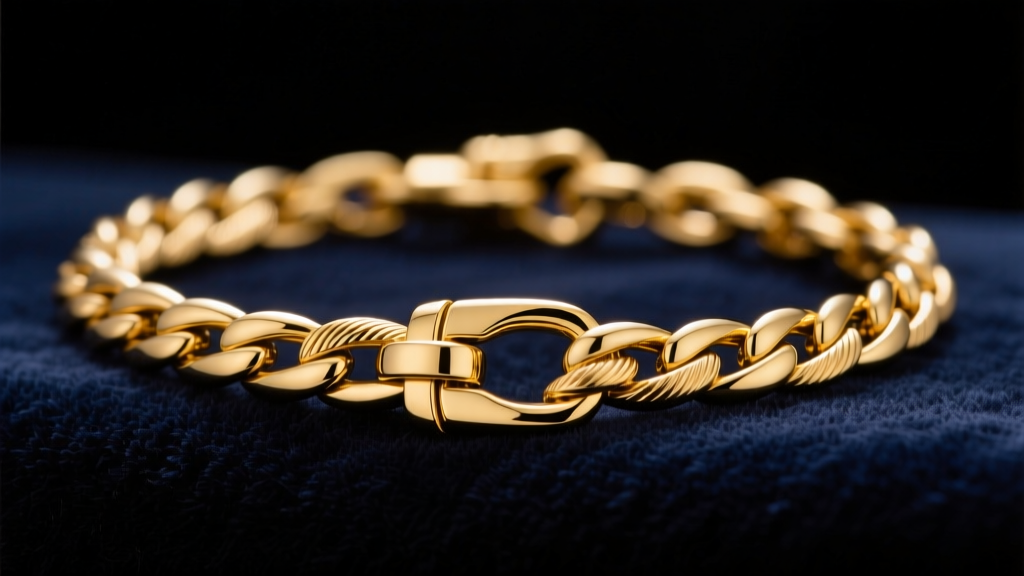
When you hear the term "italian chain necklace," you are not just buying a piece of jewelry; you are investing in centuries of metallurgical heritage. Italy remains the undisputed global capital of chain manufacturing, with entire cities dedicated to the precise art of drawing, linking, and finishing precious metals. However, the prestige of Italian craftsmanship has also led to a market flooded with imitations and misleading terminology. As of 2026, with gold prices reaching historic highs, understanding the exact specifications, hallmarks, and structural integrity of your chain is more critical than ever.
This comprehensive buying guide will teach you how to look past the marketing jargon and evaluate an Italian chain necklace like a master jeweler. From decoding obscure maker's marks to understanding the structural differences between hollow and solid links, here is everything you need to know before making your purchase.
What Defines Authentic Italian Craftsmanship?
The term "Italian" in jewelry is not merely a geographic indicator; it represents a specific standard of manufacturing excellence. Authentic Italian chains are primarily produced in three major jewelry districts: Arezzo, Vicenza, and Milan. These regions pioneered advanced techniques in diamond-cutting, electroforming, and laser welding. A genuine Italian chain necklace will exhibit uniform link tension, seamless soldering (or precise laser welding), and a high-polish or diamond-cut finish that maximizes light reflection without compromising the metal's structural integrity. The links should lay perfectly flat, and the chain should possess a fluid, almost liquid-like drape when held from one end.
Decoding Italian Hallmarks and Maker's Marks
The most critical step in verifying an authentic Italian chain necklace is examining the hallmarks. Unlike the United States, where a simple "14K" or "925" stamp is often the only requirement, Italy enforces a rigorous, multi-layered hallmarking system. According to the Federal Trade Commission Jewelry Guides, any piece of jewelry stamped with a quality mark must also bear a registered maker's mark to ensure accountability.
An authentic Italian gold or silver chain will typically feature two distinct stamps on the clasp or the jump ring:
- The Purity Mark: This indicates the metal content. You will see "750" for 18-karat gold, "585" for 14-karat gold, and "925" for sterling silver. The Gemological Institute of America (GIA) notes that European jewelers prefer these millesimal fineness numbers over the karat system.
- The Marchio (Maker's Mark): This is the ultimate proof of Italian origin. It consists of a small star (representing the Italian Republic), followed by a unique registration number, and a two-letter province code. For example, a stamp reading "★ 1234 AR" indicates the chain was made by a registered manufacturer in Arezzo (AR), while "VI" stands for Vicenza.
If a chain claims to be Italian but only features a generic "925" or "18K" stamp without the star and province code, it was likely manufactured elsewhere and imported, or it is a counterfeit.
Solid vs. Hollow: The Weight and Pricing Debate
One of the most common pitfalls when buying an Italian chain necklace is misunderstanding the difference between solid and hollow construction. Italian manufacturers are famous for their "tubular" or hollow chains, which offer a thick, luxurious visual presence at a fraction of the gram weight of a solid chain.
Hollow Chains: These are created by wrapping a thin sheet of gold or silver around a base metal core, which is later dissolved using acid. They are lightweight and more affordable per inch. However, they are highly susceptible to denting. If you squeeze a hollow 14k gold Figaro chain, the links can permanently crush, and they are nearly impossible to repair.
Solid Chains: These are crafted from solid drawn wire. They are significantly heavier, more expensive, and vastly more durable. A solid Italian chain necklace will withstand daily wear, resist kinking, and can be easily soldered if a link snaps. When pricing a chain, always calculate the cost per gram. As of 2026, expect to pay a premium of 30% to 60% over the melt value for solid Italian craftsmanship, whereas hollow chains carry a lower premium but higher labor costs for their complex manufacturing.
Top Italian Chain Styles & Durability Matrix
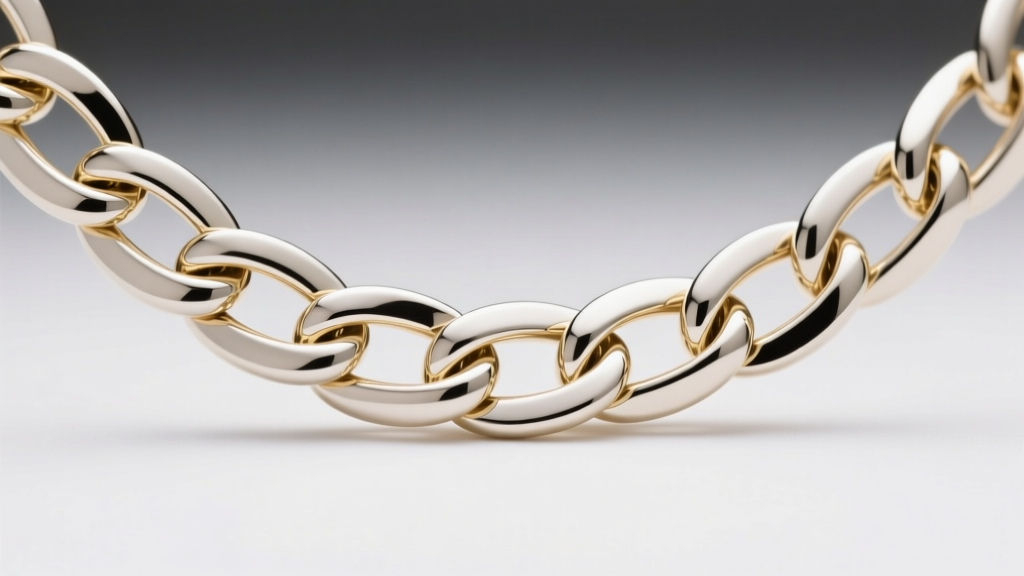
Italian factories produce dozens of chain styles, but a few iconic designs dominate the market. Choosing the right style depends on your intended use—whether you are wearing it solo, layering it, or using it to suspend a heavy pendant.
| Chain Style | Link Structure | Durability (1-5) | Best Use Case |
|---|---|---|---|
| Franco | V-shaped, 4-sided interlocking | 5 | Heavy pendants, daily wear |
| Figaro | Alternating long and short links | 4 | Solo wear, classic styling |
| Rope | Twisted links mimicking a rope | 3 | High shine, formal events |
| Wheat (Spiga) | Oval links woven in one direction | 4 | Layering, medium pendants |
| Box | Square links connected in a chain | 3 | Geometric aesthetics, light pendants |
The Jewelers of America frequently recommends the Franco and Wheat (Spiga) styles for pendant wearers due to their high tensile strength and resistance to tangling. Rope chains, while brilliantly reflective due to their diamond-cut facets, contain microscopic grooves that can snag on fabrics or trap skin oils over time.
Clasp Mechanics: The Unsung Hero
A chain is only as secure as its clasp. High-end Italian chain necklaces rarely rely on flimsy spring-ring clasps. Instead, look for precision-machined lobster clasps with a robust internal spring mechanism. For thicker, heavier chains (such as a 50-gram solid Cuban or Figaro), the standard is a box clasp with a figure-eight safety latch. This dual-security system ensures that even if the primary push-button mechanism fails, the secondary wire latch will catch the jump ring, preventing a catastrophic loss of your jewelry. Always test the clasp's lever; it should offer firm resistance and snap back into place with an audible click.

How to Spot a Fake "Italian" Chain
Counterfeiters have become adept at mimicking the look of Italian gold and silver. To protect your investment, employ these practical troubleshooting steps before handing over your money:
- The Magnet Test: Gold and silver are non-magnetic. If your chain is attracted to a strong neodymium magnet, it contains a ferrous base metal core. (Note: The internal spring of a lobster clasp is usually steel and will react to a magnet, so test the chain links, not the clasp).
- Examine the Jump Rings: On authentic Italian chains, the jump rings connecting the clasp to the chain are seamlessly soldered shut. If you can see a visible gap or slit in the jump ring, it is a mass-produced, lower-quality imitation.
- Check for Skin Discoloration: Fake silver chains often contain copper or nickel alloys that oxidize quickly, leaving a green or black residue on your neck. Authentic 925 Italian sterling silver may tarnish over months, but it will not turn your skin green upon immediate contact.
- Verify the Weight: If a chain looks visually thick (e.g., 8mm wide) but feels suspiciously light in your hand, it is likely hollow or gold-plated over brass. Always ask the jeweler for the exact gram weight.
Final Verdict: Investing in Italian Craftsmanship
Purchasing an authentic Italian chain necklace is an exercise in appreciating functional art. By demanding the proper millesimal purity stamps, searching for the star and province maker's mark, and choosing solid construction over hollow illusions, you secure a piece of jewelry that will outlast fleeting trends. Whether you opt for the indestructible weave of a Franco chain or the timeless rhythm of a Figaro, true Italian craftsmanship offers an unmatched blend of luxury, durability, and heritage that no mass-market alternative can replicate.


