Crucifix Necklaces From Italy: A Material & Alloy Guide
Compare metals in authentic crucifix necklaces from Italy. Explore 18k gold, 925 silver, hallmarks, and pricing for fine Italian religious jewelry.

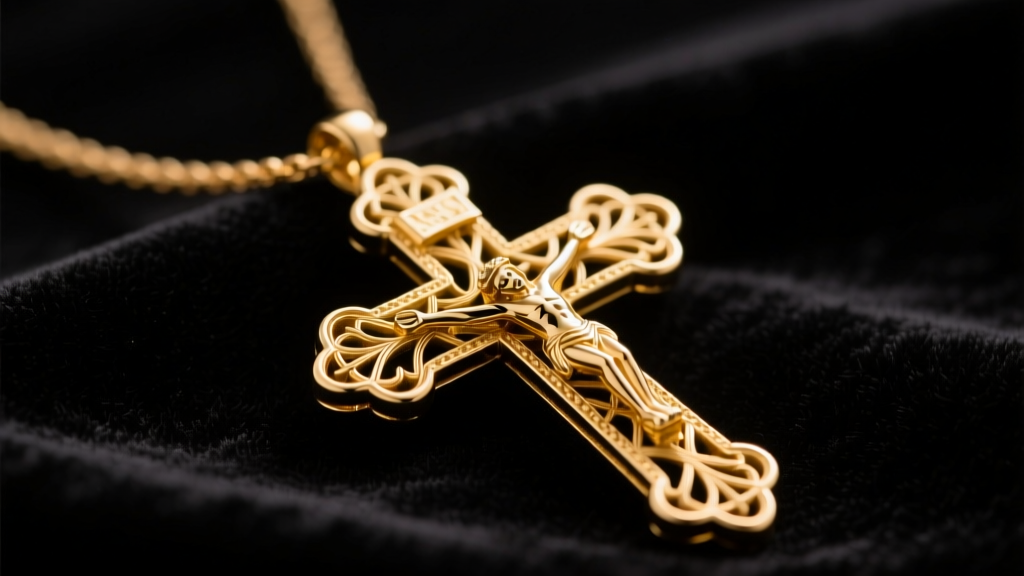
When investing in religious jewelry, the origin of the piece dictates not only its artistic heritage but its fundamental metallurgical integrity. Italy has remained the global epicenter of precious metal refinement and goldsmithing for centuries. Specifically, crucifix necklaces from Italy represent a unique intersection of devout symbolism and master-level metallurgy. Unlike mass-produced stamped pendants, authentic Italian crucifixes are born in historic jewelry districts like Valenza Po, Vicenza, and Arezzo, where alloy compositions and finishing techniques are closely guarded traditions.
This comprehensive material guide decodes the specific gold and silver alloys used in Italian crucifix pendants, explains how to read mandatory Italian hallmarks, and provides a practical pricing framework for buyers seeking genuine craftsmanship.
The Anatomy of Italian Hallmarks and Maker's Marks
Before analyzing the metals themselves, it is critical to understand how Italy regulates precious metals. The Italian hallmarking system is strictly governed by state law and provides a transparent map of a pendant's origin and purity. According to Lang Antiques' hallmarking archives, a genuine Italian crucifix will feature a specific combination of stamps, usually located on the bail or the flat back of the pendant.
- The Purity Mark: Expressed in parts per thousand. You will see 750 for 18k gold or 925 for sterling silver, often enclosed in a lozenge or oval shape.
- The Maker's Mark: A unique polygonal stamp containing a star (representing the Italian Republic), a registration number, and a two-letter province code. For example, 123 AL indicates a registered goldsmith in Alessandria (the Valenza Po district), while VI stands for Vicenza.
If a crucifix necklace lacks this polygonal maker's mark and only features a generic '18k' or 'Italy' stamp, it is highly likely to be an imported imitation or a piece manufactured outside of Italy's strict assay regulations.
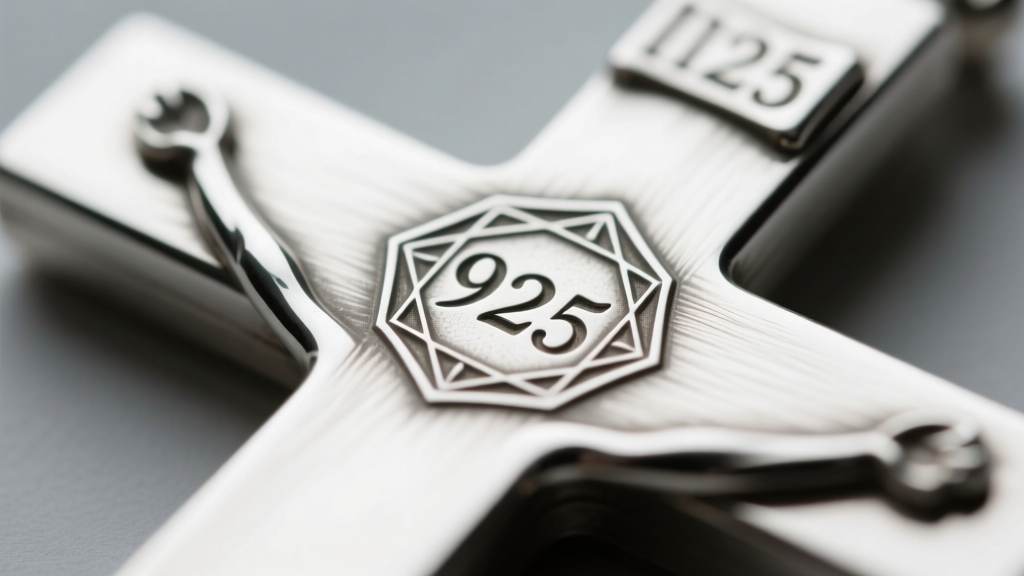
18k Gold (750): The Valenza and Vicenza Standard
In the United States and parts of Asia, 14k gold (585) is the standard for everyday jewelry. However, fine crucifix necklaces from Italy are overwhelmingly crafted in 18k gold (750). This alloy consists of 75% pure gold and 25% alloy metals. The specific ratio of that remaining 25% is where Italian goldsmiths differentiate their products.
Italian Yellow Gold Alloys
Italian 18k yellow gold is renowned for its rich, buttery hue. Goldsmiths in the Valenza district typically use a precise alloy mixture of 12.5% silver and 12.5% copper. This exact 1:1 ratio of alloying metals prevents the gold from skewing too red (which happens with higher copper content) or too green (which happens with higher silver content). The result is a warm, classic yellow that complements the traditional corpus Christi designs found on Italian crucifixes.
White and Rose Gold Variations
For modern interpretations of the crucifix, Italian workshops utilize 18k white gold alloyed with palladium and nickel, followed by a thick rhodium plating to achieve a mirror-like, tarnish-resistant finish. Italian rose gold crucifixes, increasingly popular for their vintage aesthetic, utilize a higher copper content (up to 20%) mixed with a small percentage of silver to yield a deep, romantic pinkish-red tone that highlights the sculptural relief of the crucifix figure.
Sterling Silver (925) and the Art of Brunitura
While gold commands the luxury market, sterling silver (925) remains the most popular metal for everyday Italian crucifix necklaces. Italian silver is alloyed with 7.5% copper for tensile strength. However, the defining characteristic of Italian silver crucifixes is not just the alloy, but the surface treatment—specifically, a technique known as brunitura (oxidation).
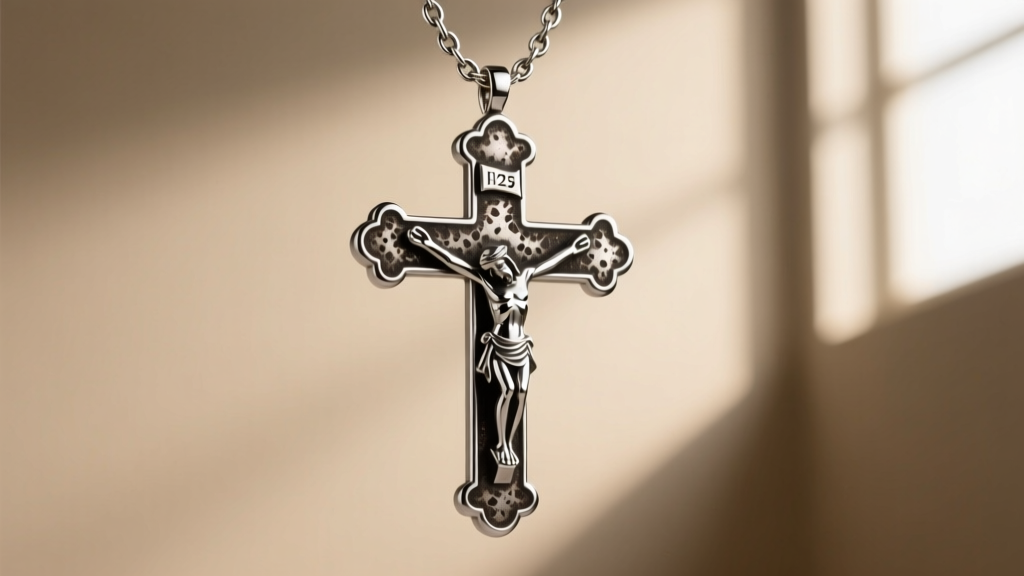
Tuscan and Vicentine silversmiths frequently apply a liver of sulfur solution to the finished crucifix. This chemical reaction intentionally darkens the silver, turning it black or deep charcoal. The artisan then uses a polishing wheel to buff only the raised, high-relief areas of the crucifix back to a brilliant shine. This high-contrast finish dramatically accentuates the anatomical details of the corpus, the texture of the wood grain on the cross, and any intricate filigree borders. As noted by the Birmingham Assay Office's guide to foreign marks, this oxidative aging is a celebrated hallmark of continental European silver craftsmanship, designed to mimic the look of centuries-old ecclesiastical artifacts.
Material & Pricing Comparison Matrix
Understanding the baseline pricing for crucifix necklaces from Italy requires factoring in the daily spot price of precious metals, the gram weight of the pendant, and the artisan labor premium. Below is a comparative matrix based on current market averages for authentic, hallmarked Italian pieces.
| Material | Typical Weight (Pendant) | Dimensions | Estimated Retail Price (USD) | Best For |
|---|---|---|---|---|
| 925 Sterling Silver (Polished) | 1.5g - 3.0g | 15mm - 25mm | $45 - $90 | Everyday wear, youth confirmations |
| 925 Sterling Silver (Oxidized) | 3.0g - 6.0g | 25mm - 40mm | $80 - $160 | Vintage aesthetics, men's jewelry |
| 18k Yellow Gold (Solid) | 1.2g - 2.5g | 15mm - 20mm | $280 - $550 | Delicate layering, minimalist style |
| 18k Yellow Gold (Solid) | 3.5g - 7.0g | 25mm - 45mm | $700 - $1,400+ | Statement pieces, heirloom gifts |
| 18k White Gold (Rhodium) | 2.0g - 4.0g | 20mm - 30mm | $450 - $850 | Modern, cool-toned skin complexions |
Chain Metallurgy: Diamond-Cut and Tensile Strength
A crucifix pendant is only as secure and visually striking as the chain that holds it. Italy, particularly the Arezzo district, is the undisputed global leader in chain manufacturing. When purchasing an Italian crucifix, it is highly recommended to pair it with an Italian-made chain utilizing the diamantata (diamond-cut) technique.
Diamond-cutting involves using precision CNC lathes to slice microscopic, flat facets into the links of chains like the Rope, Franco, or Figaro. This creates a multi-dimensional light reflection that mimics the sparkle of gemstones without adding weight or cost. Furthermore, Italian chains are engineered with specific tensile strengths. A 1.2mm Italian box chain, for example, can comfortably support a 5-gram solid gold crucifix without stretching, provided the soldered jump rings on the pendant's bail are properly fused.
Verifying Authenticity: A Practical Framework
To ensure you are purchasing genuine crucifix necklaces from Italy, follow this three-point verification framework:
- Magnify the Maker's Mark: Use a 10x jeweler's loupe to inspect the bail. The polygonal stamp must be crisp, not blurred. Blurred stamps often indicate a cast replica of a genuine hallmark.
- Check the Bail Soldering: High-end Italian goldsmiths use laser welding or precise torch soldering to close the bail. If you see excess, sloppy solder pooling around the bail joint, the piece was likely mass-produced in a region with lower quality control standards.
- Assess the Corpus Relief: Authentic Italian crucifixes feature deep, under-cut relief. The figure of Christ should appear almost fully detached from the cross in certain areas, showcasing advanced wax carving and casting techniques, rather than looking like a flat, stamped-on decal.
By prioritizing verified metallurgical standards and understanding the regional nuances of Italian goldsmithing, collectors and believers alike can acquire a piece of religious jewelry that is both spiritually meaningful and materially exceptional. For further education on precious metal compositions, the Gemological Institute of America (GIA) offers extensive resources on global gold quality factors and alloy behaviors.


