Troubleshooting Your Pearl Torsade Necklace: Tangles & Repairs
Learn how to troubleshoot common pearl torsade necklace issues. Expert tips on untangling, restringing multi-strand pearls, and upgrading weak clasps.

The Physics of the Torsade: Why Multi-Strand Pearls Fail
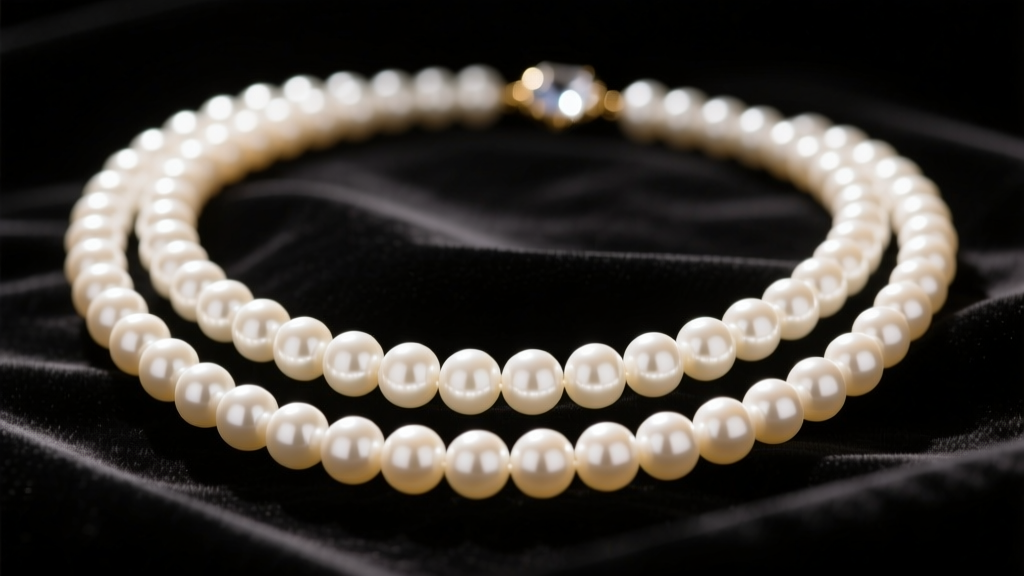
A pearl torsade necklace is a masterpiece of structural tension. Unlike a standard single-strand princess necklace, a torsade relies on the deliberate twisting of four to eight individual pearl strands to create a thick, rope-like cascade. While visually stunning, this twisted architecture introduces unique mechanical vulnerabilities. The continuous torque placed on the stringing material, combined with the friction between the nacre surfaces, makes the pearl torsade highly susceptible to tangling, asymmetric stretching, and clasp failure. If you own a vintage Akoya torsade or a modern freshwater multi-strand piece, you have likely encountered the frustration of a warped twist or a stubborn knot. This guide provides professional-grade troubleshooting frameworks to diagnose, repair, and maintain your pearl torsade necklace.
The Anatomy of the Twist: Differential Tension
To troubleshoot a torsade, you must understand its geometry. When multiple strands are twisted together, the strands on the outside of the twist travel a longer physical distance than the strands trapped in the core. If a jeweler strings all six strands to the exact same millimeter before twisting, the inner strands will buckle and bunch up, while the outer strands bear 100% of the tensile load. Master stringers use a technique called differential stringing, where the core strands are cut 1% to 2% shorter than the exterior strands to distribute the torque evenly. When your torsade begins to look uneven, with one strand drooping while another pulls tight against the clasp, it is usually a sign that the differential tension has failed due to material stretch.
Troubleshooting Issue #1: Severe Multi-Strand Tangling
Tangled torsades are notoriously difficult to fix because pulling on one strand tightens the knots on the adjacent strands. Never use your fingernails or metal tweezers, which can scratch the delicate nacre or chip the drill holes.
The Micro-Friction Reduction Method
- Lay the necklace completely flat on a smooth, non-porous surface like a glass cutting board.
- Generously dust the tangled area with talc-free baby powder or fine cornstarch. This acts as a dry lubricant, reducing the surface tension and friction between the pearls.
- Using two 0.6mm beading awls (or standard sewing needles), insert the tips into the center of the knot.
- Gently wiggle the awls in opposite directions to loosen the core, then slowly work the outer pearls outward.
- Once untangled, use a soft, dry makeup brush to sweep away the powder from the drill holes.

Troubleshooting Issue #2: Thread Stretching and Asymmetry
If your pearl torsade necklace no longer holds its twist and instead hangs in loose, uneven loops, the stringing material has permanently stretched. Traditional silk thread, while beautiful, is highly susceptible to elongation when exposed to skin oils, humidity, and the constant torsional stress of a twisted necklace.
| Material | Diameter | Stretch Factor | Restringing Interval |
|---|---|---|---|
| Griffin Silk (No. 6) | 0.30mm | High | 12-18 Months |
| Power Pro Braided Thread | 0.15mm (8lb) | Negligible | 3-4 Years |
| Soft Flex Wire (Fine) | 0.014 inch | Zero | 5+ Years |
Restringing Protocol
If your torsade was strung on Griffin silk (typically size No. 4 or No. 6, measuring 0.25mm to 0.30mm), it must be restrung every 12 to 18 months if worn frequently. For a permanent fix, ask your jeweler to restring using Power Pro braided beading thread (8lb test) or Soft Flex nylon-coated beading wire (0.014-inch or 0.019-inch diameter). These materials possess near-zero stretch memory and will maintain the differential tension required for a perfect twist for up to five years.
Troubleshooting Issue #3: Clasp Slippage and Torque Stress
The clasp is the most common point of catastrophic failure on a multi-strand necklace. Standard lobster clasps or spring rings are fundamentally incompatible with torsades. To fasten a lobster clasp, the wearer must pinch the lever and twist the necklace, applying severe lateral torque to the jump rings connecting the pearls. Over time, this daily twisting fatigues the metal, causing the jump rings to pull apart and the pearls to spill.
The Magnetic Slide Clasp Upgrade
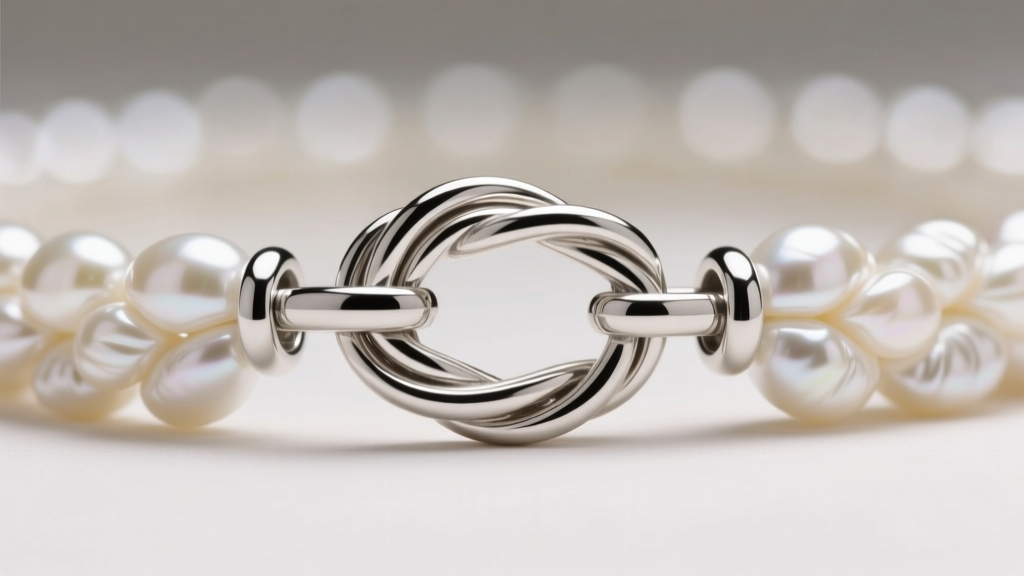
The definitive solution for a pearl torsade is a multi-strand neodymium magnetic slide clasp. These clasps feature a polished sterling silver or 14k gold tube that houses a high-gauss magnet (minimum 3000 Gauss pull force). Because the two halves snap together automatically when brought into proximity, the wearer never has to twist or pull the strands to secure the necklace. Ensure the clasp width matches your strand count; a 4-strand torsade requires a minimum 12mm wide slide clasp, while an 8-strand piece needs a reinforced 18mm to 20mm tube clasp to prevent the heavy pearl ropes from pulling the magnetic core apart.
Preventative Maintenance: The Expert Care Protocol
Preventing structural failure is always cheaper than professional restringing. The Gemological Institute of America (GIA) emphasizes that pearls are organic gems with a Mohs hardness of just 2.5 to 3.0, making them highly vulnerable to the acids in human sweat and the chemicals in cosmetics.
- The 'Last On, First Off' Rule: Always put your torsade on after applying perfume, hairspray, and lotions. Remove it immediately upon returning home.
- Post-Wear Wiping: After every wear, gently wipe the entire length of the twisted strands with a damp, lint-free microfiber cloth. This removes acidic oils before they can degrade the silk thread or etch the nacre.
- Proper Storage: Never hang a pearl torsade. The heavy weight of the multi-strand twist will stretch the thread. Store it flat in a soft pouch, or loosely coiled in a lined jewelry box. As noted by Jewelers Mutual, storing pearls in airtight plastic bags can cause them to dry out and crack; they require a slight amount of ambient moisture.
When to Seek Professional Restringing
Do not attempt to restring a multi-strand torsade at home unless you have experience with differential bead stringing and French wire (gimp) finishing. The transition point where the pearls meet the clasp requires wrapping the thread in fine metallic French wire to protect it from the friction of the metal jump rings. If you notice the thread looking gray, frayed near the clasp, or if the twist refuses to stay coiled, take the piece to a certified bench jeweler. Expect to pay between $80 and $150 per strand for professional restringing, meaning a 6-strand torsade will typically cost between $480 and $900 to restore. While expensive, this investment preserves the structural integrity and heirloom value of your pearl torsade necklace for decades to come.


