Necklace Wolf Tooth Care: Cleaning Real Bone and Metal
Learn how to safely clean, polish, and maintain your necklace wolf tooth. Expert tips for real bone, resin, and metal pendants to prevent damage.

The Anatomy of a Wolf Tooth Pendant: Material Matters
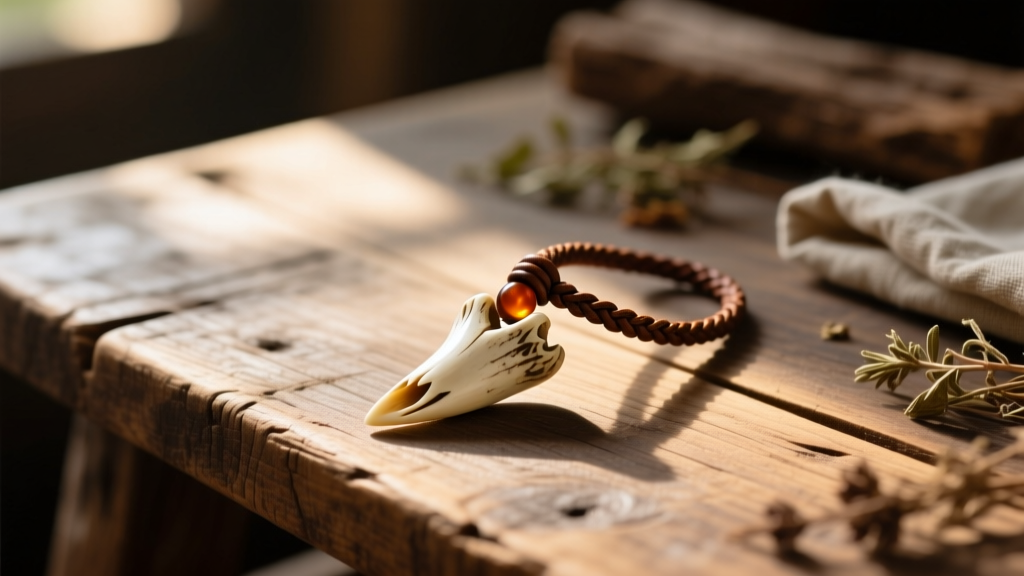
The primal aesthetic and deep symbolism of a necklace wolf tooth make it a standout piece in any jewelry collection. Whether you are wearing an ethically sourced organic specimen, a hand-carved resin replica, or a cast metal talisman, these pendants require specific maintenance protocols. The most common mistake wearers make is treating organic materials like inorganic gemstones. Real bone, antler, and ethically sourced teeth are highly porous, hygroscopic (water-absorbing), and sensitive to pH fluctuations. Conversely, metal and resin replicas require entirely different chemical approaches to maintain their luster without degrading the finish.
Organic vs. Synthetic: Why Cleaning Protocols Differ
Organic materials contain a collagen matrix and microscopic tubules. When exposed to harsh chemicals, ultrasonic vibrations, or prolonged moisture, this matrix breaks down, leading to micro-fissures, chalkiness, and irreversible structural failure. Synthetic resins and cast metals, while immune to biological degradation, are susceptible to abrasive scratching and chemical stripping. Understanding the exact material of your pendant is the critical first step in establishing a safe care routine.
Step-by-Step Cleaning Guide for Real Bone and Ethically Sourced Teeth
If your pendant is crafted from real bone or ethically sourced animal teeth, you must treat it with the same conservation-level care as a museum artifact. According to the Canadian Conservation Institute, organic artifacts require strict humidity control and gentle, non-aqueous cleaning methods whenever possible.
Essential Tools for Organic Care
- Microfiber cloths: Lint-free and non-abrasive.
- pH-neutral castile soap: Such as Dr. Bronner’s Unscented Baby Mild (diluted).
- Food-grade mineral oil: For conditioning and sealing.
- Soft-bristled makeup brush: For dusting deep crevices.
The Cleaning Process
- Dry Dusting: Always begin by removing loose particulate matter. Use a soft-bristled makeup brush to gently sweep dust out of the natural grooves and the bail (the hole where the cord passes through). Friction from trapped grit can scratch the bone surface during wiping.
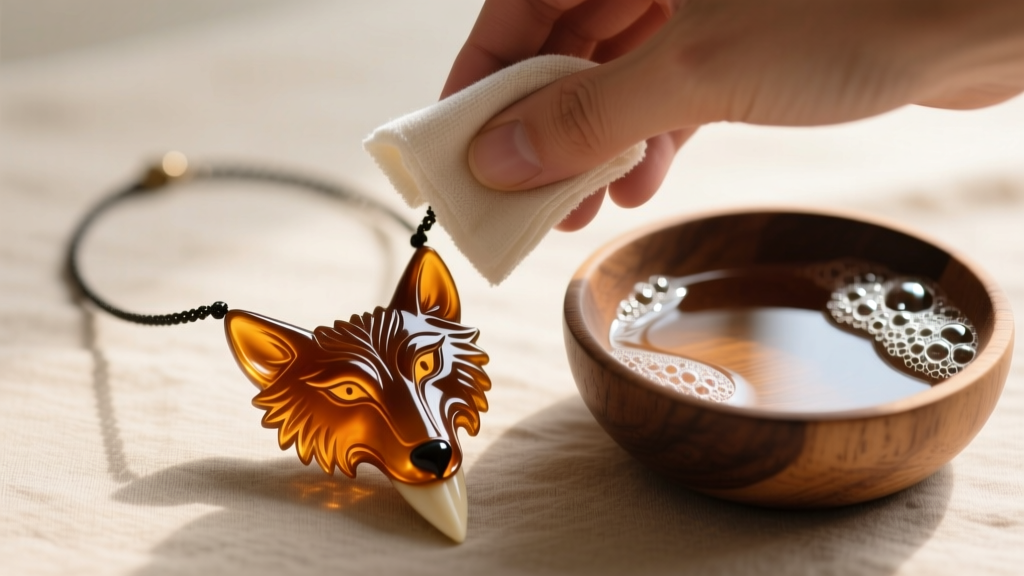
- Damp Wiping: Mix one drop of pH-neutral castile soap into a cup of distilled water. Dampen a microfiber cloth—do not soak it. Wring it out completely until it is barely moist. Wipe the tooth gently in the direction of the natural grain. Never submerge real bone in water. Submersion causes the collagen fibers to swell; when the bone dries, it shrinks and cracks.
- Drying: Immediately buff the pendant dry with a second, clean microfiber cloth. Allow it to air-dry at room temperature for 30 minutes away from direct heat sources.
- Conditioning (Crucial Step): Organic teeth lose their natural sebum over time, leading to a brittle, chalky texture. Apply exactly one drop of food-grade mineral oil to a cloth and rub it into the bone. Let it absorb for 15 minutes, then buff off the excess.
Caring for Metal and Resin Wolf Tooth Replicas
For those who prefer vegan alternatives or the durability of metal, resin and silver/brass wolf tooth replicas offer a rugged look without the biological fragility. However, they are not indestructible.
Resin and Polymer Clay
High-quality polyurethane or epoxy resin teeth can be wiped down with a 70% isopropyl alcohol solution to remove skin oils and sweat. However, prolonged exposure to alcohol will dull the polished finish of the resin over time. Avoid acetone or nail polish remover entirely, as these solvents will melt the surface layer of the resin, leaving a permanent cloudy haze.
Cast Metals (Silver, Brass, and Pewter)
Metal wolf tooth pendants often feature intentional oxidation (antiquing) in the crevices to highlight the carved details. Never use liquid silver dips or chemical tarnish removers on antiqued metal. These solutions will strip the dark patina from the grooves, leaving the piece looking flat and unnaturally bright. Instead, use a treated silver polishing cloth, gently rubbing only the high points of the tooth to create a natural, high-contrast shine.
Material Comparison and Cleaning Agents Matrix
Use the table below to quickly identify the safe and hazardous cleaning agents for your specific necklace wolf tooth material.
| Material | Safe Cleaning Agents | Agents to Strictly Avoid | Conditioning Required? |
|---|---|---|---|
| Real Bone / Tooth | Damp cloth, pH-neutral soap, Mineral oil | Bleach, Ultrasonic cleaners, Olive oil, Soaking | Yes (Monthly) |
| Epoxy / Polyurethane Resin | Mild soap, 70% Isopropyl alcohol (sparingly) | Acetone, Abrasive pastes, Boiling water | No |
| Sterling Silver (Antiqued) | Treated polishing cloth, Mild soap | Liquid silver dip, Baking soda paste, Toothpaste | No |
| Brass / Bronze | Lemon juice & salt (for brightening), Polishing cloth | Bleach, Ammonia-based cleaners | No (Wax optional) |
Chain Maintenance: Don't Forget the Cord and Hardware
A pristine pendant is useless if the cord snaps or the hardware corrodes. The suspension method of your necklace wolf tooth dictates a secondary layer of maintenance.
Leather and Hemp Cord Care
Leather cords are highly susceptible to sweat and environmental humidity. The salts and acids in human perspiration will break down the leather fibers, leading to dry rot and sudden snapping. Wipe your leather cord with a dry cloth after heavy wear. Once every few months, apply a tiny amount of leather conditioner (like Bick 4) to keep the hide supple. Hemp and cotton cords should be spot-cleaned only; soaking them invites mildew growth inside the braided core.
Stainless Steel and Sterling Silver Chains
If your pendant hangs on a metal chain, be hyper-aware of galvanic corrosion. If a sterling silver chain is stored in a damp environment while touching a brass or copper bail, the dissimilar metals can trigger a rapid chemical reaction that pits and stains the silver. Always remove metal chains before swimming in chlorinated pools or the ocean, as chloride ions aggressively attack the copper alloys within sterling silver, causing irreversible blackening.
Long-Term Storage and Preservation Strategies
How you store your jewelry when it is not on your body is just as critical as how you clean it. The Gemological Institute of America (GIA) emphasizes that environmental factors are the leading cause of preventable jewelry degradation.
- UV Degradation: Prolonged exposure to direct sunlight will bleach real bone and cause severe micro-fissures due to rapid moisture evaporation. Always store organic pendants in a dark drawer or jewelry box.
- Humidity Control: Organic materials thrive in a relative humidity (RH) of 40% to 50%. If you live in a highly arid climate, place a small, damp sponge in a perforated container inside your jewelry drawer (not touching the jewelry) to prevent the bone from drying out and splitting.
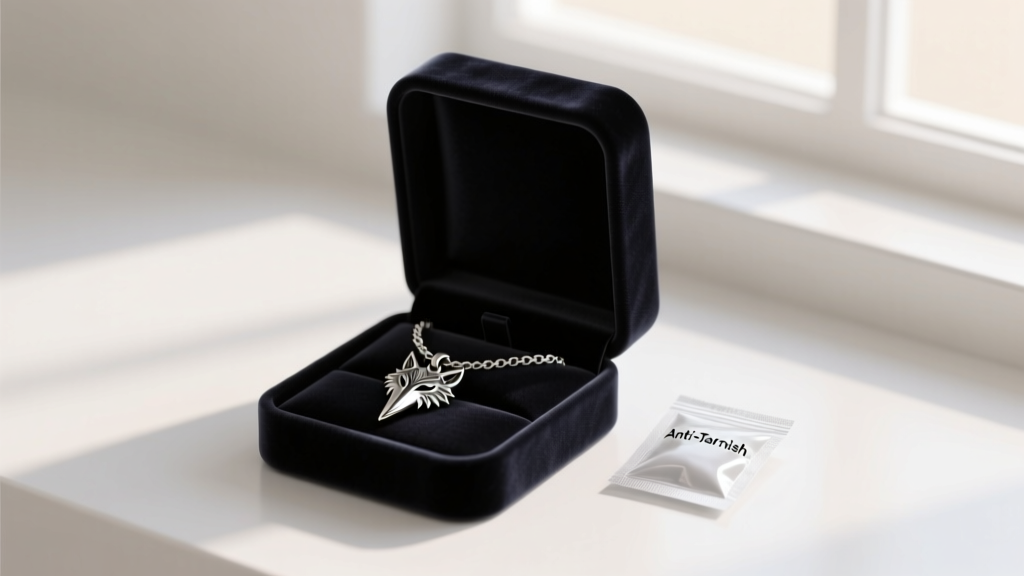
- Avoid Plastic Bags: Storing bone or silver in sealed polyethylene plastic bags traps moisture and off-gassing chemicals from the plastic itself, which can accelerate tarnishing and promote mold growth on organic materials. Use acid-free tissue paper or unbleached cotton pouches instead.
Common Mistakes That Ruin Organic Pendants
To ensure your necklace wolf tooth survives for decades, avoid these catastrophic errors:
- Using Toothpaste: Toothpaste contains hydrated silica, an abrasive meant to strip plaque from enamel. On a polished bone or resin pendant, silica will leave thousands of microscopic scratches, permanently dulling the surface and creating pockets for dirt to accumulate.
- Applying Cooking Oils: Olive oil, coconut oil, and vegetable oils are triglycerides that oxidize and go rancid when exposed to air and light. Applying them to a bone tooth will result in a sticky, yellowed surface that emits a sour odor and attracts bacteria.
- Ultrasonic Cleaning: The high-frequency cavitation bubbles generated by ultrasonic jewelry cleaners will easily shatter the delicate internal structure of real teeth and bone. Keep organic materials far away from these machines.
Conclusion
Maintaining a necklace wolf tooth requires a shift in mindset from standard jewelry care to artifact preservation. By respecting the porous nature of organic materials, utilizing pH-neutral cleaners, and conditioning with stable mineral oils, you ensure that your pendant retains its structural integrity and primal beauty for a lifetime. Treat the materials with intention, and your talisman will age gracefully alongside you.