Pearl and Ruby Necklace Gemology: A Technical Deep Dive
Explore the technical gemology, stringing mechanics, and grading standards behind a high-quality pearl and ruby necklace in this expert deep dive.

The Bimaterial Challenge: Hardness and Wear Dynamics
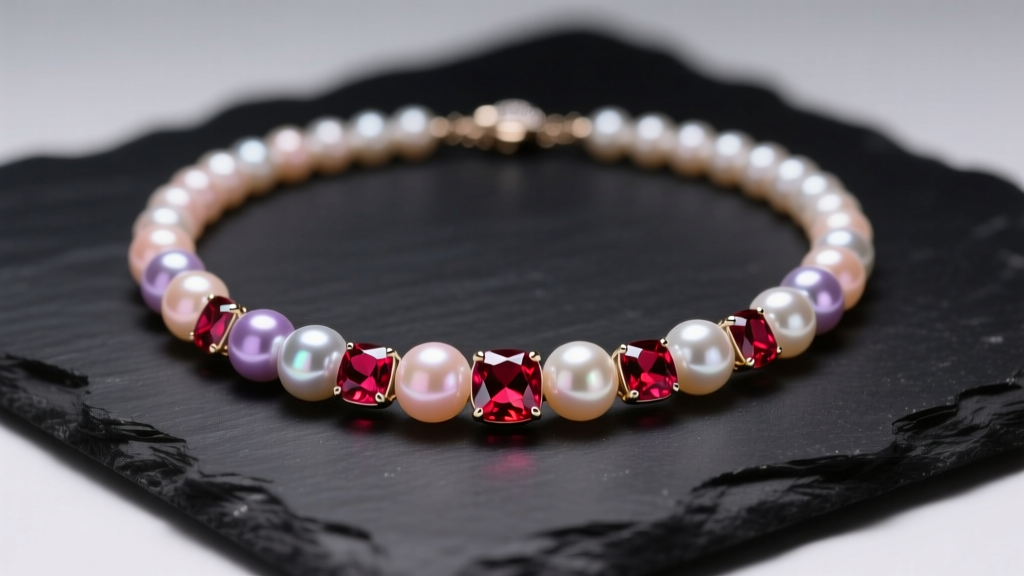
Designing a structurally sound and visually striking pearl and ruby necklace requires navigating one of the most extreme hardness disparities in gemology. On the Mohs scale of mineral hardness, organic pearls rank between 2.5 and 3.0, while crystalline corundum (ruby) sits at a formidable 9.0. This massive differential dictates the entire architectural approach to the necklace. If a faceted ruby is allowed to slide freely against a pearl, the ruby's sharp girdle and facet junctions will act like sandpaper, rapidly degrading the pearl's nacre and destroying its luster. Consequently, the integration of these two materials demands meticulous spacing, specialized knotting techniques, and protective metal findings to ensure the piece survives daily wear without catastrophic material loss.
Gemological Grading Standards
To evaluate a premium pearl and ruby necklace, gemologists must apply two distinct grading frameworks. The synergy of the piece relies on matching the optical properties of both gemstones.
Evaluating the Pearl Component
According to the GIA Pearl Description Guide, the value of the pearls in this bimaterial design hinges on nacre thickness, luster, and surface perfection. For a high-end necklace, Akoya pearls must exhibit a minimum nacre thickness of 0.4mm to prevent peeling, though South Sea or Tahitian pearls with 2.0mm+ nacre are often preferred for their durability. The luster must be graded as 'Excellent,' meaning reflections are bright, sharp, and distinct. When pairing pearls with the deep red of a ruby, gemologists typically select pearls with a strong rose or silver overtone, which optically harmonizes with the secondary hues of the corundum.
Ruby Selection: Origin, Treatment, and Fluorescence
The rubies used as focal beads or clasp accents must be evaluated for origin, treatment, and pleochroism. As documented in the GIA Ruby Description Guide, the most prized rubies exhibit 'Pigeon's Blood' coloration—a highly saturated, medium-dark red with strong fluorescence driven by chromium content. In 2026, the market heavily favors unheated Mozambican rubies from the Montepuez region, which offer exceptional clarity and size at a fraction of the cost of unheated Burmese stones. However, any ruby integrated into a pearl strand must be carefully examined for glass-filling or fracture-filling treatments, as the lead-glass used in these treatments is highly susceptible to degradation from mild acids, including human perspiration.
Drilling Mechanics and Tolerances
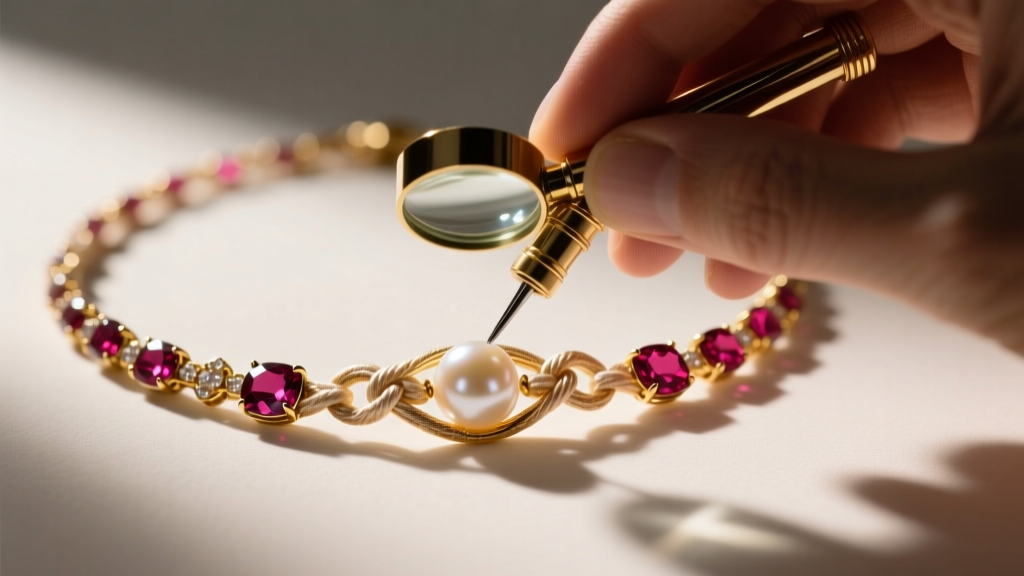
The physical preparation of the gemstones for stringing is a highly technical process. Pearls are drilled using water-cooled, diamond-tipped hollow drill bits to prevent thermal shock and nacre chipping. The standard drill hole for a fine pearl necklace ranges from 0.8mm to 1.2mm. Rubies, being significantly harder, require laser drilling or diamond-impregnated lapidary drills. When a ruby is used as a center drop or spacer bead, its drill hole must be perfectly aligned and polished. A rough, unpolished drill hole in a ruby will act as a microscopic saw blade, fraying and eventually snapping the silk thread holding the necklace together.
Advanced Stringing and Knotting Techniques
Stringing a pearl and ruby necklace is an exercise in tension management and abrasion prevention. Master stringers use 100% natural silk thread (typically Griffin Size 4 or Size 6, depending on the drill hole diameter) because of its superior knot-holding capability and elegant drape. However, silk is highly vulnerable to the sharp edges of faceted rubies.
To mitigate this, jewelers employ French wire (also known as gimp)—a micro-coiled hollow tube of fine silver or gold. The silk thread is passed through the French wire wherever it transitions from a pearl to a ruby, or from a gemstone to the metal clasp. This creates a flexible, abrasion-resistant metal shield that prevents the ruby's edges from cutting the organic silk fibers.
| Material | Tensile Strength | Drape Quality | Abrasion Resistance | Best Application |
|---|---|---|---|---|
| Natural Silk (Size 6) | Low (8-12 lbs) | Excellent | Poor | Traditional knotted strands (requires French wire near rubies) |
| Bonded Nylon (Size F) | Medium (15-20 lbs) | Good | Fair | Heavier South Sea pearls with large ruby spacer beads |
| Stainless Steel Wire (0.018') | High (30+ lbs) | Stiff | Excellent | Uncut ruby beads and heavy gemstone focal pendants |
Expert Insight: Never use stainless steel wire for a traditional knotted pearl and ruby necklace. The wire will not knot securely, and its stiffness will cause the pearls to sit unnaturally, accelerating wear at the drill holes due to rigid friction.
Metallurgy and Clasp Engineering
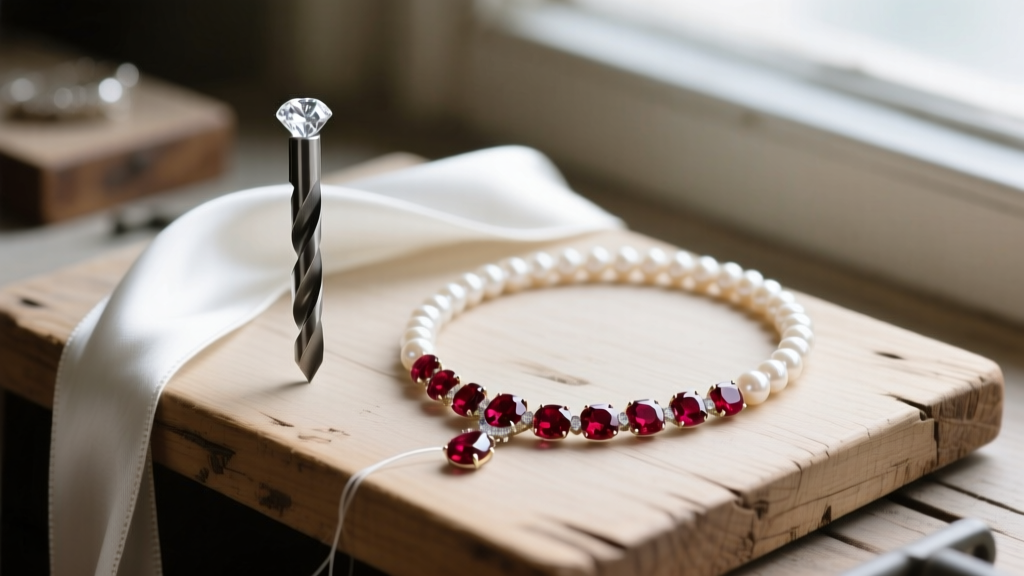
The clasp of a pearl and ruby necklace must support the substantial weight of the gems while providing redundant security. For high-end pieces, 18k yellow or rose gold is the metallurgical standard. The preferred mechanism is a tongue-and-groove box clasp equipped with a figure-8 safety catch. The tongue must be crafted from spring-hardened gold alloy to ensure it retains its tension over decades of use. Furthermore, the interior edges of the clasp where the silk attaches must be chamfered and polished to a mirror finish to eliminate any microscopic burrs that could sever the thread.
Market Valuation Framework
As of 2026, the valuation of a pearl and ruby necklace is highly stratified based on the treatment status of the rubies and the origin of the pearls. A 16-inch strand featuring 7.5mm AAA-grade Akoya pearls interspersed with 4mm heated Mozambican ruby beads typically retails between $2,800 and $4,500. Conversely, a strand utilizing 11mm unblemished South Sea pearls accented with unheated, GRS-certified Burmese rubies can easily command $45,000 to $85,000 at auction. Buyers must always demand independent gemological laboratory reports (such as GIA or SSEF) for the rubies to verify the absence of heat treatment and lattice diffusion, which are the primary drivers of value in the current market.
Conclusion
The creation and maintenance of a pearl and ruby necklace is a masterclass in balancing organic fragility with crystalline permanence. By understanding the severe Mohs hardness discrepancy, employing proper diamond-drilling tolerances, and utilizing protective French wire knotting techniques, jewelers can craft heirloom-quality pieces that withstand the test of time. For collectors and enthusiasts, recognizing these technical hallmarks is essential to distinguishing a true masterwork from a structurally compromised assembly.


