O Ring Necklace Material Guide: Steel, Titanium, and Gold
Compare surgical steel, titanium, and gold for your o ring necklace. Discover the best hypoallergenic metals, gauge sizes, and care tips.

The Evolution of the O-Ring Necklace
The O-ring necklace has transcended its historical subculture origins to become a definitive staple in both avant-garde hardware fashion and minimalist fine jewelry. Whether worn as a symbolic collar, an industrial-chic statement piece, or a delicate geometric pendant, the structural and aesthetic success of the jewelry relies entirely on its metallurgy. In 2026, consumers are more educated than ever about biocompatibility, metal allergies, and structural longevity. Choosing the right material for an O-ring necklace is not merely about color preference; it is a critical decision involving skin contact, weight distribution, and tensile strength.
Unlike standard chain necklaces where the pendant is a secondary focal point, the O-ring itself is the centerpiece. It must withstand lateral stress, resist warping, and maintain its finish against the natural oils and friction of human skin. This guide provides a deep-dive comparison of the three dominant metals used in premium O-ring necklaces: 316L Surgical Steel, Grade 23 Titanium, and Solid Gold.
The Material Matrix: Steel, Titanium, and Gold
When evaluating metals for continuous skin contact, we must look beyond marketing terms like "hypoallergenic" and examine the exact alloy compositions. Below is a comparative breakdown of the primary materials used in high-quality O-ring necklaces.
| Material | Grade / Standard | Nickel Content | Density (Weight) | Avg. Price Range |
|---|---|---|---|---|
| Surgical Steel | 316L (Marine Grade) | 10% - 14% (Bound) | 8.0 g/cm³ (Heavy) | $25 - $85 |
| Titanium | ASTM F-136 (Grade 23) | 0% (Nickel-Free) | 4.5 g/cm³ (Light) | $45 - $150 |
| Yellow Gold | 14k or 18k Solid | 0% (Typically) | 13.0 - 15.6 g/cm³ | $350 - $900+ |
| White Gold | 14k or 18k Solid | Varies (Often High) | 13.0 - 15.6 g/cm³ | $400 - $1,000+ |
Gauge Sizes and Structural Integrity
A common failure point in mass-produced O-ring necklaces is the selection of an inadequate wire gauge for the ring itself. The O-ring acts as a structural anchor, especially when paired with heavier chains or when worn as a collar. If the wire is too thin, the ring will easily warp into an oval shape under minor physical stress.
Recommended Gauge Thicknesses
- Delicate Pendants (15mm - 20mm diameter): A 12-gauge (2.0mm) to 10-gauge (2.5mm) wire is sufficient. The smaller circumference provides inherent rigidity, allowing for a lighter, more elegant drape.
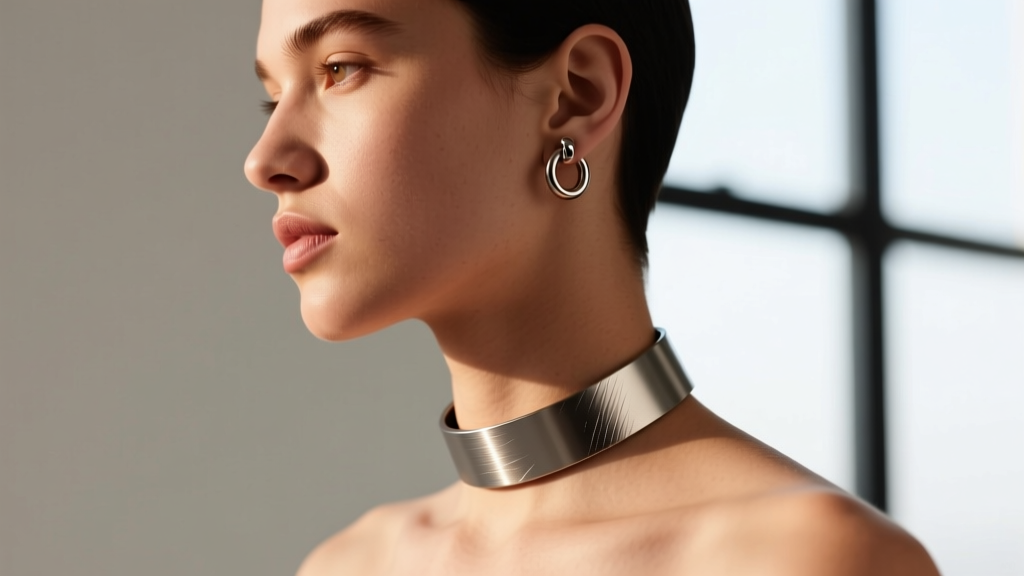
- Statement Collars (30mm - 50mm diameter): You must step up to an 8-gauge (3.2mm) or 6-gauge (4.0mm) wire. At this diameter, a thinner wire will lack the tensile strength to maintain a perfect circle, leading to a distorted, cheap-looking silhouette.
- Heavy Hardware (50mm+ diameter): For industrial aesthetics, a 4-gauge (5.0mm) to 2-gauge (6.5mm) solid metal ring is required. At this thickness, the weight of the steel or gold becomes significant, necessitating a heavy-duty chain or a structured leather/metal collar base to support the pendant without pulling uncomfortably on the nape of the neck.
The Nickel Factor: Understanding Contact Dermatitis
Nickel allergy is the most common contact allergy worldwide, affecting roughly 18% of the population. According to the American Academy of Dermatology, prolonged exposure to nickel-releasing alloys can cause severe contact dermatitis, characterized by redness, itching, and blistering directly beneath the jewelry.
Why 316L Steel Can Still Cause Reactions
316L surgical steel is widely marketed as "hypoallergenic." While it is true that the nickel in 316L steel is tightly bound within the alloy's crystal lattice, it is not entirely inert. The "L" stands for low carbon, and the alloy contains molybdenum, which creates a microscopic passivation layer that resists corrosion. However, human sweat is mildly acidic (containing lactic acid and chlorides). Over months of continuous, 24/7 wear, this acidic environment can slowly breach the passivation layer, leaching trace amounts of nickel ions into the skin. For individuals with mild sensitivities, 316L is perfectly safe. For those with severe, clinically diagnosed nickel allergies, it is a risk.
The Titanium Solution
If biocompatibility is your absolute priority, ASTM F-136 Titanium (Ti 6Al-4V ELI) is the gold standard. As noted by ASTM International, this specific grade of titanium is the exact alloy used for surgical implants. It contains zero nickel, is highly resistant to all forms of bodily corrosion, and is roughly 45% lighter than steel. An O-ring collar machined from Grade 23 titanium will never tarnish, rust, or trigger a contact allergy, making it the ultimate choice for sensitive skin.
Aesthetic Profiles: Hardware vs. Fine Jewelry
The material you choose fundamentally alters the visual language of the O-ring necklace. The transition from subculture hardware to high fashion relies heavily on the finish and metal color.
Industrial and Brutalist Aesthetics
For a brutalist, hardware-inspired look, brushed or matte-finished steel and titanium are superior. A bead-blasted titanium O-ring absorbs light, giving it a stealthy, modern, and utilitarian vibe. This aesthetic pairs best with thicker, geometric chains like box chains or heavy curb links. The inherent grey tones of titanium and steel complement streetwear, monochromatic outfits, and avant-garde fashion.
Minimalist Fine Jewelry
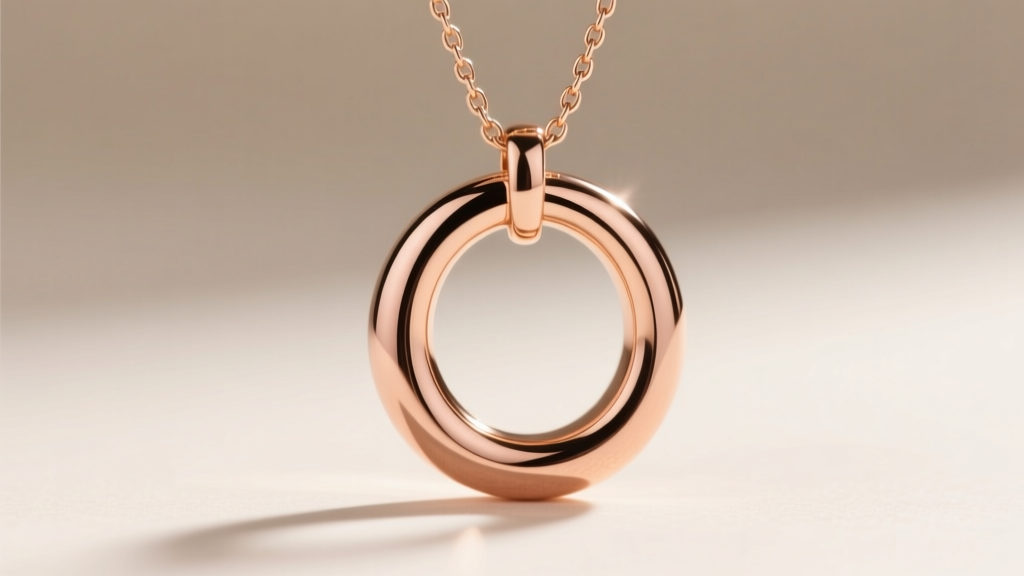
When translating the O-ring into fine jewelry, 14k and 18k solid gold are the materials of choice. According to the Gemological Institute of America (GIA), 14k gold (58.5% pure gold) offers an excellent balance of rich color and structural durability, whereas 18k gold (75% pure gold) provides a deeper, more saturated yellow hue but is slightly softer. For O-ring pendants, a high-polish mirror finish on solid gold elevates the piece from industrial hardware to luxury minimalism. Rose gold, alloyed with copper, offers a warmer, vintage-adjacent tone that flatters a wider variety of skin undertones than stark yellow or white gold.
Expert Warning on White Gold: If you prefer a silver-colored fine metal, be cautious with white gold. Most white gold alloys are created by mixing pure yellow gold with nickel or palladium. If it is nickel-alloyed, it can cause severe reactions. Furthermore, white gold is rhodium-plated to achieve its bright white finish. On an O-ring necklace, which experiences high friction against the chest and clothing, this rhodium plating will wear off relatively quickly, revealing the slightly yellowish-grey base metal beneath. For a silver-colored O-ring that will never fade or cause allergies, stick to Platinum or Titanium.
Maintenance and Tarnish Resistance
Different metals require vastly different care protocols to maintain their structural beauty and skin safety.
- 316L Surgical Steel: While highly resistant to rust, steel can accumulate microscopic layers of dead skin cells, sebum, and soap residue in the crevices where the O-ring meets the chain jump ring. Clean weekly with warm water, a drop of mild dish soap, and a soft-bristled toothbrush. Avoid bleach or chlorine, which can pit the steel surface.
- Titanium: Virtually maintenance-free. Titanium's oxide layer is self-repairing. You can wear a titanium O-ring in the ocean, the shower, or the gym without any risk of corrosion. A simple wipe with a microfiber cloth is all that is needed to remove fingerprints.
- Solid Gold: Gold does not tarnish, but the alloyed metals (like copper and silver in 14k gold) can react to harsh chemicals. Remove your gold O-ring necklace before swimming in chlorinated pools or using household cleaning agents. Polish with a dedicated jeweler's cloth to restore the mirror finish without scratching the metal.
Final Verdict: Which Metal Should You Choose?
The ideal material for your O-ring necklace depends entirely on your wearing habits and skin biology. If you are purchasing a piece for continuous, 24/7 wear—including sleeping and showering—Grade 23 Titanium is the undisputed champion. It offers unmatched biocompatibility, featherlight comfort for larger gauge collars, and absolute corrosion resistance.
If you desire a luxury aesthetic for daily office or evening wear, 14k Solid Yellow or Rose Gold provides the perfect intersection of prestige, durability, and timeless style. Finally, if you are looking for an affordable, heavy, industrial statement piece for occasional wear and have no history of metal allergies, 316L Surgical Steel remains a robust and highly attractive option. Always verify the exact gauge thickness before purchasing to ensure your O-ring maintains its perfect geometry for years to come.


