J Letter Necklace Value Guide: Budget vs Luxury 2026
Discover the true value of a J letter necklace. Compare pricing tiers, material grades, and chain durability to find the best budget and luxury options.

The Anatomy of a J Letter Necklace: What Are You Paying For?
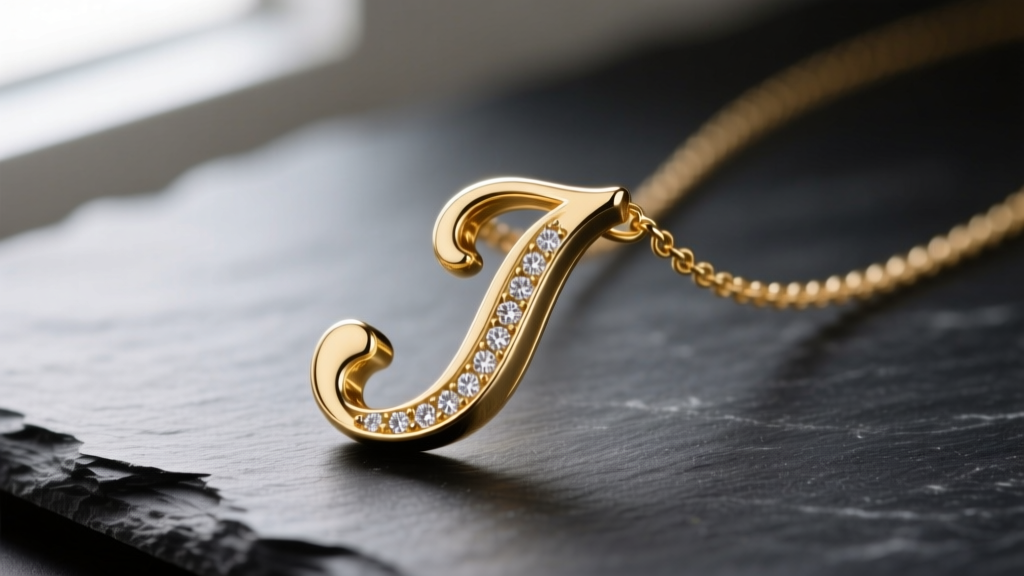
Initial jewelry remains a dominant force in personal styling, but not all letters are created equal in the manufacturing world. When evaluating a j letter necklace, you must account for the unique structural geometry of the letter itself. Unlike symmetrical letters like 'O' or 'X', the letter 'J' features an asymmetrical weight distribution and a curved bottom hook. This design creates a natural pendulum effect. If the bail (the loop connecting the pendant to the chain) is poorly positioned or soldered, the 'J' will constantly flip upside down, ruining the aesthetic and causing premature wear on the chain.
Furthermore, the manufacturing method drastically dictates the baseline value. Stamped pendants (cut from a flat sheet of metal) are typically 0.6mm to 0.8mm thick. While budget-friendly, the bottom curve of a stamped 'J' is highly susceptible to bending if snagged. Cast pendants, created via lost-wax casting, offer a three-dimensional profile with thicknesses ranging from 1.2mm to 2.5mm, providing the structural integrity required for the 'J' hook. Understanding these nuances is the first step in separating genuine value from overpriced costume jewelry in 2026.
Material Breakdown: Plated, Vermeil, and Solid Gold
The core cost driver of any initial pendant is the base metal and its surface treatment. The market is currently saturated with misleading terminology, making it vital to look past marketing buzzwords and examine the actual micron thickness and alloy composition.
Stainless Steel & PVD Coating (The $25–$60 Tier)
For strict budgets, 316L surgical stainless steel coated with Physical Vapor Deposition (PVD) gold is the undisputed champion. PVD bonding occurs in a vacuum chamber, creating a molecular bond that is significantly more resistant to sweat and friction than traditional electroplating. A high-quality PVD 'J' pendant will feature a gold layer of 0.3 to 0.5 microns. While it will eventually fade after 1 to 3 years of daily wear, the stainless steel core ensures the pendant will never turn your skin green or snap at the delicate bottom curve.
Gold Vermeil & Thick Plating (The $75–$160 Tier)
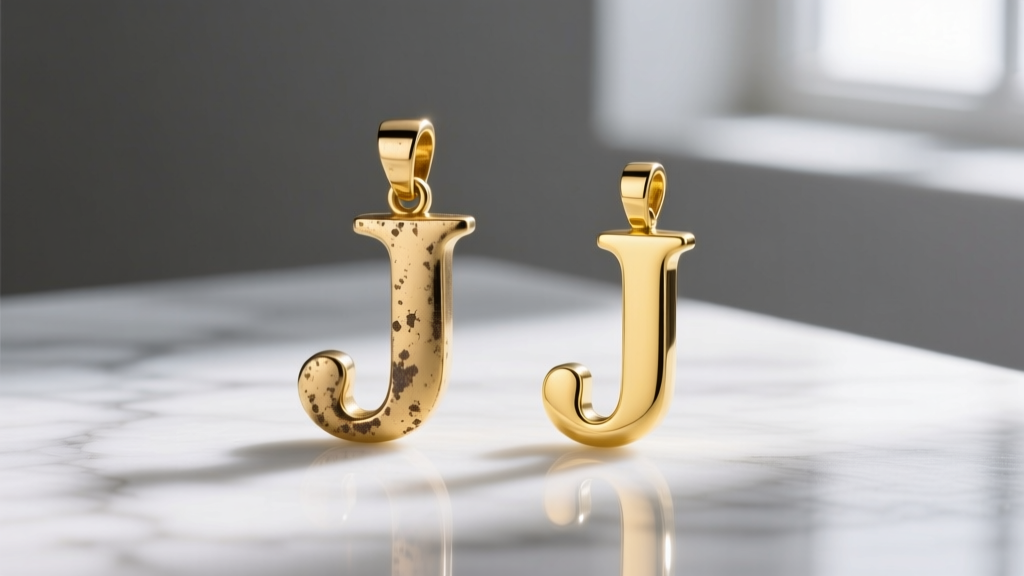
Gold vermeil is the sweet spot for mid-tier buyers, but you must verify the specifications. According to the Federal Trade Commission (FTC), true vermeil must consist of a sterling silver base coated with a minimum of 2.5 microns of 10k, 14k, or 18k gold. Many brands sell 'gold-plated silver' with a mere 0.5-micron flash and charge vermeil prices. When buying a vermeil j letter necklace, demand transparency on micron thickness. The sterling silver base offers a premium, heavy feel, but the exposed silver at the bail friction point will eventually tarnish, requiring occasional polishing.
Solid 14k & 18k Gold (The $250–$800+ Tier)
Solid gold is a generational investment. However, for the letter 'J', karat weight impacts structural durability. According to the Gemological Institute of America (GIA), 18k gold (75% pure gold) is noticeably softer than 14k gold (58.5% pure gold). Because the bottom hook of the 'J' is a stress point, a heavy 18k gold pendant is more likely to warp or bend if caught on clothing. 14k solid gold offers the optimal balance of rich color, hypoallergenic properties, and tensile strength, making it the superior choice for everyday initial pendants.
Chain Selection: The Hidden Value Killer
A common mistake consumers make is allocating 90% of their budget to the 'J' pendant and neglecting the chain. The chain is the most frequent point of failure. The bail size of your pendant dictates your chain options, but you should always prioritize tensile strength over delicate aesthetics.
| Chain Style | Ideal Gauge (mm) | Durability & Value Assessment | Price Premium |
|---|---|---|---|
| Cable Chain | 0.8mm - 1.0mm | Standard and lightweight, but the oval links are prone to stretching and snapping under the swinging weight of a cast 'J' pendant. | Base Price |
| Box Chain | 1.1mm - 1.5mm | Interlocking square links provide exceptional tensile strength. Highly recommended for solid gold 'J' pendants weighing over 2 grams. | +15% to +25% |
| Rope Chain | 1.2mm - 1.8mm | Beautiful light reflection, but the twisted grooves can catch on the edges of the pendant bail, causing micro-abrasions over time. | +30% to +40% |
Gemstone Accents: Cubic Zirconia vs. Natural vs. Lab Diamonds
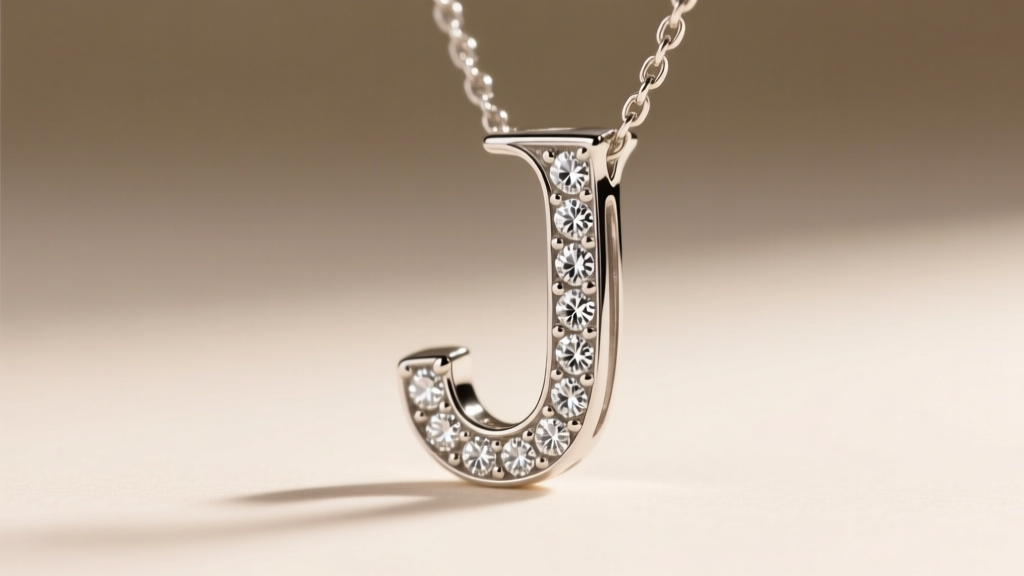
Adding sparkle to the vertical stem or the bottom curve of a J letter necklace elevates its visual impact, but it drastically alters the value proposition. Micro-pave settings require precise prong work; if the prongs are too shallow, stones will inevitably fall out during ultrasonic cleaning or daily impacts.
- Cubic Zirconia (CZ): Adds $15–$40 to the base price. CZ offers high brilliance but lacks durability, often becoming cloudy from skin oils and micro-scratches within 12 to 18 months of daily wear.
- Lab-Grown Diamonds: The 2026 market standard for accessible luxury. Adding 0.10 carat total weight (ctw) of VS-clarity lab diamonds typically adds $60–$120 to the cost. They offer identical physical hardness (10 on the Mohs scale) to mined diamonds without the massive markup.
- Natural Mined Diamonds: Expect to pay a premium of $200–$500+ for 0.10 ctw of G-H color, SI1 clarity natural diamonds. The value here is rooted in rarity and tradition rather than visual superiority.
2026 Market Pricing Matrix: Where to Buy
To help you benchmark your purchase, we have analyzed current market offerings across four distinct retail tiers. This matrix assumes a standard 15mm to 18mm cast 'J' pendant on an 18-inch chain.
| Retail Tier | Typical Materials | Expected Price Range | Value Verdict |
|---|---|---|---|
| Fast Fashion | Brass base, 0.1-micron flash plating, CZ stones | $15 – $35 | Poor. High risk of contact dermatitis and rapid tarnishing. Treat as disposable. |
| Mid-Tier / DTC | Sterling silver base, 2.0+ micron vermeil, or PVD steel | $65 – $140 | Good. Excellent for trend-driven styling. Verify the vermeil micron count before purchasing. |
| Accessible Luxury | Solid 14k gold, lab-grown diamond accents | $280 – $550 | Excellent. The best long-term value for daily wear. Brands like Mejuri or local jewelers excel here. |
| High-End Luxury | Solid 18k gold, natural VVS diamonds, brand prestige | $1,200 – $3,500+ | Subjective. You are paying a 400%+ markup for the brand name and retail experience, not raw material value. |
Final Verdict: Maximizing Your Investment
When assessing the budget and value of a j letter necklace, the smartest investment lies in the mid-to-high tiers. Skipping the ultra-cheap brass options saves you from skin irritation and broken chains, while opting for 14k solid gold or high-micron vermeil ensures the pendant survives the structural stress of the letter's curved hook.
Expert Care Tip: Never use ultrasonic cleaners on a micro-pave diamond or CZ initial pendant. The high-frequency vibrations will loosen the adhesive and micro-prongs holding the stones in the tight curves of the 'J'. Instead, use a soft baby toothbrush with warm water and a drop of mild dish soap to gently clear lotion buildup from behind the stones.
Ultimately, true value is determined by cost-per-wear. A $350 solid 14k gold J letter necklace worn 300 days a year over a decade costs less than $0.10 per wear, making it one of the most financially sound and emotionally resonant accessories you can add to your collection. For further guidance on maintaining precious metals, consult the Jewelers of America care guidelines to ensure your initial jewelry remains pristine for years to come.


